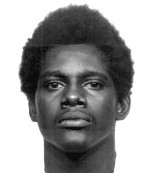
James Demouchette
Murderer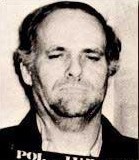 Ervil LeBaron
Murderer · USA · 1972
Ervil Morrell LeBaron (1925 to August 16, 1981) was the leader of a polygamous…
35 victims
Ervil LeBaron
Murderer · USA · 1972
Ervil Morrell LeBaron (1925 to August 16, 1981) was the leader of a polygamous…
35 victims
 Brian Kevin Rosenfeld
Murderer · USA · 1985
Brian Kevin Rosenfeld Brian Kevin Rosenfeld was sentenced to three concurrent l…
23 victims
Brian Kevin Rosenfeld
Murderer · USA · 1985
Brian Kevin Rosenfeld Brian Kevin Rosenfeld was sentenced to three concurrent l…
23 victims
 Marvin Gray
Murderer · USA · 1975
Marvin Gray was convicted killer who claimed responsibility for 23 slayings and…
23 victims
Marvin Gray
Murderer · USA · 1975
Marvin Gray was convicted killer who claimed responsibility for 23 slayings and…
23 victims
 Yahweh ben Yahweh
Murderer · USA · 1980
Yahweh ben Yahweh was born and legally named Hulon Mitchell Jr. (October 27, 19…
23 victims
Yahweh ben Yahweh
Murderer · USA · 1980
Yahweh ben Yahweh was born and legally named Hulon Mitchell Jr. (October 27, 19…
23 victims
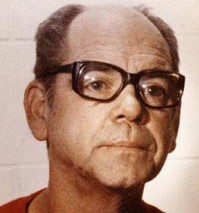 Gilbert Paul Jordan
Serial killer · Canada · 1965
Gilbert Paul Jordan (born December 12, 1931; died July 7, 2006) was known as th…
10 victims
Gilbert Paul Jordan
Serial killer · Canada · 1965
Gilbert Paul Jordan (born December 12, 1931; died July 7, 2006) was known as th…
10 victims
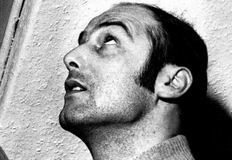 Trevor Joseph Hardy
Serial killer · United Kingdom · 1974
Trevor Joseph Hardy (born 1947 in Manchester, Lancashire) was also known as the…
3 victims
Trevor Joseph Hardy
Serial killer · United Kingdom · 1974
Trevor Joseph Hardy (born 1947 in Manchester, Lancashire) was also known as the…
3 victims
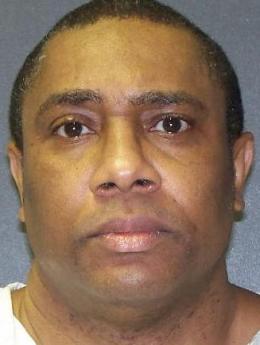 Kenneth Mosley
Murderer · USA · 1997
Kenneth Mosley was convicted of capital murder and was executed by lethal injec…
1 victim
Kenneth Mosley
Murderer · USA · 1997
Kenneth Mosley was convicted of capital murder and was executed by lethal injec…
1 victim
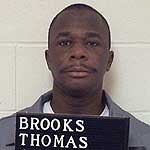 Thomas Brooks
Murderer · USA · 1993
Thomas Brooks, Jr. was convicted in the State of Missouri, Respondent, v. Thoma…
1 victim
Thomas Brooks
Murderer · USA · 1993
Thomas Brooks, Jr. was convicted in the State of Missouri, Respondent, v. Thoma…
1 victim
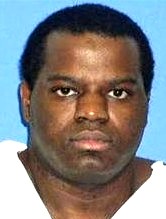 Donell Okeith Jackson
Murderer · USA · 1993
Donell Okeith Jackson was convicted of capital murder and was sentenced to deat…
1 victim
Donell Okeith Jackson
Murderer · USA · 1993
Donell Okeith Jackson was convicted of capital murder and was sentenced to deat…
1 victim
 Maksim Gelman
Spree killer · USA · 2011
Maksim Gelman Maksim Gelman (born May 31, 1987) was an American. Gelman’s fathe…
4 victims
Maksim Gelman
Spree killer · USA · 2011
Maksim Gelman Maksim Gelman (born May 31, 1987) was an American. Gelman’s fathe…
4 victims
- Gender
- male
- Country
- USA
- Location
- Harris County, Texas, USA
- Date of birth
- May 20, 1955
- Age at first offence
- 21
- Characteristics
- robbery, rape, attempted rape, history of mental illness, drug addict, mentally ill
- Victim profile
- Scott Sorrell, 19, and Robert White, 20 (Pizza Hut clerks) / Johnny B. Swift (inmate)
- Method of murder
- Shooting (.380 caliber revolver) / St abbing with homemade knife
- Date(s) of murder
- October 17, 1976 / August 1983
- Years active
- 1976–1983
- Date of arrest
- October 18, 1976 (surrenders)
- Status
-
Executed
Executed by lethal injection in Texas on September 22, 1992
Case record: James Demouchette
Status
James Demouchette was executed by lethal injection in Texas on September 22, 1992.
Timeline
- October 17, 1976 — James Demouchette and his brother entered an Inwood-area Pizza Hut and fatally shot Scott Sorrell, 19, and Robert White, 20, and injured the manager before taking stereo equipment and a sack of change.
- 1983 — Demouchette was convicted of fatally stabbing a fellow death row inmate and was sentenced to 15 years.
- September 21, 1992 — Federal appeal decision issued in James Demouchette, Petitioner-Appellant v. James A. Collins, Director, Texas Department of Criminal Justice, Institutional Division, Respondent-Appellee (No. 92-2077).
- September 22, 1992 — Demouchette was scheduled for execution by the Texas authorities.
- September 23, 1992 — The New York Times published “Texas Executes 'Meanest' Killer” describing the execution outcome and related proceedings.
People
- James Demouchette — offender, executed.
- Christopher (Demouchette) — James Demouchette’s brother; was convicted and sentenced to life in prison.
- Scott Sorrell — victim; assistant manager at the Pizza Hut; fatally shot; aged 19.
- Robert White — victim; fatally shot; aged 20.
- Geoff Hambrick — manager; was shot, survived, and testified against the Demouchettes.
- Chuck White — a friend of Scott Sorrell’s; was present at a booth and table.
- Geoffrey Hambrick — the manager; referred to as Geoffrey in background and Geoff Hambrick in other portions.
- James A. Collins — Director, Texas Department of Criminal Justice, Institutional Division; respondent-appellee in the federal proceeding.
- POLITZ — Chief Judge in the federal proceeding.
- HIGGINBOTHAM — Circuit Judge in the federal proceeding.
- DUHE — Circuit Judge in the federal proceeding.
- Demouchette’s lawyers — argued that psychological tests describing him as a sociopath should have been introduced at trial.
- Demouchette’s trial attorneys — associated with mitigation development arguments in the federal proceeding.
- Demouchette’s trial attorney — testified at an evidentiary hearing about mitigating evidence he decided not to present.
- Prison officials — described Demouchette as the meanest man on death row.
Other details
- James Demouchette declined to make a last statement.
- Demouchette was 37 years old (21).
- Demouchette had an education level of 9th grade.
- Demouchette called himself “Doom.”
- Demouchette was described by prison officials as the meanest man on death row.
- Demouchette became the 10th person to be die by lethal injection in Texas this year.
- Demouchette became the 52d Texas inmate and the 182d inmate in the nation to be executed since 1976, when the Supreme Court allowed states to resume the use of the death penalty.
The offence
On October 17, 1976, James Demouchette and his brother entered an Inwood-area Pizza Hut. The brothers fatally shot Scott Sorrell, 19, and Robert White, 20, and injured the manager. They took stereo equipment and a sack of change.
In the background described by the Texas Court of Criminal Appeals, the manager Geoffrey Hambrick locked up and the Demouchettes joined Hambrick, Scott Sorrell (the assistant manager), and an acquaintance of one of the brothers at a booth and table along with Chuck White, a friend of Sorrell’s. After a few minutes of idle conversation, Hambrick heard White say, "I'd think twice before I pulled that trigger," then turned to see Demouchette shoot White in the head with a large caliber revolver. Demouchette then shot Hambrick. The bullet struck Hambrick on the side of the head. Hambrick slumped over and pretended to be dead; he retained consciousness. A third shot rang out, and Hambrick heard what he presumed to be Sorrell falling. The Demouchettes ransacked the back room. Returning to the dining room where Sorrell was making gurgling sounds, Demouchette told Chris, "Get the keys." There was another shot and Sorrell’s gurgling ceased. The keys were taken from Hambrick and the Demouchettes left. Hambrick called the police. Sorrell died at the scene, and White died shortly thereafter. Hambrick recovered from his wounds. The cash register had been emptied and stereo equipment was missing.
A jury convicted Demouchette of the capital murder of Sorrell under Texas Penal Code § 19.03(a)(2).
Investigation
Hambrick survived to testify against the Demouchettes.
Trial
During the penalty phase of his trial, Demouchette presented expert testimony that he suffered from antisocial personality disorder, described as a chronic abnormality marked by impulsivity, an inability to learn from experience, and callousness towards others. Both mental health experts called by Demouchette testified that his acts of violence resulted from impulse rather than plan.
The jury answered the first special issue, whether Demouchette had killed deliberately, in the affirmative, and likewise answered the second special issue concerning future dangerousness. The third special issue was not relevant and was not submitted.
In accordance with the Texas statute, the judge sentenced Demouchette to death.
The Texas Court of Criminal Appeals affirmed the conviction and sentence.
Sentencing
Demouchette was sentenced to death in accordance with Texas statute after the jury answered special issues in the affirmative.
Appeals
Federal habeas proceedings
Demouchette invoked 28 U.S.C. 2254 and sought habeas relief. The state expressly waived exhaustion of collateral state remedies.
The district court conducted an evidentiary hearing. Demouchette’s trial attorney testified about mitigating evidence which he decided not to present because of the structure of the Texas death penalty statute. The district court denied relief, denied a certificate of probable cause, and vacated an earlier granted stay of execution.
Demouchette timely sought a certificate of probable cause and a stay of execution. The appeal was addressed in James Demouchette, Petitioner-Appellant, v. James A. 92-2077).
The federal court stated that when a district court denies a certificate of probable cause, the court lacks jurisdiction to decide the appeal unless it first decides to grant one. The court said a certificate may be issued only when the petitioner makes a substantial showing of the denial of a federal right.
The court determined that Demouchette’s issues were foreclosed by circuit precedent and denied the motions for CPC and for a stay of execution.
The federal proceeding addressed Demouchette’s principal argument under Penry v. Lynaugh and Graham v. Collins, and addressed an argument about constructive denial of sixth amendment rights and ineffective assistance of counsel, as well as contentions about mitigation evidence development being impaired by the Texas death penalty scheme.
Penry clearly stands for the proposition that merely because the mitigating evidence has any relevance to a negative answer to one of the special issues does not necessarily suffice in all cases to sustain application of the Texas statute.
Penry's evidence has some such relevance to the first issue.
The more difficult question is whether the Texas statute can operate as written in any case where the mitigating evidence, though all clearly relevant to support a negative answer to one or more of the issues, nevertheless also has any mitigating relevance whatever beyond the scope of the special issues.
Penry can fairly be read as precluding use of the Texas statutory scheme in any such situation.
But, Penry can also fairly be read as addressing only a situation where some major mitigating thrust of the evidence is substantially beyond the scope of all the issues.
That, indeed, was the case in Penry, where as to the third issue the mitigating evidence was all essentially irrelevant, as to the second issue it was only affirmatively harmful to the defense, and as to the first issue its favorable relevance was essentially minor but its "major thrust" was beyond the scope of the issue.
In Graham we adopted the latter reading of Penry, holding that a special instruction was required only if a "major mitigating thrust"
of the evidence was substantially beyond the scope of all the special issues.
The court concluded that the jury was able to give mitigating effect to Demouchette’s personality disorder evidence in deciding whether he acted deliberately, and that the argument for a special jury instruction was foreclosed by Graham. The court also rejected the ineffective assistance argument in the manner described as constructive denial and foreclosed related contentions.
The court denied the application for a certificate of probable cause and the motion for stay of execution.
Outcome
Aftermath
Demouchette had no final statement. His execution followed the United States Supreme Court declining to intervene twice. His brother Christopher was serving a life sentence.
Prison history and other violence
Demouchette was violent behind bars and once stabbed another inmate to death. He was convicted in 1983 of fatally stabbing a fellow death row inmate and was sentenced to 15 years.
Demouchette beat and raped another inmate, stabbed at least two others, twice set fire to his cell, and stabbed two guards searching his cell, prison records show.

Spotted an error, or have more information about this case?