
Michael Van McDougall
Murderer Ervil LeBaron
Murderer · USA · 1972
Ervil Morrell LeBaron (1925 to August 16, 1981) was the leader of a polygamous…
35 victims
Ervil LeBaron
Murderer · USA · 1972
Ervil Morrell LeBaron (1925 to August 16, 1981) was the leader of a polygamous…
35 victims
 Brian Kevin Rosenfeld
Murderer · USA · 1985
Brian Kevin Rosenfeld Brian Kevin Rosenfeld was sentenced to three concurrent l…
23 victims
Brian Kevin Rosenfeld
Murderer · USA · 1985
Brian Kevin Rosenfeld Brian Kevin Rosenfeld was sentenced to three concurrent l…
23 victims
 Marvin Gray
Murderer · USA · 1975
Marvin Gray was convicted killer who claimed responsibility for 23 slayings and…
23 victims
Marvin Gray
Murderer · USA · 1975
Marvin Gray was convicted killer who claimed responsibility for 23 slayings and…
23 victims
 Yahweh ben Yahweh
Murderer · USA · 1980
Yahweh ben Yahweh was born and legally named Hulon Mitchell Jr. (October 27, 19…
23 victims
Yahweh ben Yahweh
Murderer · USA · 1980
Yahweh ben Yahweh was born and legally named Hulon Mitchell Jr. (October 27, 19…
23 victims
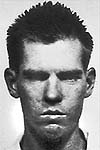 Kenneth Albert Brock
Murderer · USA · 1974
Kenneth Albert Brock was executed by lethal injection in Texas on June 19, 1986…
1 victim
Kenneth Albert Brock
Murderer · USA · 1974
Kenneth Albert Brock was executed by lethal injection in Texas on June 19, 1986…
1 victim
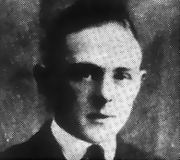 Ernest Brown
Murderer · 1933
Ernest Brown was executed by hanging at Armley prison in Leeds on February 6, 1…
1 victim
Ernest Brown
Murderer · 1933
Ernest Brown was executed by hanging at Armley prison in Leeds on February 6, 1…
1 victim
 Karen Tobie
Murderer · USA · 2004
Karen Tobie was convicted of paying a man $4,000 to kill her husband, John Cata…
1 victim
Karen Tobie
Murderer · USA · 2004
Karen Tobie was convicted of paying a man $4,000 to kill her husband, John Cata…
1 victim
 Patricia Cartier
Murderer · France · 2002
Name: Patricia Cartier Role in case: defendant (wife) Patricia Cartier was sent…
1 victim
Patricia Cartier
Murderer · France · 2002
Name: Patricia Cartier Role in case: defendant (wife) Patricia Cartier was sent…
1 victim
 William Van Poyck
Murderer · USA · 1987
William Van Poyck (DC #034071; DOB: 07/04/54) was convicted in the Fifteenth Ju…
1 victim
William Van Poyck
Murderer · USA · 1987
William Van Poyck (DC #034071; DOB: 07/04/54) was convicted in the Fifteenth Ju…
1 victim
- Gender
- male
- Country
- USA
- Location
- Mecklenburg County, North Carolina, USA
- Date of birth
- March 28, 1955
- Age at first offence
- 24
- Characteristics
- drugs
- Victim profile
- Diane Parker, 27 (neighbor)
- Method of murder
- Stabbing with knife 22 times
- Date(s) of murder
- August 21, 1979
- Years active
- 1979
- Date of arrest
- Same day
- Status
-
Executed
Executed by lethal injection in North Carolina on October 18, 1991
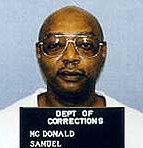
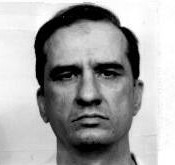
Case record: Michael Van McDougall
Background
Michael Van McDougall was convicted of fatally stabbing a neighbor and was later sentenced to death.
McDougall lived a troubled and violent life. At 8 years old, he saw his grandfather commit suicide. At age 13, his father was killed in a robbery at his family’s package store. He had an IQ of 122 and grew up in a comfortable suburb of Atlanta, but he dropped out of school in the 10th grade.
At 18, McDougall pleaded guilty to raping a 31-year-old Marietta, Ga., woman at knifepoint and served 21 months in a Georgia prison for the offense.
The offence
On the early morning of August 21, 1979, McDougall rang the doorbell at the home of his neighbors, Vicki Dunno and Diane Parker, at 1420 Blueberry Lane, Charlotte, North Carolina. He begged to be admitted and claimed that his wife had cut her leg badly and that he needed alcohol and bandages for her, and that he needed to call a doctor. Parker took alcohol and bandages and placed them outside the back door, then went back to the front of the house where McDougall began calling her by name and saying that he needed to talk to her because he needed help for his wife.
McDougall explained that he was her neighbor, Mike, and continued to plead to get into the house. Diane Parker let McDougall into the house. In the kitchen, Vicki Dunno was checking the telephone directory for a doctor’s number. While this was happening, McDougall walked from the kitchen into the den and began “check out the house.” Diane Parker took the telephone book from Vicki Dunno and started to dial for help.
McDougall returned to the kitchen, picked up a butcher knife, grabbed Diane Parker by the arm, put the knife in front of her face, and told her to put down the telephone. A struggle developed. Diane told Vicki to run next door and get help. Vicki ran out to the front yard but slipped on wet grass and, in the course of falling, lost her glasses. While she was looking for her glasses, McDougall came out of the house, told Vicki she was not going anywhere, and another struggle ensued.
Diane came out of the house holding a knife. McDougall took the knife from Diane. After another struggle, McDougall grabbed both women by their hair and dragged them back into the house.
McDougall demanded the car keys. When they were delivered, he forced both women back outside and told them he was going to put them in the trunk. Vicki then threw the keys away. McDougall threw Vicki to the ground and began to stab her. Vicki screamed to Diane to run for help. Diane ran, but McDougall caught her and stabbed her 22 times. Two of these wounds were to the heart. Medical evidence established that most of the wounds occurred while Diane Parker was in a prone position. There were also defensive cuts about her hands.
Diane Parker’s body was found in the yard of McDougall’s home. The butcher knife found at the scene was identified as the murder weapon. While McDougall was chasing Diane, Vicki Dunno dialed the emergency number 911 and police arrived and began looking for McDougall.
When police brought in search lights, McDougall came from behind some bushes saying, “I give up. Okay, I give up.” There was blood smeared on his person, his shirt, and pants, and a blood analysis showed that this blood matched the blood type of the deceased.
At sentencing, the evidence showed that Diane Parker was killed by stabbing 22 times and that Vicki Dunno was stabbed nine times but survived.
Investigation
Police arrived after Vicki Dunno dialed 911 and searched for McDougall. When police brought in search lights, McDougall surrendered from behind bushes by saying, “I give up. Okay, I give up.”
Arrest
McDougall was arrested shortly after police arrived.
Trial
At trial, McDougall did not deny the slaying. His lawyers said the killing occurred in a cocaine-induced psychosis. McDougall said he had injected four to five grams of cocaine. Testimony at the trial showed that he had injected himself with up to five grams of cocaine before going to his neighbors’ house.
At trial, defense contended that McDougall suffered a cocaine-induced psychosis, underlying depression, and organic brain damage. He also claimed amnesia as to all events surrounding the crimes. He did not testify in the guilt phase of the trial but did testify during the sentencing phase.
During the sentencing phase, it was established that McDougall had been convicted of rape in March 1974. The evidence also established that prior to stabbing Diane Parker to death, he had stabbed Vicki Dunno.
The defense presented evidence that McDougall was present, as a young boy, when his grandfather committed suicide. Defense also presented evidence that, since that event, he experienced hallucinations and heard his grandfather’s voice.
The defense asserted that McDougall suffered from cocaine-induced psychosis, organic brain damage, and depression. The defense also claimed that at the time of the murder, McDougall thought he was fighting his mother, who was hitting him with an automobile radio antenna.
Sentencing
Jury verdict form: Issues and Recommendation as to Punishment
At the conclusion of the evidence, oral arguments, and the charge in the sentencing phase, the trial judge submitted to the jury a verdict form titled “Issues and Recommendation as to Punishment.” The form included four questions, with the first two questions having four subparts each. The jury answers were:
Do you find from the evidence, beyond a reasonable doubt the existence of one or more of the following aggravating circumstances? ANSWER: Yes a. Has the defendant previously been convicted of a felony involving the use of violence to the person? ANSWER: Yes b. Was the murder in this case committed for the purpose of avoiding or preventing a lawful arrest? ANSWER: No c. Was the murder in this case especially heinous, atrocious, or cruel? ANSWER: Yes d. Was the murder in this case part of a course of conduct by the defendant which included the commission by the defendant of another crime of violence against another person? ANSWER: Yes
Do you find from the evidence the existence of one or more of the following mitigating circumstances? ANSWER: Yes a. Was the murder in this case committed while the defendant was under the influence of mental or emotional disturbance? ANSWER: Yes b. Was the defendant's capacity to appreciate the criminality of his conduct or his capacity to conform his conduct to the requirements of law impaired? ANSWER: Yes c. Was the age of the defendant at the time of the murder in this case a mitigating factor? ANSWER: No d. Is there any other circumstance or circumstances arising from the evidence which you deem to have mitigating value? ANSWER: Yes
Do you find, beyond a reasonable doubt, that the mitigating circumstance or circumstances you have found is or are insufficient to outweigh the aggravating circumstance or circumstances you have found? ANSWER: Yes
Do you find beyond a reasonable doubt that the aggravating circumstance or circumstances you have found is or are sufficiently substantial to call for the imposition of the death penalty? ANSWER: Yes
Recommendation
We, the jury, unanimously recommend that the defendant, Michael Van McDougal , be sentenced to Death. (Indicate your recommendation by writing "Life Imprisonment" or "Death".)
Sentencing phase jury instructions (verbatim excerpts)
The instruction for Issue 3 included the following:
“3. On this issue the burden is upon the state to prove to you from the evidence beyond a reasonable doubt that the mitigating circumstances you find are insufficient to outweigh any aggravating circumstances you may have found. If you find from the evidence one or more mitigating circumstances, you must weigh the aggravating circumstances against the mitigating circumstances. In so doing, you are the sole judges of the weight to be given to any individual circumstance which you find, whether aggravating or mitigating. Your weighing should not consist of merely adding up the number of aggravating circumstances and mitigating circumstances. Rather, you must decide from all of the evidence what value to give to each circumstance, and then weigh the aggravating circumstances, so valued, against the mitigating circumstances, so valued, and finally determine whether the aggravating circumstances outweigh the mitigating circumstances. So then, Members of the Jury, if the State has proven to you from the evidence beyond a reasonable doubt that the mitigating circumstances you find are insufficient to--that is, do not--outweigh the aggravating circumstances you find, it would then be your duty to answer this third issue "Yes." However, if you do not so find, or if you have a reasonable doubt, then it would be your duty to answer this issue "No." If you answer this issue "Yes," then you would come to consider the fourth issue. If you answer this issue "No," it would be your duty to recommend that the defendant be sentenced to life imprisonment.”
The instruction for Issue 4 included the following:
“4. On this issue the burden is on the State to prove to you from the evidence beyond a reasonable doubt that the aggravating circumstances found, if any, are sufficiently substantial to call for the imposition of the death penalty. Substantial means having substance or weight, important, significant or momentous. Aggravating circumstances may exist in a particular case and still not be sufficiently substantial to call for the death penalty. Therefore, it is not enough for the State to prove from the evidence beyond a reasonable doubt the existence of one or more aggravating circumstances. It must also prove beyond a reasonable doubt that such aggravating circumstances are sufficiently substantial to call for the death penalty, and before you may answer "Yes," you must agree unanimously that they are. If you unanimously find beyond a reasonable doubt that any aggravating circumstance or circumstances found by you are sufficiently substantial to call for the death penalty, you would answer this issue "Yes." If you do not so find, or have a reasonable doubt, then you would answer this issue "No." If you answer this issue "No," it would be your duty to recommend that the defendant be imprisoned for life. So then, Members of the Jury, finally I instruct you for you to recommend that the defendant be sentenced to death, the State must prove three things beyond a reasonable doubt, as I have defined that term, from the evidence: FIRST, that one or more statutory aggravating circumstances existed; and, SECOND, that the mitigating circumstances found by you are insufficient to outweigh the aggravating circumstances, if any, found by you; and, THIRD, that the aggravating circumstances, if any, found by you are sufficiently substantial to call for the imposition of the death penalty. .... If the State has proven these three things to you beyond a reasonable doubt, and you unanimously so find, it would be your duty to recommend that the defendant be sentenced to death. If you do not so find, or if you have a reasonable doubt to one or more of these things, it would be your duty to recommend that the defendant be sentenced to life imprisonment.”
The mitigating circumstances instructions included the following verbiage defining “mental or emotional disturbance” for subpart (a):
“Being under mental or emotional disturbance is similar to being in a heat of passion upon adequate provocation. Generally, heat of passion upon adequate provocation means that a person's state of mind, mental or emotional, was at the time so violent as to overcome his reason, such that he could not form a deliberate purpose and control his actions, and which may consist of anything which has a natural tendency to produce such passion in a person of average mind or disposition. However, as to this circumstance, a person may be under the influence of mental or emotional disturbance even though he had no adequate provocation and even though his mental and emotional disturbance was not so strong as to constitute heat of passion or to preclude deliberation. Mental or emotional disturbance may result from any cause or may exist without apparent cause. For this mitigating circumstance to exist, it is sufficient that the defendant's mind or emotions were disturbed, that is, interrupted or interfered with, from any cause, whether from consumption of drugs, mental illness, or other cause, and that he was under the influence of that disturbance when he killed Diane Parker.”
The instruction for subpart (b) included the following language and struck text:
“There is a typographical error in the next sentence. I will read the sentence as it should be: However, as to this circumstance, the capacity to appreciate the criminality of one's conduct or to conform his conduct to the law is not the same. That phrase appearing thereafter is stricken.”
The instruction for subpart (b) also included the following:
“Even though a defendant may know that his act is wrong, he may nevertheless lack capacity to appreciate its wrongfulness, that is, to fully comprehend or be fully sensible of the criminality or wrongfulness of his conduct. It is sufficient if his capacity to appreciate the wrongfulness of his conduct was impaired, that is, lessened or diminished. Even though the defendant did appreciate the criminality of his conduct, if his capacity to follow the law and refrain from engaging in the illegal conduct was impaired, this circumstance would then exist, since a person may appreciate that his conduct is wrong and still lack the capacity to refrain from such conduct. The defendant need not have lacked all capacity to conform. It is sufficient if such capacity as he might otherwise have had is impaired, that is, lessened or diminished.”
For subpart (d), the instructions included:
“As to this circumstance, you may consider any circumstance from the evidence which you are satisfied lessens the seriousness of the murder or suggests a lesser penalty than otherwise may be required, such as the defendant's character, education, environment, habits, mentality, propensities and record, and any other circumstances arising from the evidence which you deem to have mitigating value. Specifically, you may consider: (1) the defendant's love for his wife; (2) the defendant's love for his child; (3) the defendant's attitude toward abortion; (4) the defendant's attempt to remove himself from the drug culture in Georgia to lead a good and useful life; (5) his progress with psychotherapy; (6) his behavior when not suffering from the effects of mental illness; (7) any remorse as a result of his acts; (8) his behavior when not intoxicated with drugs; (9) his desire to love his family; (10) his employment experience at Pump and Lighting; and any other redeeming quality of the defendant.”
The instruction continued:
“Likewise, you shall consider any other circumstance arising from the evidence which you deem to have mitigating value. So then, if you find from the evidence any one or more of the mitigating circumstances specifically enumerated in the preceding paragraph or any other mitigating circumstance arising from the evidence which you deem to have mitigating value, then it would be your duty to answer this sub-part (d) "Yes." Otherwise, "No."”
Appeals
McDougall appealed the district court’s denial of his petition for a writ of habeas corpus. He asserted constitutional errors in the trial that resulted in convictions of felonious assault, kidnapping, and first degree murder, and a sentence of death imposed as a result of the murder conviction.
The appeal argued these claims of error:
- The jury instructions at the sentencing phase violated his right under Lockett v. Ohio to have the jury consider all of his mitigating evidence when making its sentencing decision.
- The district court refused to allow him to introduce evidence in the form of opinions from certain professors in anthropology, English, philosophy, psychology, communications and rhetoric about how the jury instructions would have been understood by a reasonable juror.
- The jury instructions in the sentencing phase unconstitutionally interfered with the jury’s consideration of non-statutory mitigating circumstances.
- His death sentence was unconstitutionally imposed because at the time of his trial North Carolina juries were permitted to return verdicts to the lesser included offense of second degree murder when there was no evidence to support such a verdict.
- The conduct of his lead trial attorney was so outrageous that he was denied a fair trial as required by the Sixth, Eighth and Fourteenth Amendments.
The appellate court stated that it found no error and affirmed. The court referenced that a detailed account of the facts supporting the conviction was set forth in State v. McDougall, 308 N.C. 1, 301 S.E.2d 308, cert. denied, 464 U.S. 865.
McDougall also petitioned the Supreme Court of North Carolina to remand his case for a life sentence under McKoy, or alternatively for a writ of certiorari to reargue his appeal; those motions were denied. The appellate court stated that it considered McKoy and found it had no application to the case, and it affirmed.
Other details
Attendance and trial logistics
The trial began on June 9, 1980. After voir dire, a jury of six whites and six blacks was seated. After a lengthy trial, the jury found the defendant not insane on July 18, 1980. On July 21, 1980, the jury found him guilty of murder, and on July 25, 1980, it recommended the death sentence.
Defense counsel and related events
After McDougall’s arrest, his family retained Charlotte attorney Wallace Osborne to represent him. Because of Osborne’s limited experience in criminal cases, Osborne associated Attorney Michael Scofield with McDougall’s consent. Scofield had criminal trial experience, had been an Assistant United States Attorney in the Western District of North Carolina, and had been a Public Defender for Mecklenburg County.
The attorneys arranged to send McDougall to a psychiatric hospital for mental evaluation and to secure information about his amnesia since he claimed no memory of the events of August 21, 1979.
At the hospital, McDougall was treated by Dr. Stephan S. Teich, a psychiatrist, and Courtney Mullin, a juristic psychologist, both privately retained. These individuals had been associated with Attorney Jerome Paul in defense of other criminal cases and urged McDougall to retain Attorney Paul. After meeting with Scofield and McDougall and his family, Paul was retained in May 1980 to represent him together with Scofield and Osborne. All three attorneys participated in the three-week trial that included guilt and sentencing phases and resulted in the death sentence.
The appeal also addressed claims about lead attorney Jerome Paul, including alleged ethical violations, licensing issues, illness, use of legal drugs, and alleged suborning of perjury. The appellate court described that Paul's actions were unethical, outrageous and even illegal, while also stating that McDougall had failed to show prejudice or undermining of the reliability of the jury verdict.
The appellate court stated that the state court found the orders of suspension from practice were not effective until April 2, 1981, and that at the time Paul represented McDougall his license had not been suspended by any final action of the Disciplinary Hearing Commission under North Carolina law. The state court also found that Paul's conduct did not result in ineffective assistance or denial of a fair trial.
Quotes from protesters and from McDougall
Opponents of capital punishment held a prayer service at a local church Thursday night and then marched to the prison for a candlelight vigil that lasted until McDougall was put to death.
“We want to affirm that all human life is sacred,” said Collins Kilburn, executive director of the North Carolina Council of Churches.
McDougall said “O.K.” and appeared to wink at his lawyer just before he was executed.
Execution details
McDougall was pronounced dead at 2:20 A.M. After about a minute of receiving the lethal injection, his head jerked slightly and his body became still. He was executed by lethal injection in North Carolina on October 18, 1991. He was described as a 36-year-old prisoner and as the fourth person executed by North Carolina and the 156th in the nation since the United States Supreme Court allowed the death penalty to be restored in 1976.
Spotted an error, or have more information about this case?