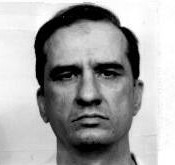
Kenneth Allen McDuff
Serial killer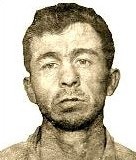 Donald Henry Gaskins
Serial killer · USA · 1969
Donald Henry Gaskins, also known as Donald “Pee Wee” Gaskins, was a serial kill…
200 victims
Donald Henry Gaskins
Serial killer · USA · 1969
Donald Henry Gaskins, also known as Donald “Pee Wee” Gaskins, was a serial kill…
200 victims
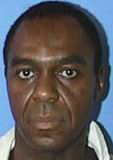 Carl Eugene Watts
Serial killer · USA · 1974
Carl Eugene Watts (born November 7, 1953; died September 21, 2007), also known…
100 victims
Carl Eugene Watts
Serial killer · USA · 1974
Carl Eugene Watts (born November 7, 1953; died September 21, 2007), also known…
100 victims
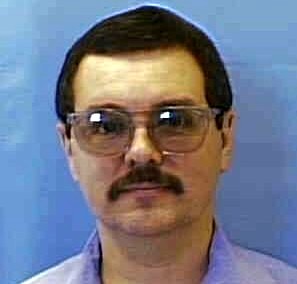 Donald Harvey
Serial killer · USA · 1970
Donald Harvey was known as an American serial killer and a self-professed “Ange…
87 victims
Donald Harvey
Serial killer · USA · 1970
Donald Harvey was known as an American serial killer and a self-professed “Ange…
87 victims
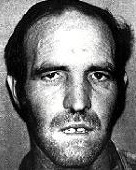 Ottis Toole
Serial killer · USA · 1961
Ottis Elwood Toole (sometimes misspelled as “Otis”) was an American serial kill…
65 victims
Ottis Toole
Serial killer · USA · 1961
Ottis Elwood Toole (sometimes misspelled as “Otis”) was an American serial kill…
65 victims
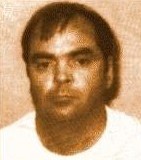 Donald Leroy Evans
Serial killer · USA · 1975
Donald Leroy Evans (born July 5, 1957) was an American serial killer who murder…
60 victims
Donald Leroy Evans
Serial killer · USA · 1975
Donald Leroy Evans (born July 5, 1957) was an American serial killer who murder…
60 victims
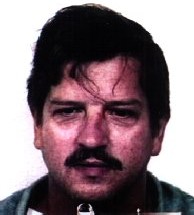 William George Bonin
Serial killer · USA · 1972
William George Bonin was executed by lethal injection in California on February…
44 victims
William George Bonin
Serial killer · USA · 1972
William George Bonin was executed by lethal injection in California on February…
44 victims
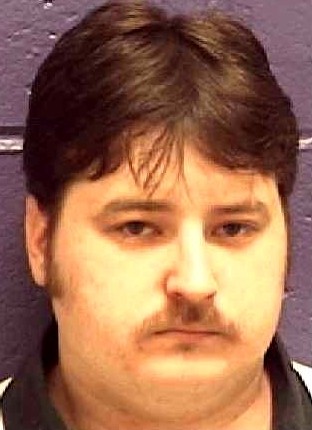 Gary Chad Thomason
Murderer · USA · 1992
Gary Chad Thomason was convicted following a three-day bench trial and was sent…
1 victim
Gary Chad Thomason
Murderer · USA · 1992
Gary Chad Thomason was convicted following a three-day bench trial and was sent…
1 victim
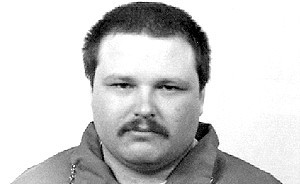 William Benirschke
Murderer · USA · 1988
William Benirschke had depression and antisocial personality, and he had drug a…
2 victims
William Benirschke
Murderer · USA · 1988
William Benirschke had depression and antisocial personality, and he had drug a…
2 victims
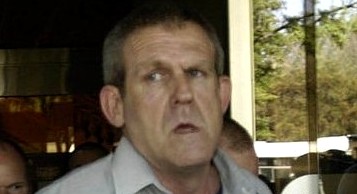 Bradley Murdoch
Murderer · Australia · 2001
Bradley John Murdoch was sentenced to life in prison (minimum 28 years) on Dece…
1 victim
Bradley Murdoch
Murderer · Australia · 2001
Bradley John Murdoch was sentenced to life in prison (minimum 28 years) on Dece…
1 victim
 Martin Link
Murderer · USA · 1991
Martin Link was convicted by a jury in the Circuit Court of the City of St. Lou…
1 victim
Martin Link
Murderer · USA · 1991
Martin Link was convicted by a jury in the Circuit Court of the City of St. Lou…
1 victim
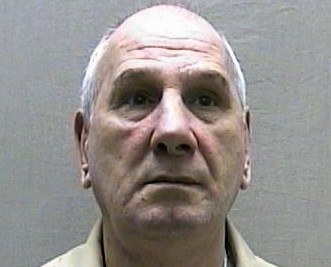 James Koedatich
Serial killer · USA · 1971
James Koedatich was born in 1948. Koedatich committed his first known murder in…
3 victims
James Koedatich
Serial killer · USA · 1971
James Koedatich was born in 1948. Koedatich committed his first known murder in…
3 victims
 Jennifer Hyatte
Murderer · USA · 2005
Name: Jennifer Hyatte Born: 11 February 1974 Known role: Shooter; former prison…
1 victim
Jennifer Hyatte
Murderer · USA · 2005
Name: Jennifer Hyatte Born: 11 February 1974 Known role: Shooter; former prison…
1 victim
- Gender
- male
- Country
- USA
- Location
- Texas, USA
- Date of birth
- March 21, 1946
- Age at first offence
- 20
- Characteristics
- kidnapping, rape, robbery
- Victim profile
- Men and women
- Method of murder
- Strangulation
- Date(s) of murder
- 1966 / 1991-1992
- Years active
- 1966–1992
- Date of arrest
- May 4, 1992
- Status
-
Executed
Executed by lethal injection in Texas on November 17, 1998
Case overview
Kenneth Allen McDuff was executed by lethal injection in Texas on November 17, 1998.
Timeline
- March 21, 1946 — Kenneth Allen McDuff was born.
- 1965 — McDuff was imprisoned for burglary.
- 1966 (August 6) — McDuff was convicted for raping and murdering three teenagers, in what became popularly known as the Broomstick Murders.
- 1968 — McDuff went to death row for the shooting deaths two teenage boys and the rape-strangulation of their 16-year-old female companion.
- 1972 — The U.S. Supreme Court struck down the death penalty as unconstitutional and McDuff’s sentence was commuted to life.
- 1970s — McDuff’s first death sentence was commuted in the 1970s when the death penalty was ruled unconstitutional.
- 1976 — McDuff became eligible for release under the parole law at that time.
- 1981 — McDuff attempted to buy his way out of prison; he dangled a $10,000 payoff and was convicted of bribery.
- 1982 — McDuff was convicted of the bribery attempt.
- 1989 — McDuff was paroled in 1989.
- 1990 (early; December 6, 1990) — McDuff was free again after a period jailed following a minor racial incident.
- 1991 — McDuff enrolled at Texas State Technical College in Waco.
- 1991 (February 24) — Valencia Joshua was last seen alive.
- 1991 (December 30) — McDuff kidnapped Colleen Reed from an Austin car wash.
- 1991 — McDuff received a second death sentence for the abduction and slaying of Colleen Reed.
- 1992 (March 1) — McDuff kidnapped and killed Melissa Northrup.
- 1992 (May 4) — McDuff was arrested in Kansas City, Mo.
- 1993 — A Houston jury ordered McDuff executed for the kidnap-slaying of Melissa Northrup.
- 1994 — A Seguin jury assessed the death penalty for the abduction-rape-murder of Colleen Reed.
- October 1989 — Parole board released McDuff when Texas prisons were overcrowded.
- November 17, 1998 (6:26 p.m. CST) — McDuff was pronounced dead after the execution.
- November 17, 1998 — McDuff was executed in Texas.
Background
Kenneth Allen McDuff was a serial killer suspected of at least 14 murders. He had previously been on death row from 1968 to 1972. McDuff’s death row number was 999055 (X999055).
While awaiting execution, the U.S. Supreme Court struck down the death penalty as unconstitutional in 1972. McDuff’s sentence was commuted to life.
Due to prison crowding, McDuff was paroled in 1989. His release was followed by additional events leading to further murder convictions and additional death sentences. After the second death sentences, both rulings were under appeal and the decisions could be moot.
McDuff was reportedly terminally ill with hepatitis C and cirrhosis of the liver. He refused requests for interviews.
The offence
Broomstick Murders (1966)
McDuff was first convicted for raping and murdering three teenagers on August 6, 1966: Robert Brand, Mark Dunman, and Edna Louis Sullivan. His partner, 17-year-old Roy Dale Green, received a sentence of four months house arrest and five years probation. McDuff was sentenced to death for this crime.
McDuff and his partner were described as having forced the boys into a car trunk and then shooting them in the head a total of five times while the boys begged for mercy. The narrative also described McDuff repeatedly raping their 16-year-old female companion and killing her by choking her with a broomstick.
Kidnapping, rape, and murder of Melissa Ann Northrup (1992)
McDuff was put to death for killing Melissa Ann Northrup, 22, of Waco. She was abducted March 1, 1992 from a Waco convenience store where she worked. Her body surfaced weeks later and dozens of miles away in a Dallas County gravel pit. Her hands were tied behind her and she had been strangled with a rope.
Kidnapping, rape, and murder of Colleen Reed (1991)
McDuff also had a second death sentence for the 1991 abduction and slaying of 28-year-old Austin accountant Colleen Reed. Authorities said he may have killed as many as a dozen other people, primarily in central Texas between Austin and Waco.
McDuff’s second death sentence related to the kidnapping and killing of Reed; Reed was abducted in Austin and taken from an Austin car wash.
Additional suspected victims
Authorities suspected McDuff may have killed as many as a dozen other people, primarily in central Texas between Austin and Waco. A fisherman found the young woman’s nearly nude body floating in a gravel pit in Dallas County, 90 miles north of Waco. Remains of other women were also reported as having been unearthed nearby after the discovery of Reed’s skeleton.
The AP interviews included the question of how many women McDuff killed and where the bodies were; some bodies had never been found.
The record included named suspected victims and locations:
- Prostitutes began disappearing after McDuff enrolled at Texas State Technical College in Waco.
- Valencia Joshua, 22, was last seen alive Feb. 24, 1991.
- Regenia Moore was described as being last seen kicking and screaming in the cab of McDuff’s pickup truck.
- After Reed disappeared from an Austin car wash during the Christmas holidays of 1991, witnesses reported hearing a woman scream and seeing two men speeding away in a yellow or tan Thunderbird.
- Melissa Northrup vanished March 1, 1992 from the Waco convenience store; her broken-down beige Thunderbird was discovered a block from the store.
- After Northrup’s abduction, a nationwide manhunt followed, and McDuff was arrested in Kansas City, Mo., on May 4.
Investigation
Authorities said McDuff led police to bodies using maps. Authorities found Reed’s skeleton buried along the Brazos River south of Waco, and remains of two other women were unearthed nearby.
A report said McDuff was secretly taken out of prison under heavy guard for two days in October to help police find Reed’s body; authorities had been unable to find the body with maps he drew. Authorities previously found the bodies of two Waco women, Reginia Moore and Brenda Thompson, using McDuff’s maps, quoting sources familiar with the searches.
A small-time thug named Hank Worley confessed that he and McDuff abducted Ms. Reed. Worley described events from Austin to a site near Lake Belton and said the victim was tied, raped, beat, and tortured sexually with burning cigarettes, followed by being ordered into the trunk. Worley said McDuff ordered him to provide a knife and a shovel, and that McDuff said he was going to use her up and get rid of her.
McDuff denied Worley’s role and said the only reason he went to Austin was to rob drug dealers; he said Worley wanted to abduct a woman and he told him no.
Arrest
McDuff was arrested in Kansas City, Mo., on May 4, 1992. The arrest followed his recognition on television’s “America’s Most Wanted.”
Trial
1966 case
McDuff was tried, convicted, and sentenced to death for the murders of Robert Brand, Mark Dunman, and Edna Louis Sullivan on August 6, 1966. His partner Roy Dale Green was sentenced to house arrest and probation.
1992 Northrup case
In 1993, a Houston jury ordered McDuff executed for the kidnap-slaying of Melissa Northrup.
1991 Reed case
In 1994, a Seguin jury assessed the death penalty for the abduction-rape-murder of Colleen Reed.
Sentencing
McDuff had a first death sentence for the 1966 murders. That sentence was commuted in the 1970s when the death penalty was ruled unconstitutional, and the U.S. Supreme Court struck down the death penalty as unconstitutional in 1972; McDuff’s sentence was commuted to life.
McDuff received a 2nd death sentence for the 1991 abduction and slaying of Colleen Reed.
The record also described:
- McDuff’s conviction of bribery connected to an attempted $10,000 payoff.
- The bribery conviction in 1982 and the narrative that the jury gave him only a two-year sentence.
- His parole in 1989 following severe prison crowding.
- A federal court stay and a federal district judge lifting the stay in the Northrup case, while he had no execution date pending for the Reed slaying.
Appeals
McDuff sought a delay so additional tests could be conducted on hair samples that authorities said linked him to Melissa Ann Northrup’s slaying. Both requests were denied. The U.S. Supreme Court refused to stop the punishment from being carried out.
A 5th U.S. Circuit Court of Appeals in New Orleans late Monday rejected his request for a reprieve. A formal written ruling would not be released until Tuesday, but the appeals court indicated it would not rule favorably.
Outcome
McDuff was executed by lethal injection in Texas on November 17, 1998. He made a final statement and then became unconscious; he was pronounced dead at 6:26 p.m. CST, eight minutes after the execution process began.
“I’m ready to be released. Release me.”
McDuff “gasped several times and then exhaled before slipping into unconsciousness.”
During the execution, Brenda Solomon watched McDuff die and said he “looked like the devil.” She also stated:
“I want you all to know I'm very glad,”
“He's going where he needs to go,”
“I feel happy. I feel wonderful.”
Aftermath
McDuff’s body was never claimed by his family. He was buried in the cemetery of the prison where he was executed, and his grave marker was adorned only with his death row number: X999055.
Following McDuff’s second arrest for murder in 1992, Texas launched a massive overhaul of its prison system to prevent violent criminals from winning early parole. The tightened parole rules, extensive prison building projects and improved monitoring of violent parolees were collectively known in Texas as the “McDuff Laws.”
The record stated that parole procedures were changed and Texas embarked on an unprecedented $2 billion prison construction program, expanding the prison system from 38,000 beds to 140,000 beds.
People involved
Offender
- Kenneth Allen McDuff (born March 21, 1946; executed November 17, 1998)
Victims
- Robert Brand (teenager; murdered August 6, 1966)
- Mark Dunman (teenager; murdered August 6, 1966)
- Edna Louis Sullivan (16-year-old female companion; raped and strangled with a broomstick after the boys were shot; murdered August 6, 1966)
- Roy Dale Green’s victim described narrative: the 16-year-old female companion, Edna Louise Sullivan
- Melissa Ann Northrup (22; abducted March 1, 1992; strangled with a rope; body found in a Dallas County gravel pit)
- Colleen Reed (28; kidnapped in Austin; abducted from an Austin car wash; killed in connection with 1991 abduction and slaying)
- Valencia Joshua (22; last seen alive Feb. 24, 1991)
- Regenia Moore (described as being last seen kicking and screaming in the cab of McDuff’s pickup truck)
- Brenda Thompson (a Waco woman whose body was found using McDuff’s maps, per a report)
- Theresa (named in relation to denials by McDuff about her parentage and alleged drug and Las Vegas involvement)
Other named individuals
- Roy Dale Green (17-year-old partner in the 1966 case; received house arrest and probation; later described as having served 13 years of a 31-year sentence for his part in the 1966 triple murder)
- Alva Hank Worley (1958-; confessed participation in a 1992 kidnapping; granted immunity for turning state's evidence)
- Brenda Solomon (watched McDuff die; made statements about the execution)
- Lori Bible (sister of Colleen Reed; made statements about McDuff)
- Aaron Northrup (husband of Melissa Northrup; asked about whether McDuff would tell where the bodies were)
- Bethany Sneed (related reactions described when she first laid eyes on McDuff)
- Emily Northrup (related reactions described; sisters-in-law mentioned)
- Walter Reaves (McDuff’s lawyer; said “That will be the plan.”)
- Victor Rodriguez (Texas Board of Pardons and Paroles Chairman; quoted about execution carrying out and later about not knowing others like the case)
- Bill Johnston (Assistant U.S. Attorney; refused to comment)
- Walter Smith (U.S. District Judge; issued a sealed order in the Royals case)
- Michael Wayne Royals (42; McDuff’s nephew; sentence reduced from 15 years to 10 years; serving prison term for delivery of amphetamines and methamphetamines)
- Brady Pamplin (Falls County sheriff described as having described McDuff at trial)
- Larry Pamplin (current sheriff of Falls County; appeared at McDuff’s Houston trial for the 1992 abduction and murder of Melissa Northrup)
- Fred Labowitz (Dallas psychologist)
- James Willett (Warden Jim Willett, asked McDuff if he had any final statement)
Other details
The record included statements attributed to McDuff, including:
“I consider myself dead,”
“I'm just waiting to be buried.”
McDuff also made multiple denials and statements, including:
“I'm not here to plead my way out of this,”
He said:
“Most of the people on Death Row have a mental condition. They committed horrible crimes they had no control over. ... They have some kind of disorder they can't control.”
He said:
“If they had received treatment, chances are they wouldn't be in prison,”
He described his view of regular criminals as:
“Regular criminals are much more vicious and violent. ... The general prison population is more dangerous and threatening than those on Death Row.”
He compared Death Row to:
“Death Row is like a mental institution.”
He also denied allegations involving his daughter, Theresa, and described as “date rape,” with additional details in the narrative including that he suggested Las Vegas only because she could earn money dealing cards in the casinos.
The record included a statement attributed to McDuff:
“Killing a woman's like killing a chicken,”
and:
“They both squawk.”
It included a direct quote from McDuff denying the news media’s role in convictions:
“They had to convict me with the news media. The facts of the case didn't warrant it.”
It included also:
“None of the cases independently should have been convictions. The news media accused me of having tie-ins in all of them.”
McDuff responded to a question about being “as innocent as the fresh fallen snow” by saying:
“No,''
He said:
“I'm telling you what the evidence is. ... There wasn't sufficient evidence in any of these cases for a conviction.”
Lori Bible’s quoted statements included:
“I can't imagine anyone in this country who deserves to die more than Kenneth McDuff,”
“I can't imagine our courts will step in and try to stop this. But then I never could have imagined someone would vote to free this monster from prison.”
The record included additional quoted material from other individuals, including:
“What a worthless being,” said Reed's sister, Lori Bible.
“Every day he's alive, you can't help but hold your breath waiting for something to happen. Another parole? A breakout? Anything could happen. The chance of him being free again is just terrifying to me.”
It also included the following quote from Larry Pamplin:
“Kenneth McDuff is absolutely the most vicious and savage individual I know,''
“He has absolutely no conscience, and I think he enjoys killing.''
A quote attributed to Fred Labowitz included:
“This guy goes beyond the study of human behavior,”
“none of this can prepare us for an encounter with Kenneth McDuff.”
A quote attributed to Mike Cochran’s Associated Press piece included a Texas Ranger statement:
“Good riddance.”
The record included other quoted statements made by Bethany Sneed and Lori Bible:
“I hate him! I hate him! He's evil! I want to see him fry!”
and:
“Good!”
“How unfortunate.”
and:
Spotted an error, or have more information about this case?