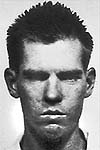
Kenneth Albert Brock
Murderer Ervil LeBaron
Murderer · USA · 1972
Ervil Morrell LeBaron (1925 to August 16, 1981) was the leader of a polygamous…
35 victims
Ervil LeBaron
Murderer · USA · 1972
Ervil Morrell LeBaron (1925 to August 16, 1981) was the leader of a polygamous…
35 victims
 Marvin Gray
Murderer · USA · 1975
Marvin Gray was convicted killer who claimed responsibility for 23 slayings and…
23 victims
Marvin Gray
Murderer · USA · 1975
Marvin Gray was convicted killer who claimed responsibility for 23 slayings and…
23 victims
 Yahweh ben Yahweh
Murderer · USA · 1980
Yahweh ben Yahweh was born and legally named Hulon Mitchell Jr. (October 27, 19…
23 victims
Yahweh ben Yahweh
Murderer · USA · 1980
Yahweh ben Yahweh was born and legally named Hulon Mitchell Jr. (October 27, 19…
23 victims
 Charles Manson
Murderer · USA · 1969
Charles Milles Manson (born November 12, 1934) was an American criminal and mus…
9 victims
Charles Manson
Murderer · USA · 1969
Charles Milles Manson (born November 12, 1934) was an American criminal and mus…
9 victims
 Jeronique Cunningham
Murderer · USA · 2002
January 3, 2002 — Jeronique Cunningham and his half-brother, Cleveland Jackson,…
2 victims
Jeronique Cunningham
Murderer · USA · 2002
January 3, 2002 — Jeronique Cunningham and his half-brother, Cleveland Jackson,…
2 victims
 Peter Dupas
Serial killer · Australia · 1997
Peter Norris Dupas was an Australian serial killer known for violence against w…
6 victims
Peter Dupas
Serial killer · Australia · 1997
Peter Norris Dupas was an Australian serial killer known for violence against w…
6 victims
 Carl Robert Brown
Mass murderer · USA · 1982
Carl Robert Brown was fatally shot and run down by two witnesses while cycling…
8 victims
Carl Robert Brown
Mass murderer · USA · 1982
Carl Robert Brown was fatally shot and run down by two witnesses while cycling…
8 victims
 Lianne Smith
Murderer · Spain · 2010
Lianne Smith was convicted of murdering her children Daniel and Rebecca. Smith…
2 victims
Lianne Smith
Murderer · Spain · 2010
Lianne Smith was convicted of murdering her children Daniel and Rebecca. Smith…
2 victims
 Michael Owsley
Murderer · USA · 1993
Michael Owsley was convicted of first-degree murder and was sentenced to death.…
1 victim
Michael Owsley
Murderer · USA · 1993
Michael Owsley was convicted of first-degree murder and was sentenced to death.…
1 victim
 Alain Lamare
Homicide · France · 1978
Alain Lamare (born 1956) was a French gendarme known to the public under the ni…
1 victim
Alain Lamare
Homicide · France · 1978
Alain Lamare (born 1956) was a French gendarme known to the public under the ni…
1 victim
- Gender
- male
- Country
- USA
- Location
- Harris County, Texas, USA
- Date of birth
- 1949
- Age at first offence
- 25
- Characteristics
- robbery
- Victim profile
- Michael Sedita, 31 (Seven-Eleven convenience store manager)
- Method of murder
- Shooting
- Date(s) of murder
- May 20, 1974
- Years active
- 1974
- Date of arrest
- Same day
- Status
-
Executed
Executed by lethal injection in Texas on June 19, 1986
Case record: Kenneth Albert Brock
Background
Kenneth Albert Brock was executed by lethal injection in Texas on June 19, 1986. He was 37 years old.
Brock had been a U.S. Marine and went AWOL from his base in Camp Lejeune, North Carolina a few weeks before the slaying. Brock was the oldest of 7 children. He had a criminal record dating to his early teens and was viewed as a loner. He had been on death row since March 27, 1975. Brock’s education level was high school graduate or GED.
The offence
Brock took night manager Michael Sedita, 31, hostage during a May 20, 1974 convenience store robbery in northeast Houston.
On May 21, 1974, Brock, along with a female companion, went into a 7-11 in Houston. During the robbery, Brock held store employee Michael Sedita at gunpoint during an attempted robbery. Harris County Sergeant P.M. Hogg came onto the scene while making early morning rounds and witnessed the robbery in progress; Hogg radioed for backup.
When backup arrived, six officers confronted Brock. Brock led Sedita to an alleyway behind the store and after a brief confrontation, Brock killed Sedita by a massive gunshot to the chest. Sedita died within minutes from massive hemorrhaging of the aorta.
Brock was able to escape. He was found three hours later in a nearby neighborhood and taken into custody. Brock was 25 at the time of the crime.
Sergeant P.M. Hogg pursued after radioing for backup. Brock shielded himself with Sedita and placed a gun at Sedita’s chest. Other officers arrived and blocked off the alley. Brock threatened to shoot Sedita if the officers did not back off. Two officers, imploring Brock not to harm Sedita, dropped their guns to their sides and backed away to allow Brock to pass them.
Brock encountered three more officers. Sedita yelled to an officer he knew: "Jack, don't come any closer, the guy is sick or crazy."
While staked out near the woods, Officer Lilly observed Brock come out between two houses. Brock approached Lilly and stated "I'm the one who did it. I shot the store owner."
Brock was arrested and taken to the police station where he was found to be carrying over $125 cash in his pockets and boots.
Brock was convicted for the 1974 shooting of 7-11 clerk Michael Sedita, 31.
Investigation and arrest
Harris County Sergeant P.M. Hogg witnessed the robbery in progress and radioed for backup units. After police confronted Brock, he shielded himself with Sedita and threatened to shoot Sedita if the officers did not back off. Brock then shot Sedita and ran into a nearby ditch and forest.
Brock was found three hours later in a nearby neighborhood and taken into custody. He was arrested and found to be carrying over $125 cash in his pockets and boots.
Trial
Brock was convicted of capital murder by a Texas jury.
During the sentencing phase, the jury answered three special issues set forth in Tex.Crim.Proc.Code Ann. art. 37.071 (Vernon 1981). The jury found:
- That the conduct of the defendant that caused the death of the deceased was committed deliberately and with the reasonable expectation that the death of the deceased or another would result.
- That there was a probability that the defendant would commit criminal acts of violence that would constitute a continuing threat to society.
- That the conduct of the defendant in killing the deceased was unreasonable in response to provocation by the deceased.
As required by article 37.071 when the jury answers each of the three special issues affirmatively, the court sentenced Brock to death.
Brock was found guilty and sentenced to die in 1978.
Brock’s defense challenged the decision and was able to obtain stays of execution on two separate occasions. The appeals were based on constitutional rights as well as technicalities throughout the trial. The Supreme Court refused to hear Brock’s appeals based on inadequate counsel and a biased jury one month before his execution date.
At voir dire, the trial judge disqualified prospective juror Virgie Shockley. Although the trial court did not articulate its basis for disqualifying prospective juror Virgie Shockley, the appellate opinion discerned an implicit rationale: Shockley’s professed inability to assess the death penalty regardless of the facts justified her disqualification under Tex.Penal Code Ann. art. 12.31(b) (Vernon 1974).
Shockley stated that upon a proper show of evidence she would be able to find the defendant guilty though the punishment would be life imprisonment or death. The judge explained to Shockley that in the sentencing phase the jury would be asked three questions and that if the jury gave an affirmative answer to each of these questions, the death sentence would be mandatory.
The exchange during voir dire was:
Q. ... Now, do you have such a fixed opinion against the imposition of death as a punishment that you would not under any circumstances, irrespective of the evidence, be able to answer such questions in the affirmative even though you were satisfied beyond a reasonable doubt that such answer was proper as indicated by the evidence, knowing that such answer would result in the imposition of the death penalty?
A. I just can't say. I have to give you an answer, I'm sure. I believe my doubts about capital punishment are so strong, I would have a hard time making my decision.
Q. Well, let me ask you this. Do you feel that your thoughts or opinions about that matter are so strong that you would automatically exclude considering answering those questions in a manner which would necessitate the imposition of death as a punishment in every case irrespective of the evidence?
A. No sir.
Q. You do not feel that your opinion is of that nature, that you would be able to answer such questions? Is that what you are saying?
A. I believe if it is the Law, we have to uphold the Law and approach that way.
Q. Well, then you are telling me now that you feel that although you personally have opposition to the matter, you feel you could put aside your personal opinion about the matter and apply the Law if you honestly found that the evidence satisfied you beyond a reasonable doubt that the issues presented to you should be answered in a manner that would impose death as a punishment, is that right? Is that what you are saying?
A. Yes sir.
Q. All right. You see, you are not necessarily bound to agree with the Law, but as a Juror, once you take an oath as a Juror, your oath binds you to return a verdict in accordance with the evidence and law, and you have to follow the law as it is given to you in the Court's charge, you understand that?
Q. And you say you could put aside your personal opposition to it and apply the law and render a verdict that would impose death as a punishment in a proper case if you were satisfied beyond a reasonable doubt from the evidence?
A. Well, I understand it. I have no alternative, do I?
Q. Oh, you have an alternative to disagree with the law and you have an alternative--but if you take an oath as a juror to follow the law, why, then, of course, you would have to abide by your oath, and you don't have to be a juror, you don't have to agree with the law. That's what we are trying to find out now, whether you agree or disagree with the law.
A. You are telling me I wouldn't have to follow it?
Q. If you were a Juror you would.
A. If I were a Juror?
Q. But at this time I simply need to know what your position is on it, whether you would follow it, or whether your own personal opinions would preclude you from following it.
A. I don't believe I could follow it in that case.
Q. Well, then let me just ask you do you feel that you, in all cases, where you were a Juror in a case, and the death penalty was one of the possible authorized penalties by Law, would you automatically refuse or automatically not consider or be unable to consider imposing death as the punishment irrespective of the evidence?
Q. And you just never would return a verdict in any case that would impose death as a punishment?
Q. Because of your own personal opinions?
Q. And if you were a Juror and were called on in the matter of the determination of guilt or innocence, which the jury would first be called upon to pass on that question and that question only, and if the charge authorized you to return a verdict finding a person guilty or not guilty of the offense of capital murder--the charge would instruct you that if you find you are satisfied from the evidence beyond a reasonable doubt the defendant is guilty of the offense of capital murder, then you will find him guilty of such offense, and if you are not satisfied from the evidence beyond a reasonable doubt the defendant is guilty of such offense, you will acquit him of the offense of capital murder, and you will next consider then whether he's guilty or not guilty of a less serious offense which does not carry as one of the possible punishments the death penalty, would this influence you in making a determination of whether a person was guilty?
A. Yes sir, I should think so.
Q. Would you, by reason of your opinion about such matter, automatically exclude considering finding a person guilty of capital murder knowing that one of the penalties could be the imposition of the death penalty?
May I ask you something else?
Q. Yes, ma'am, you certainly may.
A. What I'm telling you now, am I bound by this in case in the Jury Room I'm convinced otherwise?
Q. Well, you have to advise the Court at this time exactly what your position is.
A. At this time, but I can't be swayed later, is that not right?
Q. Well, you couldn't take an oath that you are going to do one thing and then do another. You would in violation of your own oath. A person who would do that matter might even be subject to being held in contempt of Court for telling under oath one thing and then doing another.
A. That's the way I feel as of right now, but once one hears the evidence and hears other people arguing, you might be convinced and you might change your mind.
Q. Well, you--we are not asking you about any particular situation. You understand my question is if you have such an opinion about such matter that you just do not feel that there could be facts and circumstances surrounding the commission of the offense of capital murder or the person that committed it that to your mind could warrant, justify and render it proper to return a verdict that would impose death for a person found guilty of such offense?
A. Put that way, I would say my convictions would keep me from doing it.
Q. Your convictions would preclude you from doing that?
Q. And you would in every case return a verdict--you may assess some other punishment but not the imposition of death?
Q. And you would do that automatically irrespective of what the evidence of the case might be?
The prosecution also questioned prospective juror Kelly during voir dire. The exchange was:
Prosecutor: Let me ask you one quick thing here. You know that the death penalty is a possibility in this case, and you are to only consider the evidence in the case in reaching that decision. One thing that will come out in this case is that the Defendant in this case, Mr. Brock, sitting over there is twenty-six years of age. Would that in any way affect your deliberations or make you hesitate in returning a verdict or a punishment that you thought was proper, not based upon his age but what you thought the evidence called for? Could you still do that in spite of his age, or would his age affect you in your deliberations in this case?
Kelly: Age would not affect me.
Brock’s counsel was identified as one of his defending attorneys, Carolyn Garcia stated, and J.M. Sedita petitioned for sentence reduction on behalf of his son’s killer.
During closing argument, Brock’s counsel stated:
Brock "talked to Him and he knows in his heart that he did wrong.... I can tell you this, that if God could [let him relive the thirty minutes preceding the murder], I can tell you the last thirty minutes of his time before he went in that Seven-Eleven, he would not have gone anywhere near it."
During jury argument, the prosecutor stated:
Remember what Mr. Burk [defense counsel] said to you back when we were picking the jury? Do you remember this? He said and he asked do you believe in rehabilitation. Yes, you all did, and we all do, certainly. He said do you believe any man can be rehabilitated. He asked you that and you agreed with it and said that if the man wants to, if he would take that first step, if he wants to, if he wants to be rehabilitated. Kenneth Brock has yet to take that step in the Courtroom, and I think the twelve of you know exactly what I mean and I want you to remember that when you go out there--
At that point, Brock's counsel objected that the prosecutor was making a direct comment and inference that Brock had not testified and moved for a mistrial. The objection was overruled and the motion was denied. The prosecutor then continued: Just remember that. The man has to want to. He has to want to be rehabilitated....
Brock was convicted and sentenced to die in 1978, and his death sentence was affirmed following habeas corpus proceedings.
At the time of Brock’s trial, Tex.Crim.Proc.Code art. 37.07(3)(a) (Vernon 1981) provided:
Regardless of the plea and whether the punishment be assessed by the judge or the jury, evidence may be offered by the state and the defendant as to the prior criminal record of the defendant, his general reputation and his character. The term prior criminal record means a final conviction in a court of record, or a probated or suspended sentence that has occurred prior to trial, or any final conviction material to the offense charged.
Brock’s final habeas arguments included claims about Witherspoon v. Illinois, Adams v. Texas, alleged withholding of mitigating circumstance of youth, alleged prosecutorial self-incrimination comment, and alleged ineffective assistance of counsel.
Brock’s appeal petition for habeas relief was addressed to dismissing his application for habeas corpus relief. The appellate court concluded the judgment should be affirmed, affirmed the district court’s disposition of Brock’s second claim, affirmed on prosecutorial misconduct issues, and affirmed the district court’s finding that Brock was not denied effective assistance of counsel. The appellate court also vacated the stay of execution previously entered.
The appellate proceeding included: Kenneth Albert Brock, Petitioner-appellant, v. O. I. Mccotter, Director of the Texas Department Of Corrections, Respondent- Appellee. United States Court of Appeals, Fifth Circuit. Appeal from the United States District Court for the Southern District of Texas. Feb. 5, 1986.
In that proceeding, the court described Brock’s claims on habeas relief as four grounds: prospective juror exclusion in violation of Witherspoon and Adams; trial court violation of sixth, eighth, and fourteenth amendment rights regarding mitigating youth evidence and prosecutor conduct during jury selection; alleged fifth and fourteenth amendment right against self-incrimination by comment on Brock’s failure to testify; and ineffective assistance of counsel.
The appellate court also discussed the disqualification of prospective juror Virgie Shockley, and it addressed Brock’s claim about mitigating factors and his youth, as well as his claim about prosecutorial misconduct related to comments during jury argument. It also analyzed counsel’s performance under Strickland v. Washington.
In relation to counsel’s decision-making, the appellate opinion noted that defense counsel introduced evidence that Brock was a drug user and had a troubled past, and discussed evidence about drug use and Mrs. Wilkey’s testimony.
Sentencing
Brock’s sentencing resulted in a death sentence based on the jury’s affirmative answers to the three special issues under Tex.Crim.Proc.Code Ann. art. 37.071 (Vernon 1981). The court sentenced Brock to death as required by article 37.071.
Brock had been on death row since March 27, 1975. His death sentence was later executed.
Appeals
Brock petitioned for habeas corpus relief on four grounds: prospective juror exclusion; issues regarding mitigating youth; alleged self-incrimination comment on failure to testify; and ineffective assistance of counsel.
The appellate court affirmed the district court’s disposition of Brock’s second claim, affirmed on the issue regarding alleged prosecutorial self-incrimination comment, and found Brock had not been denied effective assistance of counsel. The appellate court denied Brock’s application for writ of habeas corpus and vacated the stay of execution previously entered.
Many last second efforts were made to spare Brock’s life and get his sentence reduced to life in prison. The victim’s father, J.M. Sedita, petitioned to have Brock’s sentence reduced to life in prison. George O. Jacobs, Brock’s prosecuting attorney, wrote letters on Brock’s behalf to have Brock’s sentence reduced.
George O. Jacobs stated:
“It was my decision to go for the death penalty, however, if prison is designed for rehabilitation, Brock was an enormous success, he was a model inmate,”
The Supreme Court refused to hear Brock’s appeals based on inadequate council and a biased jury one month before his execution date.
Outcome
Brock’s last statement was: "I have no last words. I am ready."
Brock was described as the 15th man executed in Texas after the state lifted the band on lethal injections in 1982.
Aftermath
On June 19, 1986 former U.S. Marine and convicted killer Kenneth Albert Brock was executed by lethal injection in Huntsville, more than 12 years after his crime. He had been executed following extensive legal proceedings and denial of federal habeas relief.
David Crump stated:
“There has always been some question as to if Brock meant to fire the weapon, it was an old .22 and Brock’s defense contended that the weapon discharged accidentally,”
and also said:
“It is amazing to me that someone would kill someone else with six police officers as witnesses,”
Carolyn Garcia stated:
“We used every avenue of legal appeals, we went through state appeals and then federal, everything we could have done for him was done,”
The appellate record also included a note that the custom references to the length of time during which Brock, at age 25, had been subject to the privileges and duties of adulthood were omitted from the opinion text.

Spotted an error, or have more information about this case?