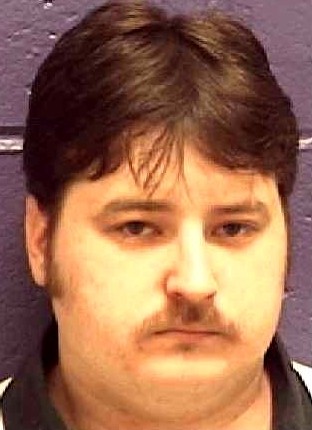
Gary Chad Thomason
Murderer Brian Kevin Rosenfeld
Murderer · USA · 1985
Brian Kevin Rosenfeld Brian Kevin Rosenfeld was sentenced to three concurrent l…
23 victims
Brian Kevin Rosenfeld
Murderer · USA · 1985
Brian Kevin Rosenfeld Brian Kevin Rosenfeld was sentenced to three concurrent l…
23 victims
 Russell Ellwood
Murderer · USA · 1991
Russell Ellwood was a former taxi driver. Authorities suspected him of killing…
20 victims
Russell Ellwood
Murderer · USA · 1991
Russell Ellwood was a former taxi driver. Authorities suspected him of killing…
20 victims
 Robert Martines Perez
Murderer · USA · 1994
Name: Robert Martines Perez · Other name used in proceedings: Robert Martinez P…
15 victims
Robert Martines Perez
Murderer · USA · 1994
Name: Robert Martines Perez · Other name used in proceedings: Robert Martinez P…
15 victims
 Billy Frank Vickers
Murderer · USA · 1993
Billy Frank Vickers Vickers was executed by lethal injection in Texas on Januar…
14 victims
Billy Frank Vickers
Murderer · USA · 1993
Billy Frank Vickers Vickers was executed by lethal injection in Texas on Januar…
14 victims
 Sheila LaBarre
Murderer · USA · 2005
Sheila LaBarre was convicted of first-degree murders of Kenneth Countie and Mic…
2 victims
Sheila LaBarre
Murderer · USA · 2005
Sheila LaBarre was convicted of first-degree murders of Kenneth Countie and Mic…
2 victims
 Steven Craig James
Murderer · USA · 1981
Steven Craig James was sentenced to death on November 23, 1982. Juan Maya picke…
1 victim
Steven Craig James
Murderer · USA · 1981
Steven Craig James was sentenced to death on November 23, 1982. Juan Maya picke…
1 victim
 Johann Otto Hoch
Serial killer · USA · 1890
Johann Otto Hoch (1855 - 1906) was the most famous and last-used alias of a Ger…
15 victims
Johann Otto Hoch
Serial killer · USA · 1890
Johann Otto Hoch (1855 - 1906) was the most famous and last-used alias of a Ger…
15 victims
 Jayanandan
Serial killer · India · 2003
Jayanandan, also known as “Ripper” Jayanandan, was a serial killer from Trichur…
7 victims
Jayanandan
Serial killer · India · 2003
Jayanandan, also known as “Ripper” Jayanandan, was a serial killer from Trichur…
7 victims
 Terance Valentine
Murderer · USA · 1988
Terance Valentine was prosecuted in the Thirteenth Judicial Circuit, Hillsborou…
1 victim
Terance Valentine
Murderer · USA · 1988
Terance Valentine was prosecuted in the Thirteenth Judicial Circuit, Hillsborou…
1 victim
- Gender
- male
- Country
- USA
- Location
- Floyd County, Georgia, USA
- Date of birth
- 1971
- Age at first offence
- 21
- Characteristics
- robbery, murder for hire
- Victim profile
- Jerry Self, 34
- Method of murder
- Shooting
- Date(s) of murder
- August 21, 1992
- Years active
- 1992
- Date of arrest
- Same day
- Status
-
Sentenced to death
Sentenced to death on October 7, 1996
Case identification
Gary Chad Thomason was convicted following a three-day bench trial and was sentenced to death.
Timeline
- August 21, 1992 — Jerry Self telephoned Floyd County police and reported that he had discovered an unfamiliar Oldsmobile Cutlass parked in the carport upon driving into the driveway of his home.
- August 21, 1992 — Floyd County officers found Jerry Self dead in his driveway; he had been shot several times and his truck was found in front of the house with the engine still running.
- August 21, 1992 — Another house on the same street, the Blaylock residence, was burglarized earlier that same day in a similar manner.
- May 3, 1993 — Thomason was re-indicted for malice murder, felony murder, two counts of burglary, possession of a firearm during the commission of a crime, and possession of a firearm by a convicted felon.
- May 2, 1995 — A jury found Thomason mentally competent to stand trial.
- September 27, 1996 — Thomason filed a waiver of his right to a jury trial on the indicted charges.
- September 30, 1996 — October 3, 1996 — Thomason was tried without a jury before the Hon. F. Larry Salmon of the Floyd County Superior Court.
- October 3, 1996 — The trial court found Thomason guilty of malice murder and felony murder (the felony murder conviction merged into the malice murder conviction by operation of law), two counts of burglary, possession of a firearm during the commission of a burglary, and possession of a firearm by a convicted felon.
- October 3, 1996 — Thomason was sentenced to death for the malice murder conviction, twenty years for each count of burglary, and five years for each of the two firearm convictions; each term of years to run consecutively.
- October 7, 1996 — Thomason was sentenced to death.
- November 1, 1996 — A notice of appeal was timely filed in the superior court.
- November 4, 1996 — The transcript was certified by the court reporter.
- November 13, 1996 — The appeal was docketed in this Court.
- March 10, 1997 — The appeal was orally argued.
- July 16, 1997 — The Supreme Court of Georgia decided the appeal.
- July 30, 1997 — Reconsideration was denied.
Background
The crimes occurred on August 21, 1992, and Thomason was originally indicted later that same year. That original indictment was nolle prossed.
The offence
Killing of Jerry Self
Shortly before noon on August 21, 1992, Floyd County police officers received an emergency telephone call from Jerry Self. Self reported that upon driving into the driveway of his home, he had discovered an unfamiliar Oldsmobile Cutlass parked in the carport. When Officers Corbin and Logan responded, they approached the Self residence and observed that as they came within 100 yards they saw and heard an automobile approaching them from the direction of the Self residence. As the two cars approached one another, the officers observed that the other car was a light brown 1978 or 1979 model Oldsmobile Cutlass, with a lighter brown top, traveling approximately thirty miles an hour and accelerating. The officers testified that, as the two cars passed, the driver looked directly at them and they observed the driver was a white male with brown curly hair wearing a black baseball cap.
After pulling into the driveway, the officers saw a body lying on the ground later identified as Self. Self had been shot several times and was dead when the officers arrived. Self’s truck was found in front of the house with the engine still running. The side window of the truck had been broken, and there was blood on the front seat.
Burglary of the Self residence and a similar burglary of the Blaylock residence
A window on the front of the Self residence had been broken, and the house had been burglarized. It was later discovered that earlier that same day, another house on the same street, the Blaylock residence, had been burglarized in a similar manner.
Among missing items from the Self residence following the burglary was a .357 magnum pistol, which sometimes was loaded with .38 caliber ammunition. Laboratory analyses determined that the blood stains on Thomason’s shirt matched Self’s blood.
Self died from three gunshot wounds, each made with a .38 caliber-type bullet.
Vehicle and items taken from residences
Local police were alerted to be on the lookout for the brown 1978 or 1979 Oldsmobile Cutlass described as “not as dark [brown] as the sheriff department’s cars,” with a lighter brown top, being driven by a white male. Shortly thereafter, a vehicle and driver matching that description were seen leaving a convenience store in nearby Calhoun.
After Thomason consented to a search of the Cutlass interior, Officer Gilbert observed crumpled currency on the car’s console that appeared to have fresh blood on it. After Thomason was handcuffed and placed in the back of Officer Gilbert’s patrol car, a sergeant from the Floyd County Police Department arrived and was shown blood stains on the currency and on Thomason’s shirt. The sergeant cut a piece of the blood-stained material off Thomason’s shirt tail and placed it in a plastic bag.
In a second pat-down conducted by the sergeant, the lighter in Thomason’s pocket was engraved with the murder victim’s name. The sergeant also discovered a ring and two gold chains in Thomason’s pocket, both later determined to have been taken in the Blaylock burglary.
Several items discovered in the Cutlass were identified as having been taken from the Self and Blaylock residences.
Investigation
Officers Corbin and Logan were identified as responding to Self’s emergency call. They observed the driver while their patrol car windows were rolled down because it was raining heavily.
The lookout generated by the Floyd County police and radioed descriptions were used to identify Thomason as matching the suspect vehicle and driver.
Arrest
Shortly after the lookout, City of Calhoun police officer Gilbert stopped the Cutlass being driven by appellant Thomason after following the vehicle for approximately five minutes. Thomason was asked to step out and was “patted down” by Officer Gilbert. The officer discovered a cigarette lighter in Thomason’s pocket, which he returned to Thomason. Officer Gilbert observed that Thomason’s clothing was soaking wet even though it had only just begun to rain very lightly in the Calhoun area, and that Thomason’s shirt appeared to have blood stains on it.
After Thomason consented to a search of the Cutlass, Officer Gilbert observed crumpled currency on the console that appeared to have fresh blood on it. Officer Gilbert then handcuffed Thomason and placed him in the back of Gilbert’s patrol car.
After approximately 45 minutes, Officers Logan and Corbin arrived and identified Thomason as the individual they had seen driving away from the Self residence. They also identified the Oldsmobile Cutlass as the car they had observed accelerating away from the crime scene.
Trial
Bench trial and convictions
Following a three-day bench trial, appellant Gary Chad Thomason was convicted of malice murder, burglary, and possession of a firearm by a felon during the commission of a burglary.
The trial court sentenced Thomason to death for the murder conviction, finding as statutory aggravating circumstances that the murder was committed during the commission of a burglary and for the purpose of obtaining money and things of monetary value.
Plea and waiver of jury trial
Thomason’s defense attorney had him plead guilty and waive a jury trial, leaving a judge to determine his punishment.
At the first appearance of counsel, the trial court was informed that Thomason intended to challenge his competency to stand trial and would be requesting that a special jury determine that issue.
At the first proceeding, Thomason’s arraignment was scheduled, and at the arraignment he objected that being required to enter a plea before the issue of his competency was resolved violated the rule set forth in Martin v. State. At the arraignment, Thomason did not enter a plea. Rather, at the trial court’s invitation, he opted to stand mute, and at the trial court’s direction, a not guilty plea was entered by the clerk of the court on Thomason’s behalf.
Motion to suppress and appellate issues
Motion to suppress evidence based on warrantless seizures and searches
Thomason argued that the trial court erred by denying his motion to suppress evidence gathered as a result of the State’s warrantless seizures and searches of him and his car. He challenged the legality of Officer Gilbert’s investigatory stop, asserted the subsequent search exceeded the bounds of such a stop, alleged his seizure was not based upon probable cause, and argued the police search of his person was unreasonable.
The Supreme Court affirmed the trial court’s denial of the motion to suppress. It found the initial stop was based on reasonable suspicion because Officer Gilbert knew detailed information about the suspect vehicle (color, manufacturer, model, and model year) and the driver (gender and race). It also found that the search of the Cutlass interior was valid because Thomason consented to the search; therefore probable cause or a warrant was not required. It further found that Thomason’s handcuffing and placement in the back of the patrol car was permissible because both Thomason and the car matched the description of the car and driver seen leaving the scene, providing probable cause to take custody. The Court also found the lighter and jewelry were seized as part of a search incident to lawful arrest, that blood evidence was taken from plain view and preserved as evidence, and that Thomason conceded a valid warrant was obtained before samples of his own blood were withdrawn.
Eyewitness identification
Thomason argued that the trial court erred in denying his motion to suppress Officers Corbin’s and Logan’s testimony identifying him as the individual they observed driving the Oldsmobile Cutlass away from the murder scene. He argued (1) conditions at the officers’ first sighting created a substantial likelihood of misidentification, and (2) unnecessarily suggestive procedures corrupted the officers’ identification after custody.
The Supreme Court affirmed the identifications. It held the officers’ “eye to eye” observation through open windows for three to five seconds, together with attention given to the driver as they approached the Self residence, supported reliability despite heavy rain and partially obscured vision. It also held the show-up identification after custody was reliable and not tainted by impermissibly suggestive procedures, rejecting the claim that the single statement “we’ve got him” improperly swayed the identification.
Unified Appeal Procedure (UAP) issues
Thomason argued his conviction must be reversed because the trial court failed to follow several procedures under the Unified Appeal Procedure. The Supreme Court found procedural errors occurred but held they caused no reversible error because Thomason suffered absolutely no harm.
The Court addressed claims including:
- failure to review section one of the UAP checklist at the first proceeding,
- failure to inquire about objections to counsel’s handling of the defense,
- failure at the motions hearing to review the UAP checklist with counsel and inquire about discussion of unraised issues,
- rulings that pre-trial motions were untimely for not being filed before arraignment.
The Court concluded the trial court’s actions accomplished the purpose of the UAP by ensuring legal issues were raised, considered on their merits, and ruled upon.
Other evidentiary and procedural issues
The Supreme Court rejected Thomason’s additional claims, including:
- admission of blood samples and chain of custody,
- refusal to sever four counts of the indictment relating to burglary of the Blaylock residence and possession of a firearm by a convicted felon,
- denial of a motion to quash the indictment,
- rejection of constitutional challenges to Georgia’s death penalty statute,
- denial of motions requesting daily transcripts for the defense counsel team,
- denial of motion for notice of intention to use evidence arguably subject to suppression,
- findings supporting the statutory aggravating circumstances and that the death penalty was not extreme or excessive and not disproportionate.
Sentencing
The trial court sentenced Thomason to death for the murder conviction and found statutory aggravating circumstances that the murder was committed during a burglary and for the purpose of obtaining money and things of monetary value.
At sentencing, the death sentence was imposed following a bench trial.
Appeals
The Supreme Court affirmed Thomason’s conviction and sentence.
Case citation and decision details
THOMASON v. THE STATE. S97P0285. (268 Ga. 298) (486 SE2d 861) (1997). The Court issued the decision July 16, 1997 and denied reconsideration July 30, 1997.
Concurrence and dissent
Justice Benham concurred in part and dissented in part. Justice Benham stated:
“Although I concur in the affirmance of Thomason's conviction for murder, I cannot concur in the affirmance of the death penalty imposed by the trial court following a trial without a jury. Contrary to the majority, I do not believe that a proportionality analysis supports affirmance of the sentence. We are required by OCGA 17-10-35 to conduct a review of the sentence in all death penalty cases, and specifically to consider "[w]hether the sentence of death is excessive or disproportionate to the penalty imposed in similar cases, considering both the crime and the defendant." OCGA 17-10-35 (c) (3). Because we are the only Georgia appellate court to review death penalty cases (Art. VI, Sec. VI, Par. III, Ga. Const. 1983) and because the issue is one of enormous gravity, this weighty responsibility must be approached with special care in every case. Exacerbating the risk of a faulty proportionality analysis is the doctrine of stare decisis: if we lower the standard in a single case, that case becomes precedent for easier and easier imposition of the most extreme punishment available in criminal jurisprudence. Bearing those considerations in mind, I have reviewed this case in the context of other murder convictions in which the conduct of the defendant was similar to that of Thomason in this case. It is evident from the facts set out in the majority opinion that Thomason was surprised in a burglary of the victim's home. Thus, there is evidence that the murder was committed in the course of a burglary and for the purpose of obtaining money and things of value. However, when considering this case in terms of proportionality, it is apparent that other defendants who have killed in the course of burglaries and other felonies, and whose crimes have thus met the same test for aggravating circumstances that Thomason's crime met, have not been subjected to our society's ultimate punishment: White v. State, 267 Ga. 523 (481 SE2d 804) (1997) , defendant convicted of felony murder, armed robbery, and aggravated assault (defendant and two others used assault rifles to rob and then shoot four men, two of whom died), sentenced to consecutive terms of life imprisonment for each count of felony murder, and twenty years for each remaining count to be served concurrently; Sterling v. State, 267 Ga. 209 (477 SE2d 807) (1996) , defendant convicted of malice murder, felony murder, aggravated assault, kidnapping and burglary (defendant and accomplice forced their way into house of drug users and demanded money from victims who were then taken into the woods and shot, one fatally in the mouth and the other in the face), sentenced to life for the murder, a consecutive life term for aggravated assault, and two twenty-year concurrent terms for the kidnapping and burglary convictions; LeMay v. State, 265 Ga. 73 (453 SE2d 737) (1995) , defendant found guilty of burglary, armed robbery, and murder (victim's home ransacked, several handguns taken as well as money and jewelry, and victim stabbed), received two life sentences for malice murder and armed robbery, and a consecutive twenty-year sentence for armed robbery (State sought the death penalty); Henry v. State, 265 Ga. 732 (462 SE2d 737) (1995) , defendant convicted of malice murder, armed robbery, and kidnapping with bodily injury (defendant robbed jewelry store, shot owner in the head), sentenced to life imprisonment without parole for the murder, and to consecutive life sentences for the armed robbery and kidnapping; Edwards v. State, 264 Ga. 615 (449 SE2d 516) (1994) , defendant found guilty of malice murder, armed robbery, and burglary (operator of a motel fatally stabbed one week after argument with defendant in which defendant threatened victim), sentenced to a life sentence for the murder, a consecutive life sentence for the armed robbery, and ten years for burglary; Brown v. State, 264 Ga. 803 (450 SE2d 821) (1994) , defendant convicted of malice murder, felony murder, attempted robbery, possession of a firearm during commission of crime, armed robbery, aggravated assault (defendant shot and killed taxicab driver during robbery), sentenced to life in prison for malice murder, life for each count of armed robbery, twenty years for each count of aggravated assault, ten years for armed robbery convictions, five years for each conviction for possession of a firearm during commission of crime; Howard v. State, 262 Ga. 784 (426 SE2d 365) (1993) , defendant convicted of felony murder, burglary, and armed robbery (victim shot when he returned unexpectedly while defendant and two other men were burglarizing victim's house), sentenced to two consecutive life sentences for felony murder and armed robbery convictions; Mitchell v. State, 261 Ga. 347 (405 SE2d 38) (1991) (reversed on other grounds), defendant convicted of malice murder and sentenced to life in prison (victim shot in chest with shotgun because defendant upset over victim's relationship with defendant's former girl friend), received a fifteen-year sentence for burglary, as well as fifteen years for aggravated assault. The conduct of the defendants in these cases was at least as culpable as Thomason's, yet they were punished by imprisonment. Thomason's conduct should be punished with similar severity. Although the majority opinion includes an appendix of cases offered to demonstrate that the penalty in this case was not disproportionate to that imposed in others, the cited cases do not serve that purpose. While all murders are horrid, the fact that proportionality analyses are undertaken shows that some murders are to be considered more horrid than others, especially those in which the murder is planned, or there is cruelty and torture beyond the fact of killing, or there are multiple victims. Those horrors are not present in this case. The evidence in this case points unquestionably to the fact that Thomason was surprised in a burglary of the victim's home, and suggests strongly that he killed the victim with the victim's own gun, stolen in the burglary. It is thus apparent that Thomason did not go to the victim's home for the purpose of committing a murder and that he did not engage in brutality and violence beyond that necessary to carry out his criminal purpose. By contrast, the cases cited in the majority opinion's appendix reflect either a fixed purpose to commit murder or a greater degree of gratuitous violence: Mobley v. State, 265 Ga. 292 (455 SE2d 61) (1995) , victim forced to kneel and shot execution style; Meders v. State, 261 Ga. 806 (411 SE2d 491) (1992) , victim shot in the chest before a demand for money was made and while he was opening the cash register, then shot again in the head after falling on the floor; Ford v. State, 257 Ga. 461 (360 SE2d 258) (1987) , victim whose relationship with defendant had gone sour (defendant told a friend before the shooting that he was going to "blow her brains out") shot three times, and her eleven-year-old niece shot in the head; Cargill v. State, 255 Ga. 616 (340 SE2d 891) (1986) , victims both lying on the floor and shot in the back of the head, one victim at a distance of less than two feet; Horton v. State, 249 Ga. 871 (295 SE2d 281) (1982) , victim killed and another shot at by defendant leaving scene of burglary; Amadeo v. State, 243 Ga. 627 (255 SE2d 718) (1976) , victim shot in chest after demand for money by defendant who had passed victim, then returned to single victim out for robbery; Bowden v. State, 239 Ga. 821 (238 SE2d 905) (1977) , one victim beaten so severely with a pellet gun as to make her unrecognizable and her brain visible from a large open wound behind her ear, then stabbed in chest with large butcher knife after death (elderly victim, also severely beaten with the same pellet gun, later died); Stephens v. State, 237 Ga. 259 (227 SE2d 261) (1976) , victim robbed, hit in the face and kicked, caught when he tried to escape, and shot by a pistol placed in his ear; Pulliam v. State, 236 Ga. 460 (224 SE2d 8) (1976) , cab driver shot in the back of the head during planned robbery-murder; Moore v. State, 233 Ga. 861 (213 SE2d 829) (1975) , victim murdered and robbed by defendant after arson-murder plan with victim's nephew failed. In all of these cases, there is some factor such as premeditation, gratuitous brutality, or multiple victims which sets the conduct of those defendants apart from Thomason's. The cases set out above, considered in context with Thomason's crime, persuade me that the imposition of the death penalty in this case is not proportionate to the penalty imposed in similar cases. The majority's affirmance of the sentence in this case lowers the standard to be applied to subsequent death penalty cases, and threatens to make routine the most serious penalty that can be imposed in this state. I must, therefore, dissent. Tamra P. Colston, District Attorney, Fred R. Simpson, Assistant District Attorney, Thurbert E. Baker, Attorney General, Susan V. Boleyn, Senior Assistant Attorney General, Paige R. Whitaker, Assistant Attorney General, for appellee.”>
Other details
Witnesses and officers
The Supreme Court’s discussion referenced:
- Officers Corbin and Logan (Floyd County police officers),
- Calhoun police officer Gilbert,
- a sergeant with the Floyd County Police Department.
Statements and quoted material
During the show-up identification discussion, the Court addressed the radioed communications and the statement:
- “we’ve got him”
Procedural history and filings
- No motion for new trial was filed.
- Thomason filed an ex parte motion seeking funds of between $17,000 and $20,000 to employ an expert in the field of DNA analysis, and between $18,000 and $24,000 to employ an expert forensic pathologist; the trial court unsealed the motion for funds, and later it continued the hearing ex parte after the State responded to the court’s inquiry about reasonable fees.
- Thomason filed motions for funds with which to hire a crime scene reconstructionist and an expert forensic psychologist, Dr. Cheatum; the Supreme Court found no abuse of discretion in the denial of the motions.
- The trial court granted Thomason $3,500 for an independent competency evaluation by Dr. Cheatum, and Dr. Cheatum conducted an independent evaluation; Thomason later sought an additional $25,000 for another psychological evaluation focused on his formative social and familial background, and the Supreme Court found that the absence of that second evaluation did not render the trial fundamentally unfair.
- The trial court ordered access to all of Thomason’s official records for purposes of presenting evidence at an ex parte hearing.
Defense and prosecution arguments at appellate level
- Bret J. Pangborn and Edwin Marger represented Thomason.
- Tamra P. Colston (District Attorney), Fred R. Simpson (Assistant District Attorney), Thurbert E. Baker (Attorney General), Susan V. Boleyn (Senior Assistant Attorney General), and Paige R. Whitaker (Assistant Attorney General) were for the appellee.
Notes
The Court’s notes included:
- The crimes occurred on August 21, 1992, and Thomason was originally indicted later that same year; the original indictment was nolle prossed.
- On May 3, 1993, Thomason was re-indicted for malice murder, felony murder, two counts of burglary, possession of a firearm during the commission of a crime, and possession of a firearm by a convicted felon.
- On May 2, 1995, a jury found Thomason mentally competent to stand trial.
- On September 27, 1996, Thomason filed a waiver of his right to a jury trial on the indicted charges.
- On September 30, 1996 through October 3, 1996, Thomason was tried without a jury before the Hon. F.
- On October 3, 1996, Thomason was found guilty of malice murder and felony murder (felony murder merged into malice murder by operation of law), two counts of burglary, possession of a firearm during the commission of a burglary, and possession of a firearm by a convicted felon.
- On October 3, 1996, Thomason was sentenced to death for the malice murder conviction, twenty years for each count of burglary, and five years for each of the two firearm convictions, each term of years to run consecutively.
- The transcript was certified November 4, 1996.
- Notice of appeal was filed in the superior court on November 1, 1996; the appeal was docketed on November 13, 1996; and it was orally argued on March 10, 1997.
Spotted an error, or have more information about this case?