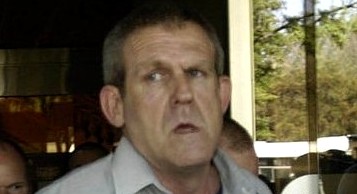
Bradley Murdoch
Murderer Carl Williams
Murderer · Australia · 2003
Carl Antony Williams (b. October 13, 1970) was an Australian convicted hitman a…
4 victims
Carl Williams
Murderer · Australia · 2003
Carl Antony Williams (b. October 13, 1970) was an Australian convicted hitman a…
4 victims
 Ashley Coulston
Murderer · Australia · 1992
Ashley Coulston was an Australian sailor and triple murderer who was serving th…
3 victims
Ashley Coulston
Murderer · Australia · 1992
Ashley Coulston was an Australian sailor and triple murderer who was serving th…
3 victims
 Bandali Debs
Murderer · Australia · 1997
Bandali Michael Debs (born 18 July 1953) was an Australian murderer. Debs was f…
3 victims
Bandali Debs
Murderer · Australia · 1997
Bandali Michael Debs (born 18 July 1953) was an Australian murderer. Debs was f…
3 victims
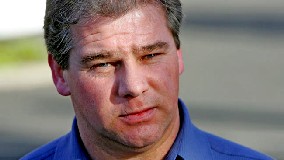 Robert Farquharson
Murderer · Australia · 2005
Robert Donald William Farquharson (born 1969) was an Australian father convicte…
3 victims
Robert Farquharson
Murderer · Australia · 2005
Robert Donald William Farquharson (born 1969) was an Australian father convicte…
3 victims
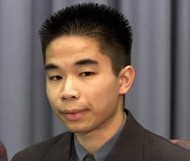 Sef Gonzales
Murderer · Australia · 2001
Sef Gonzales (born September 16, 1980) was an Australian man who was convicted…
3 victims
Sef Gonzales
Murderer · Australia · 2001
Sef Gonzales (born September 16, 1980) was an Australian man who was convicted…
3 victims
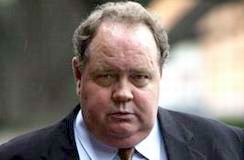 Bruce Burrell
Murderer · Australia · 1995
Bruce Allan Burrell was an Australian convicted double murderer who was sentenc…
2 victims
Bruce Burrell
Murderer · Australia · 1995
Bruce Allan Burrell was an Australian convicted double murderer who was sentenc…
2 victims
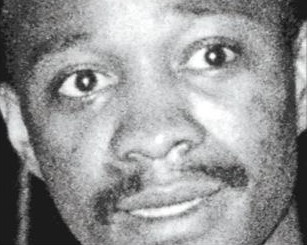 Derick Lynn Peterson
Murderer · USA · 1982
Derick Lynn Peterson was convicted of capital murder and sentenced to death in…
1 victim
Derick Lynn Peterson
Murderer · USA · 1982
Derick Lynn Peterson was convicted of capital murder and sentenced to death in…
1 victim
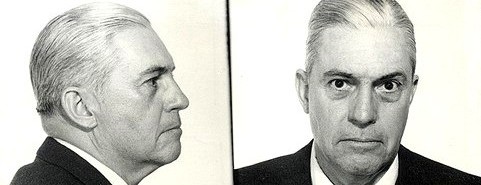 Leonard Ewin Scott
Murderer · USA · 1955
Leonard Ewin Scott was married to Evelyn Throsby Scott (née Mumper). They met a…
1 victim
Leonard Ewin Scott
Murderer · USA · 1955
Leonard Ewin Scott was married to Evelyn Throsby Scott (née Mumper). They met a…
1 victim
 James Dunham
Mass murderer · USA · 1896
James C. Dunham was a multiple murderer who killed his wife and members of his…
6 victims
James Dunham
Mass murderer · USA · 1896
James C. Dunham was a multiple murderer who killed his wife and members of his…
6 victims
- Gender
- male
- Country
- Australia
- Location
- Northern Territory , Australia
- Date of birth
- 1958
- Age at first offence
- 43
- Characteristics
- rape, drugs, serial rapist, the bodies were never found
- Victim profile
- Peter Falconio, 28 (British backpacker)
- Method of murder
- ???
- Date(s) of murder
- July 14, 2001
- Years active
- 2001
- Date of arrest
- —
- Status
-
Life imprisonment
Sentenced to life in prison (minimum 28 years) on December 13, 2005
Case record: Bradley John Murdoch
Status
Bradley John Murdoch was sentenced to life in prison (minimum 28 years) on December 13, 2005.
Background
Bradley John Murdoch (born 1958) was held in Alice Springs Correctional Centre in Alice Springs.
Murdoch had previously lived in Broome, Western Australia, and worked as a truck driver and mechanic.
Murdoch maintained his innocence.
Previous convictions
In 1980, aged 21, Murdoch received a suspended sentence after being convicted of causing death by dangerous driving.
In 1995, Murdoch served 15 months imprisonment for shooting at people who were celebrating at a football match in the remote Kimberley region of Western Australia.
The offence
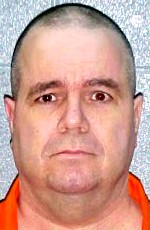
Bradley John Murdoch was convicted of the murder of British backpacker Peter Falconio in Australia.
The conviction related to the July 14, 2001 disappearance and murder of Peter Falconio on a remote stretch of road in outback Northern Territory.
Murdoch was also convicted of other assault-related charges on Falconio's girlfriend, Joanne Lees.
Falconio disappeared in the Australian outback in July 2001 while travelling with girlfriend Joanne Lees and was now presumed dead.
The location of Peter Falconio's body remained a mystery, and Falconio's body had never been found despite a massive police search.
Investigation
During his trial, Chief Justice Brian Ross Martin addressed jury approach to evidence, including the DNA and blood on the T-shirt and related issues.
The prosecution placed emphasis on Murdoch being in a service station near Alice Springs on the night of the alleged murder. The case also considered the distance between Alice Springs and Barrow Creek.
Aboriginal trackers questioned the old age of blood samples found at the crime site, the lack of any footprints or other traces of anyone having been in the bushes or in the area at all, except for Joanne Lees.
Joanne Lees described hiding under bushes while Murdoch tried to find her with a torch and a cattle dog, and the jury was instructed on evaluating the evidence.
Arrest
No specific arrest date was included in the provided material.
Trial
Court and charges
Murdoch's jury trial began on October 18, 2005 in the Darwin branch of the Northern Territory Supreme Court.
The trial concluded in May 2006 with the conviction of Murdoch on all counts.
Northern Territory Director of Public Prosecutions Rex Wild, QC, stated that there were three pieces of evidence linking Murdoch to the scene of the crime:
- Murdoch's DNA matched bloodstains on Joanne Lees's t-shirt.
- There was a smear of blood on the gearstick of the couple's car.
- DNA was located on tape used by the killer to bind her wrists.
Murdoch's defence team, Grant Algie and Mark Twiggs, disputed these assertions.
To cope with the demands of the trial and the huge media contingent covering the trial proceedings, the Darwin branch of the Northern Territory Supreme Court was refitted at a cost of AUD$900,000.
Defence closing argument
Grant Algie and Mark Twiggs, the lawyers representing the accused, Bradley John Murdoch, argued:
- "Peter Falconio faked his own death, and that when Peter Falconio and Joanne Lees stopped by the side of the road near Barrow Creek, it was to meet with a third man, of description unknown, in order to take Peter Falconio away, alive."
- Police planted evidence, with the assistance of Murdoch's former drug-running partner James Hepi, who had "both motive and opportunity" to frame Murdoch, after Murdoch had been central to Hepi's arrest.
- They pointed to the absence of blood at the crime scene, the mix-ups with DNA, the lack of a body, the sightings of Falconio in the days thereafter, inconsistencies in Lees's testimony, the poor police procedures in handling evidence, and the lack of a positive identification of Bradley John Murdoch.
- "The defence suggested that sometimes, from time to time, for reasons best known to themselves, people just disappear."
- "That sometimes they are found again, sometimes not."
Prosecution closing argument
Rex Wild QC stated that the prosecution case was:
- "Bradley John Murdoch saw Joanne Lees and Peter Falconio while in Alice Springs, and believed that they were following him."
- "So he drove behind them as they travelled along the Stuart Highway, and then stopped, so as to get rid of them, because he feared that they may be spying on him and may contact police in relation to his drug-running."
- "After stopping them, he panicked and killed Peter Falconio, making sure that there was no blood anywhere by making a shot directly to his head, then abducted Joanne Lees, binding her with cable ties, and putting her in the back of his vehicle."
- "After putting Lees in the back of his vehicle, Murdoch was trying to dispose of the body when Joanne Lees escaped into surrounding shrubland."
- "Murdoch then searched for her with his dog and a flashlight, but after five hours of searching, he gave up."
- "Murdoch then buried Falconio in an unknown place in the Central Australian outback, having wrapped Falconio's head with Lees's denim jacket so as to prevent any blood getting in the vehicle."
- "Then Murdoch panicked, and, rather than driving through the bush straight to Broome, he drove all the way back to Alice Springs, where he was spotted on closed circuit television at the truck stop, getting supplies before heading out to Broome, where he travelled non-stop at great speed, taking amphetamines to keep himself awake and alert."
- "Murdoch then altered his physical appearance as well as his vehicle's appearance so as to avoid detection, and immediately stopped running drugs because he feared that he might be linked to the murder."
Mr Wild suggested there was "no evidence whatsoever of any police corruption" and urged jurors to dismiss conspiracy suggestions as:
- "plucked out of thin air".
Mr Wild said all evidence pointed to one conclusion:
- "that Murdoch killed Falconio."
He said that although no body had been found yet, it "will be eventually" and that it may be "quite some time".
Mr Wild also stated that Joanne Lees should be expected to have mild discrepancies with Murdoch's appearance, such as the length and colour of his hair, not noticing his teeth, the description of his car and dog, and other inconsistencies, because:
- "Lees was under a lot of stress and pressure during the incident."
Mr Wild asked the jury to ignore sightings of Peter Falconio and dismiss them as inaccurate, highlighting discrepancies in stories of people who said to have seen him alive after the attack.
Mr Wild stated that:
- "Mr Wild stated that the DNA did match, and that there was no chance that it was not Murdoch's DNA and hence the jury must find him guilty."
- "Mr Wild said that Murdoch was a methodical killer, and that the crime was premeditated to "get rid of" someone, and suggested that he may have thought that Lees was travelling alone, since Falconio was asleep in the back when she drove by."
- "Mr Wild stated that the methodical actions to get rid of any evidence suggesting Murdoch committed the offense, as well as quickly getting away suggests the acts of someone with extreme premeditation, and that it was the work of an obsessive methodical person, a man just like Murdoch."
- "Mr Wild asked the jury to ignore coincidental evidence that seemed to suggest that Murdoch didn't do it, stating that he had ample time to change the evidence to fit the story, to later suggest that he didn't do it."
Chief Justice Brian Ross Martin’s summation
Chief Justice Brian Ross Martin instructed the jury, including:
"How you approach the evidence is a matter entirely for you. There are many issues that have been raised for your consideration. You may or may not find it necessary to resolve all the issues. You may or may not be able to resolve all of the issues. You must put aside the flamboyant suggestions of counsel that we do not need experts from the mother country to teach us colonials a thing or two,"
"Please put aside all the hyperbole and concentrate on the evidence before you. That's why you look at all the evidence, not just the experts. The question to be considered by you is whether you are satisfied the accused's blood came to be on the T-shirt in the course of attacking Miss Lees. Are you satisfied that the DNA came to be on the item because of contact in the course of the accused attacking Miss Lees? Or is it a reasonable possibility that the DNA came to be on the item through an innocent contact, or through some form of contamination either deliberate or accidental?"
He said that if the jury was satisfied of certain points, the Crown submission would establish murder:
"Ladies and gentlemen, if that's your view, if you are satisfied the Crown's submission is correct, and you are satisfied that the man who attacked Miss Lees killed Peter Falconio, then the Crown will have proved its case of murder,"
The judge instructed:
"You must not reason that because of those other activities, the accused is the type of person who is likely to have committed the offences charged. It provides the setting for the accused's travel and explains why he was on the road that weekend. If, from a consideration of all the other evidence, you are satisfied it was the accused and his vehicle at the truck stop, it will follow that you are satisfied that the accused has not been truthful with you and others."
Sentencing
Murdoch was sentenced to life imprisonment with a minimum non-parole period of 28 years.
Appeals
Appeal in the Supreme Court / Northern Territory Court of Criminal Appeal
On December 12, 2006, Murdoch appealed against his life sentence in the Supreme Court where his lawyers lodged eight grounds of appeal.
Murdoch claimed the evidence of Lees was tainted because she had seen a photograph of Murdoch on the internet before she was interviewed by police, and an article linking Murdoch to the murder.
The appeal was dismissed on January 10, 2007.
High Court of Australia
Murdoch applied for Special Leave to appeal to the High Court of Australia.
On 21 June 2007, the High Court refused to grant Special Leave.
Murdoch had lodged two appeals against his conviction, both were unsuccessful.
Outcome
Falconio’s body was never found.
Bradley John Murdoch was convicted of the murder of Falconio and assault-related charges on Joanne Lees.
Timeline
- July 14, 2001 — Peter Falconio disappeared in the Australian outback while travelling with Joanne Lees; Joanne Lees later described being abducted after hearing a gunshot.
- December 2004 — At the committal hearing, Joanne Lees told the court that her assailant tied her wrists, put a sack over her head, forced her into his ute, and she escaped and fled while hiding under bushes.
- October 18, 2005 — Murdoch’s jury trial began in the Darwin branch of the Northern Territory Supreme Court.
- September 2005 — Wolf Creek was shown at the Cannes Film Festival and shown on national release in the United Kingdom and Ireland on 16 September 2005.
- October 9, 2006 — Joanne Lees was interviewed on the Today programme on BBC Radio 4 by John Humphrys.
- December 12, 2006 — Murdoch appealed against his life sentence with eight grounds of appeal.
- January 10, 2007 — The appeal was dismissed.
- 21 June 2007 — The High Court refused special leave to appeal.
- mid August 2007 — Australian media speculated that Murdoch might reveal the whereabouts of Falconio’s remains.
Missing person or murder? (Joanne Lees account of events)
Joanne Lees reported that while travelling at night along the Stuart Highway near Barrow Creek (between Alice Springs and Tennant Creek) in the Northern Territory on July 14, 2001, the pair were stopped by a man waving for the couple to stop their car and indicating trouble with their car's exhaust.
Falconio got out of the van to help, and shortly afterwards Lees heard a gunshot. She believed that Falconio had been shot dead.
At the committal hearing in December 2004, Lees told the court:
- her assailant tied her wrists together,
- put a sack over her head,
- forced her into his ute,
- and she escaped and fled into the dark, hiding under bushes, while he tried to find her with a torch and a cattle dog.
She later identified Murdoch’s photograph as being the man who abducted her.
The DNA from the bloodstains on Lees' clothing matched Murdoch's DNA.
Falconio’s body was not found despite a massive police search.
Other details
Disputes and credibility issues raised at trial and pre-trial
Murdoch’s defence lawyers claimed police procedures were not followed correctly, Joanne Lees's testimony was inconsistent, and it was impossible for him to have committed the crime.
Lees incorrectly identified details of the vehicle Murdoch was driving and the breed of Murdoch's dog.
Lees admitted seeing an internet photograph and article linking Murdoch to the murder before she was interviewed by police.
At a pre-trial hearing, the defence determined that Lees had been having an affair, even though she denied this until confronted with evidence.
The material described many other contradicting details given by Lees in books written by three independent writers questioning Lees’s credibility.
Joanne Lees television/radio comments and payments
On October 9, 2006, Lees was interviewed on the Today programme on BBC Radio 4 by John Humphrys.
The material states that Murdoch proceeded to attack Lees for cashing in on the tragedy.
It also states that Lees had been paid:
- $125,000 AUD for an interview with Martin Bashir, and
- $650,000 AUD advance for a book titled 'No Turning Back".
The material stated Lees admitted to use of ecstasy and marijuana, and to having sex with another man, Nick Riley, in Sydney during their trip through Australia without Peter Falconio's knowledge.
Pre-trial and committal claims involving Red Rooster
During Murdoch's committal hearing, Lees mentioned that she and Falconio had stopped at a Red Rooster restaurant in Alice Springs.
Murdoch claimed to have stopped at the same restaurant to buy chicken for himself and his dog: "First thing in Alice, pulled into the Red Rooster... Chicken roll, box of nuggets for Jack...full chicken for the trip."
Grant Algie suggested Murdoch might have cut himself and inadvertently left blood at the restaurant which later transferred to Lees's shirt.
In April 2006, The Bulletin reported that Murdoch refused to be served chicken while incarcerated during the committal and trial, claiming he was allergic to it, and that he had a standing medical certificate at Berrimah Prison requesting that he never be served chicken.
It was also stated that when he was arrested in South Australia on charges later thrown out of court for the alleged rape of a woman and her daughter, part of his grocery shopping contained a roast chicken, showing he was prepared to buy chicken.
Murdoch’s statements about drug running, DNA, and alleged framing
The material said that Murdoch admitted to drug running and selling hydroponic cannabis to Aborigines around Broome but said he did not kill Mr Falconio, suggesting the Briton may still be alive.
It stated Murdoch said his DNA found on Ms Lees T-shirt was planted and: "Hepi (a former friend he fell out with over drugs) must have given them some of my clothes with blood on them where I cut myself."
It also said that police were reviewing the background of Murdoch for links to a string of unsolved murders and disappearances in Western Australia, and that his methodology and criminal profile were being scrutinised.
Reward considerations and James Hepi
The material states that authorities were still considering giving a $250,000 reward for information that led to Murdoch's conviction.
Police said previously that the only person being considered for the reward was Murdoch's former drugs partner, James Hepi, a convicted criminal living in South Australia.
It stated Hepi tipped off NT police that Murdoch was the killer in return for a suspended jail sentence on drug charges.
Media and film references
In early 2005, a film made in Australia, Wolf Creek was shown at the Cannes Film Festival and shown on national release in the United Kingdom and Ireland on 16 September 2005.
It was released in Australia on 3 November 2005, with an exception that in the Northern Territory it was released in January 2006 after the trial had finished, so as to not unduly influence the jury.
The material stated the film was advertised as being based on 'true stories', and the producers said it was not directly linked to any specific stories.
Media outlets suggested it was based on the 1989-1992 backpacker murders and the Peter Falconio disappearance, while the 1992-1999 Snowtown murders was also suggested.
In March 2007, Channel Ten in Australia showed an account from Joanne Lees' perspective, and it was shown on April 8, 2007 on ITV1 in the UK, and later in New Zealand on Tv1 on the 10th of June, 2007.
Books, interviews, and Murdoch’s statements to author Robin Bowles
The material stated newspapers released extracts from the only book to be published containing interviews conducted with Murdoch from inside prison.
It said Murdoch told author Robin Bowles he was innocent but prepared for a guilty verdict, and included the following quotations: "Why wouldn't I be found guilty? ... I've been paraded round the country like a prize catch on every media outlet you can be on for years," he said. "He said he planned on becoming a "fitness freak" in jail, and that life inside was easy." "No rent, three square meals a day, no tax, no parking fines." "You work a couple of hours then watch TV, read a bit ... I'll be a 63-year-old fitness freak and eligible for a pension when I get out."
It said Ms Bowles book Dead Centre would be published by Random House next week.
Court and police statements in the review material
Police were said to have released comments attributed to Sgt Graham Clifford: "Police have been aware of him (Murdoch) for a while," Sgt Clifford said. "It's normal police procedure to revisit (unsolved crimes) on a regular basis." "Maybe something has come out of this latest court case that will be of some interest."
Victim details: Peter Falconio
Peter Falconio was a British tourist who disappeared in the Australian outback in July 2001 while travelling with girlfriend Joanne Lees and was now presumed dead.
The material stated he came from Hepworth, Huddersfield, in West Yorkshire, was a graduate of Brighton University, and was 28 years old at the time of the disappearance.
It also stated that although Falconio's body had never been found, Murdoch was convicted of the murder on December 13, 2005.
Location custody note and speculation about transfer
The material stated that Murdoch did not enjoy the conditions of the Berrimah Prison, on the outskirts of Darwin, Australia and may reveal the location of Falconio's body in exchange for a transfer to a prison in Western Australia after appeals had been exhausted.
It stated Murdoch said he maintained his innocence and that although he would love a transfer back to where his terminally ill mother lived, he could not give information on something he knew nothing about.
Related proceedings and case identifiers
The material included: "Murdoch v The Queen [2007] NTCCA".
Spotted an error, or have more information about this case?