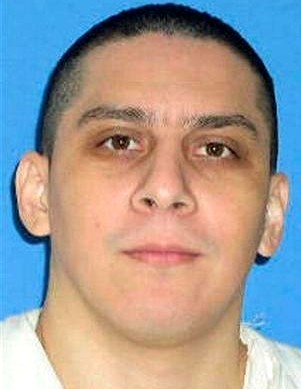
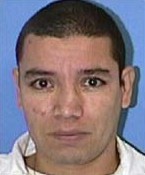
Jose Ernesto Medellin
Murderer Brian Kevin Rosenfeld
Murderer · USA · 1985
Brian Kevin Rosenfeld Brian Kevin Rosenfeld was sentenced to three concurrent l…
23 victims
Brian Kevin Rosenfeld
Murderer · USA · 1985
Brian Kevin Rosenfeld Brian Kevin Rosenfeld was sentenced to three concurrent l…
23 victims
 Russell Ellwood
Murderer · USA · 1991
Russell Ellwood was a former taxi driver. Authorities suspected him of killing…
20 victims
Russell Ellwood
Murderer · USA · 1991
Russell Ellwood was a former taxi driver. Authorities suspected him of killing…
20 victims
 Robert Martines Perez
Murderer · USA · 1994
Name: Robert Martines Perez · Other name used in proceedings: Robert Martinez P…
15 victims
Robert Martines Perez
Murderer · USA · 1994
Name: Robert Martines Perez · Other name used in proceedings: Robert Martinez P…
15 victims
 Billy Frank Vickers
Murderer · USA · 1993
Billy Frank Vickers Vickers was executed by lethal injection in Texas on Januar…
14 victims
Billy Frank Vickers
Murderer · USA · 1993
Billy Frank Vickers Vickers was executed by lethal injection in Texas on Januar…
14 victims
 Vladislav Chelakh
Mass murderer · Kazakhstan · 2012
May 27–28 (night) — Communication with Arkankergen border post was lost; the ba…
15 victims
Vladislav Chelakh
Mass murderer · Kazakhstan · 2012
May 27–28 (night) — Communication with Arkankergen border post was lost; the ba…
15 victims
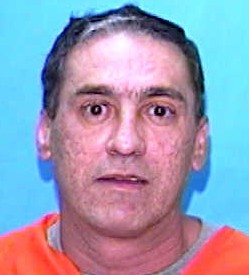 Guillermo Arbelaez
Murderer · USA · 1988
Guillermo Arbelaez was identified as the appellant in Florida Supreme Court Gui…
1 victim
Guillermo Arbelaez
Murderer · USA · 1988
Guillermo Arbelaez was identified as the appellant in Florida Supreme Court Gui…
1 victim
 Michael Miller
Murderer · USA · 1987
Michael Miller was sentenced to death in November 1988 in Walton County for the…
1 victim
Michael Miller
Murderer · USA · 1987
Michael Miller was sentenced to death in November 1988 in Walton County for the…
1 victim
 Mark Schwab
Murderer · USA · 1991
Mark Dean Schwab (born December 16, 1968; white; male; hair brown; blue eyes; 6…
1 victim
Mark Schwab
Murderer · USA · 1991
Mark Dean Schwab (born December 16, 1968; white; male; hair brown; blue eyes; 6…
1 victim
 Russell Lee Smith
Murderer · USA · 1975
February 6, 1947 — Russell Lee Smith was born in Bessemer, Alabama, United Stat…
2 victims
Russell Lee Smith
Murderer · USA · 1975
February 6, 1947 — Russell Lee Smith was born in Bessemer, Alabama, United Stat…
2 victims
 Joseph Medley
Murderer · USA · 1940
Joseph Medley was a male White person identified as being associated with robbe…
3 victims
Joseph Medley
Murderer · USA · 1940
Joseph Medley was a male White person identified as being associated with robbe…
3 victims
- Gender
- male
- Country
- USA
- Location
- Harris County, Texas, USA
- Date of birth
- March 4, 1975
- Age at first offence
- 18
- Characteristics
- rape, gang
- Victim profile
- Elizabeth Pena (female, 16) and Jennifer Ertman (female, 14)
- Method of murder
- Strangulation
- Date(s) of murder
- June 24, 1993
- Years active
- 1993
- Date of arrest
- —
- Status
-
Executed
Executed by lethal injection in Texas on August 5, 2008
Case record: Jose Ernesto Medellin
Timeline
- September 23, 1993 — Jose Ernesto Medellin was indicted in Harris County for murdering Elizabeth Pena during the course of committing kidnapping, robbery, and aggravated sexual assault.
- September 16, 1994 — Medellin was found guilty by a jury.
- October 11, 1994 — Following a separate punishment hearing, Medellin was sentenced to death.
- March 26, 1998 — Medellin filed an application for a state writ of habeas corpus.
- October 3, 2001 — The Texas Court of Criminal Appeals denied writ.
- November 28, 2001 — Medellin filed a federal petition for writ of habeas corpus.
- June 25, 2003 — The federal district court dismissed Medellin’s federal habeas petition.
- October 24, 2003 — Medellin requested permission to appeal from the 5th U.S. Circuit Court of Appeals.
- May 20, 2004 — The Fifth Circuit Court denied Medellin’ request to appeal.
- August 18, 2004 — Medellin petitioned the U.S. Supreme Court for writ of certiorari.
- May 23, 2005 — The Supreme Court dismissed the writ as improvidently granted.
- March 24, 2005 — Medellin filed a second state application for writ of habeas corpus.
- November 15, 2006 — The Texas Court of Criminal Appeals dismissed Medellin’s application.
- November 16, 2006 — Medellin filed a second federal petition for writ of habeas corpus.
- January 16, 2007 — Medellin petitioned the U.S. Supreme Court for a writ of certiorari.
- April 30, 2007 — The United States Supreme Court grants writ of certiorari.
- March 25, 2008 — The Supreme Court affirmed the Court of Criminal Appeals.
- July 22, 2008 — U.S. District court dismissed Medellin’s second federal habeas petition.
- August 5, 2008 — Medellin was executed by lethal injection in Texas.
Background
Jose Ernesto Medellin was a Mexican national who spent most of his life in the United States. He was born in Nuevo Laredo, Tamaulipas.
Medellin was 33 at the time of execution.
He executed for rape in Texas on August 5, 2008. The execution occurred at 9:57 p.m., after a lethal injection that began at 9:48 p.m. and occurred nearly four hours after his scheduled 6 p.m. execution.
Medellin’s final statement included an apology and messages to victims’ family and personal witnesses: “I’m sorry that my actions brought you pain. I hope this brings the closure to what you seek,” he said. “Don’t ever hate them for what they do. Never harbor hate.” He then looked toward the witness room in which his friend, Sandra Crisp, was watching, crying softly, and smiled. “I love you,” he said. During another account of his statement, it was reported that Medellin said at approximately 9:48 p.m.: “I am sorry my actions caused pain, and I hope this bring the closure you seek,” Medellin said Tuesday night at approximately 9:48 p.m. “Never harbor hate — I love you.” He had no last meal request, which was described as a ritual of U.S. executions.
His case gained international attention regarding alleged denial of access to the Mexican Consulate following his arrest and alleged violations of a treaty related to consular access rights.
The offence
On the night of June 24, 1993, 14-year-old Jennifer Ertman and 16-year-old Elizabeth Pena were walking home and encountered a gang initiation.
The gang members present were Jose Medellin, Peter Cantu, Roman Sandoval, Efrain Perez, Raul Villareal, and Sean O’Brien. Roman’s brother, Frank, and Medellin’s 14–year-old brother, Venancio, tagged along. The initiation involved fighting each member of the gang for a five- to ten- minute period. As the girls passed Medellin, he attempted to engage Elizabeth in conversation. When Elizabeth tried to run from Medellin, he grabbed her and threw her to the ground. Elizabeth screamed for Jennifer to help her. Jennifer ran back to help, but Peter and Sean grabbed her and threw her down as well.
The assault was described as a brutal gang rape of both girls by the gang members. After the assault, Medellin, Raul, Efrain, and Peter met at Peter’s house where he lived with his brother and sister-in-law, Joe and Christina Cantu, to brag about their exploits.
Medellin told Joe and Christina that he sexually assaulted both girls, and he related that he punched one of the girls because she had started screaming after he grabbed her. Medellin said that the girls had been killed so they could not identify their attackers. He elaborated that it would have been easier with a gun, but because they did not have one at the scene, he took off one of his shoelaces and strangled at least one of the girls with it. He also said that he put his foot on her throat because she would not die.
Medellin’s statements to Christina included a boastful claim that they “had fun” and that their exploits would be seen on the television news. Christina noticed that Raul was bleeding and that Efrain had blood on his shirt, and she asked what had occurred. Medellin responded that they “had fun” and that their exploits would be seen on the television news.
After the assault and subsequent killing, Peter joined the group shortly thereafter and began to divide up the money and jewelry that had been taken from the two girls. Peter gave Medellin a ring with an “E” design on it so that he could give it to his girlfriend, Esther.
A separate account described the gang rape and murders as including strangulation with a belt and shoelace, and it stated that the girls were raped and strangled after they stumbled into a drunken gang initiation rite while cutting through the park to get home before their curfew.
Investigation
By the time bodies were discovered, they were so badly decomposed that dental records were required to identify them. However, enough tissue remained for the medical examiner to determine that each girl had died of a trauma to the neck consistent with strangulation.
A tip from a gang member’s brother led authorities to the bodies and then to the suspects. Four days after the crime, a tip from a gang member’s brother led authorities to the bodies, then to the suspects. Another account described the break in solving the case as coming from a call in which a person identifying himself as “Gonzalez” told the Crimestoppers Tips number that the missing girls’ bodies could be found near T.C. Jester Park at White Oak bayou, and that a police helicopter search was later directed across the bayou to where the bodies were found.
Arrest
Eventually, all of the individuals who participated in the rapes and murders were arrested.
After Medellin was arrested, he gave a written and tape-recorded statement, the latter of which was never offered into evidence at trial.
In the written statement, Medellin admitted to having oral sex with Elizabeth, but commented that he only peripherally participated in her murder.
Trial
Medellin was tried for capital murder in Harris County, Texas.
Medellin was found guilty by a jury on September 16, 1994.
The trial included a separate punishment hearing, after which Medellin was sentenced to death on October 11, 1994.
A Fifth Circuit opinion excerpted included discussion of the sentencing stage and a finding that the jury found that Medellin posed a future danger, one of the special findings required for imposition of a death sentence in Texas.
A portion of the trial evidence described that Medellin was convicted of Pena’s murder, and that the other aspects of the gang conduct included rape and killings of both girls.
Sentencing
After a separate punishment hearing, Medellin was sentenced to death.
Appeals
State habeas corpus
- Medellin filed an application for a state writ of habeas corpus on March 26, 1998.
- The Texas Court of Criminal Appeals denied writ on October 3, 2001.
- Medellin filed a second state application for writ of habeas corpus on March 24, 2005.
- The Texas Court of Criminal Appeals dismissed Medellin’s application on November 15, 2006.
Federal habeas corpus
- Medellin filed a federal petition for writ of habeas corpus on November 28, 2001.
- The federal district court dismissed Medellin’s federal habeas petition on June 25, 2003.
- Medellin requested permission to appeal from the 5th U.S. Circuit Court of Appeals on October 24, 2003.
- The Fifth Circuit Court denied Medellin’ request to appeal on May 20, 2004.
- Medellin petitioned the U.S. Supreme Court for writ of certiorari on August 18, 2004.
- The Supreme Court dismissed the writ as improvidently granted on May 23, 2005.
- Medellin filed a second federal petition for writ of habeas corpus on November 16, 2006.
- The U.S. Supreme Court granted certiorari on April 30, 2007.
- The Supreme Court affirmed the Court of Criminal Appeals on March 25, 2008.
- The U.S. District court dismissed Medellin’s second federal habeas petition on July 22, 2008.
U.S. Supreme Court
The U.S. Supreme Court dismissed one petition as improvidently granted and later granted certiorari and affirmed the Court of Criminal Appeals.
A Reuters account described that Mexico sued the U.S. government in the International Court of Justice and that a World Court ordered the U.S. government to take all measures necessary to halt upcoming executions of five Mexicans including Medellin’s on the grounds that they had been deprived of their right to consular services after their arrests. It stated that Texas continued with the scheduled execution despite the order for a stay.
In a related procedural dispute discussed in the material, it was stated that on July 17, 2008, Robert Black, spokesman for Texas Governor Rick Perry, said: “The world court has no standing in Texas and Texas is not bound by a ruling or edict from a foreign court. It is easy to get caught up in discussions of international law and justice and treaties. It's very important to remember that these individuals are on death row for killing our citizens.”
Outcome
Medellin was executed by lethal injection in Texas on August 5, 2008.
According to a account, the execution was conducted after the U.S. Supreme Court dismissed the request for a stay of execution. Medellin was pronounced dead at 9:57 p.m.
Other details
Prior criminal history (weapons charge)
Medellin was referred for a weapons charge as a juvenile in 1992. Later that same year, Medellin was arrested and charged with the offense of carrying a weapon.
Other individuals mentioned
Other persons involved or referenced in the case included:
- Peter Cantu, who was part of the gang members present and who was later described as remaining on death row.
- Roman Sandoval and Efrain Perez, who were part of the gang members present.
- Raul Villareal, who was part of the gang members present.
- Sean O’Brien, who was part of the gang members present.
- Frank Sandoval, who tagged along but was described as Roman’s brother and present.
- Venancio Medellin, who was Medellin’s 14-year-old brother who tagged along.
- Joe and Christina Cantu, who were present at Peter’s house.
- Esther, Medellin’s girlfriend, to whom Medellin intended to give a ring.
The material described outcomes for other participants in the crime:
- Derrick O’Brien was put to death in July 2006.
- Gang leader Peter Cantu remained on death row.
- Two other individuals, 17 at the time of the crime, had their death sentences commuted to life in prison.
- The juvenile Venancio Medellin was described as pleading guilty to his charge and receiving a sentence that was reviewed when he turned 18, after which he was sent to serve the remainder in prison.
- The material also described that a juvenile who raped Jennifer was later sentenced to 40 years for aggravated sexual assault, described as the maximum sentence for a juvenile.
Additional procedural and legal details
The material included a discussion of Medellin’s Vienna Convention claim, including that it was procedurally defaulted in federal habeas review and that the Vienna Convention did not confer an individually enforceable right as interpreted by the court.
The material also included a discussion of a Brady claim related to exculpatory information, including references to Joe Cantu and Christina Cantu, and it discussed the court’s assessment that the claim lacked materiality in light of overwhelming evidence of Medellin’s guilt.
Final apologies (verbatim)
Medellin apologized for his crime in his final statement. The material included the following verbatim lines attributed to him: I hope this brings the closure to what you seek,” Never harbor hate.” “I love you,” “I am sorry my actions caused pain, and I hope this bring the closure you seek,” “Never harbor hate — I love you.”
Spotted an error, or have more information about this case?