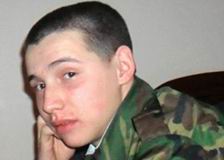
Vladislav Chelakh
Mass murderer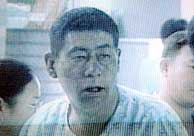 Kim Dae-Han
Mass murderer · South Korea · 2003
Name: Kim Dae-Han · Age: 56 · Occupation/background: He was an unemployed forme…
198 victims
Kim Dae-Han
Mass murderer · South Korea · 2003
Name: Kim Dae-Han · Age: 56 · Occupation/background: He was an unemployed forme…
198 victims
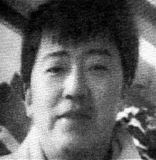 Zhang Pilin
Mass murderer · China · 2002
Zhang Pilin (张丕林) died in the plane crash of China Northern Airlines Flight 613…
111 victims
Zhang Pilin
Mass murderer · China · 2002
Zhang Pilin (张丕林) died in the plane crash of China Northern Airlines Flight 613…
111 victims
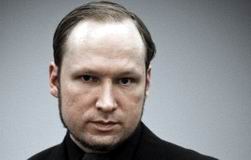 Anders Behring Breivik
Mass murderer · Norway · 2011
Anders Behring Breivik (born 13 February 1979) was the perpetrator of the 2011…
77 victims
Anders Behring Breivik
Mass murderer · Norway · 2011
Anders Behring Breivik (born 13 February 1979) was the perpetrator of the 2011…
77 victims
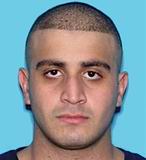 Omar Mateen
Mass murderer · USA · 2016
Omar Mir Seddique Mateen was an American mass murderer who killed 49 people and…
49 victims
Omar Mateen
Mass murderer · USA · 2016
Omar Mir Seddique Mateen was an American mass murderer who killed 49 people and…
49 victims
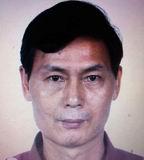 Chen Shuizong
Mass murderer · China · 2013
Chen Shuizong (simplified Chinese: 陈水总; traditional Chinese: 陳水總; pinyin: Chén…
46 victims
Chen Shuizong
Mass murderer · China · 2013
Chen Shuizong (simplified Chinese: 陈水总; traditional Chinese: 陳水總; pinyin: Chén…
46 victims
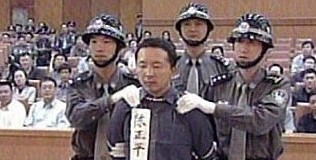 Cheng Zhengping
Mass murderer · China · 2002
Cheng Zhengping was executed on October 13, 2002. Cheng Zhengping confessed to…
42 victims
Cheng Zhengping
Mass murderer · China · 2002
Cheng Zhengping was executed on October 13, 2002. Cheng Zhengping confessed to…
42 victims
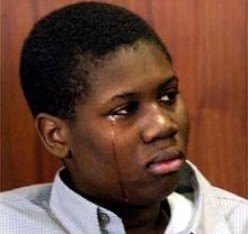 Lionel Alexander Tate
Homicide · USA · 1999
Lionel Alexander Tate was born on January 30, 1987. He was described as the you…
1 victim
Lionel Alexander Tate
Homicide · USA · 1999
Lionel Alexander Tate was born on January 30, 1987. He was described as the you…
1 victim
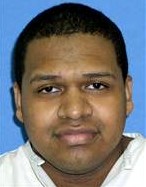 Carlton Akee Turner
Murderer · USA · 1998
Carlton Akee Turner was a Black male who was 19 years old on August 8, 1998 whe…
2 victims
Carlton Akee Turner
Murderer · USA · 1998
Carlton Akee Turner was a Black male who was 19 years old on August 8, 1998 whe…
2 victims
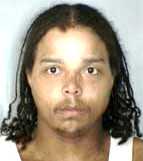 James Cooke
Murderer · USA · 2005
James Cooke (James E. Cooke, Jr.; James Edward Cooke) James E. Cooke, Jr. was b…
1 victim
James Cooke
Murderer · USA · 2005
James Cooke (James E. Cooke, Jr.; James Edward Cooke) James E. Cooke, Jr. was b…
1 victim
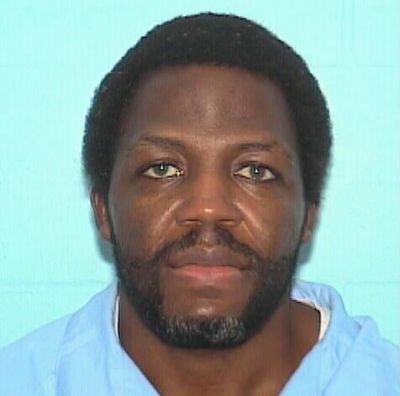 Hubert Geralds
Serial killer · USA · 1994
Hubert Geralds Jr. was mentally retarded and was described as having a sexual c…
5 victims
Hubert Geralds
Serial killer · USA · 1994
Hubert Geralds Jr. was mentally retarded and was described as having a sexual c…
5 victims
 Lindsay Haugen
Murderer · USA · 2015
Lindsay April Haugen was an Army veteran. At the time of the killing, she was a…
1 victim
Lindsay Haugen
Murderer · USA · 2015
Lindsay April Haugen was an Army veteran. At the time of the killing, she was a…
1 victim
- Gender
- male
- Country
- Kazakhstan
- Location
- Arqanqergen , Kazakhstan
- Date of birth
- 1992
- Age at first offence
- 20
- Characteristics
- former mental patient, police officer
- Victim profile
- 14 soldiers and a huntsman
- Method of murder
- Shooting
- Date(s) of murder
- May 27/28, 2012
- Years active
- 2012
- Date of arrest
- June 5, 2012
- Status
-
Life imprisonment
Sentenced to life in prison on December 11, 2012
Timeline
- May 27–28 (night) — Communication with Arkankergen border post was lost; the barracks were burned.
- May 28 — Police found burned quarters and 15 corpses (14 soldiers and a huntsman) at the Arkankergen border post.
- May 30 — A May 30 border post massacre was described as involving 14 border guards and one civilian.
- June 4 — Vladislav Chelakh returned to the burned border post and saw investigators.
- June 5 — Vladislav Chelakh was detained in possession of his commander's weapon.
- June 7, 2012 — Vladislav Chelakh confessed to killing all 15 victims; locals suspected he was forced to take the blame.
- December 11, 2012 — The Inter-District Military Court for Criminal Cases found Vladislav Chelakh guilty and sentenced him to life imprisonment at a maximum security penal colony.
- February (year not specified) — An appellate court upheld Vladislav Chelakh’s life sentence.
- June 1, 2013 — A report said a Kazakhstani military court upheld Chelakh’s life sentence.
Background
Vladislav Chelakh was a former border guard and was described as a 19-year-old soldier at the Arkankergen border post on the Kazakhstan–Chinese border. Arkankergen (Kazakh: Арқанкерген) was identified as a border post on the Kazakhstan–Chinese border.
The offence
At the Arkankergen border post, 15 people were killed: 14 soldiers and a huntsman. The barracks were burned, and all bodies were burnt but were subsequently identified.
A marble slab with 14 names was described as being placed at the site, and the same memorial was described as planned to be opened in Usharal.
Investigation
On May 28, communication with the Arkankergen border post was lost. After police arrived, they found burned quarters and 15 corpses (14 soldiers and a huntsman). The body of a hunter was found at a house nearby.
Investigators considered several versions, including a fight between the soldiers (with the note that none of them had a trace of alcohol in their blood), an attack by religious extremists, an assault by smugglers, and even extraterrestrial forces. The main version was described as bullying. It was also said that Chelakh was the only ethnic Russian on the border post, which investigators said could have made him vulnerable to hazing.
Kazakhstan’s President Nursultan Abishuly Nazarbayev described the incident as a terrorist attack and set up a special commission to investigate it. He later declared a day of national mourning.
The head of the notorious border post, Alexey Fomin, was arrested for having failed to report on the suspicious silence at the post from May 28–30.
Investigators are considering several versions, including a fight between the soldiers (although none of them had a trace of alcohol in their blood), an attack by religious extremists, an assault by smugglers, and even extraterrestial forces.
“The main version, however, is bullying.”
Arrest
Vladislav Chelakh was detained several days after the bodies of fourteen border guards and a local huntsman were found in burnt-out border post barracks, which had initially been thought to have been destroyed by an armed attack or an argument between the soldiers.
Vladislav Chelakh was arrested in possession of his commander’s weapon on June 5.
Chelakh returned to the burned out border post on June 4, where he saw investigators; he was reportedly in a deep stupor and could not say a word.
Confessions and denial
Initially, Vladislav Chelakh confessed to murdering his colleagues and the huntsman, but later denied his testimony. He later claimed that he testified under pressure.
A report said Chelakh confessed to killing all 15 victims (14 border guards and one civilian). Locals suspected Chelakh was forced to take the blame by special services to cover up the real culprits. A news presenter at a local channel quit after refusing to read “false” news about the confessions.
Chelakh said:
“He had shot all the soldiers and the local hunter, put their bodies into beds and then set fire to the barracks. Then he said he went up into the mountains, taking civilian clothes and a small sum of money with him.”
Chelakh refused to comment despite possibly facing a life term if found guilty.
Trial
The Inter-District Military Court for Criminal Cases found Vladislav Chelakh guilty of murdering 15 people at the Arkankergen border post in Kazakhstan and sentenced him to life imprisonment at a maximum security penal colony.
Chelakh was accused of murder, theft, illegally obtaining and distributing of state secrets; embezzlement or extortion of weapons, ammo, explosive devices; illegal acquisition, transfer, sale, storage, transfer or carrying of weapons and explosive devices; intentional destruction or damaging of military equipment; desertion; and violation of the housing’s inviolability.
Chelakh was described as being the sole survivor before he was detained.
Chelakh was described as inconsolable in the courtroom when the verdict was handed down.
His mother, Svetlana Vashchenko, vowed to appeal his sentence. She said she would go to the International Criminal Court to probe the massacre since she believed her son was not guilty.
“The lawyers refuse to defend my son and those who agree charge $2,000 a month, I’ve got relatives in Belgium…they will help to collect documents to appeal to the International Court,” Svetlana Vashchenko said.
“Mother’s heart does not believe that my son is dead. I am going there to pay tribute to those guys who my son served with. My son is alive and I am still waiting for him to come,” Rabiga Kadyrgaliyeva said.
A commander of staff of the military unit 2484 of Border Guard Service, Maksim Gordienko, was quoted describing contract servicemen and their experience serving in mountaneous places.
“They have 3 or 5 year contracts. They are experienced and know all nuances of serving, particularly, in mountaneous places. Therefore, only servicemen under contract are sent to outposts,” Maksim Gordienko said.
A private named Sergei Panasyuk said:
“When they told me I was assigned to Usharal, my parents were frightened at first. You know the case with Vladislav Chelakh. I felt no fear when heard where I was going, on the contrary, I was happy to serve in border troops,” Private Sergei Panasyuk said.
Sentencing
On December 11, 2012, Vladislav Chelakh was sentenced to life imprisonment at a maximum security penal colony.
The court also partially upheld the lawsuits filed by the victims to recover over $218,000 in material and moral damages from the convict.
Appeals
A report said that a Kazakhstani military court upheld the life sentence of convicted mass murder Vladislav Chelakh.
An appellate court also upheld Chelakh’s sentence in February (year not specified).
“Chelakh would seek clemency from President Nursultan Nazarbayev after exhausting all his appeals,” Defence attorney Serik Sarsenov said.
Outcome
Vladislav Chelakh remained convicted of murdering 14 colleagues and a forest ranger at the Gornyi border outpost in May 2012. A life sentence upheld report was dated June 1, 2013.
Aftermath
Usharal was described as preparing for commemorative ceremonials for the relatives of those slaughtered at the border post. It was described that relatives of the murdered border guards would be flown to Usharal from Almaty by a military plane, and that Svetlana Vashchenko was coming too.
A new squad was described as being formed at the border post, consisting of contract servicemen only. It was described that they chose not to restore the old burnt barracks and instead built a brand new post nearby. Soldiers tried to avoid going to the burnt site because everything there reminded them of the tragedy.
Other details
Victims
The victims list included the following names, birth years, and ranks:
- Kereev Altynbek Kutjanuly (1984), captain
- Aqyshov Yerlan Yergaliuly (1988), sergeant
- Aqylbayev Rustem Bagdatuly (1991), soldier
- Sersembayev Talgat Amangeldiuly (1984), soldier
- Aganas Qambar Asqaruly (1991), soldier
- Emirgaliyev Bekzat Abatuly (1989), soldier
- Balgabayev Daniyar Garifouly (1992), soldier
- Iliyasov Janat Qatuly (1992), soldier
- Imenov Meyirhan Sagyndyquly (1992), soldier
- Maqsatov Eli Izturganuly (1992), soldier
- Mukashev Nurlanbek Quatbekuly (1991), soldier
- Rey Denis Viktorovich (1993), soldier
- Sagyngaliyev jenis Deuletuly (1990), soldier
- Usipaliyev Nurjas Duysembauly (1991), soldier
A huntsman was listed as Kim Ruslan Nikolayevich (1964), huntsman.
Prison and court details
Chelakh was convicted in December and sentenced on December 11, 2012. He was sentenced to life imprisonment at a maximum security penal colony. The appellate court upheld the sentence in February (year not specified). A Kazakhstani military court upheld the life sentence in June 2013, including a report dated June 1, 2013.
Spotted an error, or have more information about this case?