
Floyd Allen Medlock
Murderer Brian Kevin Rosenfeld
Murderer · USA · 1985
Brian Kevin Rosenfeld Brian Kevin Rosenfeld was sentenced to three concurrent l…
23 victims
Brian Kevin Rosenfeld
Murderer · USA · 1985
Brian Kevin Rosenfeld Brian Kevin Rosenfeld was sentenced to three concurrent l…
23 victims
 Yahweh ben Yahweh
Murderer · USA · 1980
Yahweh ben Yahweh was born and legally named Hulon Mitchell Jr. (October 27, 19…
23 victims
Yahweh ben Yahweh
Murderer · USA · 1980
Yahweh ben Yahweh was born and legally named Hulon Mitchell Jr. (October 27, 19…
23 victims
 Russell Ellwood
Murderer · USA · 1991
Russell Ellwood was a former taxi driver. Authorities suspected him of killing…
20 victims
Russell Ellwood
Murderer · USA · 1991
Russell Ellwood was a former taxi driver. Authorities suspected him of killing…
20 victims
 Robert Martines Perez
Murderer · USA · 1994
Name: Robert Martines Perez · Other name used in proceedings: Robert Martinez P…
15 victims
Robert Martines Perez
Murderer · USA · 1994
Name: Robert Martines Perez · Other name used in proceedings: Robert Martinez P…
15 victims
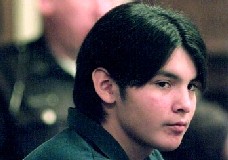 Omer Ninham
Homicide · USA · 1998
Omer Ninham was sentenced to life in prison without the possibility of parole o…
1 victim
Omer Ninham
Homicide · USA · 1998
Omer Ninham was sentenced to life in prison without the possibility of parole o…
1 victim
 Dennis Delmar Lincoln
Mass murderer · USA · 2002
Dennis Delmar Lincoln was sentenced to life in prison on May 10, 2003. Marco Pe…
5 victims
Dennis Delmar Lincoln
Mass murderer · USA · 2002
Dennis Delmar Lincoln was sentenced to life in prison on May 10, 2003. Marco Pe…
5 victims
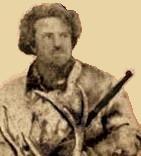 Walter Earl Durand
Spree killer · USA · 1939
Walter Earl Durand (1913-1939) was an only son of Walter W. and Effie Durand. H…
5 victims
Walter Earl Durand
Spree killer · USA · 1939
Walter Earl Durand (1913-1939) was an only son of Walter W. and Effie Durand. H…
5 victims
 Willa Blanc
Murderer · USA · 2009
Willa Blanc was convicted after pleading guilty in a case involving the kidnapp…
1 victim
Willa Blanc
Murderer · USA · 2009
Willa Blanc was convicted after pleading guilty in a case involving the kidnapp…
1 victim
 Robert Bierenbaum
Murderer · USA · 1985
Robert Bierenbaum was a plastic surgeon who was convicted in October 2000 of mu…
1 victim
Robert Bierenbaum
Murderer · USA · 1985
Robert Bierenbaum was a plastic surgeon who was convicted in October 2000 of mu…
1 victim
- Gender
- male
- Country
- USA
- Location
- Canadian County, Oklahoma, USA
- Date of birth
- October 9, 1970
- Age at first offence
- 20
- Characteristics
- child abuse, rape, torture
- Victim profile
- Katherine Ann Busch (female, 7)
- Method of murder
- St abbing with knife
- Date(s) of murder
- December 19, 1990
- Years active
- 1990
- Date of arrest
- Same day (surrenders)
- Status
-
Executed
Executed by lethal injection in Oklahoma on January 16, 2001
Overview
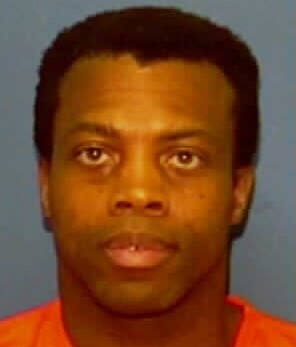
Floyd Allen Medlock was executed by lethal injection in Oklahoma on January 16, 2001. He had been sentenced to death for the February 19, 1990, first-degree murder of 7-year-old Katherine Ann Busch.
Background
Medlock had a history of mental illness presented at sentencing. Therapists testified that Medlock suffered from a split personality, and expert testimony described an alternate personality: a violent twelve-year-old named “Charley,” who had been in control at the time of the murder.
Katherine Ann Busch was 7 years old. Her body was found early the next morning in a dumpster behind a shopping center near the Woodoaks Apartments in Yukon, where she lived with her mother.
Katherine Busch’s family included:
- Her mother, Gina Ford.
- Her grandmothers, Judy Busch and Johnnie Cabrera.
- Judy Busch’s account as an advocate for the death penalty.
- Johnnie Cabrera’s advocacy to abolish the death penalty.
Judy Busch and Johnnie Cabrera were on opposite sides of the death penalty issue. They did not speak to each other and had not been close even when their children were married.
The offence
On the afternoon of February 19, 1990, Medlock was in his apartment watching cartoons on television when he heard someone attempting to open his door. On opening the door, he found Katherine Ann Busch, a small girl with a bicycle, who walked into his apartment and told him she once lived there. When Medlock admonished her against barging into his home, Kathy said simply that she was hungry and wanted something to eat.
Medlock gave her potato chips and began to prepare macaroni and cheese. While cooking, he told police, “this real weird feeling” came over him.
Precisely what Medlock did next was unclear, but the following was undisputed: Medlock grabbed Kathy by the arm, she jerked away, he grabbed her again, and she jerked away again. He wrestled with her and covered her mouth when she began to scream, choking her until she passed out. According to his confession, she regained consciousness, and he dragged her to the bathroom and forced her head into the toilet bowl for approximately ten minutes, during which time she was gasping for breath.
Then, while she was still alive, Medlock stabbed her in the back of the neck with a steak knife and later with a hunting knife until she died, holding her head in the toilet bowl again so that she would not bleed on the floor. After the bleeding ceased, he placed her in the bathtub, removed her clothes, and attempted to sexually molest her lifeless body.
Finally, he wrapped her body in a blanket, placed it in a box, and deposited the box and her bicycle into a dumpster behind a nearby shopping center. Police found Kathy’s body in the dumpster early the next morning.
As Medlock described to police, he said he feared harming others in the future. He also said the incident seemed dream-like and that he had trouble remembering it, and that he had been hearing voices in his head since the age of twelve.
Police said Katherine Busch spent her last evening alive pedaling her tiny bicycle around the Woodoaks Apartments where she lived with her mother, Gina Ford. She saw Medlock in an apartment where she and her mother used to live, and stopped to talk. Police said Medlock made her macaroni and cheese, and that about 6 1/2 hours later police found Busch’s nude body raped, beaten, stabbed, and wrapped in a sheet and blanket in a drugstore garage bin three blocks away.
Investigation
Detective Maj. Jim McDaniel led the investigation. A deputy officer searching behind a drug store three blocks from the apartment building spotted the child's bicycle near a Dumpster. McDaniel went to the scene and was the first to approach the trash bin.
McDaniel said:
“I think of that scene in my mind. Three or four of us standing over the body, poking at evidence. Here she is exposed and all. I thought about that.”
Medlock later told McDaniel that he had overheard two fellow workers saying that if the killer was not caught, he would probably kill again. A fellow restaurant worker also told him that whoever killed the child should be “nailed to a stump.”
McDaniel said that he got his first look at Medlock about 45 minutes after he was brought to the police station. He described Medlock as courteous and chain-smoked cigarettes.
Medlock called police from a telephone booth at a convenience store near the apartment complex. When officers arrived, they found Medlock standing at the side of the building. Medlock told the officers he was the person they were looking for and was carrying the knife he had used to kill Katherine, which he gave to the police.
McDaniel said:
“It was almost like I was talking to my son and him telling me something. I didn't see any remorse.”
Medlock told McDaniel about “Charlie.” In his videotaped confession, Medlock said he was at home watching cartoons when he heard his doorknob jiggle. He opened the door and found a little girl standing outside who said she used to live in the apartment and that she was hungry. Medlock said he invited her in and prepared macaroni and cheese, serving it to Katherine with potato chips.
A psychotherapist testified at Medlock’s trial that Charlie was an alternate personality, a 12-year-old boy. There was testimony that Medlock was locked in a closet as a child by his mother and frequently shut in the basement by a baby sitter. He told of being beaten with a garden hose by his stepfather.
He also testified to:
- attempted suicide at least twice,
- an attempted suicide at age 10 with a shotgun in which cartridges did not fire,
- an attempted to slash his wrists as a teenager.
In recounting the murder, Charlie kept referring to Katherine as “him” or, in several cases, as “Norm.” Norm was said to be the name of Medlock’s stepfather, whom Medlock claimed had abused him. Medlock said that when Charlie took over it was almost as if he were watching himself on television.
Medlock said he shoved Katherine’s head into the toilet bowl, trying to drown her. She struggled for her life, pulling her head out, gasping for breath. He said she cried out: “OK! OK! OK!” Medlock attacked her with a steak knife and later a hunting knife, and he washed her body in the bathtub. He also said he attempted to molest the child’s lifeless body. Later that night, Medlock took the box and Katherine’s bicycle to a nearby Dumpster, tossed the child in the trash, and left the bicycle on the side.
Arrest
Medlock turned himself in. Officers found him standing at the side of the building when they arrived at the convenience store. Medlock told officers he was the person they were looking for, carried the knife he had used, and gave it to police.
Trial
Charge and plea
In February 1990, Medlock was charged with the first-degree malice murder of Kathy Busch in Oklahoma state district court. He entered a plea of not guilty by reason of insanity.
Following a hearing, the court accepted a subsequent “blind” plea of guilty. Medlock entered a “blind” plea of guilty, not having reached an agreement with the State on the punishment it would recommend. Before the jury was empaneled, the court accepted the plea.
Special Bill of Particulars and aggravating circumstances
The State filed a Special Bill of Particulars alleging two aggravating circumstances:
- the murder was “especially heinous, atrocious, or cruel,” and
- there was a probability that Medlock would commit criminal acts of violence such that he would remain a “continuing threat to society.” Okla. Stat. tit. 21, 701.12 was cited.
Sentencing hearing
Medlock presented mitigation evidence, including testimony from expert witnesses:
- a licensed clinical social worker,
- a professor of psychology at Oklahoma City University,
- a retired clinical psychologist specializing in multiple personality disorder (“MPD”).
Those experts testified that Medlock suffered from MPD with atypical features. They explained that his second personality was a violent twelve-year-old named “Charley” who had been in control at the time of the murder. Appellant’s experts added that MPD is treatable and that Medlock’s prognosis was good if he received therapy.
In rebuttal, the State called its own expert witness, a clinical psychologist, who raised the possibility that Medlock was malingering and questioned his credibility. The State’s psychologist also opined that Medlock demonstrated a pattern of increasingly anti-social behavior.
Motion to withdraw plea and sentence
After the close of the sentencing hearing, but before the court entered its sentence, Medlock filed a motion to withdraw his plea. The court denied the motion. The court found that the aggravating circumstances outweighed the mitigating circumstances and imposed the death penalty.
Sentencing
The court imposed the death penalty after denying Medlock’s motion to withdraw his plea and after finding that the aggravating circumstances outweighed the mitigating circumstances.
Medlock had been on death row at Oklahoma State Penitentiary since March 28, 1991.
Appeals
Direct appeal and state post-conviction
On direct appeal, the Oklahoma Court of Criminal Appeals affirmed Medlock’s conviction and sentence in Medlock v. State, 887 P.2d 1333. A rehearing was denied. Certiorari was denied sub nom. Medlock v. Oklahoma, 516 U.S. 918 (1995).
In September 1996 Medlock filed an application for state post-conviction relief, which the Oklahoma Court of Criminal Appeals denied in Medlock v. State, 927 P.2d 1069.
Federal habeas corpus
Medlock filed a timely petition for a writ of habeas corpus in United States District Court for the Western District of Oklahoma. The denial of that petition was the subject of appeal.
On appeal, the United States Court of Appeals for the Tenth Circuit reduced Medlock’s claims to three:
- whether the district court erred in concluding the Antiterrorism and Effective Death Penalty Act of 1996 (“AEDPA”) applied to Medlock’s habeas petition,
- whether the district court should have granted habeas relief based on alleged unconstitutional use of aggravating and mitigating circumstances by the state trial court,
- whether the district court should have found Medlock was denied effective assistance of counsel in violation of the Sixth Amendment.
The Tenth Circuit concluded that because AEDPA applied and Medlock failed to meet his threshold for granting a writ of habeas corpus, and because his ineffective assistance of counsel claim was procedurally barred, the district court was correct in denying his petition. The court affirmed denial of habeas relief.
The Tenth Circuit discussed the aggravated circumstances “heinous, atrocious, or cruel” and “continuing threat to society,” and addressed Medlock’s arguments regarding allegedly duplicative and cumulative sentencing factors and reliance on his statement that he feared hurting someone in the future.
The Tenth Circuit also addressed Medlock’s ineffective assistance of counsel claim, stating it was procedurally barred due to not being raised in his state post-conviction proceedings.
A concurrence by LUCERO, Circuit Judge, agreed with the majority opinion and discussed the Oklahoma test for conscious suffering in relation to the “heinous, atrocious, or cruel” aggravator.
Outcome
Floyd Allen Medlock’s conviction and death sentence were affirmed and his federal habeas petition was denied. The legal outcome at the end of proceedings was that he was executed by lethal injection.
He was scheduled to die on January 16, 2001, and was pronounced dead at 9:20 p.m. after receiving a lethal injection on that date.
Aftermath
Katherine Ann Busch was buried in Rest Haven cemetery. Her grandparents, Judy Busch and Johnnie Cabrera, continued to remain divided on the death penalty issue after her murder and after Medlock’s sentence.
The cemetery details included a flat marker stating that Katherine Ann Busch “was born July 15, 1982, and died Feb. 19, 1990.” The marker text read: “Daddy's Little Girl is Now Playing in God's Garden.”
Gina Ford, Katherine’s mother, said:
“Sometimes I wish they'd let her lie in peace.”
Johnnie Cabrera said she believed:
“I don't see that as closure. Seeing someone else die, that's not closure.”
Judy Busch said:
“It will complete a chapter of my life. But it's something I have to do for Kathy.”
Medlock’s execution took place at the Oklahoma State Penitentiary in McAlester.
Spotted an error, or have more information about this case?