James Messer
Murderer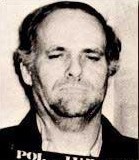 Ervil LeBaron
Murderer · USA · 1972
Ervil Morrell LeBaron (1925 to August 16, 1981) was the leader of a polygamous…
35 victims
Ervil LeBaron
Murderer · USA · 1972
Ervil Morrell LeBaron (1925 to August 16, 1981) was the leader of a polygamous…
35 victims
 Brian Kevin Rosenfeld
Murderer · USA · 1985
Brian Kevin Rosenfeld Brian Kevin Rosenfeld was sentenced to three concurrent l…
23 victims
Brian Kevin Rosenfeld
Murderer · USA · 1985
Brian Kevin Rosenfeld Brian Kevin Rosenfeld was sentenced to three concurrent l…
23 victims
 Marvin Gray
Murderer · USA · 1975
Marvin Gray was convicted killer who claimed responsibility for 23 slayings and…
23 victims
Marvin Gray
Murderer · USA · 1975
Marvin Gray was convicted killer who claimed responsibility for 23 slayings and…
23 victims
 Yahweh ben Yahweh
Murderer · USA · 1980
Yahweh ben Yahweh was born and legally named Hulon Mitchell Jr. (October 27, 19…
23 victims
Yahweh ben Yahweh
Murderer · USA · 1980
Yahweh ben Yahweh was born and legally named Hulon Mitchell Jr. (October 27, 19…
23 victims
 Angelica Vazquez
Murderer · USA · 2013
Angelica Vazquez — wife and mother; cafeteria worker for Mesquite Independent S…
3 victims
Angelica Vazquez
Murderer · USA · 2013
Angelica Vazquez — wife and mother; cafeteria worker for Mesquite Independent S…
3 victims
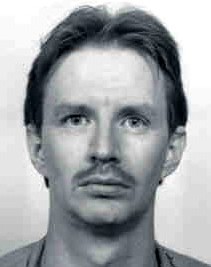 Michael Overstreet
Murderer · USA · 1997
Michael Dean Overstreet was sentenced to death on July 31, 2000. Michael Dean O…
1 victim
Michael Overstreet
Murderer · USA · 1997
Michael Dean Overstreet was sentenced to death on July 31, 2000. Michael Dean O…
1 victim
 Shari Tobyne
Murderer · USA · 2009
Shari Tobyne Shari Tobyne was the wife of Dwight Tobyne and had been married to…
1 victim
Shari Tobyne
Murderer · USA · 2009
Shari Tobyne Shari Tobyne was the wife of Dwight Tobyne and had been married to…
1 victim
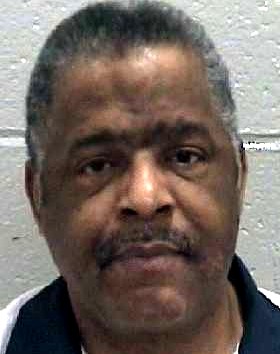 Willie Williams Palmer
Murderer · USA · 1995
Willie Williams Palmer and Brenda Palmer married in 1993. They had a baby, Will…
2 victims
Willie Williams Palmer
Murderer · USA · 1995
Willie Williams Palmer and Brenda Palmer married in 1993. They had a baby, Will…
2 victims
 Took Leng How
Murderer · Singapore · 2004
Defendant: Took Leng How (vegetable packer) · Victim: Huang Na (female, 8 years…
1 victim
Took Leng How
Murderer · Singapore · 2004
Defendant: Took Leng How (vegetable packer) · Victim: Huang Na (female, 8 years…
1 victim
- Gender
- male
- Country
- USA
- Location
- Polk County, Georgia, USA
- Date of birth
- 1954
- Age at first offence
- 25
- Characteristics
- rape, mutilation
- Victim profile
- Rhonda Joan Tanner, 8 (his niece)
- Method of murder
- Stabbing with knife
- Date(s) of murder
- February 13, 1979
- Years active
- 1979
- Date of arrest
- Same day
- Status
-
Executed
Executed by electrocution in Georgia on July 28, 1988
Case information
James Messer was executed by electrocution in Georgia on July 28, 1988.
Background
On February 13, 1979, Rhonda Tanner did not return home after school. Her mother became worried and drove to the school to look for her. At the school, the principal told Mrs. Tanner that a man identifying himself as Rhonda’s uncle had taken Rhonda home earlier in the afternoon, claiming that her father had been injured on the job and that her mother had asked him to pick her up after school. The police were notified that Rhonda was missing.
The offence
James Messer left his home to attend a doctor’s appointment on the date of Rhonda Tanner’s murder. He waited at the doctor’s office briefly, then departed before the time for his appointment arrived.
Around mid-day, he went to an electrical supply store. He told the saleswoman that he worked for a construction company in Rome and needed a specialized light fixture. After inspecting the light fixtures on display in the store, he appeared dissatisfied and told her that he wanted to look at “more stuff . . . that will probably be in the back.” The saleswoman invited him to examine the light fixtures in the supply room at the back of the store, but she told him that she could not assist him because she was alone in the store and needed to supervise the unloading of a delivery truck that had just arrived. Messer persisted in his requests that she assist him in the back of the store, and she became nervous. Suspecting his motives, the saleswoman telephoned her husband, who worked nearby, and asked him to come to her assistance. During this period of time Messer did not venture into the supply room. When Messer saw the saleswoman’s husband enter the store, he left. The saleswoman testified that she observed Messer shake his head and mouth the word “damn” as he left. At trial, the saleswoman testified that she had seen Messer in the store three months prior to this incident, and during that prior time he had also attempted, unsuccessfully, to get her to go into the back room of the store to look for a specialized item.
Around 2:30 that afternoon, the saleswoman saw Messer drive slowly by the electrical supply store. She ran out into the street and took down his license plate number. She testified that she watched Messer turn in the direction of College Street Elementary School, which was a few blocks from the electrical supply store.
That night, she and her husband telephoned the police to report the incident and request that the police investigate Messer. The following night the police asked the couple to examine photographs at the police station. Both selected a picture of Messer. The license plate number taken down by the saleswoman matched the license number of Messer’s car.
At 2:30 that afternoon, Rhonda was preparing to board the school bus that would take her home when the principal called her homeroom to say that her uncle, Messer, was there to take her home. Messer had informed the principal that Rhonda’s father had been injured on a construction job and that Rhonda’s mother was too upset to drive herself and had requested that Messer pick the child up at school. When Rhonda saw her uncle, she ran up to him and, according to an observer, began “prancing around him.” The principal testified that Rhonda took Messer’s hand and “petted” it. Rhonda excitedly told her teacher that she would not have to ride the bus as her uncle would take her home. Subsequently Rhonda and Messer left the school together. The principal later identified a police photograph of Messer as the man who had picked up Rhonda.
Between 2:45 and 3:00 that afternoon, Rhonda’s mother arrived at the school, alarmed that Rhonda had not come home on the school bus. The mother denied authorizing Rhonda’s uncle, or anyone else, to pick her up. Rhonda’s mother testified that the principal’s description of the man “fit [Messer] to a ‘T.’”
Rhonda’s mother telephoned Messer’s wife to see if the child was at their home as Messer and his wife frequently babysat for Rhonda. Messer’s wife told her that she had not seen Rhonda that day and that Messer had gone to the doctor.
At trial, a witness testified that at about 3:30 that afternoon she observed Messer walking away from the woods where Rhonda’s body was later found.
Messer spoke at length to his family about his long and futile wait at the doctor’s office. When informed of Rhonda’s abduction, Messer told Rhonda’s family that he had seen a child resembling Rhonda in a “dark colored car . . . headed north,” but that he otherwise knew nothing of the circumstances surrounding her absence.
The following day Rhonda’s family conducted an extensive search for the child. A sister-in-law of Messer, driving by the wooded area where Messer had taken Rhonda, spotted Rhonda’s coat. A police search ensued and subsequently Rhonda’s book and crayons were found. Further search uncovered the body of Rhonda, clad only in a knit shirt.
Rhonda had been stabbed numerous times in the chest and abdomen. Her face had been so severely beaten that it was not readily recognizable. Her abdomen had been slashed five times by a knife, and bruises and lacerations covered her face, neck and upper chest. Spermatozoa were found in Rhonda’s vaginal area, but there was no evidence to indicate that she had been raped. Autopsy results showed that she had bled to death.
At trial, prosecutors said Messer abducted Rhonda from her school in Cedartown, tried to molest her and then killed her when she fought him.
Investigation and arrest
Messer and his wife voluntarily accompanied Georgia Bureau of Investigation agents to the police station for questioning that night. Although not under arrest at that time, Messer was given Miranda warnings and subsequently signed a waiver form.
After being confronted with the fact that he had been identified as the person who removed Rhonda from school, Messer confessed to the murder of his niece. A GBI agent testified that Messer told him: “after not getting anywhere . . . with the female employee” at the electrical supply store, “the first thing that came to his mind was [Rho n da] and that’s why he went to the school to get her.”
Messer stated that he had driven Rhonda to a wooded area and parked the car. He told her that he was having trouble with the battery cables in his car and needed to find a rock to fix them. She accompanied him into the woods to search for a rock. Telling her that he “wanted to play a game with her,” Messer pushed Rhonda down to the ground, removed her slacks and began touching her “between the legs.” Messer repeatedly stated to the GBI agents that he had originally intended to “just molest” Rhonda and to “make her promise not to tell her father,” but that Rhonda refused to cooperate with him and began to scream. He stated that he hit her repeatedly with his fist to quiet her. He masturbated on the left side of Rhonda’s abdomen and finally stabbed her with his pocketknife to silence her. Messer then kicked Rhonda in the face until she lay motionless.
Messer told the agents that he washed his pocketknife in a nearby stream, then returned to his parked car where he removed Rhonda’s coat, book and crayons and threw them into the woods.
After Messer confessed, he was placed under arrest and reminded of his Miranda warnings. Police accompanied Messer to a nearby hospital where blood samples and hair specimen were taken.
Expert testimony presented at trial established that the hair found on the shirt and pants Messer had been wearing on the day of the murder belonged to Rhonda. The shoes Messer had been wearing at that time corresponded to the plaster cast of a partial shoe track found at the scene of the crime. Traces of blood were found on Messer’s pocketknife, but were of an amount too small to type.
Trial
Messer was convicted of murdering Rhonda Joan Tanner on February 13, 1979.
In the federal appellate proceedings, the case record described that eight-year-old Rhonda Tanner of Cedartown, Georgia did not return home after school and that her mother drove to the school. The principal told Mrs. Tanner that Rhonda had been taken home earlier that afternoon by a man identifying himself as her uncle. The next day, various family members conducted an extensive search for Rhonda. After one family member spotted Rhonda’s coat lying in bushes, the police notified and search began with agents of the FBI and the Georgia Bureau of Investigation. Later that afternoon, the search party discovered Rhonda’s half-nude, blood-spattered body in a secluded, wooded area outside Cedartown.
The record described that investigators located petitioner, James Messer, Jr., Rhonda’s uncle by marriage, that evening and told him they were investigating the Rhonda Tanner case and wanted to ask questions. They suggested questioning take place at a local police station. Petitioner indicated that he wanted to cooperate, and he and his wife accompanied the investigators to the police station where he voluntarily gave them a statement. Initially petitioner denied killing Rhonda. When he was told that witnesses had implicated him in the crime, he broke down crying and confessed to the murder. Petitioner admitted going to the elementary school and, to secure Rhonda’s release, telling the principal that Rhonda’s father had been injured and that he had come to take her home. He said that he and Rhonda left the school and drove to a secluded, wooded area; they walked into the woods together; he began to molest her; when she resisted, he stamped her face and kicked her head; then he took out his pocket knife and stabbed her repeatedly. Petitioner denied raping Rhonda but admitted to masturbating on her abdomen.
The record described pretrial procedure. On February 16, 1979, two attorneys were appointed to represent petitioner in Polk County Superior Court. Petitioner waived a committal hearing and his case was presented to a Polk County grand jury. On February 26, 1979, the grand jury indicted petitioner on two counts: kidnapping with bodily injury and murder of Rhonda Tanner. Before the indictment was returned, petitioner’s attorneys filed a motion challenging the composition of the grand jury and the pool from which it had been drawn, asserting violation of petitioner’s sixth and fourteenth amendment right to a grand jury drawn from a fair cross-section of the community. Petitioner was twenty-five years old and contended that he had been denied this constitutional right because the grand jury did not contain the percentage of “young people” represented in the community. The next day, February 27, the court convened a hearing to consider petitioner’s grand jury challenge and postponed its consideration to a later date. During the hearing, petitioner’s counsel informed the court that he would seek a psychiatric examination of petitioner “to fully protect his rights.” Counsel did not elaborate further on whether a private or state psychiatrist would be sought.
On March 2, 1979, petitioner filed a motion for an independent psychiatric examination at the State’s expense, alleging psychiatric problems would arise and that a psychiatrist’s advice would be necessary for preparation and defense. The State requested examination by staff of the Forensic Services Division at Central State Hospital in Milledgeville, Georgia. On March 8, the court directed the Forensic Services Division to perform a complete psychiatric examination of petitioner to assess mental capacity at the time of the Tanner kidnapping and murder and to determine competence to stand trial. Petitioner was admitted to the Forensic Services Division on April 10, 1979. On April 20, 1979, Dr. Louis J. Jacobs wrote to the court. Dr. Jacobs stated that a physical examination revealed a healthy individual, and that the electroencephalogram was normal and skull series study was normal. Dr. Jacobs wrote that petitioner required no medication except for mild muscle spasms in his back. Dr. Jacobs summarized psychiatric evaluation as follows:
A psychiatric evaluation revealed no mental disorder. Day-to-day observations of his behavior by the staff revealed no evidence of psychosis at any time during his stay here. He was found to be competent and responsible for his actions. Based on our examination and evaluation, we have concluded that he is aware of the charge pending against him and the possible consequences. He is able to relate to his attorney in the preparation of his defense. Therefore, we consider him competent to stand trial at the present time. As to his degree of criminal responsibility, it is our opinion that he is able to distinguish between right and wrong and was not acting under the influence of a compulsive delusion at the time of the alleged offense.
Petitioner was arraigned on May 8, 1979 and entered pleas of not guilty to both counts. After pleas were entered, consideration of the grand jury challenge was postponed until May 22, with the court advising of a hearing on the grand jury challenge and on a motion for change of venue due to intense publicity. On May 22, 1979, the court and counsel assembled, but the hearing did not reach the matters because petitioner’s family made arrangements to retain attorney John E. Sawhill, III. Sawhill was present and described as having substantial experience in defending serious criminal charges. The court deferred ruling on the request to substitute counsel for two weeks. At the hearing on June 5, petitioner stated he wished to retain Sawhill, and the court approved substitution.
On June 14, Sawhill moved for an independent psychiatrist and also moved to provide funds for expert witnesses. The requested expert list included a “psychologist and education testing specialist,” and the motion stated:
The Defendant has the need to employ a psychologist to perform intelligence and personality tests on the Defendant. The Defendant has already been given a preliminary evaluation at the Court's direction and it was determined that there was not reason to believe the Defendant was legally insane at the time of the alleged crime or unable to aid and assist in his defense. This evaluation was a short oral interview with a state doctor and did not involve any intelligence or personality tests. The Defendant's counsel, upon information and belief, have [sic] reason to believe that the Defendant suffers from a mental disease or defect that would affect his "capacity to appreciate wrongfulness of his conduct or conform his conduct to the requirements of law." A determination of this fact is relevant and material in (a) determining guilt, (b) determining his ability to aid in his defense, and (c) as a mitigating circumstance set forth in state law.
At some point after Sawhill filed these motions, the court dismissed petitioner’s indictment; the record did not reveal the date of the dismissal or whether the court ever considered Sawhill’s motions. On November 5, 1979, the Polk County grand jury returned a superseding indictment charging petitioner again on two counts. On November 9, petitioner pled not guilty to both counts.
On December 14, 1979, petitioner entered a special plea of insanity challenging competence to stand trial. The court convened a pretrial hearing on December 18. Sawhill argued the special plea obligated consideration of appointing an independent psychiatrist to determine competence. The court indicated willingness to grant if both sides could agree; if not, it would rule. On December 20 the court denied petitioner’s request for an independent psychiatric evaluation. On January 3, 1980, petitioner moved to reconsider or order another examination at Central State Hospital. On January 8, the court heard argument and initially denied the motion; on January 17 it reversed its ruling and ordered petitioner returned to the state facility at Milledgeville for further examination to determine capability to assist counsel and stand trial. On January 23, Dr. Jacobs reported that petitioner had “No Mental Disorder,” and the Division concluded:
His ideation remains intact. We detected no looseness of associations or wanderings of his ideas and he had no bizarre ideas. He was well oriented in all spheres and his memory was excellent. Intellectual function was that of a normal level.... No medication was felt to be necessary during his stay here.
The Division also concluded petitioner was capable of cooperating with his attorney in formulating a defense and of standing trial. On January 28, petitioner withdrew his special plea of insanity. The State notified petitioner that it would seek the death penalty on the same day.
The case went to trial on February 4, 1980. The record described that the State’s case established that petitioner perpetrated the kidnapping and murder and did so of his own free will. The record described testimony by FBI agent Robert C. Leary, Jr., with Agent Vernon Kennon of the Georgia Bureau of Investigation and Officer John Dean of the Cedartown Police Department, about the confession at the Cedartown police station after Rhonda’s body was found. Agent Leary testified that prior to the interview, Agent Kennon told petitioner he was not under arrest and was free to leave and that Kennon advised petitioner of Miranda rights including the right to have an attorney present. Leary testified he began the interview by informing petitioner he was one of several people who would be questioned and asked him to account for his whereabouts the day before Rhonda disappeared. Petitioner denied killing Rhonda at first. Agent Leary confronted petitioner with witnesses placing him in locations he could not have been. When the principal identified petitioner’s photograph, petitioner responded: “[H]ow much time will I get[?]” Leary replied that his job was simply to ask questions and not to determine punishment. The record described that when asked why he killed Rhonda, petitioner said “I don’t know why I did it,” and that petitioner started crying, sobbing, put his face in his hands, and kept it there for the next fifteen minutes. After petitioner started crying, Leary asked if petitioner thought he needed psychiatric help. Leary testified:
I asked him ... he had his face in his hands and he was saying that he would never see his wife again and he was crying and he was saying "I know I'm not crazy" and I ask[ed] him did he think maybe he was sick and needed psychiatric help and he repeated, he said "I know I'm not crazy", and I said "well, I'm not saying you're crazy I'm just saying do you think maybe you might need some help, some psychiatric help", and he said "maybe I do need help", and then I went through with him in detail his movements of the previous day to find out exactly where he had been.
The record described that after three days of testimony, the State rested and the defense rested without putting on evidence. The defense strategy allowed Georgia practice for opening and closing arguments. The prosecutor made closing argument after the recess. Petitioner's attorney waived opening and in closing told the jury:
"I would be no less honest with each and every one of you," he told the jury, "if I tried to tell you the evidence said something other than what [the prosecutor] indicates occurred on that day so I'm not going to."
He asked the jurors to put aside any prejudice against his client, disregard anything they had heard beyond the courtroom, and decide the case solely on the evidence. He did not argue insanity. The jury found petitioner guilty as charged on both counts. The sentencing phase began shortly after the verdicts.
The prosecution presented no additional evidence at sentencing and relied on evidence from the guilt phase to support the death penalty demand. The defense called only petitioner's mother. Neither prosecutor nor defense counsel suggested to the jury that petitioner’s mental or emotional condition might be a factor. The jury found aggravating circumstances and fixed punishment at death on both counts. On direct appeal summary described that the next day, February 8, 1979, the trial judge sentenced petitioner accordingly (the federal appellate record referred to this portion as bound by the jury’s decision).
The record described that the trial judge’s charge included an instruction on insanity. It provided the jury with the following full charge, with the portion petitioner requested italicized:
Our law declares that a person shall not be convicted of any crime committed while insane.
The test is that if a person has reason sufficient to distinguish between right and wrong in relation to a particular act about to be committed he or she is criminally responsible.
The standard by which his or her acts are to be judged is that of the conduct of a reasonable person.
To be punishable by law a person must have sufficient memory, intelligence, reason, and will to enable him or her to distinguish between right and wrong in regard to that particular offense involved.
Though an accused may not be able to evaluate the quality and consequences of his act to the same degree as a normal or average individual still that would be no defense nor excuse him if he is able to distinguish between right and wrong.
Mental abnormality or mere weakness of mind is no excuse unless it amounts to imbecility or idiocy which deprives the offender of the ability to distinguish between right and wrong as to the particular offense involved.
I charge you that mental disease differs in its susceptibility to detection by sheer observation in the normal course of human relationships especially by laymen who may not have an extended opportunity to observe the person in question.
I charge you that normal conduct and abnormal conduct are matters of common knowledge so lay persons may conclude from observation that certain observed conduct is abnormal.
As I have charged you earlier criminal intent being an essential element of every crime it is a question of fact to be determined by you whether such criminal intent was present in the mind of the defendant at the time of the alleged crime, that is to say whether the defendant was mentally capable of such criminal intent and whether the defendant acted with such intent at the time of the alleged act or was mentally capable of distinguishing between right and wrong with reference to that act.
The act itself may be so utterly sensenseless and abnormal as to furnish satisfactory proof of a diseased mind.
In determining the issue of sanity or insanity the jury may consider the acts and mental condition of the accused as revealed by the evidence before and after the commission of the alleged offense, if any, and the declarations, if any, of the defendant made at the time of the alleged offense or reasonably close thereto as proof of his mental condition at the time of such alleged offense.
If you find that the defendant did not have reason sufficient to distinguish between right and wrong, as I have instructed you, at the time of the commission of such alleged offense that would be an end to your consideration of the case and you would stop at that point and enter a verdict that would reflect that finding.
The form of that would be "we the jury find the defendant not guilty by reason of insanity".
Should this be your verdict the law of this state provides that it shall become the duty of the trial judge to retain jurisdiction of the person and to order that person to be confined in a state hospital for the mentally ill.
If, however, from a consideration of the evidence you determine that at the time and place of the occasion under investigation in this trial that the defendant was sane and thus responsible, in such event you would proceed to consider the other portions of the charge that I have given you or will give you.
Sentencing
The jury found that the kidnapping and murder had been committed under aggravating circumstances and fixed punishment at death on both counts. The trial judge sentenced Messer accordingly. The State announced it would seek the death penalty on the same day as Messer withdrew his special plea of insanity.
Appeals
On direct appeal to the Supreme Court of Georgia, petitioner raised six claims of error. The Supreme Court of Georgia affirmed his convictions and sentences and found no merit in petitioner’s claims, including the claim concerning denial of due process when the trial court refused to grant a motion for an independent psychiatric examination. On March 18, 1981, the court denied a motion for rehearing.
Petitioner later sought certiorari in the Supreme Court of the United States, and the petition was denied.
Petitioner sought habeas corpus relief in the Superior Court of Butts County, Georgia on January 5, 1982. The court dismissed a claim relevant to ineffective assistance of counsel, and the Supreme Court of Georgia declined review on April 20, 1982 by denying an application for a certificate of probable cause to appeal.
Petitioner sought review in the Supreme Court of the United States on grounds unrelated to his ineffective assistance claim, and the Court denied his petition.
On November 23, 1982, petitioner applied for a writ of habeas corpus in the United States District Court for the Northern District of Georgia. The magistrate recommended denial as to convictions. On March 30, 1984, the district court denied relief adopting in part the magistrate’s report and recommendation. Petitioner appealed and a panel of the Eleventh Circuit affirmed, and the Supreme Court denied certiorari.
On June 26, 1986, petitioner returned to state court for habeas corpus relief; his petition set forth five claims. The claim based on Ake v. Oklahoma was reviewed under Ake and found without merit after the court concluded that petitioner had not shown his sanity would be a significant factor at trial and that, applying Ake, petitioner had not made the necessary demonstration. The Supreme Court of Georgia denied an application for a certificate of probable cause to appeal on June 30, 1986.
On July 1, 1986, petitioner filed a second petition for a writ of habeas corpus in the district court, arguing denial of funds for an independent psychiatrist. The district court concluded the Ake claim was successive and had been decided on the merits in the previous federal habeas proceeding and refused to issue the writ. The Eleventh Circuit denied a certificate of probable cause and denied it for reasons given by the district court.
Petitioner applied to the Supreme Court for a stay of execution and the Supreme Court granted a stay on July 9. On July 28, petitioner filed a suggestion for rehearing en banc in the Eleventh Circuit, which was denied on September 5, 1986. On January 5, 1987, the Eleventh Circuit vacated its denial of rehearing en banc and decided to rehear the certificate-of-probable-cause application and motion for a stay.
Outcome
The Eleventh Circuit granted petitioner’s application for a certificate of probable cause and affirmed the district court’s denial of the writ of habeas corpus, concluding that the ends of justice did not require relitigation of the claim that the state trial court denied due process by refusing to provide an independent psychiatrist. The court stated: “IT IS SO ORDERED.”
FAY, Circuit Judge, concurred in part and dissented in part. KRAVITCH, Circuit Judge, dissented in which GODBOLD, JOHNSON, HATCHETT and CLARK, Circuit Judges joined.
Aftermath
James Messer Jr. was executed in the electric chair in Georgia on July 28, 1988. A spokesman for the Department of Corrections said he was pronounced dead at 7:23 P.M. The warden Walter Zant asked Messer if he had any final words, and Messer replied that he did not. Messer asked for a prayer and the prison chaplain Nolan Lavelle placed his hands on Messer’s left forearm and recited a one-minute prayer; Messer said “Amen.”
Outside the prison, 12 death penalty protesters sang, while about 20 people demonstrated in favor of the death penalty, including one man wearing a white Ku Klux Klan robe. The execution came just over an hour after the United States Supreme Court refused to halt it. Justices Thurgood Marshall and William J. Brennan dissented in a 7-to-2 vote.
The execution followed a similar action earlier that day by the Georgia Board of Pardons and Paroles. The chairman Wayne Snow said there were insufficient grounds for further consideration of a commutation request. The board rejected a psychiatrist’s testimony that Messer’s “explosive” behavior may have been caused by brain damage.
Prosecutors said Messer was convicted of murdering Rhonda Joan Tanner on Feb. 13, 1979, abducting her from her school in Cedartown, trying to molest her and then killing her when she fought him. He was the 13th person executed in Georgia’s electric chair since the state resumed executions in 1983.
Other details
Dates and related references
- 831 F.2d 946: James Messer, Jr. (Petitioner-appellant) v. Ralph Kemp, Warden, Georgia Diagnostic and Classification Center (Respondent-appellee), United States Court of Appeals, Eleventh Circuit.
- Oct. 16, 1987; rehearing denied Nov. 30, 1987.
- Appeal from the United States District Court for the Northern District of Georgia.
People named in the case record
- Rhonda Tanner (victim; later identified as Rhonda Joan Tanner).
- Rhonda’s mother.
- The saleswoman at the electrical supply store.
- The saleswoman’s husband (who worked nearby).
- The principal at College Street Elementary School.
- Messer’s wife.
- Messenger’s niece by marriage: Rhonda.
- GBI agents (including an unnamed GBI agent who testified about Messer’s statements).
- FBI agent Robert C. Leary, Jr.
- Georgia Bureau of Investigation agent Vernon Kennon.
- Officer John Dean of the Cedartown Police Department.
- Dr. Louis J. Jacobs.
- Dr. William S. Davis (psychiatrist preferred in motions).
- Chief Judge RONEY, and circuit judges GODBOLD, TJOFLAT, HILL, FAY, VANCE, KRAVITCH, JOHNSON, HATCHETT, ANDERSON, CLARK and EDMONDSON.
- Walter Zant (warden).
- Nolan Lavelle (prison chaplain).
- Wayne Snow (chairman of the Georgia Board of Pardons and Paroles).
- Justice Thurgood Marshall and Justice William J. Brennan (dissenters).
- Prison Department of Corrections spokesman John Siler.
- Petitioners’ counsel and related attorneys: E. Lamar Gammage, Joe Anderson, Dan Winn (honorable; presiding judge in proceedings referenced), John E. Sawhill, III, Mary Messer, Howard J. Manchel, and Dan? (the narrative included Manchel and other counsel; only those names explicitly present are included here).
Charged offences described
- Kidnapping with bodily injury.
- Murder of Rhonda Tanner.
Physical evidence described
- Rhonda’s hair found on Messer’s shirt and pants.
- Partial shoe track corresponding to shoes Messer wore.
- Traces of blood on Messer’s pocketknife that were too small to type.
- Blood samples and hair specimen taken at a nearby hospital.
- Rhonda’s coat, book and crayons found.
- Rhonda found clad only in a knit shirt.
Key quoted statements by Messer (as recorded)
“more stuff . . . that will probably be in the back.”
“damn”
“prancing around him”
“petted”
“fit [Messer] to a ‘T.’”
“dark colored car . . . headed north”
“after not getting anywhere . . . with the female employee”
“the first thing that came to his mind was [Rho n da] and that’s why he went to the school to get her.”
“wanted to play a game with her”
“between the legs”
“just molest”
“make her promise not to tell her father”
“I don’t know why I did it”
“I know I'm not crazy”
“maybe I do need help”
“Amen.”
“[H]ow much time will I get[?]”

Spotted an error, or have more information about this case?