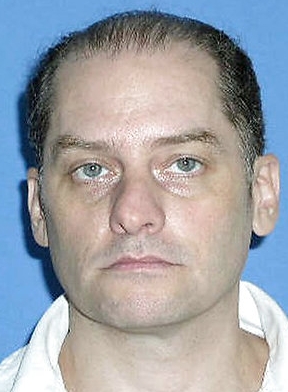
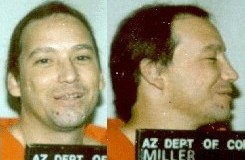
Donald Anthony Miller
Murderer Ervil LeBaron
Murderer · USA · 1972
Ervil Morrell LeBaron (1925 to August 16, 1981) was the leader of a polygamous…
35 victims
Ervil LeBaron
Murderer · USA · 1972
Ervil Morrell LeBaron (1925 to August 16, 1981) was the leader of a polygamous…
35 victims
 Brian Kevin Rosenfeld
Murderer · USA · 1985
Brian Kevin Rosenfeld Brian Kevin Rosenfeld was sentenced to three concurrent l…
23 victims
Brian Kevin Rosenfeld
Murderer · USA · 1985
Brian Kevin Rosenfeld Brian Kevin Rosenfeld was sentenced to three concurrent l…
23 victims
 Marvin Gray
Murderer · USA · 1975
Marvin Gray was convicted killer who claimed responsibility for 23 slayings and…
23 victims
Marvin Gray
Murderer · USA · 1975
Marvin Gray was convicted killer who claimed responsibility for 23 slayings and…
23 victims
 Yahweh ben Yahweh
Murderer · USA · 1980
Yahweh ben Yahweh was born and legally named Hulon Mitchell Jr. (October 27, 19…
23 victims
Yahweh ben Yahweh
Murderer · USA · 1980
Yahweh ben Yahweh was born and legally named Hulon Mitchell Jr. (October 27, 19…
23 victims
 Russell Ellwood
Murderer · USA · 1991
Russell Ellwood was a former taxi driver. Authorities suspected him of killing…
20 victims
Russell Ellwood
Murderer · USA · 1991
Russell Ellwood was a former taxi driver. Authorities suspected him of killing…
20 victims
 Miles Giffard
Murderer · United Kingdom · 1952
Miles William Giffard (1927 - 24 February 1953) twice played cricket for the Co…
2 victims
Miles Giffard
Murderer · United Kingdom · 1952
Miles William Giffard (1927 - 24 February 1953) twice played cricket for the Co…
2 victims
 Anthony Grandison
Murderer · USA · 1983
Anthony Grandison was an American drug dealer and murderer. He was convicted of…
2 victims
Anthony Grandison
Murderer · USA · 1983
Anthony Grandison was an American drug dealer and murderer. He was convicted of…
2 victims
 Rebecca Shuttleworth
Murderer · United Kingdom · 2011
Rebecca Shuttleworth was sentenced to life in prison, with a minimum tariff of…
1 victim
Rebecca Shuttleworth
Murderer · United Kingdom · 2011
Rebecca Shuttleworth was sentenced to life in prison, with a minimum tariff of…
1 victim
 Florence Rey
Murderer · France · 1994
Florence Rey was born August 25, 1975. She was 19 years old at the time of the…
4 victims
Florence Rey
Murderer · France · 1994
Florence Rey was born August 25, 1975. She was 19 years old at the time of the…
4 victims
 Sherman Noble
Murderer · USA · 1985
Sherman Noble was a death row inmate in Kentucky. He died in prison on October…
4 victims
Sherman Noble
Murderer · USA · 1985
Sherman Noble was a death row inmate in Kentucky. He died in prison on October…
4 victims
 Geza De Kaplany
Murderer · USA · 1962
Geza De Kaplany was a Hungarian-born physician who worked at a hospital in San…
1 victim
Geza De Kaplany
Murderer · USA · 1962
Geza De Kaplany was a Hungarian-born physician who worked at a hospital in San…
1 victim
- Gender
- male
- Country
- USA
- Location
- Harris County, Texas, USA
- Date of birth
- J une 12, 1962
- Age at first offence
- 20
- Characteristics
- robbery
- Victim profile
- Michael Masingo, 29, and Kenneth Whitt, 19
- Method of murder
- Shooting
- Date(s) of murder
- February 2, 1982
- Years active
- 1982
- Date of arrest
- 2 weeks later
- Status
-
Executed
Executed by lethal injection on February 27, 2007
Case record: Donald Anthony Miller
Status
Donald Anthony Miller was executed by lethal injection on February 27, 2007.
Background
Donald Anthony Miller was a white male who was 44 years old. He was 6'00" tall and weighed 155 lb. His hair color was brown and his eye color was hazel. His education was 11 years. His occupation was painter.
The offence date was 2/2/1982. The county of offence was Harris County, Texas, in Harris County, Texas.
The offence
On February 3, 1982, fisherman Charlie Sylvester found the bodies of Michael Mozingo and Kenneth Whitt on the side of a road near Lake Houston. Both men had been shot to death. The hands of both victims were tied in front of their bodies, with one body stretched out face down and the other in a fetal position. Bloody footprints were visible near the bodies. A shotgun forestock was found in the heavily wooded area. The victims appeared to have been killed at the scene.
Michael Mozingo and Kenneth Whitt were in the furniture business and traveled to different parts of the country to resell furniture. At the time of the murders, Mozingo was driving an 18-wheel tractor-trailer loaded with furniture and carried between $5,000 and $6,000 in cash.
On February 2, 1982, Donald Miller and Danny Woods arranged for Mozingo and Whitt to deliver a substantial amount of furniture to Eddie Segura’s house. Segura was an acquaintance of Miller and Woods.
When Mozingo and Whitt arrived at Segura’s house, Miller brandished a pistol and told the victims: “Just do what I say and put the furniture down and lay on the floor.” Woods then pulled out the sawed-off shotgun.
While the victims were lying face down, Miller removed Whitt’s wallet and Woods took Mozingo’s wallet and wrist watch. Miller instructed the men to take off their boots, and he told Woods and Segura to bind the men’s hands with black electrical tape. Woods took off his jacket and wrapped it around the sawed-off shotgun. The victims were then forced to return to their truck, where their hands and feet were tied with rope, and their feet were tied inside the truck such that their feet were elevated and attached to the truck.
Mozingo and Whitt were later moved to Segura’s car and driven to an isolated location in the Lake Houston area while the victims pleaded for their lives. After stopping the car, Miller assured the victims they would not be harmed and told them to go across the fence. As the victims started walking, but before they reached the fence, Woods began firing at the victims with the shotgun and Miller began shooting them with his pistol. Miller shot his pistol approximately five times, first shooting Mozingo in the head, then shooting Whitt. Miller continued to pull the trigger which made a clicking noise approximately three more times. The shotgun stock came off while Woods was firing it, and the shotgun was later discarded into a canal.
On their way back to Miller’s house, the three men divided the money from Mozingo’s wallet.
Investigation
The forestock of a shotgun was found in the heavily wooded area near where the victims were found.
Arrest
Miller, Woods and Segura were eventually arrested by authorities. Miller was arrested about two weeks after the slayings.
Trial
In October 1982, Miller was convicted by a jury of capital murder and sentenced to death for murdering Michael Dennis Mozingo.
The Texas Court of Criminal Appeals affirmed the conviction and sentence on direct appeal.
Miller’s trial involved special issues submitted to the jury pursuant to Article 37.071, V.A.C.C.P. After the jury answered the special issues in the affirmative, the trial judge assessed Miller’s punishment at death.
Miller was tried only for Mozingo’s murder.
Segura testified against Miller. Woods did not testify.
Witness testimony and evidentiary details
Ray McCall testified that he visited Miller on the Sunday after he was arrested for capital murder. McCall testified that Miller said that Edward Segura was “talking, and that he needed to be shut up.” McCall testified that Miller asked him: “see what [he] could do.” When McCall said there was nothing he could do, Miller said: “Well, see if you can talk to somebody.” McCall also testified that Miller and an accomplice robbed a drug dealer. McCall testified that when the man came out after they knocked on the door, the accomplice held a gun to him and Miller went in and stole marijuana.
Tony Tate testified that he heard Miller talking to another man about a robbery that Miller was planning. Tate testified the plan was to break down a lady’s door and steal prescription drugs, and Miller believed that the woman had several thousand dollars worth of Mandrex.
Court records and testimony described that Miller’s and companions’ involvement included luring Mozingo and Whitt to Segura’s house for a delivery, confronting the victims with a handgun and a sawed-off shotgun, robbing the victims, binding them with electrical tape, tying them with rope, driving them to an isolated location near Lake Houston, and shooting them.
The State also introduced evidence that Miller and Segura rented a storage unit to store the furniture, and that Miller’s fingerprints were found on one of the stolen tables.
Sentencing
In October 1982, Miller was sentenced to death for the capital murder of Michael Dennis Mozingo.
During the punishment phase, evidence was offered regarding Miller’s prior convictions. Miller had previously pleaded guilty to stealing a truck and was placed on probation. While on probation, he stole another automobile, and his probation was revoked. He was sent to the state penitentiary in October 1980.
At the time of trial and sentencing, the jury considered the special issues required under Texas law.
Appeals
Direct appeal
The case was reported as Miller v. State, 741 S.W.2d 382 (Tex.Cr.App. 1987) (Direct Appeal). The trial court had convicted Donald Anthony Miller in Harris County of capital murder, sentenced him to death, and the Court of Criminal Appeals affirmed.
The Court of Criminal Appeals listed and overruled points of error, including:
- error in excusing venire member Beverly Prince on the State's challenge for cause;
- error regarding use of a videotaped reenactment of the automobile ride to the scene;
- denial of cross-examination of the accomplice witness about effect of co-defendant’s life sentence on the accomplice’s testimony;
- refusal to give a cautionary instruction on accomplices as defendants awaiting PSI and the risks of such status;
- denial of a mistrial after an outburst in the courtroom by the deceased's family during the prosecutor's opening statement;
- numerous instances of improper jury arguments at guilt-innocence;
- allowing the prosecutor to impeach two key witnesses;
- due process claim based on cumulative improper arguments at punishment;
- limitation on bill of exceptions regarding jury tampering;
- limitation on bill of exceptions regarding a sleeping juror;
- allowing the prosecutor to testify over objection about Ray Mc Call;
- denial of an additional verdict form on the issue of parties.
The Court of Criminal Appeals found none of the points of error rose to reversible error and affirmed the trial court’s judgment of conviction and sentence of death.
The Supreme Court denied a writ of certiorari in 1988.
Federal habeas corpus
Miller filed his federal habeas petition on February 2, 1999, and an amended petition on February 18, 1999.
After an evidentiary hearing, a U.S. district court issued a memorandum opinion and order conditionally granting habeas relief on Miller’s first claim and granting the state’s motion for summary judgment on all other claims. The state appealed.
On November 15, 2005, the 5th U.S. Circuit Court of Appeals vacated the conditional grant of habeas relief and denied all federal habeas relief.
The U.S. Supreme Court denied Miller’s petition for certiorari review on October 2, 2006.
Brady evidence litigation and reinstatement
In February 2004, a U.S. district court found that the state knew that Ray McCall was an unreliable witness and that the state withheld statements taken from other witnesses who had heard about the crime from one or more of the participants, but who depicted Woods rather than Miller as the ringleader. The court vacated the death sentence and granted relief for sentencing purposes.
In November 2005, the U.S. Fifth Circuit Court of Appeals overturned the lower court’s decision and reinstated the death sentence. The appeals court found that withheld statements reinforced Miller’s guilt and participation. The appeals court noted that under Texas law a participant could be sentenced to death even if another participant was considered to have greater culpability.
Miller’s subsequent appeals were denied.
Other individuals involved
Danny Woods pleaded guilty to murder and received two life terms. Woods did not testify at Miller’s trial. Woods was next eligible for parole in April 2008.
Eddie Segura pleaded guilty to aggravated robbery charges, was sentenced to two 25-year prison terms, and was the key prosecution witness against Miller. Segura was released in October 2006 (as stated in one report that said released “last October” and a separate report that said released around August 2006).
Aftermath
Texas Department of Criminal Justice spokesman Byron Hays said Miller was “He was quiet, very polite and noncommittal,” describing him when Miller arrived at the death house in Huntsville at midday Tuesday. Miller arrived at death row at 19 for his role in robbing and shooting Mozingo and Whitt in 1982.
Miller, strapped to the gurney with needles in each arm, was asked by the warden if he had a final statement. Miller’s reply was a single shake of his head. Six minutes later, Miller was pronounced dead at 6:16 p.m.
Miller declined to speak with reporters in the weeks preceding his scheduled execution. In a letter to the Houston Chronicle, Miller said he was “connected to this case just not to the degree portrayed at trial.” Miller told authorities he was involved in the robbery but not the shootings. Miller said he would never tell the story of what happened.
Neither the victims’ families nor any of Miller’s relatives witnessed the execution. Miller had no friends or relatives witness his execution and had no visitors in the three days preceding the punishment.
Prior to his execution, a late appeal to the Texas Court of Criminal Appeals was turned down Monday; federal appeals had already been exhausted.
Timeline
- October 7, 1980 — Miller was convicted of third-degree theft of a motor vehicle and sentenced to three years in prison.
- February 2, 1982 — Donald Miller and Danny Woods arranged for Mozingo and Whitt to deliver furniture to Eddie Segura’s house.
- February 3, 1982 — Charlie Sylvester found the bodies of Michael Mozingo and Kenneth Whitt near Lake Houston.
- 1980 — Miller pleaded guilty to stealing a truck and received probation, and later pleaded guilty to stealing a car seven months later, revoking probation.
- October 1982 — Miller was convicted by a jury of capital murder and sentenced to death.
- September 1987 — The Texas Court of Criminal Appeals affirmed the conviction and sentence.
- February 2, 1999 — Miller filed his federal habeas petition.
- February 18, 1999 — Miller filed an amended federal habeas petition.
- February 2004 — A U.S. district court vacated the death sentence for sentencing purposes on Brady grounds.
- November 15, 2005 — The 5th U.S.
- October 2, 2006 — The U.S. Supreme Court denied Miller’s petition for certiorari review.
- February 27, 2007 — Miller was executed by lethal injection.
Other details
Miller’s penitentiary packet reflected his conviction, sentence of probation, and subsequent revocation of probation for third-degree felony theft of a truck. It also reflected that on October 7, 1980, Miller was convicted of third-degree theft of a motor vehicle and sentenced to three years in prison.
A report stated Miller was on parole for vehicle theft when he was 19.
A report stated Miller’s execution was the sixth this year in Texas and that five more convicted murderers were set to die next month. Another report stated there were 386 inmates on Texas’ death row.
In a report referencing the case’s federal litigation, a COA was denied on claims including Brady and ineffective assistance, with the procedural history including conditional habeas relief for sentencing.
One report quoted a prosecutor’s jury argument fragment: “He was quiet, very polite and noncommittal,” and it also included the quoted statement from Miller to the Houston Chronicle and related characterization in separate discussions.
The ammunition and firearm details included that Miller used a .38-caliber revolver and Woods used a sawed-off shotgun.
Spotted an error, or have more information about this case?