
Anthony Grandison
Murderer Brian Kevin Rosenfeld
Murderer · USA · 1985
Brian Kevin Rosenfeld Brian Kevin Rosenfeld was sentenced to three concurrent l…
23 victims
Brian Kevin Rosenfeld
Murderer · USA · 1985
Brian Kevin Rosenfeld Brian Kevin Rosenfeld was sentenced to three concurrent l…
23 victims
 Marvin Gray
Murderer · USA · 1975
Marvin Gray was convicted killer who claimed responsibility for 23 slayings and…
23 victims
Marvin Gray
Murderer · USA · 1975
Marvin Gray was convicted killer who claimed responsibility for 23 slayings and…
23 victims
 Yahweh ben Yahweh
Murderer · USA · 1980
Yahweh ben Yahweh was born and legally named Hulon Mitchell Jr. (October 27, 19…
23 victims
Yahweh ben Yahweh
Murderer · USA · 1980
Yahweh ben Yahweh was born and legally named Hulon Mitchell Jr. (October 27, 19…
23 victims
 Russell Ellwood
Murderer · USA · 1991
Russell Ellwood was a former taxi driver. Authorities suspected him of killing…
20 victims
Russell Ellwood
Murderer · USA · 1991
Russell Ellwood was a former taxi driver. Authorities suspected him of killing…
20 victims
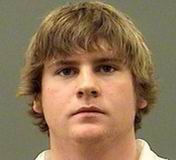 Cody Legebokoff
Serial killer · Canada · 2009
Cody Legebokoff (born c. 1990) was tried in the Supreme Court of British Columb…
4 victims
Cody Legebokoff
Serial killer · Canada · 2009
Cody Legebokoff (born c. 1990) was tried in the Supreme Court of British Columb…
4 victims
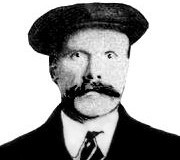 Albert Burrows
Murderer · United Kingdom · 1920
Albert Burrows (also named Albert Edward Burrows): married farm labourer who to…
4 victims
Albert Burrows
Murderer · United Kingdom · 1920
Albert Burrows (also named Albert Edward Burrows): married farm labourer who to…
4 victims
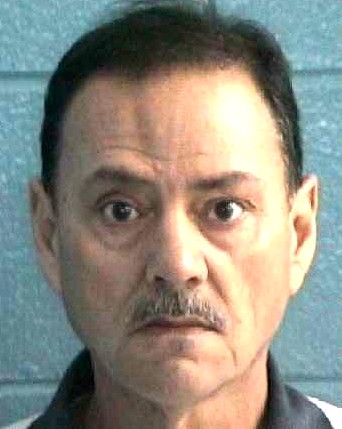 Roddy Childress
Murderer · USA · 1989
Roddy Elroy Childress was the half-brother of Jolene Kappus. In February 1989,…
2 victims
Roddy Childress
Murderer · USA · 1989
Roddy Elroy Childress was the half-brother of Jolene Kappus. In February 1989,…
2 victims
 James Emery Paster
Murderer · USA · 1980
James Emery Paster (#752) was convicted of capital murder and sentenced to deat…
3 victims
James Emery Paster
Murderer · USA · 1980
James Emery Paster (#752) was convicted of capital murder and sentenced to deat…
3 victims
 James Ritchie
Serial killer · USA · 2016
James Dale Ritchie (November 4, 1976 – November 12, 2016) was known in the medi…
5 victims
James Ritchie
Serial killer · USA · 2016
James Dale Ritchie (November 4, 1976 – November 12, 2016) was known in the medi…
5 victims
 Kelly Ellard
Homicide · Canada · 1997
Kelly Ellard was a juvenile in the relevant period. She was born August 9, 1982…
1 victim
Kelly Ellard
Homicide · Canada · 1997
Kelly Ellard was a juvenile in the relevant period. She was born August 9, 1982…
1 victim
- Gender
- male
- Country
- USA
- Location
- Baltimore County, Maryland, USA
- Date of birth
- 1950
- Age at first offence
- 33
- Characteristics
- drug dealer, murder for hire
- Victim profile
- David Scott Piechowicz and his sister-in-law Susan Kennedy
- Method of murder
- Shooting
- Date(s) of murder
- April 28, 1983
- Years active
- 1983
- Date of arrest
- —
- Status
-
Sentenced to death
Sentenced to death in 1984 and 1994
Case record: Anthony Grandison
Background
Anthony Grandison was an American drug dealer and murderer. He was convicted of first-degree murders of David Scott Piechowicz and Susan Kennedy and received two death sentences in 1984.
Grandison was on parole in 1982 after having served several years in prison for assaulting a DEA agent, carrying a firearm during the commission of a felony, and possession of a firearm by a convicted felon. His 1979 conviction was sustained on appeal in 2003.
A Federal case and a State case both resulted in convictions against Grandison.
The offence
Grandison was convicted for ordering the killing of a pair of witnesses more than 25 years before later judicial review.
David Scott Piechowicz and Cheryl Piechowicz had been scheduled to testify against Grandison in a narcotics case in the U.S. District Court for the District of Maryland. Vernon Lee Evans Jr. was hired by Grandison to kill Piechowicz and Cheryl for a payment of $9,000. Because Evans had never seen the targets in person, Evans mistakenly killed Kennedy, who was filling in for her sister Susan Kennedy at the motel where they were employees.
On April 28, 1983, Vernon Evans entered the motel lobby and shot Susan and David 17 times.
After the Warren House Motel killings, the U.S. government indicted Grandison and Evans with two co-conspirators, Rodney Kelly and Janet Moore, on charges of witness tampering and conspiracy to violate the civil rights of David Piechowicz.
In the Circuit Court of Baltimore County, the Baltimore County State's Attorney's office indicted Grandison and Evans on charges of first degree murder, conspiracy to commit murder, and the use of a handgun in the commission of a felony. Four indictments were also filed against the two men: two counts of first-degree murder, one count of conspiracy to commit murder, and one count of use of a handgun in the context of committing a crime of violence.
Investigation
While going through security at BWI Airport on his way to Miami, a baggage screener noticed a substantial amount of cash in Grandison's luggage. U.S. Marshals arrested him on suspicion of violating his parole. A search of Grandison's belongings revealed a key for a room at the Warren House Motel (presently a Howard Johnson) in Pikesville, Maryland. A search of the room found a substantial amount of cocaine and heroin, resulting in Grandison being indicted on federal drug charges.
Arrest
A U.S. Marshals Service arrest occurred after the security screening at BWI Airport on his way to Miami. The arrest was based on suspicion of violating his parole.
Trial
Grandison was tried for murder, conspiracy to commit murder, and use of a handgun in the commission of a crime of violence, for hiring someone to kill two witnesses scheduled to testify against him in his trial on federal drug charges.
The jury found Grandison guilty on all charges. He received two death sentences in 1984.
After Warren House Motel killings, Cheryl Piechowicz testified against Grandison 12 days later at his federal drug trial, which ended in Grandison's conviction. David Piechowicz was the motel's manager, and he and his wife, Cheryl, were the only two witnesses who could place Grandison in the room where the drugs were found.
Upon request, Grandison’s trial was transferred to the Circuit Court for Somerset County. He was convicted on all charges and received two death sentences in 1984.
At his arraignment, Grandison asserted the right to represent himself under Faretta v. California. He was informed of his right to counsel, the dangers of self-representation, and the advantages of having counsel to assist at trial and sentencing. He chose to proceed pro se. He was granted the right to have “standby” counsel, but conducted his own defense.
At the first scheduled sentencing proceeding, Grandison asked the court to appoint the lawyer who had served as standby counsel to represent him in the sentencing proceeding. He also sought a continuance, since neither he nor his counsel was prepared to go forward. The court refused to terminate Grandison’s self-representation, stating:
"Once the decision is made regarding self-representation, if it is properly made prior to trial, the request to change rests solely within the discretion of the trial court. The right must be timely asserted. It must be asserted before the trial starts. Of course, this is not timely asserted. Whether we continue with it or not, what I am inclined to do about self-representation is leave it just like it is, and let [standby counsel] take over and handle the proceeding as standby counsel [479 U.S. 873 , 875] with Mr. Grandison's permission. Grandison will still be the attorney."
Pet. for Cert. 8-9.
The court instructed standby counsel:
"Keep in mind, Mr. Crawford, you are not the attorney in this. Mr. Grandison is his own attorney. You are just kind of a law clerk."
Pet for Cert. 9.
The court granted an eight-day continuance; at the reconvened sentencing hearing, it made clear that Grandison was representing himself, with assistance of standby counsel.
Sentencing
Grandison received two death sentences in 1984.
In July 1992, his original death sentence was vacated based on inadequate jury instructions as a result of the Supreme Court's decision in Mills v. Maryland. Another sentencing hearing was held.
In June 1994, a second jury again sentenced Grandison to die because of the aggravating circumstance of the crime being a contractual murder for pay. This sentence was upheld on direct appeal by the Maryland Court of Appeals in 1995.
Appeals
Grandison appealed, and an appeal made that same year on the grounds that the death penalty was unconstitutional was denied.
Grandison’s original death sentence was vacated in July 1992 based on inadequate jury instructions.
His petition for post-conviction relief was denied in 1998.
His petition for federal habeas corpus relief was rejected by the U.S. District Court for the District of Maryland in 2000.
A further appeal to the Maryland Court of Appeals was denied in 2005.
Due to an appeal made to the Maryland Court of Appeals by Evans, all executions in Maryland were put on hold in 2006 until the legislature approved a new protocol. The protocol was under review.
Grandison v. Maryland, 479 U.S. 873 (1986) involved a petition for writ of certiorari to the Court of Appeals of Maryland. The petition for a writ of certiorari was denied. Justice Marshall, with whom Justice Brennan joins, dissented from denial of certiorari. Justice Scalia took no part in the consideration or decision of the petition.
The dissent stated:
"Petitioner Anthony Grandison was sentenced to death by an improperly instructed jury and did not have the benefit of representation at his sentencing hearing. Because I believe that the jury's instructions under the Maryland statute improperly shifted to petitioner the burden of disproving the appropriateness of his death sentence, and that the denial of a request for legal representation in the sentencing phase of a bifurcated capital proceeding constitutes a violation of the Sixth Amendment right to counsel, I dissent."
It further stated:
"Petitioner was tried for murder, conspiracy to commit murder, and use of a handgun in the commission of a crime of violence, for hiring someone to kill two witnesses scheduled to testify against him in his trial on federal drug charges. The jury found petitioner guilty on all charges and sentenced him to death."
The dissent also stated:
"Accordingly, I dissent.*"
Outcome
Grandison was sentenced to death in 1984 and again in June 1994.
After several years of appeals, his original death sentence was vacated on inadequate jury instructions in July 1992, and a second sentencing hearing resulted in a further death sentence in June 1994. The 1994 sentence was upheld on direct appeal by the Maryland Court of Appeals in 1995.
His post-conviction relief petition was denied in 1998, and his federal habeas corpus relief was rejected by the U.S.
Execution was on hold because of an unofficial moratorium on capital punishment in Maryland and because executions were put on hold in 2006 until the legislature approved a new protocol.
Other details
On Maryland's Death Row: Anthony Grandison by Vicki Kriz (Maryland Newsline, May 8, 2009), Grandison had been on death row for almost 25 years.
Grandison was described as 59 in that context.
Vernon Evans mistakenly killed Kennedy while Kennedy was filling in for her sister Susan Kennedy at the Warren House Motel in Baltimore County on April 28, 1983.
Janet Moore was identified as Grandison’s girlfriend at the time of the crimes. At a resentencing hearing in Somerset County Circuit Court, Janet Moore offered testimony and corroborated testimony made by previous witnesses.
Rodney Kelly was identified as Grandison’s nephew.
Timeline
- 1982 — Grandison was on parole after serving several years in prison for assaulting a DEA agent, carrying a firearm during the commission of a felony, and possession of a firearm by a convicted felon (a 1979 conviction later sustained on appeal in 2003).
- April 28, 1983 — Vernon Evans entered the motel lobby and shot Susan and David 17 times at the Warren House Motel in Baltimore County.
- June 1994 — A second jury sentenced Grandison to die because of the aggravating circumstance of the crime being a contractual murder for pay.
- 1995 — The Maryland Court of Appeals upheld Grandison’s 1994 death sentence on direct appeal.
- 1998 — Grandison’s petition for post-conviction relief was denied.
- 2000 — The U.S. District Court for the District of Maryland rejected Grandison’s petition for federal habeas corpus relief.
- 2005 — A further appeal to the Maryland Court of Appeals was denied.
- 2006 — All executions in Maryland were put on hold until the legislature approved a new protocol.
Spotted an error, or have more information about this case?