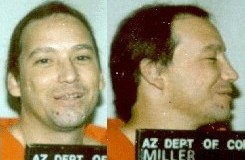
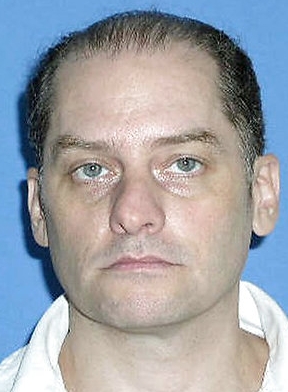
Donald Jay Miller
Murderer Brian Kevin Rosenfeld
Murderer · USA · 1985
Brian Kevin Rosenfeld Brian Kevin Rosenfeld was sentenced to three concurrent l…
23 victims
Brian Kevin Rosenfeld
Murderer · USA · 1985
Brian Kevin Rosenfeld Brian Kevin Rosenfeld was sentenced to three concurrent l…
23 victims
 Russell Ellwood
Murderer · USA · 1991
Russell Ellwood was a former taxi driver. Authorities suspected him of killing…
20 victims
Russell Ellwood
Murderer · USA · 1991
Russell Ellwood was a former taxi driver. Authorities suspected him of killing…
20 victims
 Robert Martines Perez
Murderer · USA · 1994
Name: Robert Martines Perez · Other name used in proceedings: Robert Martinez P…
15 victims
Robert Martines Perez
Murderer · USA · 1994
Name: Robert Martines Perez · Other name used in proceedings: Robert Martinez P…
15 victims
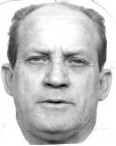 Billy Frank Vickers
Murderer · USA · 1993
Billy Frank Vickers Vickers was executed by lethal injection in Texas on Januar…
14 victims
Billy Frank Vickers
Murderer · USA · 1993
Billy Frank Vickers Vickers was executed by lethal injection in Texas on Januar…
14 victims
 Michelle Byrom
Murderer · USA · 1999
Name: Michelle Byrom · Offender data (as stated): White; age 43 at crime (DOB 1…
1 victim
Michelle Byrom
Murderer · USA · 1999
Name: Michelle Byrom · Offender data (as stated): White; age 43 at crime (DOB 1…
1 victim
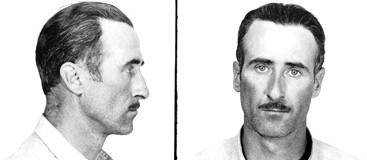 Albert Johnson Walker
Murderer · USA · 1996
Albert Johnson Walker was a Canadian criminal. He was from Paris, Ontario, and…
1 victim
Albert Johnson Walker
Murderer · USA · 1996
Albert Johnson Walker was a Canadian criminal. He was from Paris, Ontario, and…
1 victim
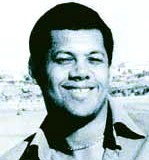 Victor Miller
Murderer · United Kingdom · 1988
Victor Miller was a computer operator in the United Kingdom. He was described a…
1 victim
Victor Miller
Murderer · United Kingdom · 1988
Victor Miller was a computer operator in the United Kingdom. He was described a…
1 victim
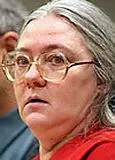 Velma Ogden-Whitehead
Murderer · USA · 2005
Velma Ogden-Whitehead pleaded guilty to first-degree murder in the 2005 killing…
1 victim
Velma Ogden-Whitehead
Murderer · USA · 2005
Velma Ogden-Whitehead pleaded guilty to first-degree murder in the 2005 killing…
1 victim
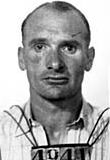 Elmer Brunner
Murderer · USA · 1957
Elmer David Brunner died on 3 April 1959. He was executed by electrocution on 3…
1 victim
Elmer Brunner
Murderer · USA · 1957
Elmer David Brunner died on 3 April 1959. He was executed by electrocution on 3…
1 victim
- Gender
- male
- Country
- USA
- Location
- Pima County, Arizona, USA
- Date of birth
- May 21, 1963
- Age at first offence
- 29
- Characteristics
- murder for hire, alcohol, history of mental illness
- Victim profile
- Jennifer Geuder, 18
- Method of murder
- Shooting
- Date(s) of murder
- June 12, 1992
- Years active
- 1992
- Date of arrest
- —
- Status
-
Executed
Executed by lethal injection in Arizona on November 8, 2000
Case record: Donald Jay Miller
Timeline
- June 12, 1992 — Jennifer Geuder went out with her married boyfriend, Jose Luna, and Don Miller; afterward they stopped to pick up Miller's gun.
- June 13, 1992 — A jogger discovered Jennifer Geuder's body lying in a desert area on the east side of Tucson; Geuder had been shot six times in the head.
- July 6, 1993 — Start of trial.
- July 12, 1993 — Verdict.
- October 26, 1998 — A hearing occurred in which the state court found Miller competent to represent himself in state post-conviction proceedings.
- December 13, 1999 — Another state court hearing reaffirmed Miller's competency to represent himself and set a firm March 13, 2000 deadline for filing a post-conviction petition.
- December 20, 1993 — Sentencing.
- November 5, 2000 — Nancy Follin Jones filed a motion to proceed as next friend and for a stay.
- November 6, 2000 — The district court found Jones lacked standing as next friend, denied the motion for a stay, and dismissed the petition for writ of habeas corpus for lack of jurisdiction.
- November 7, 2000 — The case was argued and submitted by telephone in the United States Court of Appeals for the Ninth Circuit; the order stayed execution and remanded for an evidentiary hearing.
- November 7, 2000 — Miller's execution was scheduled for November 8, 2000 at 3:00 p.m.
- November 8, 2000 — Miller was executed by lethal injection in Arizona.
- November 8, 2000 — The lethal injection procedure on Miller began at 3:37 p.m. (MST) and Miller was pronounced dead at 3:41 p.m.
Background
Donald Jay Miller was sentenced to death and was an Arizona prisoner under a sentence of death. He declined to seek federal habeas relief and refused to be represented in doing so by Nancy Follin Jones and the Pima County Public Defenders Office (PCPD).
Nancy Follin Jones appealed the denial of her motion to proceed as next friend and for a stay of execution. The Ninth Circuit treated Miller as a “volunteer,” stating that he wished to be executed and had given that instruction through his position in the proceedings.
In the execution-related events, Miller was confined on Arizona’s death row in conditions described as maximum security and all but totally isolated in “SMU II.” The federal appellate proceedings discussed evidence and arguments concerning whether those conditions affected Miller’s mental competence to choose execution and waive further proceedings.
The offence
Jennifer Geuder went out to a drive-in with her boyfriend, Jose Luna, and Don Miller. Jose Luna solicited Miller’s help in killing Geuder because Geuder was demanding $50 child support payments.
Miller and Luna drove Geuder to Mount Lemmon, where Luna shot her once in the head. Geuder did not die despite being critically wounded.
Miller and Luna drove Geuder to a desert area in Tucson. Evidence at trial indicated that Geuder fought for her life and tried to hide under her car. Miller shot Geuder five times in the head.
Jennifer Geuder had been shot six times in the head.
Investigation and discovery
On June 13, 1992, a jogger discovered Jennifer Geuder’s body lying in a desert area on the east side of Tucson.
Trial
Presiding Judge: Lawrence Fleischman. Prosecutor: Rick Unklesbay. Start of Trial: July 6, 1993. Verdict: July 12, 1993.
The defendant was convicted in Superior Court (Pima) of premeditated first-degree murder and kidnapping.
In appellate discussion, the judgment was described as including findings related to cruelty, heinousness or depravity, mental anguish, physical pain, gratuitous violence, senselessness, helplessness, and rejecting the existence of certain mitigating circumstances as insufficiently proven.
Sentencing
Sentencing: December 20, 1993. The court sentenced Miller to death for the murder.
Aggravating circumstances (F)(6)
- The finding that the murder was “especially cruel, heinous, and depraved” was upheld.
- Cruel: upheld; mental anguish was found; the court held that the victim experienced “great mental and physical suffering.”
- Defendant was held responsible for the actions of his co-defendant from the point of giving the co-defendant a gun.
“Thus, Miller is responsible for the suffering the victim experienced after being shot on Mt. Lemmon and driven down to the desert, a period of time in which Miller had the gun. The victim clearly experienced even more mental and physical anguish at the desert. She struggled to escape. By Miller's admission, he shot the victim repeatedly once they stopped.” 186 Ariz. at 325.
- Physical Pain: found; see Mental Anguish.
- Heinous or Depraved: upheld.
- Gratuitous violence: found; cutting or pulling the victim’s hair out was sufficient to constitute gratuitous violence.
- There was factual disagreement over whether Geuder’s hair was pulled or cut, but the State stipulated that the hair had been cut.
- The trial court assumed at sentencing that the defendant had pulled out large clumps of the victim’s hair.
- During sentencing, defendant interrupted to assert that the hair was cut, not pulled.
“whether it was cut or yanked it demonstrates a lack of humanity about somebody.”
- On appeal, the Court agreed with the trial court, stating:
“[w]hether he cut her hair or pulled it out, he inflicted injury beyond that necessary to kill.”
- Senselessness: found; defendant did not challenge that finding.
- Helplessness: found; the court held that helplessness was not inconsistent with a finding that the victim was attempting to escape; the co-defendant had already shot the victim when Miller approached with a gun, and at the time Miller approached she was helpless.
Mitigating circumstances
The Court found that the following mitigating circumstances existed but were not sufficiently substantial to call for leniency:
- Remorse
- Difficult Childhood/Family History
- Model Prisoner [became religious after arrest]
The Court found that the defendant failed to prove by a preponderance of the evidence the existence of the following as mitigating circumstances:
- (G)(1) Significant Impairment [intoxication]
- Duress
- Impulsivity
- Cooperation
- Follower
- Lack of Criminal History
- Lack of Intent to Kill
- Sentencing Disparity
- Intelligence
- Family Ties
Appeals
Arizona Supreme Court direct appeal
Procedural posture: The defendant’s automatic, direct appeal to the Arizona Supreme Court involved convictions and sentences for premeditated first-degree murder and kidnapping; the murder sentence was death.
Judgment: Convictions and sentences were affirmed.
Federal proceedings (Ninth Circuit)
United States Court of Appeals for the Ninth Circuit proceedings were described as:
- Case: Don Jay Miller, by and through Nancy Follin Jones, Petitioner-Appellant, v. Terry Stewart, et al., Respondents-Appellees.
- No. 00-99017
- Before: REINHARDT, RYMER, and FISHER, Circuit Judges.
- Argued and Submitted by Telephone: November 7, 2000.
- Filed: November 7, 2000.
- Appeal from the United States District Court for the District of Arizona; District Judge Raner C. Collins (Presiding); D.C. No. CV-00-630-TUC-RCC.
Nancy Follin Jones appealed from the district court’s order requesting a stay pending appellate consideration. The Ninth Circuit “grant[ed] the stay, and remand[ed] for an evidentiary hearing.”
The majority reasoned that:
- No court had made the appropriate inquiry into Miller’s competence to choose execution and voluntariness of that decision.
- A state “Faretta” hearing found Miller competent to represent himself in state post-conviction proceedings, but that determination did not purport to determine competence to choose to die or voluntariness of that decision.
- There was sufficient evidence to require an evidentiary hearing as to Miller’s competency and to mandate a stay.
The majority described evidence concerning Miller’s mental state and confinement conditions including SMU II, depression, abuse history, and changes in his circumstances.
The decision included a conclusion:
- “Stay Granted; Remanded for Further Proceedings in Conformance with this Opinion.”
Concurring and dissenting opinions (verbatim)
FISHER, Circuit Judge, Concurring:
“Under Whitmore, the ‘prerequisite for ‘next friend’ standing is not satisfied where an evidentiary hearing shows that the defendant has given a knowing, intelligent, and voluntary waiver of his right to proceed, and his access to court is otherwise unimpeded.’ Whitmore v. Arkansas, 495 U.S. 149, 165 (1990) (citing Gilmore v. Utah, 429 U.S. 1012, 1017 (1976) (Stevens, J., concurring)).”
RYMER, Circuit Judge, dissenting:
“I dissent from the unprecedented view that there is a difference of constitutional magnitude between what the majority characterizes as ‘competency to choose to die or the voluntariness of his decision,’ maj. op. at 8, and competency to make legal decisions and the voluntariness of those decisions including the decision by a prisoner under sentence of death not to file for habeas relief in federal court.”
“A state court determined that Miller was competent and intelligently, knowingly and voluntarily chose to represent himself.”
“There is no substantial evidence that his mental condition or ability to make rational decisions has changed.”
Outcome
Miller was executed by lethal injection in Arizona on November 8, 2000.
The execution-related events included:
- A stay of execution that had been granted earlier in the day was lifted by the U.S. Supreme Court.
- The lethal injection procedure began at 3:37 p.m. (MST).
- Miller was pronounced dead at 3:41 p.m. (MST).
Aftermath
In the final statements made at the execution, Miller addressed his mother, a friend, and a relative of his victim:
“First of all, Mom, I love you. Sorry to put you through all of this. I'm sorry, but I needed to,” he said. “Richard, it was good to know you. Take care of my Mom.”
He then addressed the younger brother of victim Jennifer Geuder, who was in the execution witness room:
“Matthew, I think that's you. I apologize because I didn't take the bullet for your sister, because I understand that you missed the Little League Championship game. You can't go back to play the game your team won.”
He then said:
“Heavenly Father, in the name of Jesus Christ, forgive them for they know not what they do. Although I walk through the shadow of death, I shall fear no evil. Mom, I love you. That's it.”
Other details
Co-defendant outcome
Jose Luna pleaded guilty to first degree murder and received a life sentence; the description stated he was serving 39 years to life in prison.
Clemency proceeding
The Arizona Board of Executive Clemency voted unanimously not to stand in the way of Wednesday’s scheduled execution after emotional testimony from the mother and father of Donald Miller’s victim.
Ron Geuder, whose daughter was Jennifer Geuder, said:
“I wish he would have given Jenny a reprieve,”
and:
“With all due respect to this committee, this is a no-brainer. Don't give him a reprieve. He can do that for himself today or tomorrow.”
Last meal
Last Meal:
- two guacamole tostadas
- two tacos
- one strawberry malt
- one Dr. Pepper
- one lemon meringue pie
- five whole jalapenos
- one lemon
- one lime
- one quart of strawberry ice cream
Procedure and trial dates summary
A public defender won a last minute stay late Tuesday after an appeals court said there was evidence Miller might not be competent; that stay was lifted after the state Attorney General’s office appealed.
Miller declined to pursue federal appeals, stating he would rather die than continue to live in prison.
Appellate procedural history and psychiatric evaluations referenced in the federal opinion
The federal appellate proceedings described:
- Miller was examined in October 2000 by a psychologist and a psychiatrist employed by the Arizona Department of Corrections after issuance of the pending warrant of execution; the examiners found no evidence of any major mental illness.
- The federal opinion discussed a history of depression and abuse and described that Miller was physically, sexually, and psychologically abused as a child.
- It stated that in 1982, as a juvenile offender, Miller threatened suicide if not released from confinement.
- It referenced that Miller’s advisors submitted declarations about depression and post-traumatic stress disorder symptoms and the effects of physical isolation in SMU II.
Spotted an error, or have more information about this case?