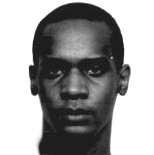
William Mitchell
Murderer Ervil LeBaron
Murderer · USA · 1972
Ervil Morrell LeBaron (1925 to August 16, 1981) was the leader of a polygamous…
35 victims
Ervil LeBaron
Murderer · USA · 1972
Ervil Morrell LeBaron (1925 to August 16, 1981) was the leader of a polygamous…
35 victims
 Marvin Gray
Murderer · USA · 1975
Marvin Gray was convicted killer who claimed responsibility for 23 slayings and…
23 victims
Marvin Gray
Murderer · USA · 1975
Marvin Gray was convicted killer who claimed responsibility for 23 slayings and…
23 victims
 Yahweh ben Yahweh
Murderer · USA · 1980
Yahweh ben Yahweh was born and legally named Hulon Mitchell Jr. (October 27, 19…
23 victims
Yahweh ben Yahweh
Murderer · USA · 1980
Yahweh ben Yahweh was born and legally named Hulon Mitchell Jr. (October 27, 19…
23 victims
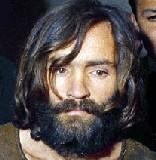 Charles Manson
Murderer · USA · 1969
Charles Milles Manson (born November 12, 1934) was an American criminal and mus…
9 victims
Charles Manson
Murderer · USA · 1969
Charles Milles Manson (born November 12, 1934) was an American criminal and mus…
9 victims
 Douglas Crabbe
Mass murderer · Australia · 1983
Douglas John Edwin Crabbe (b. 1948) was sentenced to five consecutive terms of…
5 victims
Douglas Crabbe
Mass murderer · Australia · 1983
Douglas John Edwin Crabbe (b. 1948) was sentenced to five consecutive terms of…
5 victims
 Shaun Thrower
Murderer · United Kingdom · 1994
Shaun Thrower was convicted of the murder of 17-year-old Amanda Wagg and was se…
1 victim
Shaun Thrower
Murderer · United Kingdom · 1994
Shaun Thrower was convicted of the murder of 17-year-old Amanda Wagg and was se…
1 victim
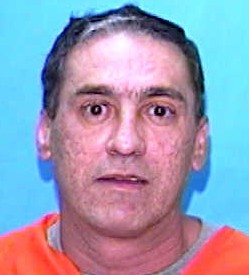 Guillermo Arbelaez
Murderer · USA · 1988
Guillermo Arbelaez was identified as the appellant in Florida Supreme Court Gui…
1 victim
Guillermo Arbelaez
Murderer · USA · 1988
Guillermo Arbelaez was identified as the appellant in Florida Supreme Court Gui…
1 victim
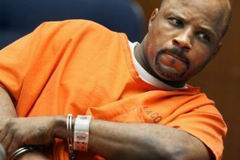 Steven Anthony Jones
Murderer · USA · 2004
Steven Anthony Jones was sentenced to death for killings connected to a robbery…
2 victims
Steven Anthony Jones
Murderer · USA · 2004
Steven Anthony Jones was sentenced to death for killings connected to a robbery…
2 victims
 Marcelina Mendoza
Murderer · USA · 1992
Marcelina Mendoza was 20 years old at the time of the Aug. 19 death of her 3-ye…
1 victim
Marcelina Mendoza
Murderer · USA · 1992
Marcelina Mendoza was 20 years old at the time of the Aug. 19 death of her 3-ye…
1 victim
- Gender
- male
- Country
- USA
- Location
- Worth County, Georgia, USA
- Date of birth
- 1952
- Age at first offence
- 22
- Characteristics
- robbery
- Victim profile
- 50-year-old man / Christopher Carr (male, 14)
- Method of murder
- Shooting
- Date(s) of murder
- August 10/11, 1974
- Years active
- 1974
- Date of arrest
- —
- Status
-
Executed
Executed by electrocution in Georgia on September 2, 1987
Case details
William “Billy” Mitchell was executed by electrocution in Georgia on September 2, 1987.
Background
On Sunday morning, August 11, 1974, Mrs. James Carr and her 14-year-old son, Christopher Carr, opened IGA Store Number 13, a convenience grocery mart in Worth County, Georgia, for business.
The offence
Fifteen minutes after the store opened, William “Billy” Mitchell entered the store. He moved by the drink box and then returned to the checkout counter where Mrs. Carr and Christopher stood. Mitchell pulled a pistol and pointed it at Mrs. Carr, who was less than three feet away, and demanded all the money.
Mrs. Carr handed him $150 in bills from the cash register. Mitchell also wanted any money she had personally, and she surrendered $15 that was in her purse. He got some money from Christopher.
Mitchell ordered Mrs. Carr and Christopher, “Go to the back (of the store).” Christopher and his mother walked to the rear at the point of Mitchell’s gun, through the meat room to a door leading to the cooler. Mitchell opened the cooler door, carried Christopher Carr inside, stepped back out, and said to Mrs. Carr, “I've never had a white bitch before,” shoving her towards the adjoining bathroom. Mrs. Carr protested, “Oh my God, no!” Mitchell said, “Into the cooler!” and pushed her into the room with her son. At Mitchell’s order both got on the floor, with Christopher sitting down and his mother squatting.
Mitchell then proceeded to shoot Christopher Carr, the murder victim, in the left chest. He then shot Mrs. Carr in the back of the head and left the cooler room temporarily. Moments later he returned and shot Christopher again, this time in the back of his head. He shot Mrs. Carr three more times before returning to the main part of the store.
Two young boys had entered the main part of the store. Mitchell pointed his gun at one of the boys and snapped it several times but it did not fire. Mitchell took money from one of the boys and marched them back to the cooler room at gunpoint. He again snapped the gun at one of the boys, but it did not fire. He closed the cooler door and left the store.
Mrs. Carr survived her injuries and testified against Mitchell at his trial.
Investigation and trial
Mitchell pleaded guilty to killing Christopher Carr during the holdup at the grocery store where the boy’s mother worked. The sentencing judge found aggravating circumstances that warranted imposition of the death penalty.
An attorney, Clarence A. Miller, represented Mitchell during his plea and sentencing. Mitchell obtained new counsel and appealed his sentence to the Georgia Supreme Court, which affirmed the trial court’s judgment (Mitchell v. State, 234 Ga. 160, 214 S.E.2d 900 (1975)).
The account of the case includes a reference to the state habeas proceedings. After Mitchell filed a petition for habeas corpus in the Superior Court of Tattnall County, Georgia, that court denied Mitchell’s petition. In Mitchell v. Hopper, 239 Ga. 781, 239 S.E.2d 2 (1977), the Georgia Supreme Court affirmed the denial of state habeas corpus relief.
On June 12, 1978, Mitchell filed an action for federal habeas corpus relief under 28 U.S.C. section 2254 in the United States District Court for the Southern District of Georgia. That court denied all of Mitchell’s claims in two separate opinions (Mitchell v. Hopper, 538 F. Supp. 77 (S.D. Ga. 1982); Mitchell v. Hopper, 564 F. Supp. 780 (S.D. Ga. 1983)). The court affirmed the district court (Mitchell v. Kemp, 762 F.2d 886 (11th Cir. 1985)).
Mitchell’s petition to the United States Supreme Court for a writ of certiorari was denied (Mitchell v. Kemp, --- U.S. ----, 107 S. Ct. 3248, 97 L. Ed. 2d 774 (1987)).
On August 24, 1987, Mitchell filed a second state petition for a writ of habeas corpus. The Superior Court of Butts County denied the petition. On August 27, 1987, the Georgia Supreme Court declined to review that denial. Mitchell then filed a second federal habeas corpus petition under 28 U.S.C. section 2254 in the Middle District of Georgia. The respondent asserted abuse of the writ. The district court denied the petition because it found the petition to be a successive presentation of the same claims and denied a certificate of probable cause.
The appeal was heard in the United States Court of Appeals, Eleventh Circuit, with the case caption: William “Billy” Mitchell, Petitioner-Appellant, v. Ralph Kemp, Superintendent Georgia Diagnostic and Classification Center; and Michael Bowers, Attorney General, State of Georgia, Respondents-Appellees (No. 87-8665). The court denied the application for a Certificate of Probable Cause and denied the stay.
The court’s disposition included:
For the reasons stated, we deny the Certificate of Probable Cause and deny the stay.
Appeals
In the second habeas corpus petition, Mitchell raised two issues.
First, Mitchell argued that attorney Miller’s failure to diagnose and present testimony of post-traumatic stress disorder (PTSD) constituted ineffective assistance of counsel under the sixth amendment. The court described Dr. Joyce Carbonell as believing Mitchell suffered from “post-traumatic stress disorder” (PTSD) in 1974 when he killed Christopher Carr and pled guilty to the murder.
The court stated that the issue had been raised and addressed previously and described that at the first state habeas corpus hearing, attorney Miller had been called as a witness and had testified regarding his conversations with Mitchell and his own independent investigations. The state court confirmed that Miller rendered “reasonably effective assistance,” and the Georgia Supreme Court affirmed. The court also stated that it had previously affirmed the same conclusion and concluded that attorney Miller met the Strickland standard.
The court further addressed Mitchell’s reassertion of the issue with alleged new evidence, including Dr. Carbonell’s opinion regarding whether Mitchell suffered from PTSD, and concluded that it was a successive petition.
Second, Mitchell argued he was not competent to render a guilty plea. The court addressed precedent including Pate v. Robinson, quoting:
“it is contradictory to argue that a defendant may be incompetent, and yet knowingly or intelligently 'waive' his right to have the court determine his capacity to stand trial.”
The court concluded that Mitchell’s competency argument failed because it found that Mitchell had received full procedural protection regarding his competency. It stated that in the first habeas proceeding, Judge Bowen found that Mitchell’s counsel reasonably determined that “further investigation into Mitchell's mental state would be fruitless,” quoting:
“further investigation into Mitchell's mental state would be fruitless.”
It also stated that the district court had considered affidavits from expert witnesses on Mitchell’s mental condition in the earlier proceedings.
The court concluded that the competence claim was successive and constituted an abuse of the writ and that all of Mitchell’s claims were barred by the abuse/successive writ doctrine. The court stated:
Because reasonable jurists would not debate this result, we DENY Mitchell's application for a certificate of probable cause; we likewise DENY Mitchell's emergency motion for a stay of execution.
Mitchell’s second habeas corpus petition was denied and a stay of execution was denied.
Sentencing and clemency
The case included that Mitchell’s death sentence was upheld by the Georgia Board of Pardons and Paroles. Mitchell’s lawyers asked the board in a letter not to consider the case. The letter expressed Mitchell’s regret for the pain suffered by the family of the victim. It also noted that the board had denied clemency to other condemned men who had been model prisoners. The letter stated:
''Simply put, he believes very strongly that clemency as an alternative to execution does not exist in Georgia,''
The narrative also included that Mitchell pleaded guilty to killing Christopher Carr during the holdup at the grocery store.
Execution
Mitchell was executed in Georgia by electrocution. He was pronounced dead at 7:21 P.M. A note included Mitchell’s last statement:
“A few hours ago, Wayne Snow said I had no redeeming qualities. The only thing I've got to say to Wayne Snow is kiss my ass. Bye.”
Outcome
Mitchell’s execution followed after the denial of his efforts to obtain a stay and after the denial of his certificate of probable cause in the Eleventh Circuit. The death sentence was carried out by electrocution in Georgia on September 2, 1987.
Other details
Mrs. Carr was described as shot four times during the robbery, which netted Mitchell about $160. Mrs. Carr also stated in a 1985 interview, “I won't be satisfied until I get revenge,” and she was identified as Peggy Carr.
Mitchell was described as 35 years old.
The narrative included an additional mention of another Texas execution postponement involving James Demouchette and the quoted identity of a Texas Department of Corrections spokesman, Charles Brown, but those details concerned a different case.
The Eleventh Circuit procedural references included that the court denied the Certificate of Probable Cause and denied the stay. The court’s procedural text stated:
Stay Denied and Certorari Denied Sept. 1, 1987.

Spotted an error, or have more information about this case?