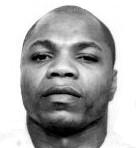
Timothy Cockrell
Murderer Dr. Wouter Basson
Murderer · 1992
Wouter Basson (born July 6, 1950) was a South African cardiologist and the form…
230 victims
Dr. Wouter Basson
Murderer · 1992
Wouter Basson (born July 6, 1950) was a South African cardiologist and the form…
230 victims
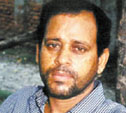 Ershad Sikder
Murderer · Bangladesh · 1990
Ershad Sikder was an influential political figure in the south-western city of…
30 victims
Ershad Sikder
Murderer · Bangladesh · 1990
Ershad Sikder was an influential political figure in the south-western city of…
30 victims
 Brian Kevin Rosenfeld
Murderer · USA · 1985
Brian Kevin Rosenfeld Brian Kevin Rosenfeld was sentenced to three concurrent l…
23 victims
Brian Kevin Rosenfeld
Murderer · USA · 1985
Brian Kevin Rosenfeld Brian Kevin Rosenfeld was sentenced to three concurrent l…
23 victims
 Russell Ellwood
Murderer · USA · 1991
Russell Ellwood was a former taxi driver. Authorities suspected him of killing…
20 victims
Russell Ellwood
Murderer · USA · 1991
Russell Ellwood was a former taxi driver. Authorities suspected him of killing…
20 victims
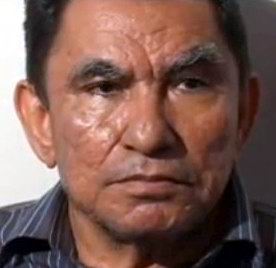 Anisio Ferreira de Sousa
Murderer · Brazil · 1989
September 4, 2003 — Anísio Ferreira de Sousa was sentenced to 77 years in priso…
19 victims
Anisio Ferreira de Sousa
Murderer · Brazil · 1989
September 4, 2003 — Anísio Ferreira de Sousa was sentenced to 77 years in priso…
19 victims
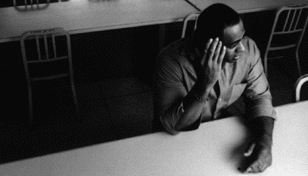 Daniel Webb
Homicide · USA · 1989
Daniel Webb (No 124596) was held at Sommers Correctional Institution in Somers,…
1 victim
Daniel Webb
Homicide · USA · 1989
Daniel Webb (No 124596) was held at Sommers Correctional Institution in Somers,…
1 victim
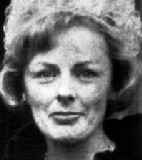 Sheila Garvie
Murderer · United Kingdom · 1967
Sheila Garvie was convicted of the murder of her husband, Maxwell Garvie. Sheil…
1 victim
Sheila Garvie
Murderer · United Kingdom · 1967
Sheila Garvie was convicted of the murder of her husband, Maxwell Garvie. Sheil…
1 victim
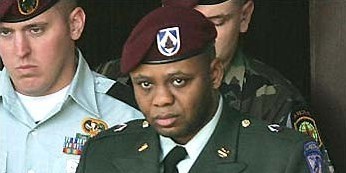 Hasan Akbar
Murderer · Kuwait · 2003
Sergeant Hasan Akbar was a U.S. Army soldier convicted for the murder of two fe…
2 victims
Hasan Akbar
Murderer · Kuwait · 2003
Sergeant Hasan Akbar was a U.S. Army soldier convicted for the murder of two fe…
2 victims
 Rebecca Emmanuel
Murderer · Nigeria · 2008
Rebecca Emmanuel Rebecca Emmanuel was a Nigerian woman who was sentenced to dea…
1 victim
Rebecca Emmanuel
Murderer · Nigeria · 2008
Rebecca Emmanuel Rebecca Emmanuel was a Nigerian woman who was sentenced to dea…
1 victim
- Gender
- male
- Country
- —
- Location
- —
- Date of birth
- December 14, 1963
- Age at first offence
- 29
- Characteristics
- robbery, drugs, drug addict
- Victim profile
- Sandra Deptawa (female, 35)
- Method of murder
- Strangulation Loca tion : Bexar County, Texas, USA
- Date(s) of murder
- August 9, 1992
- Years active
- 1992
- Date of arrest
- —
- Status
-
Sentenced to death
Sentenced to death on August 3, 1993
Case overview
Timothy Cockrell was convicted of the murder of Sandra Deptawa and sentenced to death on August 3, 1993.
Timeline
- August 3, 1993 — Timothy Cockrell was sentenced to death.
- August 7, 1992 — Cockrell helped move Sandra Deptawa into her home as a member of a three-person moving crew.
- August 9, 1992 — Sandra Deptawa's half-naked body was discovered submerged in the bathtub of her new home.
- August 10, 1992 — Police located Deptawa's car at a public housing project and apprehended Kelly Wright as he attempted to drive the car away.
- September 1999 — The Texas Court of Criminal Appeals adopted the state habeas court's recommendation and denied Cockrell's state habeas application.
- February 17, 2004 — The United States Court of Appeals for the Fifth Circuit issued its opinion in No. 03-50483, denying Cockrell's application for a certificate of appealability.
Background
Sandra Deptawa's half-naked body was discovered submerged in the bathtub of her new home. An autopsy revealed that she had been strangled to death. Her mouth had been bound with a curtain tie, and a belt had been tied around her left wrist. Scattered around the house were various items of female clothing, including women's underwear. Several items were missing from Deptawa's house, including jewelry, a vacuum cleaner, a television, and a .25 caliber handgun. Deptawa's car, a Mazda RX-7, was also missing.
Investigation
The police located Deptawa's car at a public housing project the next day. Kelly Wright was apprehended as he attempted to drive the car away. Wright denied stealing the car and claimed that Timothy Cockrell had brought the car to the housing project.
Shannon Haynes, a resident of the housing project, approached police and informed them that Cockrell had brought the car to the housing project and had lent him the car the night before. Haynes led the police to Cockrell's apartment.
Cockrell was arrested on an outstanding parole warrant and was informed that he was a suspect in a capital murder investigation. After being advised of his Miranda rights, Cockrell spoke with San Antonio Police Detective George Saidler. During the course of the conversation, Cockrell confessed to robbing and killing Deptawa.
Cockrell explained he helped move Deptawa into her home on August 7, 1992, as a member of a three-person moving crew, and that he returned to her house two days later intending to steal some of the property he had helped move. Cockrell stated he needed the property to support his $600-a-day cocaine habit. He said he entered Deptawa's house under the pretense of fixing a table that had been broken during the move. Cockrell admitted that he had bound and gagged Deptawa, but he said he could not remember much of what had happened because he had been high on cocaine at the time and had not slept for three days.
Detective Saidler typed up a three-page statement after listening to Cockrell's confession. Saidler read it to Cockrell and had Cockrell sign each page in the presence of two civilian witnesses.
Trial
At trial, the defense argued that Cockrell did not murder Sandra Deptawa and attempted to draw the jury's interest to other possible suspects. The defense highlighted an absence of any evidence at Deptawa's residence that incriminated Cockrell, and suggested that the witnesses against Cockrell were lying. The defense also contended that Cockrell's confession was improperly obtained, based on his apparent inability to read, low I.Q. scores, and poor educational record. The defense argued that Cockrell could not understand the facts contained in his signed confession.
The defense introduced expert testimony from Dr. Ronnie Alexander. Alexander testified that two I.Q. tests given to Cockrell in 1973 and 1978 appeared to show him as ranking in the lowest three percent of the population, with scores ranging from 25 to 35 on the verbal components and 37 to 42 on the performance components. Alexander also testified that he gave Cockrell a battery of reading tests reflecting that his reading comprehension was in the lowest one percent of the adult population. Based on these factors and Cockrell's poor educational background, Alexander opined that Cockrell could neither understand the confession prepared by Detective Saidler nor communicate effectively enough to have given the statement recorded by Saidler. Alexander testified that, in his view, the confession was not voluntary.
On cross-examination, the prosecution extracted concessions from Dr. Alexander that an I.Q. score in the thirties would render Cockrell profoundly mentally retarded. The prosecution also elicited that it was possible Cockrell could have understood at least part of the statement and that Cockrell could have understood a paraphrase of his statement.
After deliberating for less than one full day, the jury returned a guilty verdict.
During the punishment phase, the prosecution introduced evidence regarding Cockrell's lengthy criminal record, including 13 different first-degree felony convictions over a ten-year period. Two correctional officers testified that they had witnessed Cockrell attacking another inmate with a combination lock tied to a belt.
The prosecution called Dr. John C. Sparks, a licensed psychiatrist, who disputed Dr. Alexander's interpretation of the raw scores on Cockrell's I.Q. tests given in 1973 and 1978. Sparks testified that the proper method for interpreting raw I.Q. test scores was to cross-reference the scores with the subject's chronological age, and that doing so with Cockrell's 1970s test scores resulted in a determination that Cockrell had a composite I.Q. somewhere in the mid-70s to mid-80s during that period.
Sparks also testified that the Texas Department of Criminal Justice regularly conducted I.Q. tests on inmates and that, while incarcerated for other offenses during the 1980s, Cockrell had I.Q. test scores of 75, 86, and 93. Sparks testified that an individual with an I.Q. score in the thirties would be unable to care for himself and would have been unable to follow the directions Dr. Alexander had given Cockrell during the reading tests Alexander conducted. Sparks concluded that Cockrell was not mentally retarded.
The jury found, based on the Texas capital murder special issues, that beyond a reasonable doubt there was a probability that Cockrell would commit criminal acts of violence that would constitute a continuing threat to society. The jury further found that, taking into consideration all of the evidence, there were insufficient mitigating circumstances to warrant a sentence of life imprisonment. The jury sentenced Cockrell to death.
Sentencing
Cockrell was sentenced to death.
Appeals
Cockrell's conviction and death sentence were upheld by the Texas Court of Criminal Appeals. The Supreme Court denied Cockrell's petition for a writ of certiorari on direct appeal.
Cockrell filed an application for a writ of habeas corpus in state court. The state court filed findings of fact and conclusions of law recommending that Cockrell's application be denied. In September 1999, the Texas Court of Criminal Appeals adopted the state court's recommendation and denied Cockrell's state habeas application.
Cockrell then filed a federal petition for a writ of habeas corpus arguing that his trial counsel rendered ineffective assistance of counsel in violation of the Sixth Amendment. The district court denied federal habeas relief and also denied Cockrell's application for a certificate of appealability (“COA”). Cockrell then applied to the United States Court of Appeals for the Fifth Circuit for a COA.
Federal habeas COA decision
The Fifth Circuit reviewed the district court’s detailed opinion denying habeas relief and denied Cockrell's application for a certificate of appealability. The court concluded that no reasonable jurist could disagree with the district court's resolution of Cockrell's ineffective assistance claims and that no jurist could conclude the claims deserved encouragement to proceed further.
Ineffective assistance claim framework
To prevail on ineffective assistance claims, Cockrell was required to show that his attorneys failed to investigate or introduce evidence, that this failure amounted to deficient performance, and that he was prejudiced by the failure, citing Johnson v. Cockrell and Strickland v. Washington. Under AEDPA restrictions, federal courts had to defer to a decision of state courts unless the decision was contrary to, or involved an unreasonable application of, clearly established Federal law, or involved an unreasonable determination of the facts in light of the evidence presented.
Court's analysis of evidence and prejudice
The district court noted that Cockrell offered no evidence during the state habeas proceeding suggesting what an I.Q. test performed near the time of Cockrell's trial would have revealed, and that he did not present any evidence regarding what a rebuttal expert called to discuss Dr. Sparks's testimony might have offered. The district court concluded Cockrell failed to show that the state courts unreasonably applied the deficient performance and prejudice prongs of the Strickland test.
The Fifth Circuit agreed, stating that even assuming inadequate investigation and deficient performance, Cockrell did not present even a scintilla of evidence as to how these failures prejudiced his defense. The court referenced Moawad v. Anderson for the requirement that a defendant alleging failure to investigate must allege with specificity what the investigation would have revealed and how it would have altered the outcome, and Andrews v. Collins for the requirement to show evidence of sufficient quality and force to raise a reasonable probability of a different outcome.
The court noted that Cockrell acknowledged, in his reply brief before the court, that his state habeas petition contained no evidence outside the trial record, and that no experts were called by state habeas counsel to substantiate the claims raised in the state writ, including claims regarding the failure by trial counsel to produce mitigation evidence on mental retardation, I.Q., and cocaine-induced behavior.
The court further addressed Cockrell's argument about the potential effect of expert testimony regarding “cocaine psychosis.” The Fifth Circuit stated that, while Cockrell submitted a series of articles regarding “cocaine psychosis” and argued that expert testimony might have assisted the jury, he offered no evidence that Cockrell suffered from such a disease, and evidence of the existence of such a disease, without evidence of its relevance to the case, could not support ineffective assistance. The court also stated Cockrell did not suggest how the outcome was prejudiced by the failure to contend he murdered Deptawa while allegedly suffering from cocaine psychosis.
In addition, the court noted that, apart from the merits, both the state habeas court and the federal district court had noted that Cockrell's trial attorneys testified at the state habeas proceeding that they had legitimate, objectively reasonable, strategic reasons for not presenting potentially double-edged evidence regarding Cockrell's history of cocaine abuse. The court cited Kitchens v. Johnson and Johnson v. Cockrell for principles related to strategic decisions not to introduce double-edged mitigation evidence.
The Fifth Circuit agreed with the district court’s determination that the state courts did not unreasonably conclude that trial counsel’s decision not to highlight past drug use was a product of reasonable strategy rather than lack of adequate investigation, citing Cockrell’s lengthy criminal history and his contention throughout the trial that he did not commit the crime.
Outcome
Cockrell’s application for a certificate of appealability was denied. The Fifth Circuit’s opinion was issued per curiam by Judges Jones, Stewart, and Dennis. The opinion included a footnote stating that the court had determined it should not be published and was not precedent except under the limited circumstances set forth in 5TH CIR. R. 47.5.4.
Other details
The appeal was docketed as United States Court of Appeals for the Fifth Circuit, No. 03-50483. Timothy Cockrell appeared as petitioner-appellant, and Douglas Dretke, Director, Texas Department of Criminal Justice, Correctional Institutions Division appeared as respondent-appellee. The district court proceedings included reference to “Sa-99-ca-1119-fb.” Cockrell’s direct appeal and state habeas proceedings preceded the federal habeas petition that resulted in the denial of a COA, which led to his application to the Fifth Circuit.
Spotted an error, or have more information about this case?