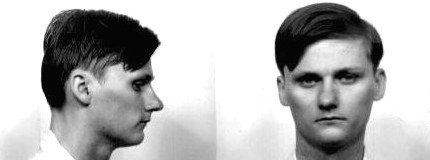
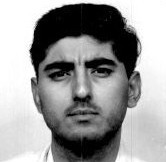
James Walter Moreland
Murderer Ervil LeBaron
Murderer · USA · 1972
Ervil Morrell LeBaron (1925 to August 16, 1981) was the leader of a polygamous…
35 victims
Ervil LeBaron
Murderer · USA · 1972
Ervil Morrell LeBaron (1925 to August 16, 1981) was the leader of a polygamous…
35 victims
 Brian Kevin Rosenfeld
Murderer · USA · 1985
Brian Kevin Rosenfeld Brian Kevin Rosenfeld was sentenced to three concurrent l…
23 victims
Brian Kevin Rosenfeld
Murderer · USA · 1985
Brian Kevin Rosenfeld Brian Kevin Rosenfeld was sentenced to three concurrent l…
23 victims
 Marvin Gray
Murderer · USA · 1975
Marvin Gray was convicted killer who claimed responsibility for 23 slayings and…
23 victims
Marvin Gray
Murderer · USA · 1975
Marvin Gray was convicted killer who claimed responsibility for 23 slayings and…
23 victims
 Yahweh ben Yahweh
Murderer · USA · 1980
Yahweh ben Yahweh was born and legally named Hulon Mitchell Jr. (October 27, 19…
23 victims
Yahweh ben Yahweh
Murderer · USA · 1980
Yahweh ben Yahweh was born and legally named Hulon Mitchell Jr. (October 27, 19…
23 victims
 Russell Ellwood
Murderer · USA · 1991
Russell Ellwood was a former taxi driver. Authorities suspected him of killing…
20 victims
Russell Ellwood
Murderer · USA · 1991
Russell Ellwood was a former taxi driver. Authorities suspected him of killing…
20 victims
 Donell Okeith Jackson
Murderer · USA · 1993
Donell Okeith Jackson was convicted of capital murder and was sentenced to deat…
1 victim
Donell Okeith Jackson
Murderer · USA · 1993
Donell Okeith Jackson was convicted of capital murder and was sentenced to deat…
1 victim
 Carlos de Luna
Murderer · USA · 1983
Carlos de Luna was executed by lethal injection in Texas on December 7, 1989. H…
1 victim
Carlos de Luna
Murderer · USA · 1983
Carlos de Luna was executed by lethal injection in Texas on December 7, 1989. H…
1 victim
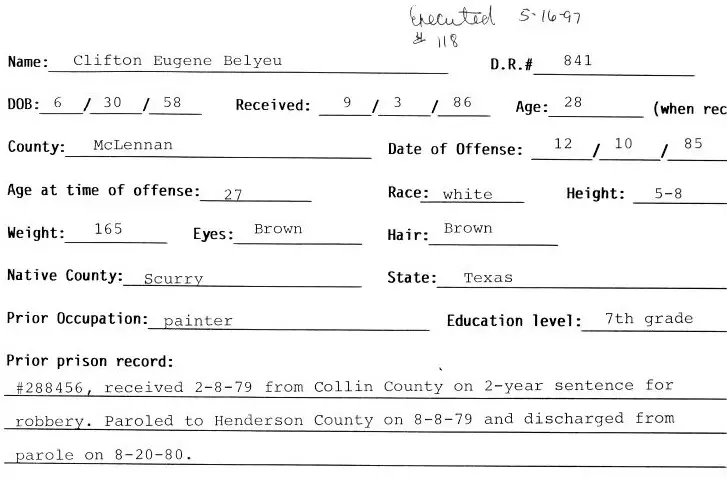 Clifton Eugene Belyeu
Murderer · USA · 1985
Clifton Eugene Belyeu was arrested, convicted, and put to death by lethal injec…
1 victim
Clifton Eugene Belyeu
Murderer · USA · 1985
Clifton Eugene Belyeu was arrested, convicted, and put to death by lethal injec…
1 victim
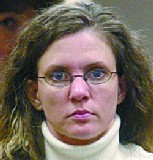 Michelle Reynolds
Murderer · USA · 2004
Michelle Reynolds — defendant; pleaded guilty to voluntary manslaughter and bur…
1 victim
Michelle Reynolds
Murderer · USA · 2004
Michelle Reynolds — defendant; pleaded guilty to voluntary manslaughter and bur…
1 victim
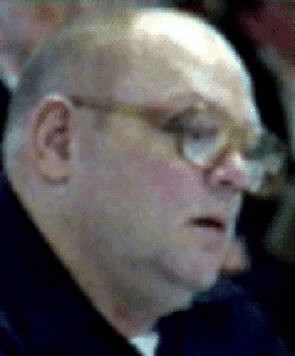 Billy Bailey
Murderer · USA · 1979
Billy Bailey (1947? - January 25, 1996) was a convicted murderer who was execut…
2 victims
Billy Bailey
Murderer · USA · 1979
Billy Bailey (1947? - January 25, 1996) was a convicted murderer who was execut…
2 victims
- Gender
- male
- Country
- USA
- Location
- Henderson County, Texas, USA
- Date of birth
- May 15, 1960
- Age at first offence
- 22
- Characteristics
- hitchhiking, robbery
- Victim profile
- Clinton Corbet Abbott , 53, and John Cravey, 41 (gay men)
- Method of murder
- St abbing with knife
- Date(s) of murder
- October 9, 1982
- Years active
- 1982
- Date of arrest
- 4 days after
- Status
-
Executed
Executed by lethal injection in Texas on January 27, 2000
Case record: James Walter Moreland
Status and execution
James Walter Moreland was executed by lethal injection in Texas on January 27, 2000.
On execution day, he was pronounced dead at 6:21 p.m., 8 minutes after the flow of lethal drugs began.
Before the lethal drugs were administered, he said: "Jesus, God, Lord."
He delivered a lengthy final statement. He told his father and brother, watching through a window nearby, that he loved them. He said:
Dad, I love you both. You've been the best. All of you, all of you have truly been the best. And ah, I believe I'm going home. I'm sorry, and I really mean that, it's not just words. My life is all I can give. I stole 2 lives and I know it was precious to ya'll. That's the story of my whole, that's what alcohol will do for you. Oh Jesus, Lord God, take me home. Precious Lord. Take me home Lord. Take me home. Yes, sir. Take me home oh Lord.
He sang the words "take me home Lord" as lethal drugs were administered through his veins. He took 2 deep breaths, then exhaled four times before falling into unconsciousness.
Victims and location of offence
On October 9, 1982, at approximately 11 p.m., the bodies of Clinton Abbott and John Cravey were discovered in Cravey’s trailer home in Eustace, Texas.
The victims had been stabbed in the back numerous times. Cravey’s body was on the floor by a blood-stained couch in the front room. Abbott’s body was in the back bedroom on the floor next to a bed.
Two bloody knives were found on top of a dresser.
The trailer showed no signs of a struggle.
Additional scene items included Cravey’s empty wallet lying on a small table in the front room and $16 found in the front pocket of Cravey’s pants. Abbott’s keys were found in the grass beside his Pinto.
Background and circumstances described at trial
Moreland was an Indiana native aged 39 at the time of execution. He never denied killing Clinton Corbet Abbott and John Royce Cravey.
Moreland’s account involved drinking and hitchhiking. In his written confession and at trial, he said that he had been drinking heavily and was hitchhiking to buy beer when the men offered him a ride and invited him back to Cravey’s trailer.
Moreland claimed that after about an hour and a half of drinking, he was left alone with Cravey. He said Cravey began behaving amorously, putting his hand on Moreland’s leg and rubbing it. As Moreland got up off the couch to leave, Moreland said Cravey grabbed the back of his pants, pulling them about halfway down and causing him to fall to the floor.
Moreland stated that he stood up and pulled his pants back up, and that Cravey followed him into the kitchen. He said Cravey continued to pursue him, so he picked up a knife from the kitchen table and stabbed him.
Moreland told investigators he did not remember how many times he stabbed Cravey, but that he remembered Cravey struck him on top of the head with something before he picked up the knife. He said it was when Cravey raised his arm to strike him a second time that he picked up the knife.
Moreland said he thought "it was either him or me," and that Cravey was going to rape or hurt him. He also said he did not know if he had killed Cravey, but wanted to get out of there.
He said that when he started for the doorway, Abbott came out of the bedroom and yelled at him. He said he panicked, ran up to Abbott, and stabbed him in the doorway of the bedroom.
Moreland stated that he then went where Cravey was lying and took the money out of his billfold to "get out of the area." He also related that he took the car keys from the floor of the trailer but was unable to drive because he was too scared.
He testified that after staying in the woods all night, he entered Dallas the next morning and bought a bus ticket to Bedford, Indiana. He said his father told him both men were dead, and that until that time he did not know if he had killed them. He claimed that he was leaving to go back to Texas to turn himself in when police arrested him.
At trial, medical testimony was presented through the Dallas County Chief Medical Examiner, who testified that Abbott had a blood-alcohol level of .24 and Cravey had a blood-alcohol level of .19 at the time of their deaths.
The medical examiner testified that the results of tests were consistent with Cravey and Abbott having stopped drinking and probably fallen asleep from one and one-half to two and one-half hours before their deaths.
The medical examiner testified that Abbott and Cravey each had seven stab wounds in a small area in the upper middle portion of their backs in a pattern so similar that the two victims were almost confusing in their similarity. The wounds were consistent with a sleeping person lying on his stomach on a bed or a couch repeatedly being stabbed by someone standing over him.
The medical examiner also testified that shallow defensive-type wounds were found on the back of the victims’ right hands. The medical examiner found that Cravey had a superficial stab wound to his front left shoulder that could have been inflicted in a face-to-face confrontation.
The medical examiner stated that someone receiving the type of back wounds Cravey and Abbott had would be able to move around for a brief period of time before dying.
Moreland testified and corroborated most of his confession, admitting to stabbing Abbott and Cravey numerous times in the back and taking some of their property. He testified that he was wearing boots he claimed Cravey gave him when he left the trailer home.
Moreland contradicted his confession on the circumstances of Abbott’s death. He testified that after he finished stabbing Cravey, Abbott ran out of the rear bedroom all the way down the hallway to the entrance of the living room and was yelling something at him. Moreland testified they met at the entrance of the living room and started fighting.
He testified that Abbott had him by the neck in the hallway while Moreland still held the knife. He said they wrestled down the hallway into the rear bedroom and fell on top of the bed. He said he could not remember how many times he stabbed Abbott.
On cross-examination, Moreland testified he told the truth when he gave the written confession. The state used Moreland’s confession to impeach his trial testimony about the circumstances of Abbott’s death.
In his defence, Moreland presented evidence about Cravey’s drinking history, including that Cravey was a heavy drinker and had been arrested twice for public intoxication and once for disorderly conduct within 10 months of his death. The Eustace police chief, James Cook, testified Cravey never became violent during his arrests and was easy to handle when he was intoxicated.
In rebuttal, the state presented several witnesses who knew Cravey. They testified that he never exhibited homosexual tendencies or made homosexual advances. Other evidence showed Cravey was in poor health and witnesses described him as physically weak.
The state presented evidence to suggest Moreland stabbed the two drunken men as they slept, including that other than shallow cuts on the victims’ hands there was little evidence of a struggle in the trailer. Two bloody kitchen knives were found on a dresser.
Investigation and arrest
On October 12, 1982, authorities obtained two arrest warrants for James Walter Moreland in Henderson County based on information they received the day before from Moreland’s cousin, David Osborne.
On October 13, 1982, local authorities arrested Moreland in Bedford, Indiana.
Authorities in Bedford searched the apartment of Barbara Brown, Moreland’s sister, recovering cut-up remnants of Cravey’s boots from a trash can. Moreland’s father also gave them a medicine bottle with the name "Cravey, Jo" on the label.
Moreland verbally confessed and then gave a written confession to Bedford police. His confession stated that he had been drinking that day and that he started hitchhiking into town. He said Cravey and Abbott drove an old car and stopped to pick him up. He said he accepted their invitation to return to the driver’s trailer home.
In his confession, he said that by that time he had "probably drank six to eight beers." He said he continued to drink with the two men from a 12-pack of Old Milwaukee beer as they drove into town. He said "he thought both of these guys were okay and were just having a good time," so he accepted their invitation to return to the driver’s trailer home.
Moreland stated that after arrival at the trailer home, all three men entered the living room and continued to drink more beer for another hour and a half. He said Abbott left the room at some point, leaving himself and Cravey alone in the living room.
Cravey’s ex-wife, who lived across the street, told authorities and later testified that she last saw the victims alive about noon on the day they were murdered and that they had been drinking. She stated that Abbott’s brown Pinto arrived in front of the trailer home around 8:00 p.m. Shortly before she discovered the victims, she saw a man trying to leave in Abbott’s car. When the car became disabled on a steel rod in a neighbor’s yard, the man got out and fled.
Trial
Moreland was indicted on December 1, 1982, for the capital murder of Clinton Abbott.
He was tried in the 173rd District Court of Henderson County before a jury upon a plea of not guilty.
On June 15, 1983, the jury found him guilty of the capital offense.
In accordance with Texas law, the trial court sentenced Moreland to death.
The conviction and sentence were automatically appealed to the Texas Court of Criminal Appeals, which affirmed the conviction and sentence on January 13, 1993.
Moreland’s petition for writ of certiorari was denied by the United States Supreme Court on June 14, 1993.
At trial, the state presented medical testimony and used Moreland’s confession to impeach his trial testimony on the circumstances of Abbott’s death.
Prior criminal history and substance use
At trial, Moreland testified that he had been charged with burglarizing two homes in Texas when he was 17. He said he pled out of one burglary charge and was placed on felony probation for five years in the other charge. He said that within one week of being placed on probation for the Texas burglary, he burglarized a Texaco station in Florida and stole a truck, and he was placed on probation for five years for the Florida incident.
Moreland testified that he committed several misdemeanor offenses in Indiana in 1977 and 1978 for illegal consumption and possession of alcohol, public intoxication, and resisting arrest.
Moreland testified that the only times he had problems with the law were when he had been drinking. He attended a drug abuse center in Florida but quit after a month. He denied he had a drug or alcohol problem. However, his confession stated he had consumed "six to eight beers" before meeting the victims and that he continued to consume alcohol with the deceased prior to their deaths.
Appeals and habeas corpus history
Moreland originally filed a petition for writ of habeas corpus in federal district court on August 26, 1993, and that court dismissed the petition without prejudice due to his failure to exhaust state remedies.
Moreland filed an application for writ of habeas corpus with the trial court on March 22, 1996. On July 12, 1996, the Court of Criminal Appeals denied habeas relief.
Moreland filed a second federal petition for writ of habeas corpus on November 12, 1996. The district court denied the petition December 11, 1997. Moreland filed a notice of appeal which the district court denied permission March 30, 1998.
The United States Court of Appeals for the Fifth Circuit affirmed the district court’s denial of habeas relief May 10, 1999.
Moreland’s subsequent petition for writ of certiorari in the Supreme Court was denied October 12, 1999, and rehearing was denied November 29, 1999.
Moreland’s clemency petition was pending, and he requested permission to file a third federal habeas petition from the Fifth Circuit as of January 21, 2000.
Moreland v. Scott, 175 F.3d 347 (5th Cir. 1999) (Habeas) involved Moreland seeking review of the district court’s denial of his application for federal habeas relief from his judgment of conviction in 1983 of capital murder and sentence of death by the State of Texas.
The Fifth Circuit described that the two victims were each stabbed numerous times in a small area of the upper portion of their backs, and that the pattern of wounds and absence of resistance were consistent with their being asleep when stabbed.
The Fifth Circuit noted that Moreland’s first federal habeas petition was dismissed in October 1995 for failure to exhaust state remedies, that the state denied on the merits his application for collateral relief on July 12, 1996, and that the present federal suit followed.
The Fifth Circuit described that the district court granted the state’s motion for summary judgment on the recommendation of the magistrate judge, refused leave to amend the application, and denied Moreland’s request for a certificate of appealability. Moreland applied to the Fifth Circuit for a certificate of appealability and asked that the COA be granted on eight issues. The Fifth Circuit declined to issue a COA on any issue except Moreland’s contention that he did not have the effective assistance of counsel in making his decision to reject a tendered plea bargain.
The Fifth Circuit described Moreland’s contention that his attorneys rendered ineffective assistance in rejecting a favorable plea bargain. Moreland contended in his habeas application that the state had offered him a 50-year maximum sentence in exchange for his guilty plea. The Fifth Circuit described that Moreland’s attorney, Billy Bandy, urged him to reject the offer because he believed that a trial-court ruling, denying Moreland’s motion to suppress a custodial statement, would be reversed on appeal. The Fifth Circuit also described that Mr. Bandy added that he would be running for district attorney in the next election and would arrange for a more favorable plea agreement after the conviction was reversed. Moreland rejected the proposed plea bargain before trial.
Additional quoted statements during reporting
In a recent death row interview referenced in reporting, Moreland said:
For me, after 16 and a half, almost 17 years in the penitentiary, dying isn't hard. It's living that's hard.
Moreland told the Athens Daily Review:
There's no doubt in my mind that what I did was wrong. But some of the things they did at that trial were wrong, too. If you're going to convict a man, especially if you're going to take his life, I'd think you'd have to do it fairly.
Reporting also included statements from relatives of the victims. Robert Cravey said:
My brother was by no means a homosexual. I know this for a fact. Neither was Clint. He'd have fought you if you even mentioned it to him.
Fane Abbott Morton said:
I look at his picture in the paper, and he looks like a mad dog to me. He needs to be put out of his misery.
Robert Cravey also said:
That's what I hate about it the most. "It should have already been done, and I blame the state for it."
An attorney named James T. Maloney supported Moreland’s claim about trial mishandling and said:
There were a number of errors in Mr. Moreland's trial dealing with the nature of the indictment ... the jury selection process and the sufficiency of evidence that were not properly preserved.
Other details
A Texas Attorney General media advisory stated that James Walter Moreland was scheduled to be executed after 6 p.m. on Thursday, January 27th.
The media advisory described witnesses and medical evidence, including that two victims each had seven stab wounds to the back in a pattern consistent with an attack from above while they slept on their stomachs, and that evidence indicated neither victim struggled with his attacker.
The advisory said investigators arrived at the scene and found two bloody knives on top of a dresser in a hallway a few feet from Abbott’s body, Cravey’s empty wallet in the front room, $16 found in the front pocket of Cravey’s pants, and Abbott’s keys beside his Pinto, and reiterated that the trailer showed no signs of a struggle.
Moreland’s father gave authorities a medicine bottle with the name "Cravey, Jo" on the label.
Moreland’s execution was described as the last in a controversial string of executions in Texas in January, and as the seventh condemned inmate put to death in Texas that year in a series of executions. Reporting also stated that Moreland became the 12th condemned inmate to be put to death in the USA in that year and the 610th overall since America resumed executions on Jan. 17, 1977.
Spotted an error, or have more information about this case?