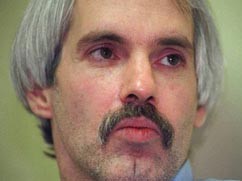
Richard Allen Moran
Murderer Brian Kevin Rosenfeld
Murderer · USA · 1985
Brian Kevin Rosenfeld Brian Kevin Rosenfeld was sentenced to three concurrent l…
23 victims
Brian Kevin Rosenfeld
Murderer · USA · 1985
Brian Kevin Rosenfeld Brian Kevin Rosenfeld was sentenced to three concurrent l…
23 victims
 Marvin Gray
Murderer · USA · 1975
Marvin Gray was convicted killer who claimed responsibility for 23 slayings and…
23 victims
Marvin Gray
Murderer · USA · 1975
Marvin Gray was convicted killer who claimed responsibility for 23 slayings and…
23 victims
 Yahweh ben Yahweh
Murderer · USA · 1980
Yahweh ben Yahweh was born and legally named Hulon Mitchell Jr. (October 27, 19…
23 victims
Yahweh ben Yahweh
Murderer · USA · 1980
Yahweh ben Yahweh was born and legally named Hulon Mitchell Jr. (October 27, 19…
23 victims
 Russell Ellwood
Murderer · USA · 1991
Russell Ellwood was a former taxi driver. Authorities suspected him of killing…
20 victims
Russell Ellwood
Murderer · USA · 1991
Russell Ellwood was a former taxi driver. Authorities suspected him of killing…
20 victims
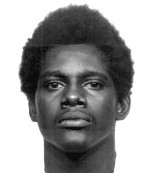 James Demouchette
Murderer · USA · 1976
James Demouchette was executed by lethal injection in Texas on September 22, 19…
3 victims
James Demouchette
Murderer · USA · 1976
James Demouchette was executed by lethal injection in Texas on September 22, 19…
3 victims
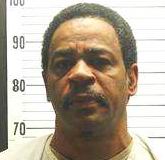 Farris Morris
Murderer · USA · 1994
Farris Genner Morris Jr. was the defendant in State of Tennessee v. Farris Genn…
2 victims
Farris Morris
Murderer · USA · 1994
Farris Genner Morris Jr. was the defendant in State of Tennessee v. Farris Genn…
2 victims
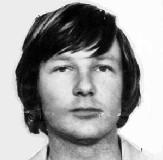 Samuel Leonard Boyd
Murderer · Australia · 1982
Samuel Leonard Boyd was sentenced to 5 consecutives sentences of life imprisonm…
4 victims
Samuel Leonard Boyd
Murderer · Australia · 1982
Samuel Leonard Boyd was sentenced to 5 consecutives sentences of life imprisonm…
4 victims
 Andrew Thomas
Murderer · USA · 1997
Andrew Thomas and his co-defendant, Anthony Bond, were indicted for the felony…
1 victim
Andrew Thomas
Murderer · USA · 1997
Andrew Thomas and his co-defendant, Anthony Bond, were indicted for the felony…
1 victim
- Gender
- male
- Country
- USA
- Location
- Clark County, Nevada, USA
- Date of birth
- 1954
- Age at first offence
- 30
- Characteristics
- robbery, drugs
- Victim profile
- Sandra Devere, 24 (bartender) and Russell Rhodes, 27 (cook) / Linda Vandervoort ( his former wife )
- Method of murder
- Shooting
- Date(s) of murder
- August 2/11, 1984
- Years active
- 1984
- Date of arrest
- August 13, 1984 (suicide attempt)
- Status
-
Executed
Executed by lethal injection in Nevada on March 30, 1996
Case record: Richard Allen Moran
Background
Richard Allen Moran was executed by lethal injection in Nevada on March 30, 1996.
The Supreme Court of the United States decision in Godinez v. Moran, 509 U.S. 389 (1993), involved issues of a defendant’s competency to stand trial and competency to plead guilty or waive the right to legal counsel.
The offence
In August 1984, Richard Allen Moran killed three people in two separate incidents.
Saloon murders and arson
On August 2, 1984, Moran entered the Red Pearl Saloon. He shot and killed the bartender and a patron at the saloon. After the shootings, he stole the cash register, the bartender’s purse, and racks of money that he had seen the bartender place under a cupboard. He also set fire to the saloon in an attempt to burn it down.
Moran confessed to the murders while in the hospital, recovering from his suicide attempt.
Moran took his former companion, Tammy Cortez, into danger during the saloon murders. Cortez accompanied Moran to the saloon and was present when Moran shot the bartender and the patron numerous times. Cortez stated she was in fear for her life. During the murders, Moran had to reach around her in order to shoot the patron.
Two court-ordered psychiatrists concluded that he was competent to stand trial, although both noted he was depressed.
Murder of his former wife and suicide attempt
Nine days after the saloon killings, Moran fatally shot his former wife, Linda Vandervoort. During this murder, Moran unsuccessfully attempted suicide. On the same occasion, he also unsuccessfully tried to slit his wrists.
Moran summoned the police to his hospital bedside and confessed to the killings.
Investigation
Arrest
Trial
Moran was charged with three counts of first-degree murder. He pleaded not guilty initially, but later discharged his counsel and pleaded guilty to all counts.
The two cases were consolidated for all purposes before the state court.
Moran was charged with:
- two counts of murder with use of a deadly weapon for the saloon murders, and
- one count of murder with use of a deadly weapon for the murder of his ex-wife. He was also charged with:
- two counts of robbery with use of a deadly weapon, and
- first-degree arson.
A three-judge state court panel sentenced Moran to death for each of the murders.
The Nevada Supreme Court affirmed the death sentence for the saloon murders, but vacated the death sentence for the murder of Moran’s ex-wife, and remanded with directions to impose a life sentence without the possibility of parole (Moran v. State, 103 Nev. 138, 734 P.2d 712 (1987)).
Sentencing
Moran was sentenced to death for murdering Sandra Devere, 24, a bartender, and Russell Rhodes, 27, a cook, at the Red Pearl Saloon in Las Vegas in August 1984 during what he said was a state of cocaine-induced paranoia.
At sentencing, the panel found two aggravating factors:
- the murders were at random and without apparent motive, and
- Moran placed another person in danger of death during the murders.
The sentencing panel found two mitigating factors:
- Moran had no significant criminal history, and
- Moran exhibited remorse for the saloon murders.
Moran stated he was under the influence of “lotsa drugs.” The sentencing panel did not find this to be a mitigating circumstance in this case.
After the Nevada Supreme Court vacated the death sentence for the murder of Moran’s ex-wife, it directed imposition of a life sentence without the possibility of parole for that murder.
Appeals
Initial state and federal habeas proceedings; first appeal and reversal
After unsuccessfully seeking post-conviction relief from the Nevada state courts, Moran filed his first federal petition for habeas corpus relief in the United States District Court for the District of Nevada. The district court denied Moran’s petition.
Moran appealed to the Ninth Circuit. In his opening brief, Moran raised these arguments:
- his plea and waiver of counsel were not freely and voluntarily entered because he was heavily medicated at the time of his guilty plea,
- he received ineffective assistance of counsel because his counsel failed to investigate or raise any defenses,
- the evidence did not support the aggravating circumstances found,
- the sentencing panel violated his due process rights by refusing to find his intoxicated state constituted a mitigating circumstance, and
- the sentencing panel violated his due process rights by consolidating the two actions at the penalty hearing.
The Ninth Circuit reversed the district court’s denial of Moran’s petition for habeas corpus. The Ninth Circuit concluded that the state trial court deprived Moran of due process rights by failing to hold a hearing to determine his competency to waive constitutional rights to counsel, to compulsory process, to confront witnesses, to a public trial, to a jury of his peers, and his privilege against self-incrimination.
The Ninth Circuit stated: “Competency to waive constitutional rights requires a higher level of mental functioning than that required to stand trial.”
Because the Ninth Circuit reversed on that ground, it declined to reach the other issues raised in Moran’s appeal.
The Supreme Court granted certiorari and reversed. The Supreme Court held that the standards were the same to determine competency to stand trial and competency to waive counsel and plead guilty, and held that a defendant must be knowing and voluntary in waiving rights. The Supreme Court remanded for further proceedings.
On remand, after reexamining the issues in light of the Supreme Court’s decision, the Ninth Circuit concluded that the post-conviction hearing addressing Moran’s competency had cured the due process violation and that his waiver was knowing and voluntary.
The Ninth Circuit also rejected Moran’s ineffective assistance of counsel claim, concluding Moran’s counsel was not ineffective by failing “to investigate whether he was competent to plead guilty, waive counsel, and forego the presentation of mitigating evidence” and by failing to investigate and research all possible defenses.
Judge Pregerson dissented.
Moran filed a petition for rehearing and suggestion for rehearing en banc on December 30, 1994; his rehearing petition was denied. A judge called for rehearing en banc, but the call failed to receive a majority of the votes of the active judges, and the suggestion for rehearing en banc was rejected.
Moran then filed a petition for certiorari with the Supreme Court; certiorari was denied in November 1995.
Second state post-conviction relief and federal habeas; procedural bar and abuse of the writ
In December 1995, Moran filed a second petition for post-conviction relief in the Nevada state trial court. In February 1996, the state trial court denied this petition. Moran’s request for reconsideration was also denied, and the state trial court scheduled his execution for the week of March 25, 1996.
On March 7, 1996, Moran appealed the state trial court’s denial of his petition for post-conviction relief to the Nevada Supreme Court.
During the pendency of these proceedings, Moran filed in the Ninth Circuit a motion to recall the mandate after his opinion issued following the filing of the opinion on November 15, 1994, and amended on June 2, 1995. Moran also requested a stay of execution.
On March 21, 1996, the Nevada Supreme Court affirmed the state trial court’s dismissal of Moran’s second post-conviction petition. It concluded the claims were procedurally barred under state law as untimely.
On March 22, 1996, the United States District Court for the District of Nevada heard oral argument and determined that federal review was precluded because the Nevada Supreme Court’s dismissal rested on adequate and independent state procedural grounds and because Moran’s federal habeas petition was an abuse of the writ.
Moran filed a notice of appeal and a motion for a stay of his execution. On March 27, 1996, the Ninth Circuit heard oral argument on the motion to recall the mandate and on the motion for a stay of execution.
Outcome
The Ninth Circuit affirmed the denial of Moran’s habeas corpus petition and denied his application for a stay of execution.
Moran’s motion to recall the mandate and his motions to stay execution were denied.
Richard Allen Moran decided to forgo further appeals after a Federal court rejected his request for a stay of execution.
He was executed by lethal injection in Nevada on March 30, 1996.
The statement signed by Moran and read after the execution by Bob Bayer, director of Nevada’s prisons, included the following:
“I chose my life style of drugs and alcohol, so there is no one to blame except me,”
“I'm truly ashamed for what I've done.”
Her brothers, Bill and Charles Vandervoort, were among nine people who watched Mr. Moran die.
Other details
Supreme Court issue discussed in Godinez v. Moran
The Supreme Court ruled that if a defendant was competent to stand trial, they were automatically competent to plead guilty or waive the right to legal counsel.
Justice Kennedy’s concurring opinion included this statement:
“At common law, therefore, no attempt was made to apply different competency standards to different stages of criminal proceedings or to the variety of decisions that a defendant [509 U.S. 389, 407] must make during the course of those proceedings.”
The decision further included this statement:
“does not mandate different standards of competency at various stages of or for different decisions made during the criminal proceedings.”
The discussion also emphasized that the trial judge had to determine if the waiver was “voluntary” and “intelligent.”
The decision also referenced McKaskle v. Wiggins, addressing standby counsel for a pro se defendant, including that standby counsel could be provided if the pro se defendant had actual control over the presentation of the case and the jury retained the belief the defendant was in charge.
Charges and plea details relevant to sentencing eligibility arguments
Moran argued that the sentencing panel allegedly found him guilty only of second degree murder and that he was not properly convicted on his guilty plea to first degree felony murder. The Ninth Circuit addressed whether Moran had demonstrated by clear and convincing evidence that he was not eligible for the death penalty.
In the change-of-plea hearing, the state trial court explained that first degree murder included killings “committed in the perpetration or attempted perpetration of a ... robbery.”
The state trial court asked questions, and Moran answered: Q: And did you do that at the time of the perpetration of a robbery? A: Yes.
Q: And did you do that during the perpetration of that robbery? A: Yes.
During his confession in the hospital, he stated that the patron he eventually shot was talking to a “fat girl” in the saloon. He stated that when the “fat girl” left the saloon with the patron, the patron returned alone about five minutes later. When asked when he “develop[ed] the intention of robbing the place,” he answered: “Well, it was after that fat girl left.”
Moran also stated he paid attention to where the bartender was placing racks of money and then, after the killings, he took this money. When asked, “Once you shot the bartender and the guy, then what did you do,” Moran answered: “Then I started robbing everything I could rob.”
The Ninth Circuit also noted Moran had a severe drug addiction and was unemployed at the time of the robbery.
Additional issues raised in Moran’s second federal petition
In his second federal petition, Moran contended:
- his guilty plea was invalid because the sentencing panel allegedly found him guilty of only second degree murder,
- the use of the three-judge sentencing panel to determine his sentence was unconstitutional,
- the random and apparently motiveless aggravating factor is unconstitutionally vague, shifts the burden of proof to Moran, provides no rational basis for imposing the death penalty, and violated his right against self-incrimination,
- the facts do not support a finding of the aggravating factor of presenting a danger of death to others,
- the sentencing panel failed to find Moran’s state of intoxication to be a mitigating circumstance,
- his appellate counsel's failure to raise claims one through five constitutes ineffective assistance of appellate counsel,
- the Nevada Supreme Court failed to conduct an adequate review because it did not consider his intoxication as a mitigating circumstance, did not address the alleged unconstitutionality of the three-judge sentencing panel, and did not consider the sentencing panel's alleged failure to find Moran guilty of first degree murder,
- the absence of articulable standards under which the Nevada Supreme Court reviews death sentences renders its review unconstitutional, and
- the death penalty constitutes cruel and unusual punishment.
Timeline
- August 2, 1984 — Moran entered the Red Pearl Saloon, shot and killed the bartender and a patron, stole the cash register and other money, and set fire to the saloon in an attempt to burn it down.
- August 13, 1984 — Moran summoned the police to his hospital bedside and confessed to the killings.
- November 15, 1994 — The Ninth Circuit issued its opinion in Moran v. Godinez, 57 F.3d 690.
- December 30, 1994 — Moran filed a petition for rehearing and a suggestion for rehearing en banc.
- June 2, 1995 — The Ninth Circuit amended its opinion.
- November 1995 — The Supreme Court denied certiorari.
- December 1995 — Moran filed a second petition for post-conviction relief in Nevada state trial court.
- February 1996 — The Nevada state trial court denied the second petition for post-conviction relief.
- March 25, 1996 (week) — The state trial court scheduled execution for the week of March 25, 1996.
- March 7, 1996 — Moran appealed the state trial court’s denial of his petition for post-conviction relief to the Nevada Supreme Court.
- March 21, 1996 — The Nevada Supreme Court affirmed the dismissal of Moran’s second post-conviction petition on procedural grounds.
- March 22, 1996 — The United States District Court heard oral argument on Moran’s second federal habeas petition and request for a stay of execution and found federal review precluded.
- March 27, 1996 — The Ninth Circuit heard oral argument on the motion to recall the mandate and the motion for a stay of execution.
- March 28, 1996 — The Ninth Circuit decided appeal in Moran v. McDaniel, 96-99007.
- March 30, 1996 — Moran was executed by lethal injection in Nevada.


Spotted an error, or have more information about this case?