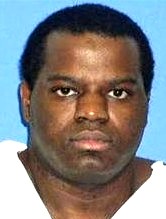
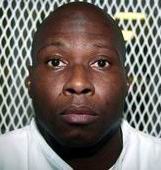
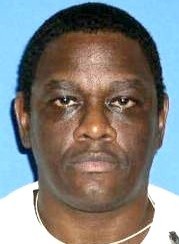
Donell Okeith Jackson
Murderer Brian Kevin Rosenfeld
Murderer · USA · 1985
Brian Kevin Rosenfeld Brian Kevin Rosenfeld was sentenced to three concurrent l…
23 victims
Brian Kevin Rosenfeld
Murderer · USA · 1985
Brian Kevin Rosenfeld Brian Kevin Rosenfeld was sentenced to three concurrent l…
23 victims
 Russell Ellwood
Murderer · USA · 1991
Russell Ellwood was a former taxi driver. Authorities suspected him of killing…
20 victims
Russell Ellwood
Murderer · USA · 1991
Russell Ellwood was a former taxi driver. Authorities suspected him of killing…
20 victims
 Robert Martines Perez
Murderer · USA · 1994
Name: Robert Martines Perez · Other name used in proceedings: Robert Martinez P…
15 victims
Robert Martines Perez
Murderer · USA · 1994
Name: Robert Martines Perez · Other name used in proceedings: Robert Martinez P…
15 victims
 Billy Frank Vickers
Murderer · USA · 1993
Billy Frank Vickers Vickers was executed by lethal injection in Texas on Januar…
14 victims
Billy Frank Vickers
Murderer · USA · 1993
Billy Frank Vickers Vickers was executed by lethal injection in Texas on Januar…
14 victims
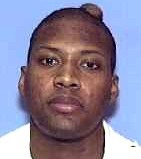 Christopher Coleman
Murderer · USA · 1995
December 14, 1995 — A man approached the passenger side of a car occupied by fo…
3 victims
Christopher Coleman
Murderer · USA · 1995
December 14, 1995 — A man approached the passenger side of a car occupied by fo…
3 victims
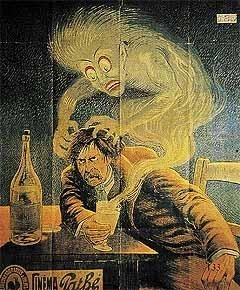 Jean Lanfray
Homicide · Switzerland · 1905
Jean Lanfray (1873/74 – February 26, 1906) was a Swiss laborer. He was convicte…
3 victims
Jean Lanfray
Homicide · Switzerland · 1905
Jean Lanfray (1873/74 – February 26, 1906) was a Swiss laborer. He was convicte…
3 victims
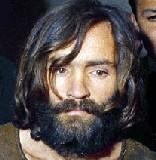 Charles Manson
Murderer · USA · 1969
Charles Milles Manson (born November 12, 1934) was an American criminal and mus…
9 victims
Charles Manson
Murderer · USA · 1969
Charles Milles Manson (born November 12, 1934) was an American criminal and mus…
9 victims
 Anton Probst
Mass murderer · USA · 1866
Anton Probst was born in Germany in 1843 and came to the United States in 1863,…
8 victims
Anton Probst
Mass murderer · USA · 1866
Anton Probst was born in Germany in 1843 and came to the United States in 1863,…
8 victims
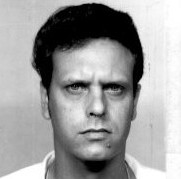 David Wayne Spence
Murderer · USA · 1982
David Wayne Spence was executed by lethal injection in Texas on April 3, 1997.…
3 victims
David Wayne Spence
Murderer · USA · 1982
David Wayne Spence was executed by lethal injection in Texas on April 3, 1997.…
3 victims
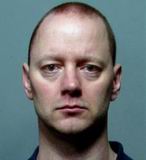 Shaun Thrower
Murderer · United Kingdom · 1994
Shaun Thrower was convicted of the murder of 17-year-old Amanda Wagg and was se…
1 victim
Shaun Thrower
Murderer · United Kingdom · 1994
Shaun Thrower was convicted of the murder of 17-year-old Amanda Wagg and was se…
1 victim
- Gender
- male
- Country
- USA
- Location
- Harris County, Texas, USA
- Date of birth
- December 11, 1972
- Age at first offence
- 21
- Characteristics
- murder for hire
- Victim profile
- Mario Stubblefield (male, 17)
- Method of murder
- Shooting
- Date(s) of murder
- August 31, 1993
- Years active
- 1993
- Date of arrest
- 1995
- Status
-
Executed
Executed by lethal injection in Texas on November 1, 2006
Case record: Donell Okeith Jackson
Background
Donell Okeith Jackson was convicted of capital murder and was sentenced to death. The case involved the killing of Mario Stubblefield in the course of retaliation and described as a murder for hire.
Jackson was 33 at the time of his execution. Curtis Smith, the uncle of Mario Stubblefield, watched Jackson through a window in a nearby window at the execution.
The offence
Mario Stubblefield was targeted after telling a grand jury about a drive-by shooting he had witnessed. Stubblefield had been scheduled to testify in an upcoming trial.
Jackson lured Stubblefield out of his home into the front yard, then shot him in the head and neck. The killing occurred outside Jackson’s Houston home area; Stubblefield was shot outside his Houston home, lured there by Jackson, before he could repeat his testimony in court.
Authorities said Jackson collected $200 for killing 17-year-old Mario Stubblefield, who had witnessed a drive-by shooting. Jackson acknowledged the slaying from the death gurney before Mario Stubblefield could testify in court about what he had seen.
Jackson stated: “I received nothing. I was not paid. I took his life for the love of a friend.” Jackson was reported to have told relatives: “I’m all right. Make sure Mama knows.”
Investigation
Eddie Clark testified that he was a witness at the scene of the shooting. Clark testified that he stopped briefly to talk with Mario Stubblefield and that Mario and another man were outside talking while a third person was waiting in a car. Clark heard a gunshot a few seconds after he left the Stubblefields and witnessed the two men leaving the scene in a hurry.
After returning to where Mario Stubblefield was lying, Clark discovered that Mario had been shot in the head and asked Mario’s father to call 9-1-1.
Police quickly discovered that Mario was scheduled to testify against David Smith. Police then went to the house of Smith’s girlfriend, Sheila Tolston, where Smith had been staying. Police found a white car with blue pinstripes and eagle emblems parked in the driveway, the same car Eddie Clark described to them the day before.
Police later obtained a picture of Smith, and Clark positively identified him as the person he saw sitting in the car in front of the Stubblefield’s house moments before the shooting.
The investigation stalled for almost two years because neither Smith nor Tolston fully cooperated. Tolston eventually implicated Jackson in Mario Stubblefield’s murder.
With the new information, police assembled a photo lineup from which Eddie Clark positively identified Jackson as the man standing next to the car just before Mario Stubblefield was shot.
Later, once Smith realized that the police knew who the shooter was, he gave a taped statement claiming Jackson committed the murder. In the tape, Smith stated that he did not know that Jackson was going to shoot Stubblefield.
After police arrested Jackson and confronted him with Smith’s statement, Jackson replied: “Man, he paid me to do it.” Jackson then gave a taped confession in which he claimed that Smith paid him two hundred dollars to kill Stubblefield.
In a police interview in jail described in the case record, Smith gave a taped statement claiming Jackson committed the murder. On the tape Smith claimed he did not know Jackson was going to shoot Stubblefield. When Jackson heard this statement he replied: “Man, he paid me to do it.” He then gave a taped confession in which he claimed that Smith paid him two hundred dollars to kill Stubblefield.
Arrest
Jackson was arrested and confronted with Smith’s statement.
Trial
Jackson was charged with capital murder for the killing of Mario Stubblefield in the course of retaliation. The case included a pretrial motion regarding payment for a polygraph examiner, and at trial Jackson testified on his own behalf.
Guilt/innocence
Jackson was charged with capital murder for the killing of Mario Stubblefield. Eddie Clark testified he had seen Smith sitting in a car in front of Stubblefield’s house moments before the shooting, that Smith was talking with Stubblefield and another man who stood outside the car, and that police later discovered the car belonged to Smith’s girlfriend, Sheila Tolston.
When Tolston implicated Jackson, police assembled a photograph lineup from which Clark positively identified Jackson as the man standing next to the car just before Stubblefield was shot.
During a police interview in jail, Smith gave a taped statement claiming Jackson committed the murder. Police arrested Jackson and confronted him with Smith’s statement. When Jackson heard this statement he replied: “Man, he paid me to do it.” He then gave a taped confession, claiming Smith paid him two hundred dollars to kill Stubblefield.
At trial Jackson testified on his own behalf. He denied any payment or discussion of payment with Smith and claimed he had intended only to scare Stubblefield out of testifying against Smith at trial.
The jury found Jackson guilty of capital murder.
Pretrial polygraph motion
In point of error twenty-four, Jackson challenged the trial court’s refusal to order payment of a polygraph examiner.
Jackson filed a motion to permit a polygraph examination in the jail and to authorize counsel to incur the expenses of the examination and testimony by the examiner “should that be necessary.” Attached to the motion were:
- a letter from a polygraph examiner stating he could administer an examination regarding whether appellant gave false information in his confession and stating his fees for examining and testifying,
- the polygraph examiner’s resume,
- a copy of the opinion in United States v. Posado, 57 F.3d 428 (5th Cir.1995).
The motion was denied on the day it was filed.
At trial Jackson testified that a police officer misled him into making false statements in his taped confession. The officer denied doing so.
Posttrial juror questioning
In points of error twenty-five and twenty-six, Jackson contended that the trial court deprived him of the effective assistance of counsel by granting the State’s motion to quash posttrial defense subpoenas for jurors and informing jurors that they were under no obligation to answer any questions regarding their service.
The court held the refusal of jurors, after discharge, to talk to defense counsel or to sign affidavits relating to the jury room violated no statute and did not authorize reversal.
Victim impact evidence
In point of error twenty-two, Jackson contended that the trial court erred in admitting victim impact testimony by Curtis Smith, a police officer and an uncle of Stubblefield.
Smith testified about the effect of Stubblefield’s death on Stubblefield’s father and grandmother, with questions and answers including:
- “It affected him very bad because my brother was-had only one good leg and Mario was his future in being able to do things that he was not able to do as far as moving around and helping him move around; and with the incident happening, he just started deteriorating and which by doing so, he only lasted ten months after Mario’s death.”
- “He didn’t have the will to live anymore; and he had other physical ailments, also, which he just didn’t care anymore.”
- “He has taken it extremely hard. And being here now, she has very high blood pressure; and I would rather that she had not been here because of it.”
Photographs
In point of error twenty-three, Jackson contended that the trial court erred, in the punishment phase, by excluding from evidence six photographs of Jackson during his childhood. Jackson contended at trial that the photographs were relevant because they showed some circumstances of his life.
The court overruled the contention.
Sentencing
During the punishment phase of trial, the State introduced evidence that Jackson:
- had been found delinquent as a juvenile for the offense of indecency with a child,
- had been expelled from school for excessive absences after various other disciplinary problems,
- following the Stubblefield murder, had shot a former high school classmate in the face.
Jackson presented evidence of favorable home life and church membership, and two experts testified that he suffered from a learning disability.
The jury answered the future dangerous issue “yes” and the mitigation special issue “no.” The trial court sentenced Jackson to death as required by law.
Jackson’s direct appeal record also described the trial court sentencing Jackson to death.
Appeals
Jackson filed and pursued appeals and post-conviction proceedings.
Direct appeal
Jackson v. State, 992 S.W.2d 469 (Tex.Cr.App.) described:
- that Jackson was convicted in the Circuit Court, Harris County, Carol G. Davies, J., of capital murder and sentenced to death,
- that on direct appeal the Texas Court of Criminal Appeals held:
- defendant was not entitled to assistance of state-funded polygraph examiner,
- defendant was not entitled to have jurors compelled to submit to posttrial questioning,
- consideration of extraneous unadjudicated offenses or bad acts did not have to be limited to the future dangerousness punishment issue,
- victim impact evidence was admissible,
- pictures of defendant during his childhood were excludable. The opinion was delivered PER CURIAM.
Federal habeas corpus and certificate of appealability
Jackson sought federal habeas corpus relief following affirmance of the capital murder conviction and denial of state habeas corpus petition. The United States District Court for the Southern District of Texas denied the petition.
Jackson requested a certificate of appealability (COA) from the denial of federal habeas corpus relief.
The Court of Appeals, Jerry E. Smith, Circuit Judge, held:
- Jackson was not entitled to COA on claim that his confession was involuntary.
- Jackson was not entitled to COA on actual innocence claim.
- Jackson was entitled to COA on his Batson claim, but the state’s use of peremptory strikes against black venire members did not indicate racial bias, so as to warrant habeas relief.
- Jackson was not entitled to COA on claim that the trial court was required to give special instruction that any unadjudicated extraneous offenses introduced during punishment phase needed to be proven beyond a reasonable doubt.
- Jackson was not entitled to COA on claim that admission of evidence of unadjudicated extraneous offenses violated his rights under the Eighth and Fourteenth Amendments.
- Jackson was not entitled to COA on claim that trial court was required to instruct jury that failure to reach a verdict on two special issues would automatically result in a life sentence under Texas law.
- Jackson was not entitled to COA on claim that trial court’s instruction on mitigating circumstances violated the Eighth Amendment.
- Jackson was not entitled to appointment of an expert in false confessions to support his claim that his confession was coerced.
Request for COA was granted in part and denied in part, and judgment affirmed. Dennis, Circuit Judge, concurred in the judgment and filed separate opinion.
Regarding the involuntary confession claim, the Court noted that the jury considered the evidence and found that no promises were made in exchange for the confession, and applied a presumption of correctness.
Regarding the expert in false confessions, Jackson sought appointment in a post-conviction proceeding under 21 U.S.C. § 848(q)(9). The district court denied the motion, and the Court of Appeals affirmed the denial, stating that expert testimony would merely have supplemented other evidence already available to and considered by the jury.
Outcome
Donell Okeith Jackson was executed by lethal injection in Texas on November 1, 2006.
On Wednesday night at execution, Jackson expressed love to relatives and friends and assured them that he was fine. Witnesses described his conversation with Curtis Smith and included Jackson’s statement: “You are Mario’s uncle? Correct?” and then “I just want you to know that I wronged your family. I received nothing. I was not paid. I took his life for the love of a friend.”
Jackson was pronounced dead eight minutes later. Another account stated he was pronounced dead at 6:21 p.m. CST, and that the U.S. Supreme Court refused appeals to review Jackson’s case and block his execution.
A related execution was scheduled from Harris County: Willie Marcel Shannon, 33, had a Nov. 8 execution date for a 1992 fatal carjacking in Houston. The execution of Shannon was described as occurring next week.
Aftermath
Curtis Smith, a Houston police officer, described the execution as “bittersweet” and stated he appreciated Jackson’s apology and the provision of closure for he and his family. Smith said he did not regret encouraging his nephew to testify against Scott and stated he would still protect Jackson’s family and friends to prevent others from doing this to someone else’s family.
Denise Nassar, an assistant Harris County district attorney who prosecuted Jackson in 1995, said in relation to the lengthy time between conviction and punishment: “It doesn’t really accomplish that goal, but it is fair that he received the appeals process.” She also described Jackson’s case as “basically, it was a murder for hire, a situation where the defendant admitted a friend paid him to kill.”
Harris County District Attorney Chuck Rosenthal stated: “Whether or not he got paid is not important,” and said “He was solicited for the money. He testified and he said he was just supposed to scare Stubblefield and no money was mentioned. He said he didn’t mean to kill him.”
Timeline
- January 18, 1996 — A Harris County grand jury indicted Jackson for the capital murder of Mario Stubblefield.
- August 7, 1996 — A jury found Jackson guilty of capital murder.
- August 13, 1996 — Following a separate punishment hearing, Jackson was sentenced to death.
- April 28, 1999 — The Texas Court of Criminal Appeals affirmed Jackson’s conviction and sentence.
- July 20, 1998 — Jackson filed an application for writ of habeas corpus with the state trial court.
- June 26, 2002 — The Court of Criminal Appeals denied Jackson’s state application for writ of habeas corpus.
- June24, 2003 — Jackson filed a federal petition for writ of habeas corpus in a Houston federal district court.
- March 23, 2005 — The federal district dismissed Jackson’s federal habeas petition and also denied him a certificate of appealability.
- June 29, 2005 — Jackson filed an application for certificate of appealability with the 5th U.S. Circuit Court of Appeals.
- May 11, 2006 — The Fifth Circuit Court denied Jackson’s request for permission to appeal on all but two claims raised in his application.
- September 15, 2006 — Jackson petitioned the U.S. Supreme Court for a writ of certiorari.
- November 1, 2006 — Jackson was executed by lethal injection in Texas.
Other details
Jackson wrote a letter describing his time on death row and asked for friendship, stating:
- “GREETINGS, my name is DONELL O"KEITH JACKSON. For the past nine years i've been on DEATH ROW, and it's been one had hard day after another... the thing i'd most like to stress to all who take the time to read this, is nothing in life is ever a sure thing!”
- “I was sure i wouldn't get sent to DEATH ROW .. i was sure my family would be by my side to the end... i was sure the friends i make would last... aside from the first one, ITS MY FAULT I'M HERE.”
- “IVE YET TO MEET ANYONE THAT REALLY CARES!!! Not that anyone has to, but it would be nice if someone did...”
- “i'm 32 years old and before my time is up i'd like to know what it's like too really have some one in your corner... so i ask that someone steps up to show me what a real friend is...”
- “there isn't much i can do here to pass the time, but what i do i will share with you.”
- “Most of my time is spent looking for a laugh, it may sound corny but it's true it's what they say "have to laugh to keep from crying" .”
- “When i'm not doing that i like to read all kinds of books... i try to write poetry, i enjoy writing "when i have someone too write... and i' really into dungeons & dragons the roll playing game.”
- “that's about all i've found here that i can do ... not much and i know it's sad when you just look at what my life has been reduced too!!!”
- “the bottom line is i'm not an ANIMAL and i really need a friend..... THANK YOU FOR YOUR TIME... DONELL #999206”
In one account, Jackson’s address to Curtis Smith included: “I just want you to know that I wronged your family. I received nothing. I was not paid.
In a press conference following the execution, Smith said he appreciated Jackson’s apology and that it provided closure.
A separate United States Court of Appeals excerpt described Jackson’s petition for a COA and summarized the positions on involuntary confession, actual innocence, expert assistance, and other claims, and also included the holding that the request for COA was granted in part and denied in part, and judgment affirmed.
Spotted an error, or have more information about this case?