William Kirwam
Murderer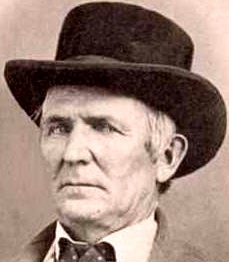 John Doyle Lee
Murderer · USA · 1857
Name: John Doyle Lee Lifespan: September 12, 1812 - March 23, 1877 Legal outcom…
120 victims
John Doyle Lee
Murderer · USA · 1857
Name: John Doyle Lee Lifespan: September 12, 1812 - March 23, 1877 Legal outcom…
120 victims
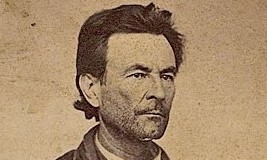 Champ Ferguson
Murderer · USA · 1861
Champ Ferguson was born November 29, 1821 in Clinton County, Kentucky, near the…
100 victims
Champ Ferguson
Murderer · USA · 1861
Champ Ferguson was born November 29, 1821 in Clinton County, Kentucky, near the…
100 victims
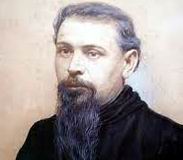 Juan Moreira
Murderer · Argentina · 1856
Juan Moreira (? - April, 1874) was a well-known figure in the history of Argent…
16 victims
Juan Moreira
Murderer · Argentina · 1856
Juan Moreira (? - April, 1874) was a well-known figure in the history of Argent…
16 victims
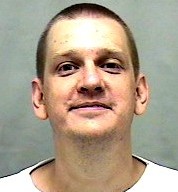 David Francis Brom
Homicide · USA · 1988
David Francis Brom (born October 3, 1971) killed his parents, brother, and sist…
4 victims
David Francis Brom
Homicide · USA · 1988
David Francis Brom (born October 3, 1971) killed his parents, brother, and sist…
4 victims
 Donald Middlebrooks
Murderer · USA · 1987
Donald Ray Middlebrooks was sentenced to death for torturing and murdering 14-y…
1 victim
Donald Middlebrooks
Murderer · USA · 1987
Donald Ray Middlebrooks was sentenced to death for torturing and murdering 14-y…
1 victim
 Pekka-Eric Auvinen
Mass murderer · Finland · 2007
Pekka-Eric Auvinen was identified as the gunman in a shooting at Jokela High Sc…
8 victims
Pekka-Eric Auvinen
Mass murderer · Finland · 2007
Pekka-Eric Auvinen was identified as the gunman in a shooting at Jokela High Sc…
8 victims
 Charles Neale
Murderer · USA · 1997
Charles Anthony Nealy was convicted of capital murder and sentenced to death fo…
2 victims
Charles Neale
Murderer · USA · 1997
Charles Anthony Nealy was convicted of capital murder and sentenced to death fo…
2 victims
 Jesse Jacobs
Murderer · USA · 1986
Jesse Jacobs (#872) was the offender. He was executed in Texas on January 4, 19…
1 victim
Jesse Jacobs
Murderer · USA · 1986
Jesse Jacobs (#872) was the offender. He was executed in Texas on January 4, 19…
1 victim
- Gender
- male
- Country
- Ireland
- Location
- Ireland's Eye, Ireland
- Date of birth
- 1814
- Age at first offence
- 38
- Characteristics
- parricide
- Victim profile
- Sarah Maria Louisa Kirwan (his wife)
- Method of murder
- Strangulation
- Date(s) of murder
- September 6, 1852
- Years active
- 1852
- Date of arrest
- —
- Status
-
Released
Sentenced to death; commuted to penal servitude for life; released on the 3rd of March, 1879
Case record: William Kirwam
Background
William Burke Kirwan was a professional artist, apparently in good circumstances. He resided at 11 Merrion Street with his wife, Sarah Maria Louisa Kirwan, whom he had married 12 years before.
Mrs. Kirwan was described by witnesses as “a well-made and extremely good-looking ‘woman of about 35 years of age.” She was “passionately fond of sea bathing,” and was described as “a powerful and daring swimmer,” “as one witness declared the most venturesome ever seen at Howth.”
In June 1852, Kirwan took lodgings with Mrs. Power in Howth, where he sketched and his wife bathed. They visited Ireland’s Eye, a short distance from Howth, “on several occasions” for the purpose of sketching and bathing.
Rumours of foul play began “almost immediately after the burial,” and it was whispered that Kirwan had been guilty “not merely of the murder of his wife, but of a number of other persons.” Those rumours were strengthened by the claim that for many years he had been living a double life, dividing his time between his wife in Merrion Street and a woman named Miss Kenny, by whom he had seven children.
The offence
Kirwan was tried, convicted, and sentenced to death for the murder of his wife, Sarah Maria Louisa Kirwan, on “the 6th of September.”
Kirwan was said to have taken his wife to Ireland’s Eye on a Monday, “the 6th September,” departing at “10 in the morning,” carrying “a carpet bag containing Mrs. Kirwan’s bathing dress, a basket of provisions, with two bottles of water and a sketch-hook.” They landed at Ireland’s Eye, and the boatman left them with instructions to return “at eight o’clock in the evening.”
In the interval, Mr. and Mrs. Brue landed. “Mrs. Brue, when she was leaving about four o’clock,” offered Mrs. Kirwan a seat in her boat if she cared to return, but Mrs. Kirwan refused, “preferring to wait for her own boat at eight.” From the time the Brues left until the boat came “about eight o’clock,” Mr. and Mrs. Kirwan were alone on the island.
A person named Hugh Campbell, leaning “against the wall of the Howth harbour,” heard “a loud cry more than once repeated coming from the island.” Alice Abernetby heard cries. Catherine Flood heard cries from the open door of a dwelling house. John Barrett also heard a cry, and on coming down to the harbour to find the cause heard “other cries coming from the island towards the harbour.” Thomas Larkin, in a boat returning from fishing that passed close to the island, heard similar cries. All the cries “seemed to come from a portion of the island named ‘Long Hole.’”
The boat left Howth at eight o’clock to bring back Mr. Kirwan and his wife. On board were four boatmen: Patrick Nagle, Michael Nagle, Thomas Styles, and Edward Campbell.
When they arrived, “they found the prisoner alone on a high rock over the landing-place,” and he said “that his wife had left him after the shower (about six in the evening), and he had not seen her since.”
After a prolonged search, a boatman “caught a glimpse of something white through the gathering dusk,” and they found the body “on a rock in the middle of the Long Hole.” At the time the body was found, “the rock was quite dry,” and “the tide had receded six feet from its base.” The dead woman was lying “on her back on the rock,” with her bathing dress drawn up from her body. When the prisoner arrived at the spot, he “rushed forward and threw himself on the body exclaiming, ‘Maria! Maria!’” He then told the boatmen “go and fetch her clothes.” When they returned unable to find the clothes, “he said, ‘I will go myself.’” He then went away, returned, and said “if they went to the rock close at hand they would find the clothes.”
Patrick Nagle then went and found the clothes in a place where, “as he swore, he had searched before without success.” The boatmen returned to the landing-place, leaving the prisoner alone with the body; they later succeeded in bringing the boat round to the Long Hole. The body was then wrapped in a sail and brought back to Howth.
There were scratches on the face and eyelids when the body was discovered, and blood was issuing “from a cut on the breast, and from the ears.” The body was brought on “a dray” to the house of Mrs. Campbell, where the Kirwans lodged. On the following day the inquest was held. The prisoner and the two Nagles, and a medical student named Hamilton, were examined. The verdict returned was: “found drowned.” The body was “interred in Glasnevin Cemetery.”
Investigation
After the burial, rumours “began to get about.” They claimed Kirwan had been guilty of murder not only of his wife but of other persons.
Arrest
Kirwan was arrested and charged with the murder of his wife, Sarah Maria Louisa Kirwan.
The Grand Jury returned a true bill, and Kirwan was “returned for trial.”
Trial
Court personnel
Judge Crampton and Baron Greene presided at the trial.
The prosecuting counsel were:
- Mr. Smyly, Q.C.
- Mr. Hayes, Q.C.
- Mr. John Penefeather
The defence counsel were:
- Mr. Butt, Q.C.
- Mr. Walter Burke, Q.C.
- Mr. Brereton, Q.C.
- Mr. John Adye Curran
On the application of Mr. Butt, witnesses “except the professional witnesses” were excluded from court.
Indictment
The indictment charged Kirwan with having murdered his wife, Sarah Maria Louisa Kirwan, “on the 6th of September previously.”
Prosecution opening and emphasis
Mr. Smyly led for the prosecution in the unexpected absence of the Attorney-General. In his opening speech he stated that it would be proved to the jury’s satisfaction that, though Kirwan had been married to Mrs. Kirwan 12 years earlier, “during the whole of that period he lived with another female by whom he had a family of seven children.” Mr. Smyly said that Kirwan’s time was spent “at Sandymount with Mary Kenny,” and that “the business was so well managed that it was not until the last six months that either of those women knew that the other had a claim on his attention.” Mr. Smyly stated: “Mrs. Kirwan believed that she was the sole possesser of his affection, and Miss Kenny had the same belief up to a recent period.”
Witnesses and testimony at trial
Alfred Jones, engineer, examined for the Crown, proved the accuracy of a map of Ireland’s Eye and the condition of the tide at the Long Hole at various hours during the day of the murder. The tide was full about “three o’clock” that day. The water depth on the rock was described as “about eight feet” on the rock, with the rock “itself about a foot over the sea.” At “about half-past six o’clock,” the time Kirwan said his wife left him to bathe after the shower, “there was about three feet six inches over the rock.” At “seven,” just before the cries were heard, there was “about one foot nine inches of water.” At “half-past nine,” the time the body was found, “the water was about two feet lower than the rock.”
Margaret Campbell testified that Kirwan came to lodge with her. She testified that “in the middle of June” she first saw Kirwan and his wife, and that they occupied one room used as a sitting-room and bedroom. She testified that Kirwan did not sleep in the room every night, sleeping there “about three nights in the week.” She also testified that he was away in the city during the day and returned sometimes by “the five o’clock” train and sometimes by “the last train.”
Margaret Campbell testified that during the first month she heard quarrelling and “heard angry words from Mr. Kirwan to his wife.” She testified she heard him say he would “make her stop there,” heard him “call her a—,” and heard him say, “I’ll finish you.” She also testified she heard “Mrs. Kirwan say, ‘Let me alone.’” She testified that she heard no other dispute “except a word now and then.”
She testified that Mrs. Kirwan said the next morning she was “black from the ill-usage she got.” She testified that she heard no other disputes besides occasional words.
She testified that Mrs. Kirwan bathed and that the witness was present when the body was brought to the house, noting: “the deceased woman had a bathing chemise on.” She testified the body was stripped by three women and that she observed nothing particular about the appearance of the body.
Margaret Campbell testified that Kirwan remained in the house that night and that she did not notice anything particular about him. She testified that he remarked “that his feet were wet,” and she assisted him to change his stockings.
In cross-examination by Mr. Walter Burke, Q.C., Margaret Campbell admitted she might have said that Kirwan and his wife lived most unitedly and happily together. She also testified she remembered having made an information but was not sworn, and that she heard nothing of an oath or mention of a book. The sworn deposition was then put in and read, in which she swore: “I never knew the prisoner and his wife to disagree except on one occasion; she did not know what caused them to disagree then, but except in that instance she always knew them to live happily together as could be.”
Patrick Nagle testified about bringing Mr. and Mrs. Kirwan to Ireland’s Eye on the day in question. He testified they had “a bag and two bottles of water,” and that Mrs. Kirwan had “a reticule bag” also. He testified that Kirwan had “the kind of a stick called a ‘slick stick.’” He testified: “I mean a cane with a sword in it.”
Patrick Nagle testified to the search and finding of the body as already described. He testified that Mrs. Kirwan had “her bathing shift on; it was gathered up about her waist leaving the rest of her person exposed.” He testified that a sheet was under her back, that “the sheet was wet and so was her bathing shift,” and that her head lay “right between two little rocks,” with her feet lying in a pool or hollow containing “about half a gallon of water.”
He testified he inspected the face and person “as well as he could,” including that “there was a cut under the right eye, and scratches on the cheek, and a cut upon the forehead,” and that “blood was flowing from the cuts.”
He testified that he tied the sheet about the neck and folded the other end round the feet. He testified Kirwan came up, threw himself on the body, and called out: “Oh, Maria! Maria!” He testified that Kirwan told him to go look for the lady’s clothes; he testified he could not find them and that “the clothes were not in the place where he searched, and where they were afterwards found.” After his unsuccessful search he returned; Kirwan told him the clothes were “on the top of the rock.” He then found them, testifying they were arranged as she had taken them off, with the stockings folded together.
Patrick Nagle testified that there were bathing shoes on the feet when the body was found.
In cross-examination, Patrick Nagle testified that Kirwan almost lost his life during the search. Patrick Nagle testified: “Mr. Kirwan was very near being killed himself that evening when the body was found.” He testified: “If I had not called and caught him he would have gone over the rock; if he took a step further he would certainly have been killed. A horse would have been killed if it fell them.”
He also testified he did not know whether the stick Kirwan carried was a “slick stick” or not, but that it was the stick he always carried. He testified he had been examined at the inquest but was made to draw back when he came to the part about the sheet.
Michael Nagle also described the search and finding of the body. He testified Kirwan “went over” and threw himself down on the body and began “to moan and cry, before witness had quite come up.” Michael Nagle testified that Kirwan desired him to go away and look for the clothes, and that neither he nor Patrick found the clothes at that time. Michael Nagle testified that after they returned, Kirwan rose and went up the rock, and soon he heard Kirwan say: “Here they are,” and then saw Kirwan coming down bringing something white and “also a shawl.” Michael Nagle testified that Kirwan then told Pat Nagle to go for the clothes.
In cross-examination by Mr. Butt, Michael Nagle testified he saw Kirwan bringing down the shawl and “something white like a sheet.”
Mr. Brue testified to his wife’s invitation to Mrs. Kirwan to return earlier in the day, and testified to Kirwan sketching an old ruin.
Mr. Henry Campbell testified that he lived in Howth and that on the evening the body was found he heard cries from Ireland’s Eye. He testified he heard “three cries” and could distinguish no words, with the second cry about three minutes after the first, and the third shortly after that.
Thomas Larkin, fisherman, testified that while returning in a boat close to Ireland’s Eye he heard cries when half way between the Martello Tower and the bay. To Mr. Butt he testified there were “five or six minutes” between the first and second cries.
Several other witnesses testified to hearing screams.
Mr. Bridgeford testified that he owned a house in Sandymount. He testified that Kirwan lived in one of four houses in Spafield and resided there about “four years.” He testified he saw a woman in the house he supposed to be Kirwan’s wife, and that he saw children. He testified: “He had notes from the woman, and I think she signed herself ‘Theresa.’”
Catherine Byrne testified she lived with Kirwan at Sandymount as a servant. She testified Mrs. Kirwan lived there and that there were seven children in the house. She testified that Kirwan was at the place “a good deal in the day time,” slept there with Mrs. Kirwan frequently at night, and that her name was “Theresa Mary Frances Kenny.” She testified about Kirwan’s activities while living there.
Mr. Hamilton, a medical student who made the examination at the inquest, testified there were no marks on the body that arrested his attention.
George Hatchel, M.D. and Surgeon, testified to examining the body after it had been exhumed from Glasnevin 31 days after death. He testified the season had been wet, there were about two feet of water in the grave, the body was much decomposed, and he discovered no internal or external trace of violence.
Medical evidence on cause of death
Mr. Smyly asked the witness: “From your knowledge of the place, the observations you made upon it, and from your observations of the body, are you able to form an opinion how the lady came by her death?”
Mr. Butt objected. Mr. Justice Crampton ruled the question inadmissible.
Mr. Smyly then asked: “From the appearance you observed on the body can you as a medical man form an opinion as to the cause of her death?”
The witness replied: “I am of opinion that death was caused by asphyxia or stoppage of the respiration.”
The witness was asked: “Was there any appearance on the body which would enable you to say how the stoppage of the respiration was occasioned?”
The witness replied: “From the appearance, I should say that the stoppage of respiration must have been combined with pressure or constriction of some kind.”
The witness was asked: “Would simple drowning cause the appearance presented?”
The witness replied: “Not to the same extent.”
The witness was cross-examined by Mr. Butt. He admitted the appearance might be caused by the lady making efforts to save herself from drowning. He testified he had been told of instruments having been run through the body, but could find no trace of that. He also testified: “Going into the water with a full stomach would likely to cause a fit.”
Mr. Butt asked: “Do I understand you to say that the appearances presented were consistent with the fact of a person with a stomach going into the water?”
The witness replied: “I think if probable.”
Mr. Butt asked: “Is it not probable that such was the cause of death?”
The witness replied: “I am not prepared to say whether it was or not.”
Mr. Butt asked: “From your knowledge as a medical man is it not probable? Taking it per Se.”
The witness replied: (no further medical reply was quoted beyond the preceding answers in the trial narrative).
The witness was asked: “Have you heard of a fit of epilepsy being caused by a person going into the water with a full stomach?”
He replied: “It is possible.”
The witness testified: “I have heard of persons falling in a fit of epilepsy giving one loud scream, I never heard more than one scream.”
Mr. Butt then asked whether frequent screams were possible. The witness replied: “Frequent screams are not impossible.”
Henry Davis, Coroner, gave reply to the holding of the inquest. In reply to Mr. Brereton on cross-examination he testified he had been coroner for “12 years.” He also testified: “He had seen bodies that had been bitten by crabs. The marks on the eye-lids were like those marks, the nipples on the breasts had similar marks.”
Surgeon Rynd testified for the defence that in his opinion the appearance discovered by postmortem examination would be produced by an epileptic fit. Mr. Justice Crampton asked: “Without any concurring cause?”
The witness replied: “Without any concurring cause.”
The witness testified that epileptic patients often scream loudly and might utter several screams.
Surgeon Adams testified he had known people seized with epilepsy to scream violently “more than once; the first scream is the most violent.”
In cross-examination, Surgeon Adams testified: “Putting a wet sheet over the mouth and nose would produce all the effects of drowning.”
Dr. Adams replied to the court regarding a medical question: “That is not a medical question.”
Dr. Adams also testified: “It would be impossible by the appearances described to distinguish between accidental and forcible drowning.”
Prosecution closing theory and jury charge
Mr. Hayes, in reply to Mr. Butt’s challenge, suggested to the jury the Crown theory of how the murder had been committed: “Let them suppose that the prisoner induced the deceased to bathe in the Long Hole. He meditated her death. It must have been about seven o’clock when she bathed, and at that time the water was two feet nine inches deep. Let it be supposed she was in this water, that the prisoner came into the hole with the sheet in his hand for the purpose of putting it over her head, that on seeing him approach in this manner his dreadful purpose at once flashed across the mind of the victim, might she not then have uttered the dreadful agonizing shriek that was the first heard on the mainland? If he succeeded in forcing her under the water, notwithstanding her fruitless struggles with all her youthful energy against his superior strength, might they not in that respect expect the fainter, agonizing, and dying shrieks, which both men and women swore they heard from the mainland growing fainter and fainter? It was for the jury to consider all the facts, and to say whether this (for the present suppositious) case was not the most probable.”
After Mr. Justice Crampton charged the jury, they retired. The jury deliberated and returned with no agreement, then continued deliberations overnight. They eventually returned a verdict of “Guilty.”
During deliberations, the foreman said: “I don’t think we are likely to agree.” “A second juror. There is not the most remote chance of our agreeing.” “A third juror. There is not the smallest chance of an agreement.”
The judge told them they would have to remain in their room for the night, and later stated he would return at 11 o’clock to receive any verdict.
At 11 o’clock, the foreman declared they had not agreed and were “nor-were they likely to agree.” The judge stated they “must be locked up for the night without food.” After “about half-an-hour’s further deliberation,” they returned with a verdict of “Guilty.”
Prisoner’s statement before sentencing
Before sentence, the prisoner protested his innocence of the murder and gave a long and detailed description of occurrences on the island during the day. He stated he had continued sketching after his wife had left him in order to catch sunset effects on the mountain and referred to a sketch given to the police reproducing those effects. He explained his feet had got wet trampling after the shower through the long grass and ferns while searching for his wife. Judge Crampton interrupted, pointing out those points had already been made by counsel.
Sentencing
Judge Crampton passed sentence of death upon the prisoner.
Judge Crampton stated: “Upon the verdict,” he said, “it is not my province to pronounce opinion, but after what has been said I cannot help adding this observation, that I see no reason or grounds to be dissatisfied with it, and, in saying this, I speak the sentiments of my learned brother, who sits beside me, as well as my own. You have raised your hand, not in daring vengeance against a man from whom you received, or thought you had received, provocation or insult; you raised your hand against a female, a hapless, unprotected female, who by the laws of God and man was entitled to your protection, even at the hazard of your life, and to your affectionate guardianship. In the solitude of that rocky island to which you brought her on the fatal 6th September under the veil of approaching night, when there was no hand to stay and no human eye to see your guilt, you perpetrated this terrible, this unnatural crime. . . . No human eye could see how the act was done, none but your own conscience and the all-seeing Providence could develop this mysterious transaction.”
When the judge pronounced the final words of the sentence, the prisoner appeared for a moment overcome, dropping his head between his hands and giving “a low suppressed moan, expressive of the deepest anguish of mind.” He then recovered composure and stated, as sentence was pronounced: “Convinced as I am that my hopes in this world are at an end, I do most solemnly declare in the presence of this court, and before the God before Whom I expect soon to stand, that I had neither act nor part nor knowledge of my late wife’s death, and I state further that I never treated her unkindly, as her own mother can testify.”
Appeals
No appeal proceedings were described in the provided record.
Outcome
The death sentence was commuted “by Lord Eglinton, the then Lord Lieutenant, to penal servitude for life.”
Kirwan was removed in early 1853 to Spike Island, where he served “no less than 27 years.”
The last definitely known of him was that he was “released on the 3rd of March, 1879,” on condition of his going to live outside the British dominions.
A rumour existed among the fishermen of Howth that “a few years after his release” Kirwan revisited the scene of the tragedy, “but I can find no further confirmation of the rumour.”
Aftermath
The record described later discussion of the case and medical opinion, including mention of a pamphlet titled “Defence of William Burke Kirwan, Condemned for the alleged Murder of his Wife, and now a Convict in Spike Island, to which amongst other documents is appended the opinion of Alfred S. Taylor, M.D., F.R.S., the most eminent medico-legal writer in the Empire, that ‘no murder was committed.’” The narrative included discussion of claimed arbitrariness and disputed accounts about the inquest and trial evidence.
A letter extract attributed to a juror in the Freeman’s Journal stated: “That the jury believed that about five minutes past seven o’clock the unfortunate woman had been decoyed to the spot where her bathing cap had been found, and then thrown down, the damp sheet held forcibly on her face while the murderer knelt upon her belly. As soon as resistance ceased Kirwan stripped the body, attired it in a bathing-suit, and carried the body to Long Hole as far as the depth of his own knees.”
The record included claims about the inquest and communications by the coroner Mr. Davis regarding marks on the body and the sheet finding, including the coroner’s statement: “I have met with cases showing their marks in all stages from a body not an-hour in the water having only the eyes touched up to the head completely deprived of all flesh.”
The record included a quote about the sheet: “What did occur was when Mr. P. Nagle, in his evidence, came to the finding of the body, he said she was lying with the sheet partly under her, whereupon Michael Nagle interrupted him and said- ‘No, Pat, the gentleman brought down the sheet.’ Pat Nagle himself also gave direct evidence that Mr. Kirwan brought down the sheet from the rock to wrap up the-body.”
It also quoted a letter by Alexander Boyd, foreman to the coroner’s jury: “Pat Nagle,” he said, “admitted at the inquest that he might be mistaken about the sheet”; the writer expressed his own unshaken belief that no murder had been committed.
The record further discussed Dr. Taylor’s conclusions, including: “The theory of death assumed by the prosecutor is not only not proved, but actually disproved by the appearances on the body. . . . I assert as my opinion on a full and unbiased examination of the medical evidence in this case, that so far as the appearance of the body was concerned, there is an entire absence of proof that death is the result of violence at the hands of another Persons bathing or exposed to the chance of drowning are often seized with fits which may prove suddenly fatal, though they may allow of a short struggle. The fit may arise from syncope, apoplexy, or epilepsy, either of the last conditions would, in my opinion, explain all the medical circumstances in this remarkable case.”
The record then quoted a joint certification by a number of Dublin medical authorities, describing that: “the appearances on the body when found were compatible with death caused by simple drowning, or by the seizure of a fit in the water, and we deem it highly probable that the latter was the unhappy cause of death in this instance; for it appears on the sworn testimony annexed of Arthur Kelly and Anne Maher that Mrs. Kirwan was subject to fits, and are given to understand that her mother now alive rives her pension on the medical certificate, that her husband, the late Lieutenant Crowe, Mrs. Kirwan’s father, died of a fit eight years ago in Irishtown in the County of Dublin.”
The record quoted a letter by Mr. John Wynn, Secretary Lord Lieutenant, the Earl of Eglinton: “in commuting the death sentence passed on Mr. Kirwan, Lord Eglinton acted on the recommendation of Judge Crampton and Baron Green, with the concurrence of the Lord Chancellor, and he neither solicited no received the advice of any other person whatsoever. There could be no possible palliation for the crime if it had been committed. Either the prisoner had been guilty of a premeditated and atrocious murder or he was wholly innocent. If the conviction was right he should have been hanged, if it was wrong he should have been set free. The course adopted was wholly illogical and savagely unjust. Mr. Kirwan was entitled to his acquittal, and to freedom if there was (as the judges in effect confessed there was), ‘a reasonable doubt of his guilt.’”
No family details beyond the seven children fathered with Miss Kenny were presented as part of the case outcome within the provided record.
Other details
Kirwan’s trial included repeated mention of the location Ireland’s Eye and “Long Hole,” and the body’s description as “on a rock in the middle of the Long Hole.”
Kirwan’s conviction resulted in the death sentence, later commuted to life penal servitude, and he served time at Spike Island.
The record stated that “the last definitely known of him” was his release on “the 3rd of March, 1879,” with a condition to go to live outside the British dominions.
The record also included a description that Dr. P. O’Keife told a friend that he accompanied Kirwan after his release to Liverpool and that Kirwan then sailed to America with the intention of joining and marrying the mother of his children, whose name “figured so prominently” at his trial.
The record stated that during imprisonment Kirwan “painted a series of artistic decorations for the prison chapel at Spike Island,” and that a miniature of Kirwan and one of his wife were sold at the auction of his effects, passing into the hands of Mr. Charles Bennett, auctioneer of Ormond Quay.


Spotted an error, or have more information about this case?