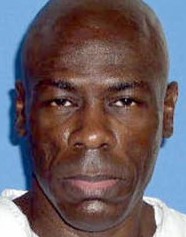
Lorenzo Morris
Murderer Brian Kevin Rosenfeld
Murderer · USA · 1985
Brian Kevin Rosenfeld Brian Kevin Rosenfeld was sentenced to three concurrent l…
23 victims
Brian Kevin Rosenfeld
Murderer · USA · 1985
Brian Kevin Rosenfeld Brian Kevin Rosenfeld was sentenced to three concurrent l…
23 victims
 Yahweh ben Yahweh
Murderer · USA · 1980
Yahweh ben Yahweh was born and legally named Hulon Mitchell Jr. (October 27, 19…
23 victims
Yahweh ben Yahweh
Murderer · USA · 1980
Yahweh ben Yahweh was born and legally named Hulon Mitchell Jr. (October 27, 19…
23 victims
 Russell Ellwood
Murderer · USA · 1991
Russell Ellwood was a former taxi driver. Authorities suspected him of killing…
20 victims
Russell Ellwood
Murderer · USA · 1991
Russell Ellwood was a former taxi driver. Authorities suspected him of killing…
20 victims
 Robert Martines Perez
Murderer · USA · 1994
Name: Robert Martines Perez · Other name used in proceedings: Robert Martinez P…
15 victims
Robert Martines Perez
Murderer · USA · 1994
Name: Robert Martines Perez · Other name used in proceedings: Robert Martinez P…
15 victims
 William Kendrick Burns
Murderer · USA · 1980
William Kendrick Burns was executed by lethal injection in Texas on April 11, 2…
2 victims
William Kendrick Burns
Murderer · USA · 1980
William Kendrick Burns was executed by lethal injection in Texas on April 11, 2…
2 victims
 Kenneth Foster
Murderer · USA · 1996
Kenneth Foster, Jr. (born October 22, 1976) was a prisoner formerly on death ro…
1 victim
Kenneth Foster
Murderer · USA · 1996
Kenneth Foster, Jr. (born October 22, 1976) was a prisoner formerly on death ro…
1 victim
 Mark Anthony Pruitt
Murderer · USA · 1986
Mark Anthony Pruitt was sentenced to death on September 18, 1987.
1 victim
Mark Anthony Pruitt
Murderer · USA · 1986
Mark Anthony Pruitt was sentenced to death on September 18, 1987.
1 victim
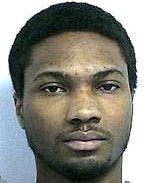 Marc Sappington
Spree killer · USA · 2001
Marc Vincent Sappington was born February 9, 1978. Sappington had a history of…
4 victims
Marc Sappington
Spree killer · USA · 2001
Marc Vincent Sappington was born February 9, 1978. Sappington had a history of…
4 victims
 Robert Gary Girts
Murderer · USA · 1992
Robert Gary Girts was a Poland Township native who worked at a funeral home in…
1 victim
Robert Gary Girts
Murderer · USA · 1992
Robert Gary Girts was a Poland Township native who worked at a funeral home in…
1 victim
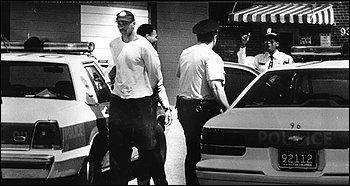 James Edward Swann
Serial killer · USA · 1993
James Edward Swann, Jr., also known as “The Shotgun Stalker,” was an American s…
4 victims
James Edward Swann
Serial killer · USA · 1993
James Edward Swann, Jr., also known as “The Shotgun Stalker,” was an American s…
4 victims
- Gender
- male
- Country
- USA
- Location
- Harris County, Texas, USA
- Date of birth
- September 25, 1952
- Age at first offence
- 38
- Characteristics
- —
- Victim profile
- Jesse Fields (female, 70)
- Method of murder
- Beating with a hammer
- Date(s) of murder
- August 5, 1990
- Years active
- 1990
- Date of arrest
- March 1991
- Status
-
Executed
Executed by lethal injection in Texas on November 2, 2004
Case record: Lorenzo Morris
STATUS
Lorenzo Morris was executed by lethal injection in Texas on November 2, 2004. Morris declined to make a last statement and replied "No" when asked by the warden if he had a final statement.
CHARACTERISTICS
Morris was convicted of capital murder and was scheduled to be executed. He was condemned for the stabbing and beating of Jesse Fields during an attempted robbery.
The offence
Lorenzo Morris attacked 70-year-old Jesse Fields on August 5, 1990, at Fields’s Houston home. Morris cut Fields’s throat and bludgeoned him in the head with a hammer.
Judy Courtney, Morris’s girlfriend at the time, testified that she and Morris were in Fields’s home when she saw Morris sitting on top of Fields holding a knife in one hand and beating him with the other. Courtney heard Morris tell Fields that he was going to kill him and then asked Fields where he kept his money. Courtney testified that she did not call the police because she was afraid of what Morris might do if she reported what she had seen. Fields’s ex-wife and his granddaughter discovered Fields’s body the following day on the floor of his home in a pool of blood.
From the attack, Fields suffered severe head injuries and irreparable brain damage. Fields remained in a vegetative state in a hospital and later developed pneumonia and gangrene requiring amputation of a leg. Fields died the day after the operation, on May 11, 1991. Fields was 71 at the time of death.
After Fields’s death, Morris, who had originally been charged with aggravated robbery, was charged with capital murder. At Morris’s trial, the prosecution presented testimony from doctors that Fields’s injuries from the beating were the root cause of his death. The Harris County Medical Examiner ruled the death a homicide.
Morris contended that the victim first had come at him with the hammer and argued that Fields’s death resulted from hospital negligence. Doctors testified for the prosecution, and Morris’s defence position was rejected by both the jury and the appeals courts.
Other account of the offence (Morris’s statement to police)
Morris gave police a written statement in which he claimed that he went to Fields’s house to buy drugs and that a fight broke out after Fields refused to give him free “dope.” Morris stated that after he struck Fields in the face, Fields pulled out a knife and tried to stab him. Morris then claimed that he grabbed the knife away from Fields and stabbed him in the neck. Morris stated that Fields ran and got a hammer, which Morris also wrestled away from him. Morris claimed that he hit Fields twice with the hammer, and then ran out.
Discovery and victim details
Fields was hospitalized after the attack and later transferred to a nursing home. His family discovered his body the following day. Two of Fields’s granddaughters and his daughter witnessed Morris’s execution, and Fields’s family testimony at the time of trial described Fields as vibrant and testified that Morris had robbed them of a loved one.
Investigation and arrest
Morris was in a coma when he was arrested in March 1991 for the unrelated shooting during a robbery. In interviews with police, Morris told them about the attack on Fields.
The Harris County Medical Examiner’s office ruled Fields’s death a homicide after reviewing the circumstances.
Trial
Conviction and sentencing
On March 19, 1992, Morris was found guilty by a jury for the offense of capital murder. On March 23, 1992, following a separate punishment hearing, Morris was sentenced to death.
At the trial, the jury’s affirmative answers to Texas special issues required imposition of the death penalty. The Texas special issues were:
- I. Did Morris deliberately commit the conduct that caused the death of Fields, with the reasonable expectation that the death of Fields would result?
- II. Is there a probability that Morris would commit criminal acts of violence that would constitute a continuing threat to society?
- III. Was Morris’s conduct in killing Fields unreasonable in response to any provocation by Fields?
Judy Courtney testified for the prosecution at trial about the beating and Morris’s statements to Fields during the attack. Morris maintained that the death was due to natural causes and poor medical care, but the medical testimony for the prosecution was that the beating was the underlying cause of Fields’s death.
At sentencing, Morris declined to call any punishment phase witnesses, according to the federal habeas account.
Accomplice
Accomplice Ricky Darnell Henson was also convicted and was sentenced to life imprisonment.
Procedural history and appeals
State procedural history
- July 31, 1991 — Morris was indicted by a Harris County grand jury for the capital murder of Jesse Fields.
- March 19, 1992 — Morris was found guilty by a jury for the offense of capital murder.
- March 23, 1992 — Following a separate punishment hearing, Morris was sentenced to death.
- December 7, 1994 — The Texas Court of Criminal Appeals affirmed Morris’s conviction and sentence on direct appeal.
- May 15, 1995 — The U.S. Supreme Court denied Morris’s petition for writ of certiorari.
- October 21, 1996 — Morris filed an application for writ of habeas corpus in the state trial court.
- May 3, 2000 — The Texas Court of Criminal Appeals denied Morris’s application for writ of habeas corpus.
- February 6, 2002 — The Texas Court of Criminal Appeal dismissed Morris’s successive state habeas application.
Federal procedural history
- February 8, 2002 — Morris filed a federal petition for writ of habeas corpus in a Houston U.S. district court.
- March 24, 2003 — The federal district court dismissed Morris’s federal habeas petition.
- June 2, 2003 — Morris requested permission to appeal from the 5th U.S. Circuit Court of Appeals.
- January 6, 2004 — The 5th Circuit denied Morris’s request to appeal the denial of his habeas petition.
- April 5, 2004 — Morris petitioned the U.S. Supreme Court for a writ of certiorari.
- October 4, 2004 — Morris’s petition for writ of certiorari was denied by the U.S. Supreme Court.
Habeas and COA ruling (federal appellate decision)
Morris sought a certificate of appealability (COA) to appeal the dismissal of his federal habeas petition based on ineffective assistance of counsel. The United States District Court for the Southern District of Texas dismissed the petition, and Morris sought COA.
The Court of Appeals held:
- COA was not warranted following the denial of federal habeas relief as procedurally barred because the state appellate court had denied state habeas petition based on independent and adequate grounds of Morris’s failure to comply with law governing subsequent applications for habeas relief.
- Denial of federal habeas relief did not result in fundamental miscarriage of justice as to his claim that trial counsel was ineffective for failing to investigate and present evidence showing his actual innocence.
- COA was not warranted as to a claim of constitutional violations resulting from an ad hoc nullification instruction allegedly given to the jury.
- COA was not warranted as to a claim of ineffective assistance of counsel resulting from counsel’s alleged failure to present mitigating evidence at the sentencing phase.
Petition denied; decision affirmed.
Prior criminal history
Morris’s prior criminal history included:
- 1972 aggravated assault of a police officer.
- 1976 aggravated robbery.
- 1982 robbery.
- 1991 aggravated robbery for which he was serving a concurrent life sentence.
In the federal account, Morris’s long criminal history presented at punishment phase included incidents of shoplifting, resisting arrest, carrying a weapon, aggravated assault of a police officer, and aggravated robbery, and the defense did not call any punishment phase witnesses.
Other facts used in challenges
Morris challenged the conviction and sentence by arguing that Fields died from natural causes and poor medical care. Morris also argued that his death sentence was unfair because outdated laws at his 1992 trial prevented jurors from hearing extenuating circumstances of his life, including childhood neglect, drug abuse, and military service.
In connection with these arguments, Morris was described as claiming a drug addiction while serving in Southeast Asia during military service, and he was described as having been forced to leave the Army because of misconduct related to his drug use. Morris contended that the courts should have allowed mitigating evidence and that trial and habeas counsel had failed to investigate and present exculpatory and mitigating evidence.
A federal habeas account further described special issues and noted that Morris did not argue he was not the person who committed the crime, and stated that certain procedural avenues for relief were not available to him as a result.
Sentencing information
Morris was sentenced to death on March 23, 1992 following a separate punishment hearing.
Execution details and last day events
Morris asked that no last-day appeals be filed to try to block his scheduled execution. On the day of his execution, Morris asked his lawyer, Rob Morrow, not to make any more appeals on his behalf. Morris was described as having made peace with the situation.
When asked by the warden if he had a final statement, Lorenzo Morris replied: "No." Morris closed his eyes as the lethal drugs flowed. He was pronounced dead at 6:13 p.m.
Last meal and final words
Morris requested a final meal of fried chicken and fried fish, French bread, hot peppers, apple pie, butter pecan ice cream and two soft drinks, either Sprites or Big Reds. Morris also requested a pack of cigarettes, but he did not receive them because the prison system was tobacco-free.
Morris declined to make a last statement at his execution. Final words were none.
Authorities and representatives mentioned
- Attorney General Greg Abbott (media advisory naming the execution schedule).
- District Judge Michael Wilkinson (execution-setting reference).
- Rob Morrow (Morris’s lawyer).
- Michelle Lyons (prison spokeswoman).
- Roe Wilson (Harris County prosecutor referenced in connection with the appeal).
- Jerry Guerinot (trial attorney referenced in connection with appeal).
- Attorney Gerald Bierbaum (assisted with Morris’s appeal).
- Jim Marcus (executive director of the Texas Defender Service referenced in connection with appeals).
- Harris County Medical Examiner’s office (ruled death a homicide).
- United States Supreme Court (denied certiorari at points described in the procedural history).
Outcome
Morris was condemned for the murder of Jesse Fields in 1990 during the course of a robbery-type attack. The Court of Criminal Appeals affirmed Morris’s conviction and sentence on direct appeal, and Morris’s later appeals in state and federal court were denied. Morris’s accomplice, Ricky Darnell Henson, was convicted and sentenced to life imprisonment.
Spotted an error, or have more information about this case?