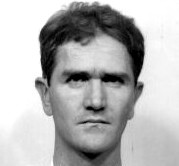
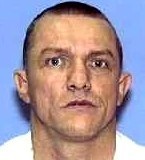
Ricky Eugene Morris
Murderer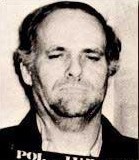 Ervil LeBaron
Murderer · USA · 1972
Ervil Morrell LeBaron (1925 to August 16, 1981) was the leader of a polygamous…
35 victims
Ervil LeBaron
Murderer · USA · 1972
Ervil Morrell LeBaron (1925 to August 16, 1981) was the leader of a polygamous…
35 victims
 Brian Kevin Rosenfeld
Murderer · USA · 1985
Brian Kevin Rosenfeld Brian Kevin Rosenfeld was sentenced to three concurrent l…
23 victims
Brian Kevin Rosenfeld
Murderer · USA · 1985
Brian Kevin Rosenfeld Brian Kevin Rosenfeld was sentenced to three concurrent l…
23 victims
 Marvin Gray
Murderer · USA · 1975
Marvin Gray was convicted killer who claimed responsibility for 23 slayings and…
23 victims
Marvin Gray
Murderer · USA · 1975
Marvin Gray was convicted killer who claimed responsibility for 23 slayings and…
23 victims
 Yahweh ben Yahweh
Murderer · USA · 1980
Yahweh ben Yahweh was born and legally named Hulon Mitchell Jr. (October 27, 19…
23 victims
Yahweh ben Yahweh
Murderer · USA · 1980
Yahweh ben Yahweh was born and legally named Hulon Mitchell Jr. (October 27, 19…
23 victims
 Russell Ellwood
Murderer · USA · 1991
Russell Ellwood was a former taxi driver. Authorities suspected him of killing…
20 victims
Russell Ellwood
Murderer · USA · 1991
Russell Ellwood was a former taxi driver. Authorities suspected him of killing…
20 victims
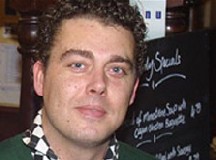 Mark Dixie
Murderer · United Kingdom · 2005
Mark Philip Dixie — defendant Sally Anne Bowman — victim; British model Lewis S…
1 victim
Mark Dixie
Murderer · United Kingdom · 2005
Mark Philip Dixie — defendant Sally Anne Bowman — victim; British model Lewis S…
1 victim
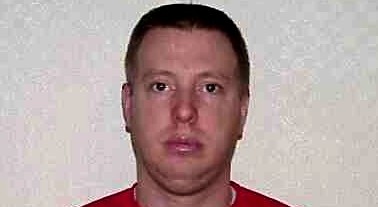 Fred Furnish
Murderer · USA · 1997
Fred Furnish was convicted of strangling and robbing Ramona Jean Williamson, wh…
2 victims
Fred Furnish
Murderer · USA · 1997
Fred Furnish was convicted of strangling and robbing Ramona Jean Williamson, wh…
2 victims
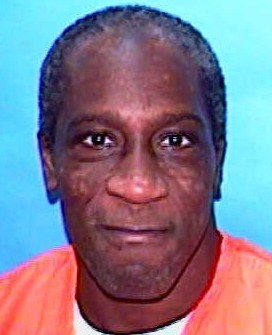 Ted Herring
Murderer · USA · 1981
Name: Ted Herring · Date of birth (DOB): 07/02/61 · DC#: 082284 · Seventh Judic…
1 victim
Ted Herring
Murderer · USA · 1981
Name: Ted Herring · Date of birth (DOB): 07/02/61 · DC#: 082284 · Seventh Judic…
1 victim
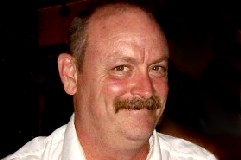 Timothy Hendron
Murderer · USA · 2010
Timothy Hendron, a 51-year-old ABB employee and former supervisor, committed su…
3 victims
Timothy Hendron
Murderer · USA · 2010
Timothy Hendron, a 51-year-old ABB employee and former supervisor, committed su…
3 victims
 Kenneth Albert Brock
Murderer · USA · 1974
Kenneth Albert Brock was executed by lethal injection in Texas on June 19, 1986…
1 victim
Kenneth Albert Brock
Murderer · USA · 1974
Kenneth Albert Brock was executed by lethal injection in Texas on June 19, 1986…
1 victim
- Gender
- male
- Country
- USA
- Location
- Dallas County, Texas, USA
- Date of birth
- May 29, 1951
- Age at first offence
- 31
- Characteristics
- armed robbery
- Victim profile
- Mark Frazier, 26 (bank employee)
- Method of murder
- Shooting
- Date(s) of murder
- January 19, 1982
- Years active
- 1982
- Date of arrest
- Same day
- Status
-
Executed
Executed by lethal injection in Texas on October 20, 2004
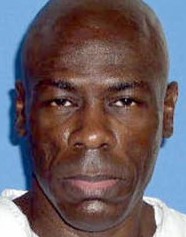
Case record: Ricky Eugene Morris
Personal details
Ricky Eugene Morris was the offender.
Linda Morrow was Morris’s girlfriend and was later his wife.
Mark Frazier was killed during the robbery.
Tammy Roy was a bank teller who complied with Morris’s demand to place money into a bank bag.
Kathy Crouse was an employee at the savings and loan.
Jo Brown was an Operations Supervisor at First Texas.
Nancy Galloway was an employee at First Texas.
Jan Noble was a real estate agent with an office in the same building at First Texas.
Mark Frazier was described as a bank employee who asked Morris if he needed assistance.
Joena Bailey Shipley, Jean Cullum Blum, W.L. Miller, and Carol Fritchie were working at Metropolitan Savings at the time of the robbery.
Louis Wong and Bo Holmes were bystanders who witnessed a man leaving the scene with money falling from a ripped sack.
John Norton was a Dallas police officer who interviewed witnesses at Metropolitan.
K.C. Edmonds was a Dallas police officer who interviewed Shipley, Blum, Miller, and Fritchie.
Agent Nelson Borrero was an FBI agent who interviewed Blum.
Richard A. Acree was a police officer then employed by the University Park Police Department.
Sherry Baker was the clerk-receptionist for the Park Cities Inn.
FBI Agent Thomas Yunessa was armed with an assault rifle.
Dallas Police Officer P.T. Barnum was armed with a shotgun.
Officers Edmonds, Luke Robertson, and Harold Rice were also present.
Detectives Charles Hallam, John Landers, and Jack Baird were also present.
Special Agent Richard T. Garcia interviewed Crouse after the robbery and shooting at First Texas.
Special Agent H. Lamar Meyer interviewed Nancy Galloway and Jan Noble regarding the events at First Texas.
Timeline
- January 19, 1982 — Ricky Eugene Morris and Linda Morrow drove to the Metropolitan Savings and Loan in Dallas and robbed it while armed with a .38 caliber revolver and a .25 caliber automatic.
- January 19, 1982 — About thirty minutes later, Morris and Linda Morrow arrived at First Texas Savings in Dallas, robbed the institution, and Morris shot and killed Mark Frazier.
- January 19, 1982 — After the robbery, Morris and Linda Morrow drove to the Park Cities Inn and checked in, renting Room 311.
- January 19, 1982 — Police officers and FBI agents tracked and surrounded Room 311; Ferguson voluntarily surrendered and Morris fired his .38 revolver; Morris subsequently surrendered after an exchange of gunfire.
- February 2, 1982 — A Dallas County grand jury indicted Ricky Morrow for capital murder.
- November 7, 1983 — A Dallas County jury found Morris guilty of capital murder.
- November 9, 1983 — Following a separate punishment hearing, the trial judge sentenced Morris to death.
- March 30, 1988 — The Texas Court of Criminal Appeals reversed and remanded the case for a new trial.
- November 19, 1990 — At his second trial, the jury found Morris guilty of capital murder.
- December 5, 1990 — Following a separate punishment hearing, the trial judge sentenced Morris to death.
- May 31, 1995 — The Texas Court of Criminal Appeals affirmed Morris’s conviction and sentence on direct appeal.
- May 13, 1996 — The U.S. Supreme Court denied Morris’s petition for writ of certiorari.
- October 24, 1996 — Morris filed an application for writ of habeas corpus in the state trial court.
- April 19, 2000 — The Texas Court of Criminal Appeals denied Morris’s application for writ of habeas corpus.
- September 13, 2000 — Morris filed a federal petition for writ of habeas corpus in a Dallas U.S. district court.
- December 20, 2002 — The federal district court dismissed Morris’s federal habeas petition.
- June 10, 2003 — Morris requested permission to appeal from the U.S. 5th Circuit Court of Appeals.
- April 14, 2004 — The 5th Circuit Court of Appeals denied Morris’s request for appeal of denial of his habeas petition.
- April 27, 2004 — Morris filed a petition for rehearing in the 5th Circuit.
- May 21, 2004 — Morris’s petition for rehearing was denied by the 5th Circuit Court.
- July 7, 2004 — Morris petitioned the U.S. Supreme Court for a writ of certiorari, which was pending.
- October 20, 2004 — Morris was executed by lethal injection in Texas.
Background
Morris had prior criminal history and prior convictions.
Morris’s first arrest and conviction came in 1969 for aggravated robbery.
In 1970, Morris pleaded guilty to several other felonies, including two counts of burglary with intent to commit theft, felony theft, and possession of a dangerous drug.
Morris was convicted of aggravated robbery in 1976 and was sentenced to 25 years.
Morris served 5 years before being paroled in October 1975.
In August 1976, Morris was returned to prison with a new conviction for aggravated robbery and received another 25-year sentence.
Morris was paroled again in August 1981, 1 year before the murder of Mark Frazier.
During trial, Morris admitted to burglarizing the office of his psychologist, Dr. Farrar, in 1988.
In 1993, Morris pleaded guilty to two counts of attempted capital murder in connection with the murder of Mark Frazier.
The offence
Metropolitan Savings and Loan robbery
On January 19, 1982, Morris and his girlfriend, Linda Morrow, proceeded to the Metropolitan Savings and Loan in Dallas.
Morris and Linda Morrow were armed with a .38 caliber revolver and a .25 caliber automatic.
Morris entered the savings and loan and robbed the institution.
Miller, and Carol Fritchie were working at Metropolitan at the time of the robbery.
Morris exited the bank with a sack of money, including coins.
As he exited, the sack ripped and his gun discharged.
Morris stopped to retrieve the dropped money.
Two bystanders, Louis Wong and Bo Holmes, witnessed a man leaving the scene with money falling from a ripped sack.
No one disputed that the man seen leaving the scene with money falling was Ricky Morrow.
Morrow’s conduct inside the bank was described as disruptive and directed at employees.
Morris “started screaming and cursing and hollering and directing profanities at everyone in the bank and demanding the money.”
First Texas Savings robbery and killing of Mark Frazier
About thirty minutes after the Metropolitan robbery, Morris and Linda Morrow arrived at First Texas Savings, also in Dallas.
Morris approached one of the teller windows with one pistol aimed at the head of a bank employee and the other pistol aimed at a bank teller.
Morris ordered the teller to place all of her money inside a bank bag and she complied.
After receiving the bag from the teller, Morris fired a single shot into the head of the other bank employee, Mark Frazier.
Mark Frazier died instantly.
Morris and the couple fled with $5,000 and later descriptions stated the amount as $5,500.
After the robbery, they proceeded to the Park Cities Inn and rented Room 311.
The events at First Texas included witness testimony describing Morris’s threats and commands and the shooting.
Morris “started screaming and ranting and raving and cursing and hollering it was a robbery.”
Morris led Frazier at gunpoint to Tammy Roy’s teller window and pointed one pistol at Roy and another pistol at Frazier.
A trial witness described the shooting as deliberate and included detailed testimony about his actions and timing:
- The witness testified that Morris picked up the money bag with his left hand, turned his head slightly, raised the .38 pistol very deliberately, and shot Frazier in the face as he stood two feet away.
- The witness said it “was as deliberate as anything I have ever seen”; there was a “slight pause” before he pulled the trigger.
- The witness testified that Morris “turned around and very calmly walked out with a springy little step right up on the balls of his feet with a smirky little look on his face” – a “satisfied look,” and an “I don’t care attitude.”
Another witness statement described Morris’s leaving and shooting:
- One witness testified: “He looked, raised the gun, and shot.”
A real estate agent with an office in the same building at First Texas witnessed Morris and Linda Morrow leave the scene in their vehicle.
The real estate agent testified she heard a shot, approached her car, and found a car blocking her exit.
She testified that she saw the male passenger bent down as if he were putting something down or picking something up, and when he looked up, he was laughing and smiling, which “chilled” her.
She watched for a brief period, perhaps 30 to 60 seconds, until the car entered traffic.
Because the car “whipped around” in a dangerous manner, she felt something was wrong and obtained a partial license plate number.
After she saw police cars traveling toward the scene with flashing lights, she called First Texas, learned of the robbery, and went to the bank to describe the car to officers.
On the following day, she identified a photo of Morrow as the man she had observed.
Investigation and arrest
Police officers and FBI agents tracked Morris and Linda Morrow to the Park Cities Inn.
They surrounded the couple’s room in Room 311 and demanded that Morris and Linda Morrow surrender.
Richard A. Acree spotted their vehicle, spoke with the inn’s clerk-receptionist Sherry Baker, and ascertained that Morris and Ferguson were in room 311.
Numerous law enforcement officers from the FBI, Dallas Police Department, and University Park Police Department arrived at the inn and converged on Room 311.
FBI Agent Thomas Yunessa, armed with an assault rifle, and Dallas Police Officer P.T. Barnum, armed with a shotgun, crouched behind a toppled coke machine in the hall outside the room.
Officers Edmonds, Luke Robertson, and Harold Rice, and Detectives Charles Hallam, John Landers, and Jack Baird of the Dallas Police Department were also present at the inn.
Ferguson voluntarily surrendered.
Morris then fired his .38 revolver.
Law enforcement officers fired weapons, and Morris subsequently surrendered.
The earlier described account stated that when officers asked Morris to surrender, he threatened to kill the officers, and that an exchange of gunfire occurred before Morris surrendered.
Trial
Capital murder conviction
Morris was convicted of capital murder in Dallas County.
A Dallas County jury found Morris guilty of capital murder on November 7, 1983.
Following a separate punishment hearing, the trial judge sentenced Morris to death on November 9, 1983.
On March 30, 1988, the Texas Court of Criminal Appeals reversed and remanded for a new trial.
At his second trial, the jury found Morris guilty of capital murder on November 19, 1990.
Following a separate punishment hearing, the trial judge sentenced Morris to death on December 5, 1990.
Voir dire issue and direct appeal holdings
In 753 S.W.2d 372, the Texas Court of Criminal Appeals reversed and remanded because of the prosecutor’s use of an improper hypothetical question during early portions of voir dire.
The court described the prosecutor’s hypothetical and included a verbatim account of the exchange with a venireman, with defense counsel objecting.
The decision included a verbatim excerpt from the voir dire involving venireman Charles Race:
“[PROSECUTOR:] Let me give you an example of how they differ from finding a person guilty of capital murder. Let's say that I go in and rob [Co-counsel] in the 7-Eleven store. He gives me the money and, for whatever reason I have, I'm leaving and I--it is my conscious objective or desire to engage in the conduct of pulling the trigger on the gun that I have and shoot him. And I shoot him. I just so happen to shoot him in the knee and medical complications set in and he dies. That is a murder that occurred during the course of a robbery because he wouldn't have died if I hadn't shot him. You may very well go out and find me guilty of capital murder, you see? I committed the crime in Dallas County, January the 19th, had a gun, caused his death by shooting him with a gun during a robbery-- [Defense counsel]: We're going to object to that hypothetical as not being substantial and the facts that would be required to substantiate a capital murder. The fact that he leaves out that he intentionally committed the murder in the course--he said he shot him. There's no requisite intent to commit the murder as required in the Capital Murder Statute. All he's given is a hypothetical that comes under the third circumstance of the statute [V.T.C.A. Penal Code, § 19.02(a)(3) ] and, therefore, is a death caused by an act committed in the course of a felony. We would object to that hypothetical as not being proper. THE COURT: Overruled. [Prosecutor] You see how you can find me guilty of that offense? Switch number one has been answered 'yes.' Now you come to switch number two, that first question up there. You see that there's a different inquiry being made of you than whether I committed the crime? A. (Nods head.) Q. Now you're asked: Was my act deliberate and with a reasonable expectation that death would result? You might say, if he got shot in the knee, he didn't reasonably expect that he's going to die, and I'm going to answer that 'no.' A. Right. Q. Contrast that with the situation, Mr. Race, where I go into the 7-Eleven to rob it. I finish robbing. I intentionally fire the gun. This time I do it right at his head and pull the trigger and blow his brains out. Can you see how that is a deliberate act with a reasonable expectation that death would result? A. Yes, I can see that.” ”
The court concluded the hypothetical infected the voir dire process and violated due course of law and representation of counsel under the Texas Constitution.
Second direct appeal and affirmance
In 910 S.W.2d 471, the Texas Court of Criminal Appeals affirmed the conviction and sentence and held that, among other points, evidence of certain factors was not mitigating as a matter of law for purposes of assessing punishment in capital murder trial.
The court addressed challenges to venire members for cause, including beliefs about what evidence was mitigating or aggravating, and beliefs about the burden of proof.
Sentencing
Morris received death sentences.
The trial judge sentenced Morris to death on November 9, 1983, after the first trial.
The trial judge sentenced Morris to death on December 5, 1990, after the second trial.
Appeals
State and federal appellate proceedings
- 753 S.W.2d 372 (Tex.Crim.App. 1988) — The Texas Court of Criminal Appeals reversed and remanded for a new trial.
- 910 S.W.2d 471 (Tex.Crim.App. 1995) — The Texas Court of Criminal Appeals affirmed the conviction and sentence on direct appeal.
- Ex Parte Morrow, 952 S.W.2d 530 (Tex.Crim.App. 1997) — Relief was denied in state habeas proceedings.
- Morrow v. Dretke, 367 F.3d 309 (5th Cir. 2004) — The United States Court of Appeals for the Fifth Circuit granted a certificate of appealability on Brady claims and ultimately affirmed their denial on the merits, and denied a COA on remaining claims; the case described the denial of habeas relief.
Brady-related federal habeas issues (as described in the case record)
Morrow v. Dretke described that the federal habeas court addressed Brady claims related to FBI and Dallas police reports and testimony.
The described holdings included:
- Failure to disclose FBI reports indicating that witnesses told FBI agents that Morrow was high on drugs, or intoxicated during two successive bank robberies did not violate Brady.
- Failure to disclose FBI reports containing witnesses’ description as to how shooting occurred did not violate Brady.
- Failure to disclose FBI reports containing witnesses’ account of Morrow running from the bank did not violate Brady.
- Failure to disclose arguably conflicting FBI reports of interviews with a witness who worked in an office suite above bank where robbery and shooting occurred did not violate Brady.
- Cumulative effect of prosecutor’s failure to disclose various FBI reports did not violate Brady.
Outcome
Morris was executed by lethal injection on October 20, 2004.
He was pronounced dead at 6:32 p.m.
At execution, Morris made a final statement and expressed love to family members.
Morris’s last statement included the following verbatim content:
“Yes, I do. I want to say first that I love you Pam. I love you, Ann, Jenny, Carla, Fran, Mom and Dad. What a blessing, what a blessing you have been in my life. And I am so sorry you are going through what you are now. But we are both headed to a better place. Thank you, baby girl - love you people. Sister, Blackie, Dixie, Rusty, Andy, Buster, Milo - we got so many - Grace and Sonny man. I love you all. You have a treat coming to you. Thank you for having been there for me -- and our Father and Mother. Give them a hug and give them my love. I am ready Warden.”
Multiple accounts described his final words to his sisters, which included additional verbatim statements:
“I am so sorry you are going through what you are now,” he told three sisters who watched from a few feet away.
“But we are both headed to a better place.”
“Thank you for having been there for me - and our father and mother. Give them a hug and give them my love.”
He also requested a final meal of a cheeseburger, French fries, onion rings and iced tea.
Other details
Austins-area media advisory described a sentencing date for capital murder as December 5, 1990, and described the evidence summary for the capital murder of Mark Frazier in Dallas on January 19, 1982.
The United States Supreme Court refused to block Morris’s execution.
Morris acknowledged firing the shot that killed Mark Frazier, and he maintained that the shooting was accidental; he also described his condition in testimony and statements:
- “I'm not innocent of a crime. I'm innocent of capital murder,” Morris said from his cell.
- “It was a complete accident, something I never intended to happen. I was drunk, I was on psychiatric medication, I had just been released from a hospital seven days before,” he said.
- “In my own mind, I do not think that it would be any more wrong for me to die than it was for him.... He should be living today and would be living today had I not gone out and got drunk and decided to rob a bank. But I did and it happened,” he said.
A witness testimony described that the Metropolitan Bank employee said Morris was not intoxicated on drugs or alcohol.
A different account described that an employee denied telling police officers a different story and explained that she told the officers that Morris was “high like on adrenaline,” appearing “excited with the thrill of what was going on.”
A police officer present at Morris’s arrest testified that Morris appeared “high” on drugs or adrenaline.
The Fifth Circuit described in its decision that Morrow pleaded guilty to robbery of the Metropolitan Savings & Loan and to attempted capital murder of police officers who arrested him at the Park City Inn, and that the court found his accidental-shooting claim undercut by his detailed explanation of how the shooting occurred.
Morrow’s federal case described a trial testimony excerpt with quotations:
- “started screaming and cursing and hollering and directing profanities at everyone in the bank and demanding the money.”
- “started screaming and ranting and raving and cursing and hollering it was a robbery.”
A description of Morrow’s testimony included the following verbatim quote:
- “My thumb slipped.”
- “It was something I never ever intended would happen.”
A description in another part of the record included a quote attributed to Dan Hagood:
- “No question he got a fair trial, no question he got a fair sentence in my mind,” he said.
- “Ricky was a just cold-blooded killer, nothing more, nothing less.”
Another Hagood quote included:
- “That's nonsense,” he said.
- “They received everything.”
Another Hagood quote included:
- “He aims flat smooth square right at that young man's head and shot him through the temple and walked out laughing. It was a clean shot right through the head. There wasn't any angle to it. It wasn't like he was waving the gun around and it went off in a strange way. ”
- “He got to say his story and the jury didn't believe it. Other witnesses got to say their story and the jury believed that. End of issue.”
A letter described as a “RICKY MORROW'S CCADP PEN PAL REQUEST” contained the following verbatim statements:
“I am a Texas death row prisoner who has been on death row for 21 years (CCADPs note - as of Oct 2003) - my appeals are running out and the chances of me being executed within the next year to eighteen months are great. I've lost touvh with most everyone over the years. Life here is pretty lonely, and I would appreciate it so much if you could help me meet some people who are interested in corresponding with a person in my situation. Thanks for your time and consideration. Ricky Morrow 000753 Polunsky Unit D.R 3872 FM 350 South Livingston Texas 77351 USA”
The record also described that Morrow was moved from death row at a prison in Livingston to the Huntsville “Walls” Unit, about 45 miles west, where lethal injections were carried out.
The record listed him as 53 at the time of execution.
Spotted an error, or have more information about this case?