Leon Moser
Murderer Brian Kevin Rosenfeld
Murderer · USA · 1985
Brian Kevin Rosenfeld Brian Kevin Rosenfeld was sentenced to three concurrent l…
23 victims
Brian Kevin Rosenfeld
Murderer · USA · 1985
Brian Kevin Rosenfeld Brian Kevin Rosenfeld was sentenced to three concurrent l…
23 victims
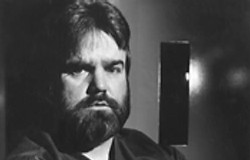 Marvin Gray
Murderer · USA · 1975
Marvin Gray was convicted killer who claimed responsibility for 23 slayings and…
23 victims
Marvin Gray
Murderer · USA · 1975
Marvin Gray was convicted killer who claimed responsibility for 23 slayings and…
23 victims
 Yahweh ben Yahweh
Murderer · USA · 1980
Yahweh ben Yahweh was born and legally named Hulon Mitchell Jr. (October 27, 19…
23 victims
Yahweh ben Yahweh
Murderer · USA · 1980
Yahweh ben Yahweh was born and legally named Hulon Mitchell Jr. (October 27, 19…
23 victims
 Russell Ellwood
Murderer · USA · 1991
Russell Ellwood was a former taxi driver. Authorities suspected him of killing…
20 victims
Russell Ellwood
Murderer · USA · 1991
Russell Ellwood was a former taxi driver. Authorities suspected him of killing…
20 victims
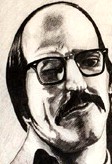 Jack Howard Potts
Murderer · USA · 1975
Jack Howard Potts was sentenced to death in March 1976 in two counties, Forsyth…
1 victim
Jack Howard Potts
Murderer · USA · 1975
Jack Howard Potts was sentenced to death in March 1976 in two counties, Forsyth…
1 victim
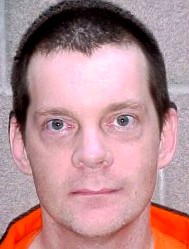 Milo Stanley
Murderer · USA · 1986
Milo Stanley was convicted in Yavapai County of fatally shooting his wife, Susa…
2 victims
Milo Stanley
Murderer · USA · 1986
Milo Stanley was convicted in Yavapai County of fatally shooting his wife, Susa…
2 victims
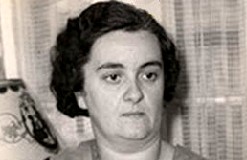 Mary Frances Creighton
Murderer · USA · 1923
Mary Frances Creighton (c. 1898 - July 16, 1936) was a housewife and was execut…
3 victims
Mary Frances Creighton
Murderer · USA · 1923
Mary Frances Creighton (c. 1898 - July 16, 1936) was a housewife and was execut…
3 victims
 Serge Fortin
Mass murderer · France · 1999
October 2001 — His sentence was commuted to 30 years in prison. · October 2003…
4 victims
Serge Fortin
Mass murderer · France · 1999
October 2001 — His sentence was commuted to 30 years in prison. · October 2003…
4 victims
 Johann Nelböck
Murderer · Austria · 1936
Dr Johann Nelböck (1903–1954) was an Austrian former student of Moritz Schlick,…
1 victim
Johann Nelböck
Murderer · Austria · 1936
Dr Johann Nelböck (1903–1954) was an Austrian former student of Moritz Schlick,…
1 victim
- Gender
- male
- Country
- USA
- Location
- Philadelphia County, Pennsylvania, USA
- Date of birth
- 1943
- Age at first offence
- 42
- Characteristics
- parricide, mentally ill
- Victim profile
- His former wife, Linda, 35, and daughters Donna, 14, and Joanne, 10
- Method of murder
- Shooting
- Date(s) of murder
- 1985
- Years active
- 1985
- Date of arrest
- —
- Status
-
Executed
Executed by lethal injection in Pennsylvania on August 15, 1995
Case identification
Leon Moser, also referred to as Leon Jerome Moser, was convicted for killing his ex-wife and two daughters outside St. James Episcopal Church in the Philadelphia suburb of Lower Providence Township.
Background
Leon Moser was a former Army lieutenant and a one-time seminary student. He underwent psychiatric treatment while in prison. He was described as a former mental patient. Lawyers for Mr. Moser said they never had the opportunity to argue about his mental state. Lawyers also said Mr. Moser underwent psychiatric treatment while in prison.
Leon Moser had appeared before a Judge of the Court of Common Pleas in the Commonwealth of Pennsylvania in 1985, entered an intelligent, knowing, and voluntary guilty plea to three charges of first degree murder, and was sentenced to death by a three-judge panel of the same court. The Supreme Court of Pennsylvania affirmed the judgment. Throughout the proceedings, Leon Moser maintained that he wanted to die.
The offence
Leon Moser pleaded guilty to killing his former wife, Linda, 35, and daughters Donna, 14, and Joanne, 10, outside St. James Episcopal Church on Palm Sunday ten years before his execution.
Investigation
A federal judge ordered an independent psychiatric evaluation of Mr. Leon Moser and appointed CJA counsel to report to the court with respect to Mr. Moser’s present competency. The state pushed ahead with the execution before the scheduled hearing.
Legal proceedings
Proceedings related to competency and stays
By order entered August 14, 1995, the District Court granted a stay of execution of death sentence, directed an independent psychiatric evaluation of Mr. Leon Moser, and appointed CJA counsel for the purpose of reporting to the Court with respect to Mr. Moser's present competency.
The State appealed, and by per curiam opinion entered August 15, 1995, the Court of Appeals affirmed the order of the District Court at C.A. No. 95-9003.
The Supreme Court of the United States granted the State's motion and vacated the stay.
The Pennsylvania Post-Conviction Defender Organization (PPCDO) filed renewed motions for relief in the District Court on August 16, 1995, which were denied by order dated August 16, 1995 at 1:55 a.m. The PPCDO appealed and requested a certificate of probable cause and a stay of execution.
By per curiam opinion entered August 16, 1995, the Court granted the certificate of probable cause, denied the request for a stay on the record as it then existed, and remanded the matter to the district court for an immediate hearing on all outstanding merits issues including inter alia:
- the standing of the Reverend Holland to act as Mr. Moser's next friend;
- a possible amendment to include Mr. Moser's brother as a next friend if an appropriate petition should be filed;
- the competency of Mr. Moser, which may require that the district court order the State to produce Mr. Moser in the court's presence and that any mental health records of Mr. Moser relevant to the issue of his competency be produced for the district court's review;
- and the issue of deliberate delay.
The Court indicated that the district court possessed the authority to grant a temporary stay if required, on the basis of the newly developed record.
The district court heard arguments from counsel commencing at 10:45 a.m. on August 16, 1995 regarding the petition of Mr. Moser's brother, Theodore Moser of Theresa, Wisconsin, to intervene as a “next friend” on his brother's behalf in addition to Reverend Holland. The district court also considered arguments on the issue of whether Mr. Moser engaged in deliberate delay so as to flout judicial processes pursuant to McFarland v. Scott, 114 S. Ct. 2568, 2573 (1994).
On August 16, 1995 at 2:20 p.m., the district court issued an order permitting the PPCDO to amend its pleading to include Theodore Moser as a next friend and requiring the State to produce Mr. Moser and his mental health records forthwith to the district court, at which time an immediate hearing would convene to determine Mr. Moser's competency.
The State immediately appealed the district court’s August 16, 1995 2:20 p.m. order simultaneously to the Supreme Court of the United States and to the Court of Appeals. The Court of Appeals dismissed the appeal for lack of jurisdiction given the interlocutory nature of the order, which did not invoke jurisdiction under either 28 U.S.C. § 1292(a)(1) or 28 U.S.C. § 1651(a).
When it became apparent that neither Mr. Moser nor his mental health records would be produced prior to the execution scheduled for 10:00 p.m. that night, the district court entered a temporary stay of Mr. Moser's execution currently scheduled for 10:00 p.m. on August 16, 1995 until August 17, 1995 at 10:00 p.m.
The Court of Appeals held that the district court did not err in finding that Theodore Moser clearly was dedicated to the best interests of Leon Moser and had a significant relationship with him. The Court also held that the district court’s action in briefly staying the execution for roughly 24 hours was a sound exercise of discretion given the state's inability to produce Mr. Moser for examination by the district court or the mental health records in a prompt fashion. The Court held that the district court properly exercised federal judicial power. The Court affirmed the order of the district court.
Dissenting view on competency and the desire to die
Circuit Judge NYGAARD dissented. The dissent stated that in 1985 Leon Moser entered an intelligent, knowing, and voluntary guilty plea to three charges of first degree murder, was sentenced to death by a three-judge panel, and that the Supreme Court of Pennsylvania affirmed the judgment. The dissent stated that Leon Moser maintained that he wanted to die and that, from all indications, he still did. The dissent stated there was no evidence that his situation or desire to die had changed since being found capable to enter a plea. The dissent stated that the experts who testified by affidavit as to Moser's incompetence had not seen him for ten years and that their assessment had been rejected by the state trier of fact.
The dissent stated that the minister and brother who claimed to represent Moser's personal interests as “next friend” had not visited with him in prison during the past ten years and that the attorneys who claimed to represent his legal interests had never seen him. The dissent stated that it did not believe that petitioners had made the requisite threshold showing that Moser was incompetent to make his own decisions. The dissent stated that if Moser wanted to die by the hands of the Commonwealth of Pennsylvania, “we must let him.”
The dissent said hours ago the Commonwealth petitioned the U.S. Supreme Court, which vacated an earlier stay of execution. The dissent stated that the Court's order contained no explanation, and summarized the Commonwealth’s representations in its petition as including:
- Petitioner's application was filed 37 hours before Moser's scheduled execution;
- The Commonwealth had witnesses available to testify in district court about Moser's current state of mind;
- The district court's stay was granted after argument;
- Petitioners lacked standing to file a motion on behalf of Moser;
- Moser had consistently and unequivocally expressed his desire to die; and
- The district court had based its decision on affidavits of a psychiatrist and a psychologist, neither of whom had seen Moser in ten years, and both of whom testified at the state hearing ten years ago at which Moser was found capable of entering a knowing and voluntary guilty plea, as well as facts that Moser had been hospitalized once for depression nine years ago and that he took a routine anti-depressant, Imipramine.
The dissent stated that aside from the appearance of Leon Moser's brother as next friend, the district court’s stay order today had essentially the same material before it as it had yesterday, and had once again granted a stay. The dissent stated that no new evidence had been submitted on the threshold inquiry of Moser's incompetence and that therefore it believed the stay entered today contravened the mandate of last night's Supreme Court order. The dissent said it would reverse the second stay of execution entered by the district court and allow Moser to have his wish.
Timeline
- 1985 — Leon Moser entered an intelligent, knowing, and voluntary guilty plea to three charges of first degree murder and was sentenced to death by a three-judge panel; the Supreme Court of Pennsylvania affirmed the judgment.
- August 14, 1995 — The District Court granted a stay of execution of death sentence, directed an independent psychiatric evaluation, and appointed CJA counsel for reporting on Mr. Moser's present competency.
- August 15, 1995 — The Court of Appeals affirmed the District Court’s order at C.A. No. 95-9003; the Supreme Court of the United States vacated the stay at the State’s request.
- August 16, 1995 — The District Court denied renewed motions filed by the PPCDO at 1:55 a.m.; the Court of Appeals granted a certificate of probable cause and denied a stay on the record, remanding for an immediate hearing on outstanding merits issues; the district court heard argument beginning at 10:45 a.m. and issued an order at 2:20 p.m. permitting amendment to include Theodore Moser as next friend and requiring production of Mr. Moser and mental health records forthwith; when production could not be completed prior to the scheduled execution time of 10:00 p.m., the district court entered a temporary stay until August 17, 1995 at 10:00 p.m.
- August 15, 1995 — Leon Moser was executed by lethal injection in Pennsylvania; he was declared dead 11 minutes after poison began dripping into his body.
Sentencing
Leon Moser was sentenced to death by a three-judge panel in the Commonwealth of Pennsylvania after his guilty plea.
Trial
After entering his plea, he said:
"I request the death penalty and that it be carried out as soon as possible."
Appeals
The Supreme Court of the United States lifted a stay issued by a federal appeals court to allow lawyers time for a competency hearing on Thursday morning. The Pennsylvania Post-Conviction Defender Organization filed an 11th-hour request for a competency hearing, which was denied by a federal judge; a federal judge’s ruling denying the hearing was overturned by an appeals court, and the Supreme Court at first declined 5-to-4 to intervene. The stay was later lifted.
Outcome
Leon Moser was executed by lethal injection in Pennsylvania on August 15, 1995. He was declared dead 11 minutes after poison began dripping into his body.
Aftermath
As the execution approached, a federal judge called the state's attorney to see if there was a cellular phone at the prison. The judge was told there was none, and was not told there was a standard phone in the execution chamber. The lethal chemicals were already flowing into Mr. Moser by the time the judge reached the chamber. A clerk later rang back and asked if the prisoner was alive or dead, “because if he is alive, the judge may want to talk to him”. The clerk was informed that the lethal injection had begun.
Mr. Moser’s final meal consisted of a large cheese pizza, cheese slices, cold cuts, pasta salad, iced cup cakes and a 2-liter bottle of Coca-Cola.
Other details
Leon Moser’s brother, Theodore Moser of Theresa, Wisconsin, was identified as part of the “next friend” petition. The church’s former minister, the Rev. Melford Holland, also issued appeals on Mr. Moser’s behalf. The prosecutor was Mary MacNeil Killinger.
A federal judge called attempted to contact the prisoner by phone as Leon Moser lay strapped down to receive his lethal injection. The judge’s clerk was told that the prisoner did not have a mobile phone, but was not told about a phone in the death chamber. The clerk later asked whether the prisoner was alive or dead because the judge might want to talk to him, and was told the lethal injection had begun.
Names and courts referenced
United States Court of Appeals for the Third Circuit, including Circuit Judges MANSMANN, COWEN, and NYGAARD, and District Judge Thomas N. O'Neill, Jr. The proceeding references United States District Court, Eastern District of Pennsylvania. The matter also references Whitmore v. Arkansas, Demosthenes v. Baal, and McFarland v. Scott.
Spotted an error, or have more information about this case?