
Cecil Sutherland
Murderer Brian Kevin Rosenfeld
Murderer · USA · 1985
Brian Kevin Rosenfeld Brian Kevin Rosenfeld was sentenced to three concurrent l…
23 victims
Brian Kevin Rosenfeld
Murderer · USA · 1985
Brian Kevin Rosenfeld Brian Kevin Rosenfeld was sentenced to three concurrent l…
23 victims
 Yahweh ben Yahweh
Murderer · USA · 1980
Yahweh ben Yahweh was born and legally named Hulon Mitchell Jr. (October 27, 19…
23 victims
Yahweh ben Yahweh
Murderer · USA · 1980
Yahweh ben Yahweh was born and legally named Hulon Mitchell Jr. (October 27, 19…
23 victims
 Russell Ellwood
Murderer · USA · 1991
Russell Ellwood was a former taxi driver. Authorities suspected him of killing…
20 victims
Russell Ellwood
Murderer · USA · 1991
Russell Ellwood was a former taxi driver. Authorities suspected him of killing…
20 victims
 Michael Lupo
Serial killer · United Kingdom · 1986
Michael Lupo was a former choir boy in his native Italy. He served in an Italia…
4 victims
Michael Lupo
Serial killer · United Kingdom · 1986
Michael Lupo was a former choir boy in his native Italy. He served in an Italia…
4 victims
 Michael Durant
Murderer · Canada · 2003
Michael Durant was found guilty of two counts of first-degree murder in the dea…
2 victims
Michael Durant
Murderer · Canada · 2003
Michael Durant was found guilty of two counts of first-degree murder in the dea…
2 victims
 Olaf Däter
Serial killer · Germany · 2001
Olaf Däter (born September 25, 1969 in Bremerhaven) was a German serial killer…
5 victims
Olaf Däter
Serial killer · Germany · 2001
Olaf Däter (born September 25, 1969 in Bremerhaven) was a German serial killer…
5 victims
 Pamela Moss
Murderer · USA · 1996
Pamela Moss was convicted in connection with the March 13, 2012 murder of Doug…
2 victims
Pamela Moss
Murderer · USA · 1996
Pamela Moss was convicted in connection with the March 13, 2012 murder of Doug…
2 victims
 Brandy Holmes
Murderer · USA · 2003
Brandy Aileen Holmes was convicted of first-degree murder and sentenced to deat…
1 victim
Brandy Holmes
Murderer · USA · 2003
Brandy Aileen Holmes was convicted of first-degree murder and sentenced to deat…
1 victim
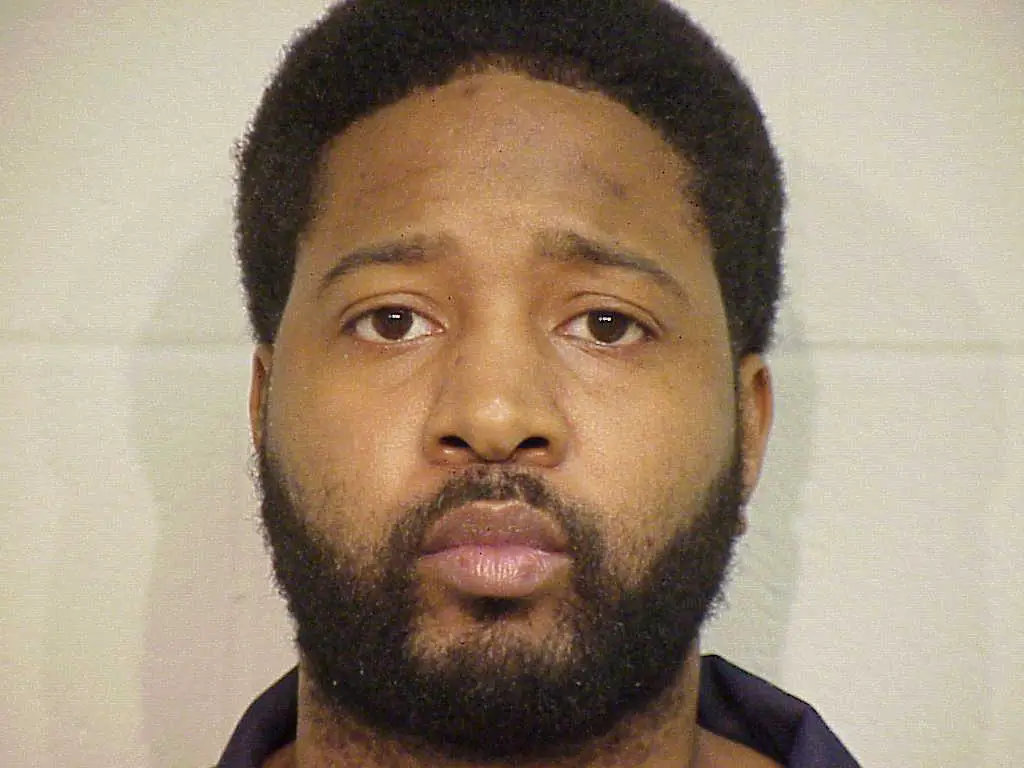 Roger Thompson
Mass murderer · USA · 2004
Roger Thompson was sentenced to life in prison without the possibility of parol…
5 victims
Roger Thompson
Mass murderer · USA · 2004
Roger Thompson was sentenced to life in prison without the possibility of parol…
5 victims
- Gender
- male
- Country
- USA
- Location
- Kell, Illinois, USA
- Date of birth
- May 28, 1955
- Age at first offence
- 32
- Characteristics
- rape, convicted rapist, kidnapping, torture
- Victim profile
- Amy Schulz, 10
- Method of murder
- Strangulation - Cutting her throat
- Date(s) of murder
- July 1, 1987
- Years active
- 1987
- Date of arrest
- October 22, 1987
- Status
-
Sentenced to death
Sentenced to death on November 13, 1989
Case record — Cecil Sutherland
Background
Cecil Sutherland was convicted of aggravated kidnaping, aggravated criminal sexual assault, and first degree murder related to the death of 10-year-old Amy Schulz.
On July 1, 1987, Amy Schulz disappeared from her home. The following morning, Amy’s body was discovered on a dirt oil-lease road in rural Jefferson County. Amy had been sexually assaulted and strangled, and her throat had been slit.
Cecil Sutherland was living in Dix, Illinois at the time of Amy’s disappearance and murder and was 32 years old at the time. In early October 1987, he left his Dix, Illinois, home and drove to Montana, later being arrested there for federal charges unrelated to the case involving Amy Schulz. Based in part on information provided by Montana authorities, Jefferson County police obtained search warrants and seized evidence, including hair samples and items from Sutherland’s person and vehicle.
The offence
Amy Schulz was abducted, beaten, strangled, and raped by Cecil Sutherland.
The autopsy described an incised wound to Amy’s neck made by a nonserrated blade. The wound began left of the midline and had four separate starting marks that fused into one deep cut ending behind her right ear, severing the jugular vein and the carotid artery on the right side of the neck and cutting into the cartilage between the fourth and fifth vertebral body in the spinal cord. The autopsy described hemorrhaging to various neck muscles and the right eye, and that the larynx had been crushed. The doctor observed no ligature marks.
The autopsy further described three distinct areas of hemorrhaging beneath the scalp indicating three blows to the head. Amy’s inner upper and lower lips were torn and bruised, suggesting she had been smacked across the mouth. Her right ear was torn off at the base. The autopsy described numerous abrasions and contusions, and heel prints delivered with force. The autopsy described a subtle abrasion of the labia majus, no vaginal penetration, and anal penetration occurring either shortly before or after death. The autopsy described a fracture of the right first rib and trauma to the right kidney, with the liver torn almost in half. Dr. Nuernberger concluded the injury occurred postmortem based on the small amount of internal bleeding tied to the liver injury.
Dr. Nuernberger testified that Amy was strangled first, possibly into unconsciousness, and after that her throat was slit. Based on stomach contents, the doctor testified death occurred between 9:30 p.m. and 10:30 p.m.
Evidence at the scene included shoe impressions on Amy’s back and hairs “stuck in the rectum area.” Automobile tire impressions were found near the body, and plaster casts were made of tire tracks and a shoe impression.
Investigation
Police determined that tire prints near Amy’s body were consistent with only two models of tires manufactured in North America: the Cooper “Falls Persuader” and the Cooper “Dean Polaris.” Police also determined that the shoe prints on and near the body were made by a boot sold by K mart called the “Texas Steer.”
The case remained unsolved for several months until Sutherland was arrested in Montana after shooting at a park ranger. Illinois police were contacted by law enforcement authorities at Glacier National Park in Montana where Sutherland had been arrested. Park authorities reported that Sutherland’s car had a single Cooper Falls Persuader tire on the right front wheel and that a pair of Texas Steer boots was found in his possession.
At the time of the murder, Sutherland was living in Dix, Illinois, a few miles from where Amy’s body was found. Jefferson County deputies and a criminalist then traveled to Montana where they made an ink impression of the right front wheel of Sutherland’s car.
The investigation included forensic evaluation of tire and shoe impressions, as well as examination of hairs and fibers found on Amy and linked to Sutherland’s dog and vehicle.
Arrest
In early October 1987, Sutherland left Dix, Illinois, and traveled to Montana. Federal authorities later arrested him on charges unrelated to Amy Schulz’s case. Jefferson County police executed search warrants in Montana and subsequently seized evidence.
The record described that Sutherland was arrested by federal authorities and later pleaded guilty to attempted murder of a federal officer. After that, Sutherland was indicted in 1988 for Amy’s rape and murder.
Trial
Charges and proceedings
Following a jury trial in St. Clair County, Sutherland was convicted of:
- aggravated kidnaping (Ill. Rev. Stat. 1987, ch. 38, par. 10–2(a)(2))
- aggravated criminal sexual assault (Ill. Rev. Stat. 1987, ch. 38, par. 12–14(b)(1))
- first degree murder (Ill. Rev. Stat. 1987, ch. 38, par. 9–1(a)(1))
The circuit court sentenced Sutherland to death.
The record described that on direct appeal, the Illinois Supreme Court held that the prosecution at trial improperly argued to the jury that hair and fiber evidence conclusively established that Amy had been in Sutherland’s car, but discounted the effect of that error. In 2000, the Illinois Supreme Court agreed that trial counsel was ineffective in failing to present evidence that the purchase of “Texas Steer” boots and installation of the Falls Persuader tire occurred after the date of the crime and that the conviction required a new trial.
Sutherland was tried again after extensive media coverage.
Evidence presented at trial
At the first trial (before retrial), the prosecution presented evidence that DNA analysis linked hairs that were found on Amy to Sutherland.
The record described that in those pre-DNA days, a forensic scientist testified for the State that the two pubic hairs could have originated from Sutherland but did not originate from 24 other suspects or from any member of Amy’s family. A jury convicted Sutherland of all charges, found him eligible for the death penalty, and found no mitigating factors sufficient to preclude a sentence of death.
At the retrial that began on May 3, 2000, the State used DNA from the pubic hair and a body hair found on Amy’s body to tie Sutherland. Former FBI analyst Harold Deadman testified for the State that the chance of a coincidental match of the pubic hairs was one in 1,428, the chance of a coincidental match of fibers from the clothes Amy was wearing being identical to fibers found in the vehicle was less than one in 1,400, and the chance of a coincidental match of the dog hairs was about 1 in 20.
The defense argued that a relative of Amy’s family, later convicted of molesting young boys, was responsible. In that defense presentation, a witness testified about pedophiles’ crossover into molesting males and females and opined that there was a high probability the relative would cross over from sexually abusing young boys to abusing young girls. The defense presented testimony that the man was prone to outbursts of anger and that when a victim resisted, his violence intensified.
The jury did not accept that defense theory and convicted Sutherland again of the crime.
Prior testimony and rebuttal witness
The circuit court allowed prior testimony of crime-scene technician Richard Caudell, who died before Sutherland’s retrial, to be read to the jury. The court also allowed the State to call Sherry Witzel, a member of Sutherland’s prior defense team, as a rebuttal witness.
Sufficiency and evidence details (as discussed on appeal)
On appeal, the record included a detailed evidentiary account. It described witnesses and evidence related to Amy’s last seen time and location, vehicle sightings in Kell, crime scene processing, the autopsy findings, and the forensics involving boot and tire impressions, hairs, fibers, and dog hair.
The court discussed that some evidence had failed to connect Sutherland to the abduction, sexual assault, and murder, including that the boot-impression evidence was limited to shoe size comparisons and that knives found with Sutherland contained no trace evidence linking Sutherland to the crimes. The court also described that there was conflicting testimony about whether Sutherland’s vehicle matched a vehicle seen on the night Amy disappeared.
Even with weaknesses noted in individual items, the appellate court held the remaining evidence, taken together and viewed in the light most favorable to the prosecution, was legally sufficient to support Sutherland’s convictions.
Sentencing
Sutherland waived a sentencing hearing at retrial and accepted an agreed recommended sentence of death. The circuit court accepted the recommendation after finding Sutherland death eligible.
The record described that the sentencing proceeding was unusual and that the trial judge admonished Sutherland about rights he was waiving, including the right to a jury determine death eligibility and the ultimate sentence, and the right to a second-stage sentencing hearing where mitigation evidence could be offered.
The trial court found Sutherland death eligible under three factors argued by the State, described as:
- felony murder (aggravated kidnaping)
- felony murder (aggravated criminal sexual assault)
- the victim was under the age of 12 and the death resulted from exceptionally brutal and heinous conduct
The trial court accepted the agreed recommended sentence and sentenced Sutherland to death.
The record described that the trial judge entered no sentences on the aggravated kidnaping and aggravated criminal sexual assault counts and remanded for imposition of sentences on those two counts.
Appeals
On direct appeal, the Illinois Supreme Court held the prosecution improperly overstated the strength of fiber-comparison evidence in its arguments, but initially held the error immaterial because the evidence at trial was not closely balanced.
Sutherland later filed a post-conviction petition that led to an evidentiary hearing on specific claims. After that hearing, the circuit court denied the post-conviction petition. On further appeal, in 2000, the Illinois Supreme Court set aside the sentence and conviction and ordered a new trial, holding that trial counsel’s performance fell below a reasonable level of assistance by failing to present evidence discrediting two salient items in the State’s case.
In the 2006 appeal decision, the Illinois Supreme Court affirmed Sutherland’s convictions and death sentence and remanded for additional sentencing on the other counts. The opinion was filed September 21, 2006, with Justice Fitzgerald delivering the judgment of the court, with Chief Justice Thomas and Justices Freeman, Kilbride, and Garman concurring and Justices Karmeier and Burke taking no part.
The record also described that the case included issues regarding motions to suppress evidence from Montana searches and Franks hearing motions, and that the court applied collateral estoppel principles and addressed inevitable discovery and missing vehicle issues. The opinion also addressed challenges regarding prior testimony of Richard Caudell and rebuttal testimony of Sherry Witzel, as well as human mtDNA evidence and associated discovery requests.
Outcome
The Illinois Supreme Court affirmed Sutherland’s convictions for aggravated kidnaping, aggravated criminal sexual assault, and first degree murder, and affirmed the death sentence for first degree murder. The case was remanded for imposition of sentences on the aggravated kidnaping and aggravated criminal sexual assault counts.
The record further included that the sentence of death, entered by the circuit court of St. Clair County, was set to be carried out on Tuesday, March 13, 2007, and that execution would be carried out in the manner provided by law.
Other details
Sutherland requested the death penalty during sentencing.
The record described:
- the victim’s last seen times by neighbors Cathy Simmons and Paul Sherwin around 9:10 p.m. and 9:15 p.m.
- the autopsy timeline placing death between 9:30 p.m. and 10:30 p.m.
- the existence of hairs and fibers in Amy’s rectal area and buttocks region and forensic conclusions about these materials
- evidence about dog hair consistent with Sutherland’s black Labrador retriever, Babe, and dissimilar to dogs in Amy’s environment
- fiber evidence involving gold fibers and red fibers and carpet standards from Sutherland’s vehicle
- discussion of mtDNA analysis limitations, including that mtDNA cannot exclude maternal relatives
- mention of a billing dispute and costs of defense representation described in external reporting, including a Minnesota attorney charging nearly $900,000 and the total cost to the state to defend Sutherland about $2 million
- the Illinois Supreme Court remand directing additional sentencing for aggravated kidnaping and aggravated criminal sexual assault counts
- the docket number 99047 and the opinion filing date of September 21, 2006
People named
- Cecil S. Sutherland (defendant; full name stated in the record as Cecil Steven Sutherland)
- Amy Schulz (victim)
- Dennis Schulz (Amy’s father)
- Esther Schulz (Amy’s stepmother)
- Adam Schulz (Amy’s brother)
- Ryan Schulz (Amy’s brother)
- Gwen Willis (step-grandparent; Esther Schulz’s mother)
- William Willis (step-grandfather; Gwen Willis’s husband)
- Kathy Simmons (neighbor mentioned in the warrant affidavit)
- Cathy Simmons (witness; saw Amy walking south on Jefferson Street)
- Paul Sherwin (witness; saw Amy walking south)
- Cheri Norton (witness; testified about walk with Cathy Simmons)
- Kenneth (Sutherland’s brother; testified and identified as Kenneth Sutherland)
- Michael Sutherland (Sutherland’s brother; testified)
- Tina Sutherland (Michael’s wife; testified)
- Joan Sutherland (Sutherland’s mother; testified)
- Walter Sinclair (uncle referenced in mtDNA testimony)
- Richard Caudell (crime-scene technician)
- Harold Deadman (former FBI analyst; testified for the State)
- Terry Melton (Mitotyping Technologies lab; performed mtDNA analysis)
- John Planz (expert on DNA and mtDNA techniques)
- Bruce Budowle (FBI scientist; testified)
- David Brundage (forensic scientist with Illinois State Police; testified)
- Officer Anthis (Officer Anthis; involved in Montana warrant process and testified)
- Officer Parker (Charles Parker; Illinois State Police special agent accompanying Anthis)
- Sherry Witzel (member of Sutherland’s prior defense team; testified)
- Prosecutor(s): Gary Duncan (identified in the case summary)
- Defense lawyer(s): John Paul Carroll (identified in the case summary)
- Justice Fitzgerald (delivered the judgment of the court; Illinois Supreme Court)
- Chief Justice Thomas and Justices Freeman, Kilbride, and Garman (concurring)
- Justices Karmeier and Burke (took no part)
Timeline
- July 1, 1987 — Amy Schulz disappeared from her Kell, Illinois, home area and was last seen walking south on Jefferson Street.
- July 2, 1987 — Amy Schulz’s body was discovered on a dirt oil-lease road in rural Jefferson County.
- October 22, 1987 — Jefferson County police officers secured a search warrant authorizing a search of Sutherland’s person, vehicle, and possessions in Montana.
- October 24, 1987 — Jefferson County police executed a second warrant authorizing a search of the vehicle.
- 1988 — Sutherland was indicted for Amy’s rape and murder.
- 1992 — The Illinois Supreme Court discounted error on direct appeal while discussing overstated arguments about fiber evidence.
- 1993 — Sutherland’s petition for a writ of certiorari to the United States Supreme Court was denied.
- 2000 — The Illinois Supreme Court set aside the sentence and conviction and ordered a new trial; the second trial began May 3, 2000.
- September 21, 2006 — Illinois Supreme Court opinion was filed, affirming convictions and death sentence and remanding for additional sentencing.
- November 13, 1989 — Sentenced to death (as stated in the case status field).
- March 13, 2007 — The record set the date for the sentence of death to be carried out.

Spotted an error, or have more information about this case?