
Anzel Keon Jones
Homicide Jack Kevorkian
Homicide · USA · 1990
Jack Kevorkian (born May 26, 1928) was a controversial American pathologist. He…
130 victims
Jack Kevorkian
Homicide · USA · 1990
Jack Kevorkian (born May 26, 1928) was a controversial American pathologist. He…
130 victims
 David Koresh
Homicide · USA · 1993
David Koresh (born Vernon Wayne Howell; August 17, 1959 – April 19, 1993) led t…
79 victims
David Koresh
Homicide · USA · 1993
David Koresh (born Vernon Wayne Howell; August 17, 1959 – April 19, 1993) led t…
79 victims
 Todd Hall
Homicide · USA · 1996
Todd Hall was described by neighbors as "mentally slow" and was said to have su…
9 victims
Todd Hall
Homicide · USA · 1996
Todd Hall was described by neighbors as "mentally slow" and was said to have su…
9 victims
 Clinton Bankston
Homicide · USA · 1987
15 August 1987 — Ann Morris (63), her sister Sally Nicholson (59), and Sally’s…
5 victims
Clinton Bankston
Homicide · USA · 1987
15 August 1987 — Ann Morris (63), her sister Sally Nicholson (59), and Sally’s…
5 victims
 Joshua Jenkins
Homicide · USA · 1996
Joshua Jenkins was a 15-year-old American killer who killed five members of his…
5 victims
Joshua Jenkins
Homicide · USA · 1996
Joshua Jenkins was a 15-year-old American killer who killed five members of his…
5 victims
 Jackie Arklöv
Murderer · Sweden · 1999
Jackie Arklöv was sentenced to life imprisonment. Jackie Arklöv (born June 6, 1…
2 victims
Jackie Arklöv
Murderer · Sweden · 1999
Jackie Arklöv was sentenced to life imprisonment. Jackie Arklöv (born June 6, 1…
2 victims
 Bathsheba Spooner
Murderer · USA · 1778
Bathsheba Ruggles Spooner (February 15, 1746 – July 2, 1778) was executed by ha…
1 victim
Bathsheba Spooner
Murderer · USA · 1778
Bathsheba Ruggles Spooner (February 15, 1746 – July 2, 1778) was executed by ha…
1 victim
 David Detrich
Murderer · USA · 1989
David Detrich was convicted in Superior Court (Pima) of first-degree murder, ki…
1 victim
David Detrich
Murderer · USA · 1989
David Detrich was convicted in Superior Court (Pima) of first-degree murder, ki…
1 victim
 Vincent Sims
Murderer · USA · 1996
April 5, 1996 — Forrest Smith arrived home from work around 10:00 p.m. and foun…
1 victim
Vincent Sims
Murderer · USA · 1996
April 5, 1996 — Forrest Smith arrived home from work around 10:00 p.m. and foun…
1 victim
 Maketu
Mass murderer · New Zealand · 1841
Maketu (also known as Maketu Wharetotara or Waretotara) (c. 1824 – 7 March 1842…
5 victims
Maketu
Mass murderer · New Zealand · 1841
Maketu (also known as Maketu Wharetotara or Waretotara) (c. 1824 – 7 March 1842…
5 victims
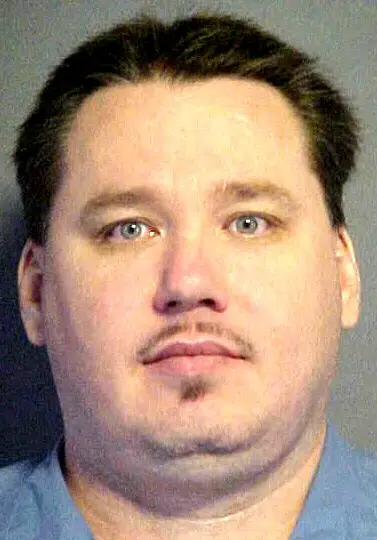 Norman Richard Cleary
Murderer · USA · 1991
Name: Norman Richard Cleary · Jurisdiction (trial): Tulsa County District Court…
1 victim
Norman Richard Cleary
Murderer · USA · 1991
Name: Norman Richard Cleary · Jurisdiction (trial): Tulsa County District Court…
1 victim
- Gender
- male
- Country
- USA
- Location
- Lamar County, Texas, USA
- Date of birth
- February 4, 1978
- Age at first offence
- 17
- Characteristics
- juvenile (17), robbery, arson
- Victim profile
- Sherry Kay Jones, 40
- Method of murder
- St abbing with knife
- Date(s) of murder
- May 2, 1995
- Years active
- 1995
- Date of arrest
- 10 days after
- Status
-
Life imprisonment
Sentenced to death on June 4, 1996; commuted to life in prison without parole on June 24, 2005
Case record
Anzel Keon Jones was a 17-year-old at the time of his arrest for the May 1995 murder of Sherry Kay Jones in Paris, Texas. Jones was sentenced to death and later received a commutation to life in prison without parole.
Jones was also described as a neighbor's son. He lived in a middle-income neighborhood with his mother and sister. About his father, Jones said: "Me and him, we don't associate no more."
Timeline
- May 2, 1995 — Jones broke into the Texas home of Sherry Jones and her mother, Edith; the house was set on fire; Sherry died from her wounds.
- June 27, 1995 — Jones was charged with capital murder.
- June 3, 1996 — Jones was convicted as charged and sentenced to death.
- June 4, 1996 — Jones was sentenced to death.
- February 25 — U.S. Supreme Court Justice Antonin Scalia stayed Jones' execution, which had been slated for April 29, pending the outcome of Simmons.
- January 26, 2000 — Jones had a previous execution date set, but received a stay.
- March 2005 — A divided Supreme Court ruled that persons who were under 18 years of age at the time of their crime could not be executed.
- June 24, 2005 — Jones's death sentence was commuted to life in prison with a mandatory 40 years before parole eligibility.
- June 2036 — Jones would be eligible for parole in June of 2036, when he would be 57 years old.
- April 29, 2004 — An execution date had been set.
The offence
Jones broke into the Texas home of Sherry Jones and her mother, Edith. Edith Jones was locked in the bedroom while Jones attacked.
While Edith Jones came out of the bedroom, Jones attacked Sherry and sexually assaulted Edith Jones and cut her throat. The house was set on fire. Edith Jones survived and testified against Jones. Sherry Jones died from her wounds.
In a separate recounting of the same events, Sherry and her mother heard dogs barking, and when Sherry went to investigate, Jones appeared at the back door. Sherry offered Jones the keys to two vehicles parked in the garage and also gave him $125 in cash if he would not harm the women. Jones took the cash and then attacked them both with a kitchen knife. Sherry was stabbed eight times, and Jones tried to slit Edith Jones’s throat. Jones left Edith Jones bleeding in her bed and then set the house on fire; neighbors saw the smoke and Edith Jones was rescued. Sherry died from her wounds at the scene. The physical evidence linking Jones to the murder of Sherry was described as not as strong as the physical evidence that Jones was the assailant of Edith.
Investigation and arrest
Jones was arrested 10 days after the attack. Police arrested Jones at school a few days after he committed the crimes.
Jones’ fingerprints were found on a bottle of nail polish remover that had been thrown under a chair in the women’s home. The contents had been poured around the perimeter of the house as fuel to burn it.
At the crime scene, police found cult-related signs scrawled in the dirt in the backyard. Jones’ defense lawyer and a prosecutor described these findings, with one person stating suspicion that other teenagers had put Jones up to the murders as part of some cult initiation rite, but no further evidence was developed.
Jones insisted he acted alone.
Trial
Jones was charged with capital murder on June 27, 1995.
Jones pleaded not guilty. Jones was convicted as charged and sentenced to death on June 3, 1996.
A witness for the defense narrative was Jones’ best friend, Joe Dollins, who testified that Jones confessed to him that he committed the crime against Edith and Sherry Jones. It was argued that trial counsel provided ineffective assistance by asking an open-ended question about why Dollins testified that Jones had confessed when Dollins previously told the police he knew nothing about the crime. Dollins responded that he changed his story because the police found a letter he had written to Jones confirming a plan he and Jones had developed for Jones to kill Dollins’ father and brother. Faced with the threat of prosecution for this conspiracy, Dollins testified that he stopped trying to protect Jones and told the police what he knew. It was further argued that counsel was ineffective because this open-ended question led to Dollins’ testimony that he and Jones had conspired to kill Dollins’ father and brother.
The trial narrative also included an argument that counsel was ineffective in pursuing evidence of Jones’ brain damage. It described signs that Jones suffered from brain dysfunction or organic brain damage and argued that with effective pursuit of that evidence there would have been a reasonable likelihood of persuading the jury to sentence Jones to life instead of death.
It was also described that Royce Smithey, as a prosecution penalty phase witness, testified that Jones might be able to escape from the confines of prison if he were not sentenced to death, and that this deprived Jones of an individualized sentencing determination under the Eighth Amendment because the possibility of escape exists for all offenders.
There was also an argument that the prosecutorial decision to seek the death penalty against Jones for a crime committed at age 17, without first determining whether Jones was sufficiently mature to prosecute as an adult, violated the Eighth and Fourteenth Amendments’ safeguards against cruel and unusual punishment.
During trial, after the prosecutor displayed pictures of the crime scene, one juror became physically ill and had to be replaced.
In jail and in court, Jones acted unruly. The defense narrative described Jones making gang-sign gestures to friends in the courtroom and drawing pictures of the judge in Ku Klux Klan costumes.
At trial, Jones’ defense lawyer called only the grandmother to the stand and did not call Jones’ mother, sister, or Jones himself. The defense narrative stated the defense lawyer did not think Jones would hold up under the prosecutors and said Jones never really showed any remorse.
Sentencing
Jones was sentenced to death on June 3, 1996.
Jones had a previous execution date set for January 26, 2000, but received a stay.
An execution date was set for April 29, 2004. A stay was later granted by U.S. Supreme Court Justice Antonin Scalia pending the outcome of Simmons.
Jones was sentenced to death on June 4, 1996.
On June 24, 2005, Jones’s death sentence was commuted to life in prison without parole with a mandatory 40 years before parole eligibility.
Jones was described as serving his sentence at the Telford Unit and would be eligible for parole in June of 2036, when he would be 57 years old.
Appeals and federal proceedings
Jones pursued relief through federal habeas corpus proceedings and was awaiting the decision of the United States Supreme Court on his petition for writ of certiorari at the end of federal habeas corpus proceedings.
Jones raised two issues in his petition:
- The death penalty was cruel and unusual punishment for a person who was only seventeen years old at the time of the capital offense.
- The Texas system for habeas corpus review was “ineffective,” excusing prisoners from presenting all their claims to the state courts in order to gain review in the federal courts, because the state habeas process in Texas recognized the need for counsel but refused to require that counsel appointed for condemned state habeas applicants provide adequate assistance.
A divided Supreme Court ruling in March 2005 stated that persons who were under 18 years of age at the time of their crime could not be executed.
Outcome
Jones’s death sentence was commuted to life in prison without parole on June 24, 2005.
Jones continued to be described as residing on Texas’ death row while awaiting decisions in his case.
Aftermath and personal statements
Jones’ nickname among fellow death row inmates was “Youngster.”
Jones did not deny his actions, and he said: "I did it."
In an interview, Jones said: "I'm sort of a people person."
Jones described his school and earlier behavior, saying: "I was an A, B, C, D student." He also said: "I didn't even take it seriously. I didn't take nothing seriously back then," and "Back then I was sort of like, 'Fuck the world.'"
When asked for an explanation of why he committed the crimes, Jones said: "I sit back nights, actually years, and I just can't think of anything."
Jones declined to answer questions involving details of his crimes.
Jones’ grades at Paris High School were described as mediocre, and he was described as having played football, ran track, and competed in hurdles, sprint relays and the high jump.
Jones’ grandmother, 65-year-old Betty Jones, and Garland Cardwell, a partner in Sherman's Munson, Munson, Cardwell & Keese who was Jones’ defense lawyer at trial, said Jones never had been in serious trouble before the early morning hours of May 2, 1995.
Cardwell said that about a year earlier, Jones had appeared before a judge in juvenile court for stealing cigarettes with a friend and that "We stuffed them down our pants and got caught," as Jones said. The juvenile court required community service, and Jones said: "The only thing then was going to school, acting up on weekends, drinking, riding around, and playing football. That was my mentality."
Jones’ defense narrative described that Betty Jones also believed her grandson did not help his case and "He just sat there."
Assistant district attorney J. Kerye Ashmore said:
"I don't think the jury had much problem with their decision, and they knew his age,"
Ashmore also described his view of what Jones did and said:
"This is what I can tell you about Anzel Keon Jones. He went into a backyard, took a nearly 50-year-old woman and beat her with a gun, cut her throat in front of her mother, then sexually assaulted her mother in every way imaginable, including perforating her organ with an antenna, cut her throat, attempted to burn the house down and fled. He doesn't deserve to be in society ever again. He needs to be executed. Twelve people heard the evidence, including his age, and didn't feel that it mitigated his crime,"
Ashmore said the surviving victim, Edith Jones, died several years ago. Ashmore also said that Jones’ son asked not to be contacted by reporters.
Jones expressed his view about hoping for Simmons to prevail and said:
"It's a relief, right. It prolongs my death. Everybody's got to die someday, right. But I'd like to be able to die of natural causes, possibly 50 years from now, than have to go down on that gurney and strap down and stick a needle in my arm, right. If I get a chance to grow, I might be able to right some of the wrongs I've done. You never know. I might be able to get a chance to talk to Edith to tell her I'm sorry and apologize to her. It's just the aspect of living a little bit longer, possibly in regular population. I might be able to move around a little more rather than sitting in my cell all day."
A prisoner-related description said prison officials segregated condemned individuals in a separate unit known as the Deathwatch Pod when an execution date was set, and Jones had resided on that unit twice because he had an execution date scheduled and then stayed in 2000 and then more recently last month.
Defense lawyer Richard Burr described Jones as:
"He is very different from the impudent, arrogant, 17-year-old tried for capital murder. Trial lawyers had a difficult time with him because he acted out, but he is a delightful adult now,"
Spotted an error, or have more information about this case?