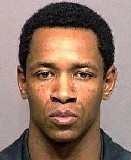
Joseph Holcombe Mulligan
Murderer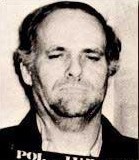 Ervil LeBaron
Murderer · USA · 1972
Ervil Morrell LeBaron (1925 to August 16, 1981) was the leader of a polygamous…
35 victims
Ervil LeBaron
Murderer · USA · 1972
Ervil Morrell LeBaron (1925 to August 16, 1981) was the leader of a polygamous…
35 victims
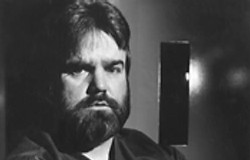 Marvin Gray
Murderer · USA · 1975
Marvin Gray was convicted killer who claimed responsibility for 23 slayings and…
23 victims
Marvin Gray
Murderer · USA · 1975
Marvin Gray was convicted killer who claimed responsibility for 23 slayings and…
23 victims
 Yahweh ben Yahweh
Murderer · USA · 1980
Yahweh ben Yahweh was born and legally named Hulon Mitchell Jr. (October 27, 19…
23 victims
Yahweh ben Yahweh
Murderer · USA · 1980
Yahweh ben Yahweh was born and legally named Hulon Mitchell Jr. (October 27, 19…
23 victims
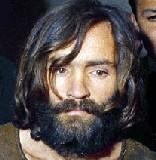 Charles Manson
Murderer · USA · 1969
Charles Milles Manson (born November 12, 1934) was an American criminal and mus…
9 victims
Charles Manson
Murderer · USA · 1969
Charles Milles Manson (born November 12, 1934) was an American criminal and mus…
9 victims
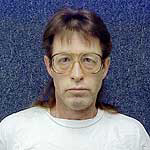 Thomas Grant Ervin
Murderer · USA · 1967
Thomas Grant Ervin was convicted of two counts of first-degree murder and one c…
3 victims
Thomas Grant Ervin
Murderer · USA · 1967
Thomas Grant Ervin was convicted of two counts of first-degree murder and one c…
3 victims
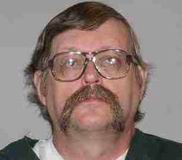 Kim Brown
Murderer · USA · 1987
Jun 12, 1987 — Angela Fay Hackl disappeared from her hometown of Lone Rock, Wis…
3 victims
Kim Brown
Murderer · USA · 1987
Jun 12, 1987 — Angela Fay Hackl disappeared from her hometown of Lone Rock, Wis…
3 victims
 Gregory Beaver
Murderer · USA · 1985
Gregory Warren Beaver was a 30-year-old man who was executed by lethal injectio…
1 victim
Gregory Beaver
Murderer · USA · 1985
Gregory Warren Beaver was a 30-year-old man who was executed by lethal injectio…
1 victim
 Rodrigo Hernandez
Murderer · USA · 1991
Rodrigo Hernandez was convicted in 2004 of the rape and capital murder of Susan…
2 victims
Rodrigo Hernandez
Murderer · USA · 1991
Rodrigo Hernandez was convicted in 2004 of the rape and capital murder of Susan…
2 victims
 Delbert Teague
Murderer · USA · 1985
Delbert Teague was executed by lethal injection in Texas on September 9, 1998.…
1 victim
Delbert Teague
Murderer · USA · 1985
Delbert Teague was executed by lethal injection in Texas on September 9, 1998.…
1 victim
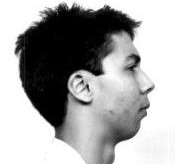 Jose Angel Moreno
Murderer · USA · 1985
Jose Angel Moreno Jose Angel Moreno was sentenced to death on January 14, 1987.…
1 victim
Jose Angel Moreno
Murderer · USA · 1985
Jose Angel Moreno Jose Angel Moreno was sentenced to death on January 14, 1987.…
1 victim
- Gender
- male
- Country
- USA
- Location
- Muscogee County, Georgia, USA
- Date of birth
- 1952
- Age at first offence
- 22
- Characteristics
- attempt to collect insurance money, alcohol
- Victim profile
- Capt. Patrick A. Doe of the Army (the estranged husband of Mulligan's sister) / Marion Jones Miller (the captain's girlfriend)
- Method of murder
- Shooting (.38 special automatic in a .45 frame)
- Date(s) of murder
- April 13, 1974
- Years active
- 1974
- Date of arrest
- —
- Status
-
Executed
Executed by electrocution in Georgia on May 15, 1987
Case overview
Joseph Holcombe Mulligan was executed by electrocution in Georgia on May 15, 1987.
Timeline
- April 12, 1974 — Mulligan talked Timothy A. Helms into driving him to Columbus, Georgia, offering Helms a fee of $1,000; during the drive, Mulligan told Helms he was going to Columbus to “ice somebody.”
- April 12–13, 1974 — Mulligan and Helms spent the night of April 12-13 at a hotel in Columbus registered under false names.
- April 13, 1974 — Mulligan and Helms visited Patrick A. Doe, an army captain at Fort Benning and Mulligan’s brother-in-law; the two joined Capt. Doe in washing his car, during which Mulligan and Capt. Doe argued.
- Evening after the car washing on April 13, 1974 — Capt. Doe drove to the house of Marian Jones Miller to pick her up for a party; while Capt. Doe left the car, Mulligan announced to Helms that he would “do it in the next two blocks.”
- Following Capt. Doe’s return to the driver’s seat — Mulligan held a .38 special automatic in a .45 frame, which Mulligan had earlier borrowed from Capt. Doe, to Capt. Doe’s head and fired once.
- Shortly after the shooting — Mulligan ordered Helms to grab the now-abandoned steering wheel, but the car struck both a stop sign and a mail box.
- After Marian Jones Miller cried out for help — Mulligan placed the gun across Helms’ back and shot Miller, as he told her to be silent.
- After the car was brought to a stop — Mulligan and Helms towelled it off for fingerprints and then ran.
- As they fled — Helms threw away his bloody shirt and the wallet removed from the body of Capt. Doe at Mulligan’s instruction; Mulligan threw Capt. Doe’s gun into some bushes and Mulligan’s own clothes over a bridge.
- September 18, 1979 — The Supreme Court of Georgia issued its opinion in Mulligan v. the State, docket number 35314.
- May 17, 1982 — The district court denied relief in the ineffective assistance of counsel portion of the habeas petition.
- May 14, 1987 — The United States Court of Appeals for the Eleventh Circuit denied the motion for certificate of probable cause and denied a motion for stay of execution set for Friday, May 15, 1987, at 7:00 p.m.
- May 15, 1987 — Mulligan was executed by electrocution in Georgia.
- May 16, 1987 — A report about the execution stated that the Supreme Court of the United States had earlier rejected an emergency request to postpone the execution and a formal appeal challenging his conviction and death sentence.
The offence
Mulligan was convicted of the murders of Patrick A. Doe and Marian Jones Miller and was also convicted of theft by taking.
During the events on the evening of the shootings, Mulligan and Timothy Helms were sitting in the back seat; Mulligan was seated directly behind the driver’s seat. After Capt. Doe left the car to get Ms. Miller, Mulligan told Helms he would “do it in the next two blocks.” After Capt. Doe returned and the car began to move again, Mulligan held a .38 special automatic in a .45 frame, which he had earlier borrowed from the captain, to Capt. Doe’s head and fired once. Mulligan then ordered Helms to grab the now-abandoned steering wheel, but Helms was unable to do so before the car struck both a stop sign and a mail box.
When Marian Jones Miller cried out for help, Mulligan placed the gun across Helms’ back and shot Miller while telling her to be silent. After Helms brought the car to a stop, Mulligan and Helms towelled it off for fingerprints and then ran.
Targets and injuries (autopsy findings)
The autopsy performed on Capt. Doe showed that the bullet had entered the left eye, traveled through the brain, and exited the right temple.
The autopsy of Ms. Miller revealed that she had been shot four times: in the left forearm, the left shoulder, the right upper arm, and the midportion of the back of the skull; the exit wound of the last listed shot was the right eye.
The cause of death for both victims was laceration and hemorrhage of the brain and cerebral trauma.
Evidence described
Several .38 shell casings were found in the captain’s car along with a bullet. A State Crime Laboratory test indicated that the shell casings and the bullet found in Capt. Doe’s car had been fired by Capt. Doe’s .38 pistol.
A latent fingerprint lifted from the left door window of Capt. Doe’s car was found to match a rolled print of Mulligan’s left middle finger.
The evidence also revealed that Capt. Doe had filed a divorce action against Mulligan’s sister and that Capt. Doe told Mulligan on the day of the murders that his divorce from Mulligan’s sister would be final soon.
Investigation and witness evidence
Much of the prosecution’s case rested on the testimony of Timothy Helms, who was granted immunity in return for testifying that Mulligan shot Captain Doe once in the head and Mrs. Miller four times.
Mulligan was alleged to have killed Captain Doe “to collect on a life insurance policy” and to have killed Mrs. Miller “to eliminate a witness.”
Mulligan maintained that he was not guilty and stated that he was on a bus traveling from Atlanta to Savannah when the killings occurred.
Arrest
The record did not provide arrest details in the material provided.
Trial
Charges and co-indictee
Joseph Holcombe Mulligan was co-indicted with Timothy Andrew Helms in Muscogee County in August of 1974 for the murders of Patrick A. Doe and Marian Jones Miller, and for theft by taking.
Verdict and sentencing at trial
Following a jury trial, Mulligan was found guilty on all counts. The jury sentenced him to death for each murder and to thirty days for theft by taking.
Sentencing aggravating circumstances found by the jury
In recommending the death penalty as to Count 1 of the indictment, the jury found:
- “The offense of murder was outrageously and wantonly vile, horrible and inhuman.” Code Ann. 27-2534.1 (b) (7).
In recommending the death penalty as to Count 2, the murder of Ms. Miller, the jury found:
- “The offense of murder was committed while the offender was engaged in the commission of another capital felony to wit: the murder of Patrick A. Doe.” Code Ann. 27-2534.1 (b) (2)
- “The offense of murder was outrageously or wantonly vile, horrible or inhuman in that it involved torture and depravity of mind.”
The appellate review stated that the sentence of death imposed in Count 2 was not imposed under the influence of passion, prejudice or any other arbitrary factor, and that the trial court’s instructions during sentencing were not subject to the defects addressed in Hawes v. State.
Defense position at trial and sentencing stage strategy
Mulligan maintained he was not guilty and argued that he was on a bus from Atlanta to Savannah when the killings occurred.
The case material also described trial counsel, Joseph Mulligan’s counsel (appointed by the trial court as “Mr. Jay Fitt” in the federal habeas discussion), and counsel’s approach at guilt and sentencing phases. The record described counsel’s attempts in cross-examination to undermine eyewitness accounts placing Mulligan in Columbus and counsel’s cross-examination of Timothy Helms to explore conflicts and the grant of immunity.
Sentencing
Supreme Court of Georgia mandatory review and remand
As to Count 1 of the indictment, the appellate court concluded that the evidence did not support a finding of Code Ann. 27-2534.1 (b) (7) or (4) as an aggravating circumstance. The opinion stated that:
- the death sentence on Count 1 was vacated, and
- the case was remanded with direction that a sentence of life imprisonment be imposed.
As to Count 2 of the indictment, the appellate court affirmed the death penalty.
Appeals and habeas proceedings
Supreme Court of the United States certiorari and denial
The material stated that the Supreme Court of the United States denied Mulligan’s petition for writ of certiorari after the Georgia Supreme Court reversed the death sentence for the murder of Doe but affirmed the sentence for Miller.
The material also stated that a second petition for writ of certiorari was denied by the U.S. Supreme Court.
Federal habeas: Eleventh Circuit affirmance (September 4, 1985)
The United States Court of Appeals for the Eleventh Circuit affirmed the denial of Mulligan’s petition for a writ of habeas corpus filed under 28 U.S.C.A. Sec. 2254.
The Eleventh Circuit addressed:
- Mulligan’s claim of ineffective assistance of counsel at both guilt and sentencing phases, including lack of pre-trial investigation.
- Mulligan’s claim that prosecutorial closing statements rendered both phases fundamentally unfair.
The Eleventh Circuit described trial counsel as “Mr. Jay Fitt” and stated that Mulligan was represented by an experienced criminal defense attorney who had served as counsel for between 75 and 100 defendants.
The Eleventh Circuit noted that the Sixth Amendment guarantees criminal defendants the right to “adequate legal assistance” and that claims of ineffective assistance are governed by Strickland v. Washington.
The Eleventh Circuit concluded that counsel’s representation did not fall below the reasonably effective level required by the Sixth and Fourteenth Amendments.
Successive habeas / abuse of the writ decision (May 14, 1987)
The Eleventh Circuit denied a motion for certificate of probable cause and denied a motion for stay of execution set for Friday, May 15, 1987, at 7:00 p.m.
The court found that:
- the district court denied relief because the petition was a successive habeas petition and all six grounds asserted constituted an abuse of the writ.
- of the six grounds alleged, three were asserted in the prior petition and three were “new” grounds.
The Eleventh Circuit concurred with dismissals as abuse of the writ for four issues, which were described as:
- A misleading and incomplete felony murder instruction amounting to a judicially created amendment violating Fourteenth and Sixth Amendment rights; the court stated the petitioner failed to show why assertion did not constitute an abuse of the writ.
- The Muscogee County grand and traverse jury system unconstitutionally underrepresented black and female citizens; the court stated the issue was raised in a prior federal petition, decided contrary to petitioner’s arguments, and not appealed, making reassertion an abuse of the writ.
- Introduction of morgue photographs of the deceased serving no purpose other than to inflame the passions of the jury in violation of the Sixth, Eighth and Fourteenth Amendments; the court stated the claim was dismissed as abuse of the writ and the ends of justice did not require consideration.
- Sentencing phase jury instructions being constitutionally defective for failing to specifically and explicitly instruct the jury that it had an option to recommend a life sentence notwithstanding a finding of a statutory aggravating circumstance; the court stated it was asserted in the prior federal petition but not appealed and thus reassertion was abuse of the writ without showing new law or new facts.
The Eleventh Circuit also addressed two penalty instruction issues under the merits, stating:
- The penalty phase jury instructions did not unconstitutionally diminish the jury’s sense of responsibility under Caldwell v. Mississippi, and the instructions complied with the requirement that the jury understand its responsibility for a death sentence.
- The jury in Mulligan’s case had been properly instructed that verdicts in each phase must be unanimous, with an explanation that the jury was told it could not return a less than unanimous verdict because the court stated: “Now, upon retiring to the jury room, you will select one of your number to act as foreman or forelady who will preside over your deliberations, and who will sign the verdict to which all twelve of you freely and voluntarily agree.”
The court noted that when the jury returned its verdict, defense counsel declined the court’s invitation to poll the jury.
Aftermath
Mulligan’s execution followed the rejection of an emergency request to postpone the execution and a formal appeal challenging his conviction and death sentence.
Other details
Trial court and appellate proceedings described in the Georgia Supreme Court opinion (September 18, 1979)
The Supreme Court of Georgia described that the case came from the Superior Court of Muscogee County before Judge Smith and that the case involved mandatory review of the death sentence.
The opinion also listed enumerations of error raised by the appellant and rejected them as without merit, including:
- failure to charge the jury about considering mitigating circumstances and recommending life imprisonment despite finding a statutory aggravating circumstance beyond a reasonable doubt;
- failure to hold Georgia’s death penalty procedure unconstitutional as a cruel and unusual mechanism in violation of the Eighth Amendment;
- the verdict not being supported by the evidence because the conviction allegedly relied on uncorroborated testimony of a co-conspirator, with discussion of Georgia statutory requirements for corroboration and holdings about corroboration standards;
- failure to present the jury in writing with a copy of the court’s entire charge regarding sentencing, with discussion of statutory instructions and required written charge.
Extracts of verbatim quoted matter from the record
The following verbatim statements appeared in the material:
- Mulligan told Helms during the drive: “ice somebody.”
- Mulligan announced to Helms: “do it in the next two blocks.”
- In the Georgia Supreme Court opinion, the court referenced jury instructions and legal standards, including the statement that the jury was to consider “our system for deciding whether a death sentence is to be given requires the jury to consider two issues in the sentencing phase. First, the jury must consider if the state has proven the existence of at least one statutory aggravating circumstance (Code Ann. 27-2534.1 (b)(1-10)), beyond a reasonable doubt. Second, if one of these circumstances is found, the jury must then consider the mitigating and aggravating circumstances relevant to the defendant and determine whether the death penalty is appropriate in this case.”
- In the Eleventh Circuit opinion, the court quoted the trial court instruction on unanimity: “Now, upon retiring to the jury room, you will select one of your number to act as foreman or forelady who will preside over your deliberations, and who will sign the verdict to which all twelve of you freely and voluntarily agree.”
Spotted an error, or have more information about this case?