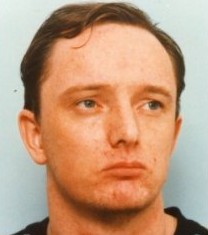
Robert Napper
Homicide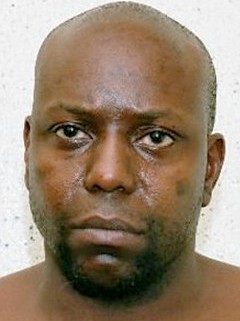 Peter Bryan
Homicide · United Kingdom · 1993
Peter Bryan was a schizophrenic cannibal who was sentenced to closed psychiatri…
3 victims
Peter Bryan
Homicide · United Kingdom · 1993
Peter Bryan was a schizophrenic cannibal who was sentenced to closed psychiatri…
3 victims
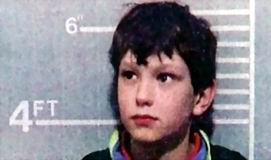 Jon Venables
Homicide · United Kingdom · 1993
Jon Venables was born 13 August 1982. He was a 10-year-old boy when he abducted…
1 victim
Jon Venables
Homicide · United Kingdom · 1993
Jon Venables was born 13 August 1982. He was a 10-year-old boy when he abducted…
1 victim
 Matthew Hardman
Homicide · United Kingdom · 2001
1998 — Matthew Hardman moved to Llanfairpwll, Anglesey, when he was 13; his fat…
1 victim
Matthew Hardman
Homicide · United Kingdom · 2001
1998 — Matthew Hardman moved to Llanfairpwll, Anglesey, when he was 13; his fat…
1 victim
 Robert Sartin
Homicide · United Kingdom · 1989
Robert Sartin was found to be unfit to stand trial and was being held in Moss S…
1 victim
Robert Sartin
Homicide · United Kingdom · 1989
Robert Sartin was found to be unfit to stand trial and was being held in Moss S…
1 victim
 Brian Field
Murderer · United Kingdom · 1968
Brian Field was convicted of the murder, rape, and strangling of 14-year-old bo…
1 victim
Brian Field
Murderer · United Kingdom · 1968
Brian Field was convicted of the murder, rape, and strangling of 14-year-old bo…
1 victim
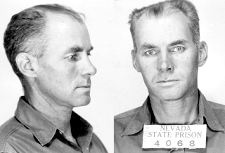 Burton Williamson
Murderer · USA · 1939
Burton Franklin Williamson was executed by asphyxiation-gas in Nevada on Novemb…
1 victim
Burton Williamson
Murderer · USA · 1939
Burton Franklin Williamson was executed by asphyxiation-gas in Nevada on Novemb…
1 victim
 Anna Carolina Jatobá
Murderer · Brazil · 2008
Anna Carolina Jatobá was the stepmother of Isabella de Oliveira Nardoni. Alexan…
1 victim
Anna Carolina Jatobá
Murderer · Brazil · 2008
Anna Carolina Jatobá was the stepmother of Isabella de Oliveira Nardoni. Alexan…
1 victim
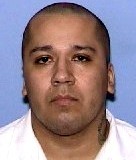 Rodrigo Hernandez
Murderer · USA · 1991
Rodrigo Hernandez was convicted in 2004 of the rape and capital murder of Susan…
2 victims
Rodrigo Hernandez
Murderer · USA · 1991
Rodrigo Hernandez was convicted in 2004 of the rape and capital murder of Susan…
2 victims
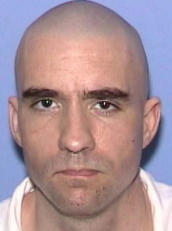 Christopher Jay Swift
Murderer · USA · 2003
Christopher Jay Swift was a white male who was born in Dallas County, Texas. He…
2 victims
Christopher Jay Swift
Murderer · USA · 2003
Christopher Jay Swift was a white male who was born in Dallas County, Texas. He…
2 victims
 Michelle Tharp
Murderer · USA · 1998
Michelle Sue Tharp was convicted in Washington County of first-degree murder, e…
1 victim
Michelle Tharp
Murderer · USA · 1998
Michelle Sue Tharp was convicted in Washington County of first-degree murder, e…
1 victim
- Gender
- male
- Country
- United Kingdom
- Location
- London, England, United Kingdom
- Date of birth
- February 25, 1966
- Age at first offence
- 26
- Characteristics
- rape, mutilation
- Victim profile
- Rachel Nickell / Samantha Bisset, 27, and her daughter, Jazmine, 4
- Method of murder
- St abbing with knife - Smothering
- Date(s) of murder
- July 15, 1992 / November 1993
- Years active
- 1992–1993
- Date of arrest
- May 1994
- Status
-
Remanded in Broadmoor Hospital indefinitely on 18 December 2008
Case record: Robert Clive Napper
Background
Robert Clive Napper (born 25 February 1966) was a paranoid schizophrenic convicted British serial killer and rapist who had also been diagnosed with Asperger's syndrome.
Napper was the oldest child of Brian Napper, a driving instructor, and his wife Pauline. He was born in Erith, Greater London, and was raised in Plumstead, South East London in his early years. Napper’s parents’ marriage was violent. Napper witnessed violent attacks on his mother, and the marriage ended in divorce when he was 10. Napper and his siblings (two brothers and a sister) were placed in foster care and underwent psychiatric treatment. Psychiatric counselling at the Maudsley Hospital in Camberwell lasted for six years.
Napper underwent a personality change after a family friend assaulted him on a camping holiday when he was 12. The offender was jailed. Napper became introverted, obsessively tidy and reclusive, and he bullied his siblings and spied on his sister while she undressed.
Napper pursued a series of manual jobs after school and left home aged 21 to live in a bedsit in Plumstead.
Other details
Napper was held at Broadmoor from the time of the first Old Bailey trial. In his childhood, a violent family environment and psychiatric counselling were described as shaping his later behaviour, including delusions and violent urges.
Napper kept detailed records of the sites of potential and actual attacks on women.
Napper was believed to be the "Green Chain rapist" who carried out at least 70 savage attacks across south-east London over a four-year period ending in 1994. The earliest of the 'Green Chain' rapes were linked to Napper, and were those he admitted to in 1995. He was described as attacking young mothers accompanied by their children.
A psychiatrist treating Napper in Broadmoor said he also suffered from Aspergers’ Syndrome. Natalie Pyszora said Napper believed changes had been made to the calendar making him believe unusual things were taking place. Napper believed he had an MA in maths and a Nobel Peace Prize and medals from fighting in Angola, and that he and his family were in Who's Who and may well have had millions of pounds in a bank in Sidcup, Kent. Pyszora also said Napper believed he could transmit thoughts through telepathy and had been kneecapped by the IRA and had had his fingers blown off by an IRA parcel bomb but they had miraculously grown back. The psychiatrist said his thought process was irrational, and she could not envisage Napper ever being let out of Broadmoor and that he accepted this.
During Napper’s summing up at the Old Bailey, Mr Justice Griffiths Williams told Napper: "You are on any view a very dangerous man".
Napper denied involvement in relation to the Nickell murder in later interviews and was questioned about unsolved attacks on women during 1992 but was eliminated from inquiries at that time.
Napper was described as being held indefinitely at Broadmoor, and detectives were described as intending to return there to question him about other offences.
The offence
On 15 July 1992, on Wimbledon Common, Napper stabbed Rachel Nickell, a young mother, forty-nine times in front of her son Alex, then aged two. Alex clung to his mother’s body begging her to wake up. Napper also sexually assaulted Nickell and mutilated her body. Alex was found clinging to her bloody body after the attack.
In November 1993, in the Bisset home in Plumstead, South East London, Napper stabbed Samantha Bissett, aged 27, in her neck and chest, killing her. Napper then sexually assaulted and smothered Bissett’s daughter, Jazmine Jemima Bissett, aged four. The account described the scene as involving mutilation of Samantha Bissett’s body inside the sitting room. A police photographer was off work for two years from the impact of witnessing the murder scene.
Napper admitted to a rape and two attempted rapes during the period considered in 1995, and he later admitted to three other attacks on women in addition to the manslaughter conviction connected to Rachel Nickell.
Napper was also believed to have carried out the 'Green Chain' rapes, and detectives described the hallmark as involving arming himself with a knife to intimidate and or control vulnerable young women not known to him.
Victims
Rachel Nickell died after being stabbed forty-nine times and being sexually assaulted and mutilated during the attack on Wimbledon Common. At the time of her death she was described as 23, and her son Alex was then aged two.
Samantha Bissett was killed in Plumstead in November 1993. She was 27. Her daughter Jazmine Jemima Bissett was four years old at the time of the attack.
Investigation
In 1986, Napper was convicted of an offence with an airgun and given a conditional discharge.
In October 1989, police rejected information conveyed in a phonecall from Napper’s mother that he had admitted to perpetrating a rape on Plumstead Common because no case apparently matched the evidence. It emerged that a rape of a 30-year-old woman in front of her children had been reported to have occurred in a house that backed on to Plumstead Common. At this point, Pauline Napper broke off all contact with her son.
Napper was questioned about unsolved attacks on women during the year after the Wimbledon Common murder but was eliminated from inquiries.
The investigation to find Nickell’s murderer resulted in the attempted prosecution of an innocent man, Colin Stagg, before advances in DNA profiling revealed Napper’s connection to the case.
A series of Metropolitan police apologies was described as being issued over the mishandling of the Rachel Nickell murder inquiry, including missed chances to apprehend Napper, missed chances to take a DNA sample, ignored people who recognised him in a photo-fit, releasing him after he was questioned as a "peeping tom", and reliance on advice of a forensic psychologist during the investigation. Police now conceded that Colin Stagg was completely innocent, and that DNA profiling advances later revealed Napper’s connection to the case.
Arrest
Napper was stopped and questioned as a "peeping tom" close to the Green Chain Walk and was released after brief questioning. Officer notes said he "should be considered as a possible rapist, indecency type suspect".
Napper was arrested after weapons were found in his flat and he pleaded guilty and was jailed for eight weeks. Later, his fingerprints were found on a gun buried on Winns Common, and no action was taken against him at that time.
Napper was arrested for the murders of Samantha and Jazmine Bissett after tests revealed fingerprints in the murder flat matched his prints.
Trial
At the Old Bailey, Napper was convicted at the Old Bailey of the murder of Samantha and Jazmine in October 1995. He also admitted a rape and two attempted rapes at this time. From the time of the first Old Bailey trial, he had been held at Broadmoor.
In October 1995, Napper pleads guilty to the manslaughter of Ms Bissett and her daughter, and was sent indefinitely to Broadmoor high security hospital. In the same period he admitted rape and two attempted rapes in 1992.
In November 2007, Napper was charged with the murder of Ms Nickell and committed for trial.
In December 2008, Napper pleaded guilty to the manslaughter of Rachel Nickell on the grounds of diminished responsibility, and he was remanded in Broadmoor Hospital indefinitely on 18 December 2008.
Quotes
Mr Justice Griffiths Williams said to Napper in his summing up at the Old Bailey: "You are on any view a very dangerous man".
Sentencing
In the 1990s, Napper was sentenced to Broadmoor high security hospital. He was held at Broadmoor from the time of the first Old Bailey trial and was sent indefinitely to Broadmoor high security hospital after the 1995 manslaughter plea.
On 18 December 2008, he was remanded in Broadmoor Hospital indefinitely.
Appeals
No appeal details were included in the provided material.
Outcome
Napper was convicted at the Old Bailey in October 1995 of the murder of Samantha and Jazmine. He later admitted rape and two attempted rapes.
On 18 December 2008, Napper was convicted of the manslaughter of Rachel Nickell on the grounds of diminished responsibility and remanded in Broadmoor Hospital indefinitely.
Aftermath
Detectives described as returning to Broadmoor to question Napper about other offences were noted.
John Yates, Assistant Commissioner of the Met, offered formal apology to Stagg and said “more could and should have been done” to prevent the murders of Samantha and Jazmine Bissett.
Colin Stagg received £706,000 compensation from a discretionary scheme set up to award victims of miscarriages of justice.
Timeline: how police missed chances to catch Robert Napper for Nickell killing
- August 1989 — woman raped in her home in Plumstead in front of her two children; believed to be the first of Napper's sex attacks
- November 1989 — Napper's mother tells police her son has claimed to be a rapist but officers find no record of the crime
- March 1992 — two women raped close to Green Chain walk in south-east London
- May 1992 — young mother raped as she walks with her daughter in a buggy in south-east London
- July 1992 — Rachel Nickell murdered as she walks on Wimbledon Common, south-west London, with her two-year-old son Alex; stabbed her 49 times and mutilated her body
- August 1992 — Robert Napper questioned about the Green Chain rapes after callers tell police he looks like a photo-fit of the suspect
- September 1992 — Colin Stagg arrested as a suspect for the Nickell murder and questioned then released
- October 1992 — Napper arrested after weapons were found in his flat; pleads guilty and is jailed for eight weeks
- January 1993 — Police begin a "honeytrap" operation designed to get Stagg to confess to an undercover policewoman, Lizzie James, who begins writing sexually explicit letters to the suspect
- April 1993 — Napper's fingerprints found on a gun buried on Winns Common, southeast London; no action taken against him
- July 1993 — Napper stopped and questioned as a "peeping tom" close to the Green Chain Walk; released after brief questioning but officer notes he "should be considered as a possible rapist, indecency type suspect"
- August 1993 — Colin Stagg arrested and charged with the murder of Rachel Nickell
- November 1993 — Samantha Bissett and her daughter Jazmine, four, murdered in their flat in Plumstead, south-east London; Jazmine sexually assaulted before being smothered; Samantha's body mutilated after death
- October 1994 — Mr Justice Ognall dismisses the case against Colin Stagg, saying the “honeytrap” operation designed was an "attempt to incriminate a suspect by positive and deceptive conduct of the grossest kind"
- November 1994 — Napper interviewed for first time about Nickell murder but denies any involvement
- October 1995 — Napper pleads guilty to the manslaughter of Ms Bissett and her daughter; admits rape and two attempted rapes in 1992 and is sent indefinitely to Broadmoor high security hospital
- December 1995 — Napper interviewed about the Nickell murder again and denies ever being on Wimbledon Common
- March 1999 — Undercover female officer who laid “honeytrap” for Stagg issues writ against police after taking 18 months off work and then retiring from the force early saying she had suffered post-traumatic stress syndrome as a result of the case
- October 2001 — Scotland Yard begins fresh review of the Nickell murder case; Forensic Science Service finds no DNA from case material
- April 2002 — LGC Forensics asked to examine the scientific material producing profile
- October 2002 — Dr Britton cleared of seven counts of misconduct at hearing by the British Psychological Society after formal complaints by Stagg
- July 2004 — full murder investigation re-opened with Napper as chief suspect
- November 2007 — Napper charged with the murder of Ms Nickell and committed for trial
- August 2008 — Colin Stagg receives £706,000 compensation from a discretionary scheme set up to award victims of miscarriages of justice
- 18 December 2008 — Napper pleads guilty to manslaughter of Ms Nickell on grounds of diminished responsibility
- December 2008 — John Yates, Assistant Commissioner of the Met, offers formal apology to Stagg and says “more could and should have been done” to prevent the murders of Samantha and Jazmine Bissett

Spotted an error, or have more information about this case?