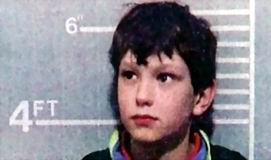
Jon Venables
Homicide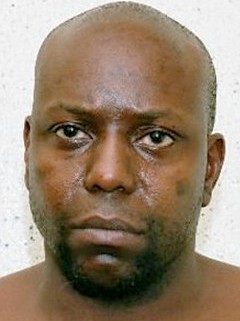 Peter Bryan
Homicide · United Kingdom · 1993
Peter Bryan was a schizophrenic cannibal who was sentenced to closed psychiatri…
3 victims
Peter Bryan
Homicide · United Kingdom · 1993
Peter Bryan was a schizophrenic cannibal who was sentenced to closed psychiatri…
3 victims
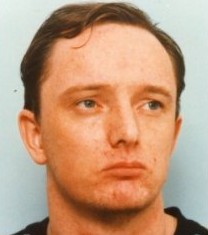 Robert Napper
Homicide · United Kingdom · 1992
Robert Clive Napper (born 25 February 1966) was a paranoid schizophrenic convic…
3 victims
Robert Napper
Homicide · United Kingdom · 1992
Robert Clive Napper (born 25 February 1966) was a paranoid schizophrenic convic…
3 victims
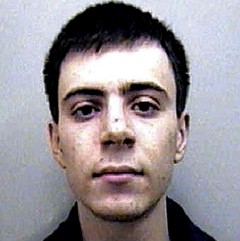 Gregory Davis
Homicide · United Kingdom · 2003
Gregory Davis was sentenced to closed psychiatric confinement in 2003. He serve…
2 victims
Gregory Davis
Homicide · United Kingdom · 2003
Gregory Davis was sentenced to closed psychiatric confinement in 2003. He serve…
2 victims
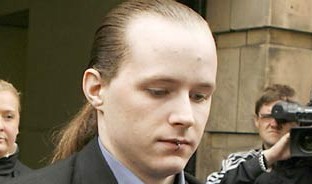 Luke Mitchell
Homicide · United Kingdom · 2003
Luke Muir Mitchell (born July 24th 1988) was a Scottish teenager convicted of m…
1 victim
Luke Mitchell
Homicide · United Kingdom · 2003
Luke Muir Mitchell (born July 24th 1988) was a Scottish teenager convicted of m…
1 victim
 Matthew Hardman
Homicide · United Kingdom · 2001
1998 — Matthew Hardman moved to Llanfairpwll, Anglesey, when he was 13; his fat…
1 victim
Matthew Hardman
Homicide · United Kingdom · 2001
1998 — Matthew Hardman moved to Llanfairpwll, Anglesey, when he was 13; his fat…
1 victim
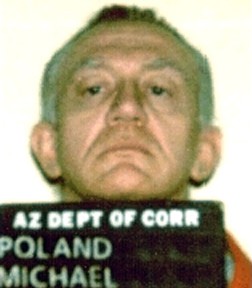 Michael Poland
Murderer · USA · 1977
Michael Poland was executed by lethal injection in Arizona on June 16, 1999. He…
2 victims
Michael Poland
Murderer · USA · 1977
Michael Poland was executed by lethal injection in Arizona on June 16, 1999. He…
2 victims
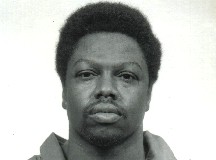 Walter Dye
Murderer · USA · 1996
Walter L. Dye was sentenced to death on January 20, 1998. Dye conceded that giv…
3 victims
Walter Dye
Murderer · USA · 1996
Walter L. Dye was sentenced to death on January 20, 1998. Dye conceded that giv…
3 victims
 Viktor Dembovskis
Murderer · United Kingdom · 2005
Viktor Dembovskis was convicted of murdering Jeshma Raithatha, 17, in 2005 afte…
1 victim
Viktor Dembovskis
Murderer · United Kingdom · 2005
Viktor Dembovskis was convicted of murdering Jeshma Raithatha, 17, in 2005 afte…
1 victim
 Orlando Ganal
Mass murderer · USA · 1991
February 15, 1991 — Orlando Ganal Sr. injured his back while working at his job…
4 victims
Orlando Ganal
Mass murderer · USA · 1991
February 15, 1991 — Orlando Ganal Sr. injured his back while working at his job…
4 victims
 Jack Henry Abbott
Murderer · USA · 1965
Name: Jack Henry Abbott · Dates: January 21, 1944–February 10, 2002 · Known rol…
2 victims
Jack Henry Abbott
Murderer · USA · 1965
Name: Jack Henry Abbott · Dates: January 21, 1944–February 10, 2002 · Known rol…
2 victims
- Gender
- male
- Country
- United Kingdom
- Location
- Liverpool, Merseyside, England, United Kingdom
- Date of birth
- August 13, 1982
- Age at first offence
- 11
- Characteristics
- juvenile, abduction, torture
- Victim profile
- James Patrick Bulger, 2
- Method of murder
- Beating with bricks, stones, and a piece of metal
- Date(s) of murder
- February 12, 1993
- Years active
- 1993
- Date of arrest
- 6 days after
- Status
-
Released
Sentenced to custody until the age of 18; released on lifelong licence in June 2001
Case record: Jon Venables
Background
Jon Venables was born 13 August 1982. He was a 10-year-old boy when he abducted, tortured and murdered James Bulger.
The offence
James Patrick Bulger was a two-year-old boy from Kirkby, Merseyside, England. He disappeared on 12 February 1993 from the New Strand Shopping Centre, Bootle, while accompanying his mother.
Venables and Robert Thompson were charged on 20 February 1993 with the abduction and murder. At trial, they were found guilty of the murder of Bulger on 24 November 1993.
At the location of the attack near the disused Walton & Anfield railway station, close to Walton Lane police station and Anfield Cemetery, it was established at trial that one boy threw blue Humbrol modelling paint into Bulger’s left eye. They kicked him and hit him with bricks, stones and a 22-pound (10.0 kg) iron bar, described in court as a railway fishplate. The boys placed batteries in his mouth. Bulger suffered ten skull fractures as a result of the iron bar striking his head.
A police suspicion of a sexual element to the crime was recorded because Bulger’s shoes, stockings, trousers and underpants had been removed. The pathologist’s report read out in court stated that Bulger’s foreskin had been manipulated. When questioned about this aspect of the attack by detectives and the child psychiatrist Eileen Vizard, Thompson and Venables were reluctant to give details.
Before the boys left him, they laid Bulger across the railway tracks and weighted his head down with rubble in the hope that a train would hit him and make his death appear to be an accident. After the killers left, Bulger’s body was cut in half by a train. His severed body was discovered on 14 February.
Investigation
The police quickly found low-resolution video images of Bulger’s abduction from the Strand Shopping Centre by two unidentified boys. As the circumstances surrounding the death became clear, tabloid newspapers denounced people who had seen Bulger but had not intervened, as the “Liverpool 38”.
Forensic tests confirmed that both boys had the same blue paint on their clothing as found on Bulger’s body. Both had blood on their shoes; blood on Thompson’s shoe was matched to Bulger through DNA tests.
The fact that the boys were so young came as a shock to investigating officers, headed by Detective Superintendent Albert Kirby, of Merseyside Police.
The breakthrough came when a woman, on seeing slightly enhanced images of the two boys on national television, recognised Venables, whom she knew had played truant with Thompson that day. She contacted police and the boys were arrested.
Arrest
Venables was arrested following the television recognition. He and Thompson were charged on 20 February 1993 and appeared at South Sefton Youth Court on 22 February 1993, when they were remanded in custody to await trial.
Trial
Court proceedings and charges
At the close of the trial, the judge ruled that the boys’ names should be released because of the nature of the murder and public reaction. They were identified along with lengthy descriptions of their lives and backgrounds.
At the trial, the lead prosecution counsel Richard Henriques QC successfully rebutted the principle of doli incapax.
The attempted abduction charge related to an incident earlier on 12 February 1993 at the New Strand Shopping Centre, the day of Bulger’s death. It involved attempting to lead away another two-year-old boy, but this was prevented by the boy’s mother.
The full trial opened at Preston Crown Court on 1 November 1993. The proceedings were conducted as an adult trial with the accused in the dock away from their parents. The boys denied the charges of murder, abduction and attempted abduction.
Psychiatric evidence and interviews
The child psychiatrist Dr. Eileen Vizard, who interviewed Thompson before the trial, was asked in court about right and wrong and causing injury to a child. Vizard replied: “If the issue is on the balance of probabilities, I think I can answer with certainty”. Vizard also said that Thompson was suffering from posttraumatic stress disorder after the attack on Bulger.
Dr. Susan Bailey, the Home Office forensic psychiatrist who interviewed Venables, said unequivocally that Venables knew the difference between right and wrong.
The case against the boys was based to a large extent on more than 20 hours of tape-recorded police interviews, which were played back in court.
Conviction
Thompson and Venables were found guilty of Bulger’s murder at Preston Crown Court on 24 November 1993. They became the youngest convicted murderers in modern English history.
The judge, Mr. Justice Morland, told Thompson and Venables that they had committed a crime of “unparalleled evil and barbarity... In my judgment, your conduct was both cunning and very wicked.”
The European Court of Human Rights later ruled in 1999 that Thompson and Venables had not received a fair trial by being tried in public in an adult court.
Sentencing
The judge sentenced Thompson and Venables to be detained at Her Majesty’s pleasure, with a recommendation that they should be kept in custody for “very, very many years to come”, recommending a minimum term of eight years.
Shortly after the trial, Lord Taylor of Gosforth, the Lord Chief Justice, ordered that the two boys should serve a minimum of ten years, which would have made them eligible for release in February 2003 at the age of twenty.
The editors of The Sun handed a petition bearing nearly 280,000 signatures to Home Secretary Michael Howard to increase the time spent by both boys in custody. In July 1994, Howard announced that the boys would be kept in custody for a minimum of fifteen years, meaning they would not be considered for release until February 2008.
Lord Donaldson criticised Howard’s intervention, describing the increased tariff as “institutionalised vengeance ... [by] a politician playing to the gallery”.
The increased minimum term was overturned in 1997 by the House of Lords, which ruled that it was “unlawful” for the Home Secretary to decide on minimum sentences for offenders aged under 18.
Appeals
In 1999, lawyers for Thompson and Venables appealed to the European Court of Human Rights that the boys’ trial had not been impartial because they were too young to follow proceedings and understand an adult court.
On 15 March 1999, the court in Strasbourg ruled by 14 votes to 5 that there had been a violation of Article 6 of the European Convention on Human Rights regarding the fairness of the trial, stating: “The public trial process in an adult court must be regarded in the case of an 11-year-old child as a severely intimidating procedure”.
Bulger’s parents applied to the European Court of Human Rights in September 1999, but failed to persuade the court that a victim of a crime had the right to be involved in determining the sentence of the perpetrator.
Outcome
Thompson and Venables were released on lifelong licence in June 2001.
In October 2000, Lord Woolf recommended that the tariff be reduced from ten to eight years, adding that young offenders’ institutions were a “corrosive atmosphere” for the juveniles.
In June 2001, after a six month review, the parole board ruled that the boys were no longer a threat to public safety and could be released as their minimum tariff had expired in February. The Home Secretary David Blunkett approved the decision, and they were released a few weeks later on a life licence after serving eight years.
The terms of their release included that they were not allowed to contact each other or Bulger’s family; were prohibited from visiting the Merseyside region; curfews may be imposed and they must report to probation officers; breach of those rules would make them liable to be returned to prison; if they were deemed to be a risk to the public, they would be returned to prison.
An injunction was imposed on the news media after the trial, preventing publication of details about the boys. The injunction was kept in force following their release on parole, so their new identities and locations could not be published.
David Blunkett stated in 2001: “The injunction was granted because there was a real and strong possibility that their lives would be at risk if their identities became known.
Aftermath
Continued legal trouble: 2010 imprisonment
In March 2010, Venables was returned to prison for an unspecified violation of the terms of his licence of release.
On 21 June 2010, Venables was charged with possession and distribution of indecent images of children. It was alleged that he downloaded 57 indecent images of children over a twelve month period to February 2010 and allowed other people to access the files through a peer-to-peer network. Venables faced two charges under the Protection of Children Act 1978.
On 23 July 2010, Venables appeared at a court hearing at the Old Bailey via a video link and pleaded guilty to charges of downloading and distributing child pornography. He was given a sentence of two years’ imprisonment.
At the court hearing, it emerged that Venables had posed in online chat rooms as 35-year-old Dawn “Dawnie” Smith, a married woman from Liverpool who boasted about abusing her eight-year-old daughter, in the hope of obtaining further child pornography.
The judge ruled that Venables’ new identity could not be revealed, but the media was allowed to report that he had been living in Cheshire at the time of his arrest.
The High Court also heard that Venables had been arrested on suspicion of affray in September 2008 following a drunken street fight with another man, and that he was cautioned for possession of cocaine later the same year.
In November 2010, a review of the National Probation Service handling of the case by Sir David Omand found that probation officers could not have prevented Venables from downloading child pornography. Harry Fletcher, assistant general secretary of the National Association of Probation Officers, commented that only 24-hour surveillance would have prevented Venables from downloading the material.
Media, injunction and public reporting details
The terms of release included restrictions on contact and location, and an injunction prevented identification details.
The Manchester Evening News named the secure institutions in which the pair were housed, in possible breach of the injunction banning information which might identify their whereabouts. In December 2001, the paper was fined £30,000 for contempt of court and ordered to pay costs of £120,000.
The Guardian revealed that both boys had passed A-levels during their sentences and reported details including that Bulger’s family’s lawyers consulted psychiatric experts to present a report to the parole panel suggesting Thompson was an undiagnosed psychopath; that report was ultimately dismissed.
Other personal and family details mentioned
Bulger’s parents Ralph and Denise divorced in 1995, and Denise married Stuart Fergus in 1998.
In 2004, Denise Bulger stated that she received a tip-off from an anonymous source that helped her locate Thompson, and that on seeing him she was “paralysed with hatred” and unable to confront him.
In April 2007, documents released under the Freedom of Information Act confirmed that the Home Office spent £13,000 on an injunction to prevent a foreign magazine from revealing the new identities of Thompson and Venables.
On 14 March 2008, an appeal to set up a Red Balloon Learner Centre in Merseyside in memory of James Bulger was launched by Denise Fergus and Esther Rantzen. A memorial garden was created in Sacred Heart Primary School in Kirkby, where Bulger would have been expected to attend.
In March 2010, a call was made to raise the age of criminal responsibility in England from 10 to 12. Children’s commissioner Maggie Atkinson said that the killers should have undergone “programmes” to help turn their lives around, rather than being prosecuted. The Ministry of Justice rejected the call, saying that children over the age of 10 knew the difference “between bad behaviour and serious wrongdoing”.
Freedom of information and reporting of identity risk
Baroness Butler-Sloss, the judge who made the decision to grant Venables anonymity in 2001, warned he could be killed if his new identity was revealed.
A spokesperson for the Ministry of Justice stated that there was a worldwide injunction against publication of either killers’ location or new identity.
Chief Inspector Tracie O’Gara of Lancashire Constabulary was quoted as stating: “An individual who was targeted four and a half years ago was not Jon Venables and now he has left the area”.
Statements quoted about trial fairness and injunction
Jack Straw stated in the context of 2010 imprisonment that he could not give further details because it was not in the public interest to do so.
Ed Balls warned that some parts of UK media were coming close to breaking the law and stated: “If we responded to the desire for people to know the facts in public in a way which ends up prejudicing a legal case, we would look back and think we made very irresponsible decisions”.
Baroness Butler-Sloss’s warning was recorded regarding the risk of harm if identity was revealed.

Spotted an error, or have more information about this case?