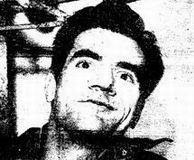
Stephen Nash
Serial killer Richard Kuklinski
Serial killer · USA · 1949
Richard “Iceman” Kuklinski was sentenced to life in prison in 1988. He died in…
100 victims
Richard Kuklinski
Serial killer · USA · 1949
Richard “Iceman” Kuklinski was sentenced to life in prison in 1988. He died in…
100 victims
 Ottis Toole
Serial killer · USA · 1961
Ottis Elwood Toole (sometimes misspelled as “Otis”) was an American serial kill…
65 victims
Ottis Toole
Serial killer · USA · 1961
Ottis Elwood Toole (sometimes misspelled as “Otis”) was an American serial kill…
65 victims
 Juan Vallejo Corona
Serial killer · USA · 1960
Juan Vallejo Corona was a native of Mexico, born in 1934. He moved to Yuba City…
25 victims
Juan Vallejo Corona
Serial killer · USA · 1960
Juan Vallejo Corona was a native of Mexico, born in 1934. He moved to Yuba City…
25 victims
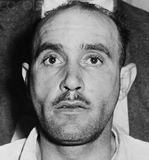 Raymond Fernandez
Serial killer · USA · 1947
Raymond Martinez Fernandez was executed by electrocution at Sing Sing prison in…
17 victims
Raymond Fernandez
Serial killer · USA · 1947
Raymond Martinez Fernandez was executed by electrocution at Sing Sing prison in…
17 victims
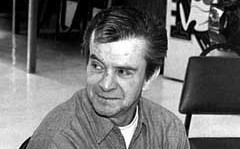 Carroll Edward Cole
Serial killer · USA · 1948
Carroll Edward Cole, also known as “Eddie,” was born in Sioux City, Iowa on May…
15 victims
Carroll Edward Cole
Serial killer · USA · 1948
Carroll Edward Cole, also known as “Eddie,” was born in Sioux City, Iowa on May…
15 victims
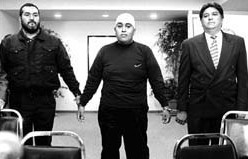 Alejandro Perez de la Rosa
Mass murderer · Mexico · 1996
December 3, 1996 — Yolanda Figueroa, her husband Fernando Balderas, and their t…
5 victims
Alejandro Perez de la Rosa
Mass murderer · Mexico · 1996
December 3, 1996 — Yolanda Figueroa, her husband Fernando Balderas, and their t…
5 victims
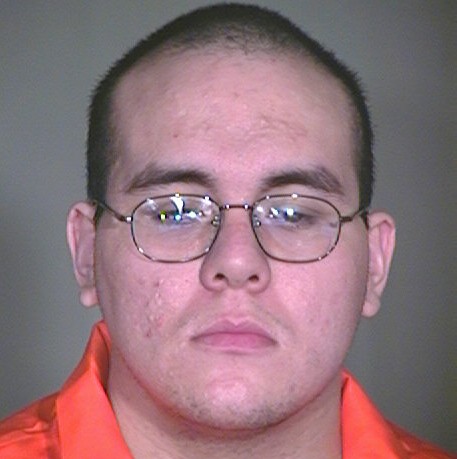 Ruben Garza
Murderer · USA · 1999
December 1, 1999 — Ruben Garza entered the Franco/Rush residence and shot Ellen…
2 victims
Ruben Garza
Murderer · USA · 1999
December 1, 1999 — Ruben Garza entered the Franco/Rush residence and shot Ellen…
2 victims
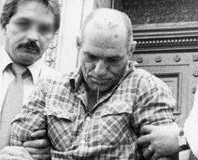 Andre Rand
Murderer · USA · 1972
Andre Rand was born Andre Rashan in 1943. He later used the name “Rand” and emp…
4 victims
Andre Rand
Murderer · USA · 1972
Andre Rand was born Andre Rashan in 1943. He later used the name “Rand” and emp…
4 victims
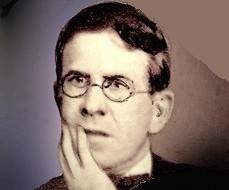 Dr. Bennett Clark Hyde
Murderer? · USA · 1909
Dr. Bennett Clark Hyde was accused in Kansas City of murdering members of the S…
3 victims
Dr. Bennett Clark Hyde
Murderer? · USA · 1909
Dr. Bennett Clark Hyde was accused in Kansas City of murdering members of the S…
3 victims
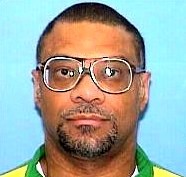 Henry Brisbon
Homicide - Murderer · USA · 1973
Henry Brisbon was a juvenile (17) when he was convicted for double murder. The…
3 victims
Henry Brisbon
Homicide - Murderer · USA · 1973
Henry Brisbon was a juvenile (17) when he was convicted for double murder. The…
3 victims
- Gender
- male
- Country
- USA
- Location
- Los Angeles, California, USA
- Date of birth
- 1924
- Age at first offence
- 31
- Characteristics
- homosexual, rape, torture
- Victim profile
- Men and boys
- Method of murder
- St abbing with knife
- Date(s) of murder
- 1955 - 1956
- Years active
- 1955–1956
- Date of arrest
- —
- Status
-
Executed
Executed by asphyxiation-gas in California on August 21, 1959
Case identification
Stephen Nash
Status
Stephen Nash was executed by asphyxiation-gas in California on August 21, 1959.
Timeline
- August 21, 1959 — Stephen Nash was executed by asphyxiation-gas in California.
- November 21, 1956 — Ten-year-old Larry George Rice’s body was found lying in a pool of blood beneath the Santa Monica Pier; he died three hours later from thirty stab wounds.
- August — Stephen Nash murdered Robert Eche, a twenty-three-year-old draftsman for the Pacific Gas & Electric Company.
- December — Stephen Nash beat William Clarence Burns to death with a lead pipe.
- mid-October to late November — Five murders were committed in a six-week period, stretching from mid-October to late November.
- three days after the Berg killing — Ten-year-old Larry Rice was playing near the pier in the beach area at Venice.
Background
Stephen Nash was a drifter. At the age of thirty-three, he had already done half a dozen years in San Quentin for strong-arm robberies. He had brawled at a cannery where he was working, and he had done six months on a sheriffs honor farm at Santa Rita. He was not wanted for murder at the time Sergeant Larry Scarborough first heard of him, but Scarborough suspected he was “touching something evil” and that “something especially that would have to be stopped fast.”
A cannery worker named Floyd Leroy Barnett, 27, had been found in the Sacramento River with bludgeon and knife wounds.
The offence
Stephen Nash assaulted Denis Butler. The attack occurred midway through the Third Street tunnel. A hunting knife with a four-inch blade drove into Butler’s stomach. Butler screamed and ran despite the burning wound, fleeing out of the tunnel and into the lobby of a nearby hotel. Nash followed him, trapping him in the lobby. Nash withheld the fatal thrust and instead stomped on Butler until he had broken Butler’s collarbone. Butler survived the attack, and in the hospital he whispered to a radio car patrolman the name of his assailant: Stephen Nash.
Stephen Nash fatally stabbed John William Berg, 27. He met Berg in Long Beach, twenty miles south of Skid Row hangouts, and Berg invited him up to his apartment. An argument occurred or Nash’s tirades against society continued, and Nash fatally stabbed Berg. The next day, Nash had Berg’s new clothes altered to fit him, sold his own shabby garments, and disappeared.
Stephen Nash murdered Larry Rice, ten years old, at the Santa Monica Pier area at Venice. Larry was listlessly playing near the pier in the beach area at Venice, and he did not want to play with other kids or go home to his empty house. He had an only child home situation: his father worked as an aircraft assembler, and his mother had died of cancer eight days earlier. A gaunt man with a funny, toothless smile got Larry to talk, treated him to a hamburger and pop, and took him under the pier to talk more. Larry confided that his daddy had talked to him and that there were going to be lots of more nice things ahead, including “all the rides in the amusement park.” When Larry tried to run, Nash grabbed him and slashed him with a knife. When Larry was found later, there were twenty-eight knife wounds all over his body, and he died the same day. One additional account stated that on November 21, 1956 Larry George Rice’s body was found beneath the Santa Monica Pier in a pool of blood and he died three hours later from thirty stab wounds.
Stephen Nash confessed to the killings and also provided details of additional murders.
Stephen Nash confessed that almost a year earlier, in the previous December, he had beaten William Clarence Burns to death with a lead pipe. Burns was described as an Oakland merchant seaman with a good job, and Nash said that was reason enough to murder. The pipe and body had been thrown into San Francisco Bay near Richmond just north of Oakland.
Stephen Nash confessed that in August, two months before killing fellow cannery worker Floyd Leroy Barnett, he had murdered Robert Eche, a twenty-three-year-old draftsman for the Pacific Gas & Electric Company. Nash said this was the first time he used a knife and that the motive was the same as in all wanton killings: an envious hate. After the murder, Nash told Sergeant Scarborough he piled Eche’s corpse into his car and rolled it down a cement ramp into the bay off Pier 52 in San Francisco. The tide carried the car out to some oil docks where it got caught in the pilings.
Stephen Nash stated a boast about the murders and also expressed his motives in terms of envy and wanting “to see how it felt.” In interrogation, Nash reviled society and occasionally laughed when describing a murder. He mentioned a hope to invent a new kind of murder by spiking whiskey with iodine.
Stephen Nash’s confession included five slayings in a six-week period stretching from mid-October to late November, in a sequence described as: cannery worker Floyd Leroy Barnett, hairdresser John William Berg, and ten-year-old Larry Rice, plus two additional murders Nash described: William Clarence Burns and Robert Eche. The narrative also described the murders as occurring in December, August, October, and then two in November, and it raised the question whether he had abstained during a long eight-month period between December and August.
Investigation
Sergeant Larry Scarborough worked in the Narcotics detail where he had worked the previous five years. Scarborough first heard of Stephen Nash and “knew instinctively that he was touching something evil.” At the time, Nash “wasn’t even wanted for murder,” but Scarborough suspected the seriousness of what Nash had done.
A week earlier, Scarborough checked the file of All Points Bulletins and found a match: Floyd Leroy Barnett, 27, cannery worker, body found in the Sacramento River, with bludgeon and knife wounds. Scarborough wired the Sacramento police for full details. Standup mugs of Nash were printed up and distributed. All commands were briefed on his physical description, habits, and known haunts.
In Los Angeles Police Department Homicide, Scarborough put out a “want” on Nash for assault with a deadly weapon for police in other cities.
Scarborough later correlated the “modus operand i” and added a second murder to the case he was already building against Nash.
When Stephen Nash was bagged by Santa Monica cops in a roundup of vagrant, Scarborough was on his way there. In a show up of suspects, several small boys recognized Nash as the gaunt, toothless man with his funny smile who had been seen with Larry Rice.
During an interrogation, Scarborough listened to Nash’s confession and made playback and notes. Scarborough had corroborated Nash’s story by revisiting the scenes of the five slayings during a week-long tour through the state with Nash.
Arrest
Stephen Nash was identified as the assailant by Denis Butler in the hospital after Butler was attacked in the Third Street tunnel and later in the hotel lobby. At another time, Nash was bagged by Santa Monica cops in a roundup of vagrants, and in a show up several small boys recognized him as the man seen with Larry Rice.
Interrogation and confession
As Nash was taken back to the police, Scarborough listened as Nash gave a confession described as boasting, triumphant, and detailed. Nash boasted and Scarborough noticed handcuffs clicked in the first notch ad n ore as he snapped them on Nash’s thick, muscled wrists. Scarborough took Nash back to LAPD Headquarters for what was described as one of the most detailed, brilliant interrogations in LAPD history, which was said to win Scarborough a special honor plaque from the California Association of Private Investigations.
For two weeks, a tape recorder at his side, Scarborough listened and prompted as Nash bragged, whined, screamed, joked, wept, and ranted.
Nash claimed:
- “He was a kid,” Nash said without a flicker of remorse. “It was all there in front of him. His whole life . . . sex, fun, all of it! Why should he have it when I never did? I took it all away from him.”
- Then toothlessly he smiled at the cops. “Besides, I never killed a kid before. I wanted to see how it felt.”
Nash also stated a plan regarding murder methods and described a desire to test it, and he offered information at $200 per body in the narrative.
Trial and sentencing
Stephen Nash was taken into Los Angeles County Superior Court. The case was described as tight and tidy. Scarborough had corroborated Nash’s confession. After listening to the tapes, there was described to be little for the jury to do except rule that Nash had been sane when he committed the killings.
Since the death sentence was mandatory, Judge Burton Noble had even less to do. Judge Burton Noble called Nash “the most evil person who ever appeared in my court” and consigned him to death row at San Quentin.
Nash was convicted of murder and sentenced to death.
Appeals
At this writing, an appeal was pending due to a question of “Due process” in connection with his sanity trial.
Outcome
As Nash stepped into a station wagon for his last ride to San Quentin, he bragged to newspapermen:
- “I’m the king of killers! I’ll go to my death like a king should. I have nothing to die for because I had nothing to live for.”
When a reporter asked if Nash wanted a Christian burial, Nash laughed harshly:
- “Who, me!” he exclaimed in derision.
The narrative included a statement that Sergeant Scarborough had no statement. It also stated that he was drained and sick at heart from his long, close association with evil.
Aftermath
After Larry Rice’s death, the city fenced off the area under the pier in an effort to prevent similar incidents.
One additional account stated that when Nash was taken back to the scene of the crime the next day, nearly one hundred menacing people gathered and would have lynched him on the spot. Nash said that he talked to the boy for five minutes, then pulled a knife, stabbed him in the stomach, and stabbed “then again and again.” Another statement described that two teenagers identified a tall, bushy-haired, toothless man with arms of a blacksmith as the man seen with the local lad shortly before the murder, and police found Stephen Nash shortly afterward with a blood-soaked hunting knife on him.
Other details
- Denis Butler survived the attack.
- Denis Butler was attacked in the Third Street tunnel and trapped in the lobby of a nearby hotel.
- Stephen Nash used a hunting knife with a four-inch blade in the Third Street tunnel attack.
- Sergeant Larry Scarborough had worked in narcotics for the previous five years before moving into homicide.
- Nash had saved up a prodigious sum of $450 from cannery wages, and he did not drink wine because it cost too much in the narrative.
- The narrative described a total of five murders in a six-week period and also mentioned “perhaps half a dozen more.”
- Stephen Nash’s confession included the cannery worker, the hairdresser, and the little boy, plus the lead-pipe killing and the knife killing described as separate earlier murders.
Spotted an error, or have more information about this case?