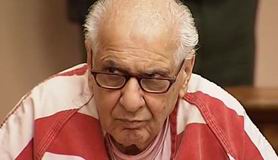
Joseph Naso
Serial killer Donald Henry Gaskins
Serial killer · USA · 1969
Donald Henry Gaskins, also known as Donald “Pee Wee” Gaskins, was a serial kill…
200 victims
Donald Henry Gaskins
Serial killer · USA · 1969
Donald Henry Gaskins, also known as Donald “Pee Wee” Gaskins, was a serial kill…
200 victims
 Carl Eugene Watts
Serial killer · USA · 1974
Carl Eugene Watts (born November 7, 1953; died September 21, 2007), also known…
100 victims
Carl Eugene Watts
Serial killer · USA · 1974
Carl Eugene Watts (born November 7, 1953; died September 21, 2007), also known…
100 victims
 Rodney Alcala
Serial killer · USA · 1977
Rodney James Alcala (born August 23, 1943) was also known as Rodrigo Jacques Al…
100 victims
Rodney Alcala
Serial killer · USA · 1977
Rodney James Alcala (born August 23, 1943) was also known as Rodrigo Jacques Al…
100 victims
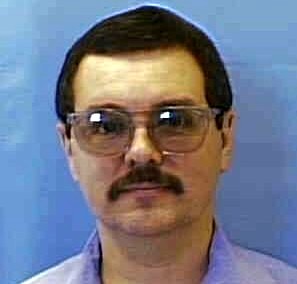 Donald Harvey
Serial killer · USA · 1970
Donald Harvey was known as an American serial killer and a self-professed “Ange…
87 victims
Donald Harvey
Serial killer · USA · 1970
Donald Harvey was known as an American serial killer and a self-professed “Ange…
87 victims
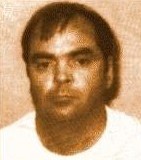 Donald Leroy Evans
Serial killer · USA · 1975
Donald Leroy Evans (born July 5, 1957) was an American serial killer who murder…
60 victims
Donald Leroy Evans
Serial killer · USA · 1975
Donald Leroy Evans (born July 5, 1957) was an American serial killer who murder…
60 victims
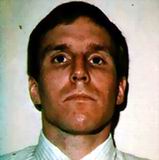 Michael Swango
Serial killer · USA · 1981
Michael Swango (Joseph Michael Swango) was a physician and American serial kill…
60 victims
Michael Swango
Serial killer · USA · 1981
Michael Swango (Joseph Michael Swango) was a physician and American serial kill…
60 victims
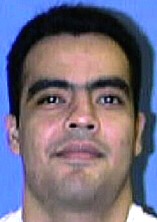 Anthony Guy Fuentes
Murderer · USA · 1994
Anthony Guy Fuentes Anthony Guy Fuentes was executed by lethal injection in Tex…
1 victim
Anthony Guy Fuentes
Murderer · USA · 1994
Anthony Guy Fuentes Anthony Guy Fuentes was executed by lethal injection in Tex…
1 victim
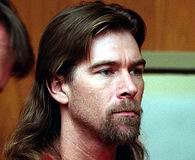 Loren Herzog
Murderer · USA · 1984
Loren Herzog — convicted multiple killer; pleaded guilty to voluntary manslaugh…
3 victims
Loren Herzog
Murderer · USA · 1984
Loren Herzog — convicted multiple killer; pleaded guilty to voluntary manslaugh…
3 victims
 Frank Basil McFarland
Murderer · USA · 1988
Frank Basil McFarland was executed by lethal injection in Texas on April 29, 19…
1 victim
Frank Basil McFarland
Murderer · USA · 1988
Frank Basil McFarland was executed by lethal injection in Texas on April 29, 19…
1 victim
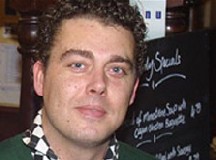 Mark Dixie
Murderer · United Kingdom · 2005
Mark Philip Dixie — defendant Sally Anne Bowman — victim; British model Lewis S…
1 victim
Mark Dixie
Murderer · United Kingdom · 2005
Mark Philip Dixie — defendant Sally Anne Bowman — victim; British model Lewis S…
1 victim
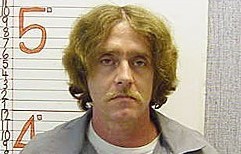 John Middleton
Murderer · USA · 1995
John Middleton was a user and dealer of methamphetamine. He was convicted of fi…
3 victims
John Middleton
Murderer · USA · 1995
John Middleton was a user and dealer of methamphetamine. He was convicted of fi…
3 victims
- Gender
- male
- Country
- USA
- Location
- Northern California, USA
- Date of birth
- 1934
- Age at first offence
- 43
- Characteristics
- rape, convicted rapist, abuser, drugs
- Victim profile
- Roxene Roggasch, 18 / Carmen Colon, 22 / Pamela Parsons, 38 / Tracy Tafoya, 31
- Method of murder
- Strangulation
- Date(s) of murder
- 1977-78 / 1993-94
- Years active
- 1977–1993
- Date of arrest
- April 11, 2011
- Status
-
Convicted by a Marin County jury of four murders on 20 August 2013; may be eligible for the death penalty
Case overview
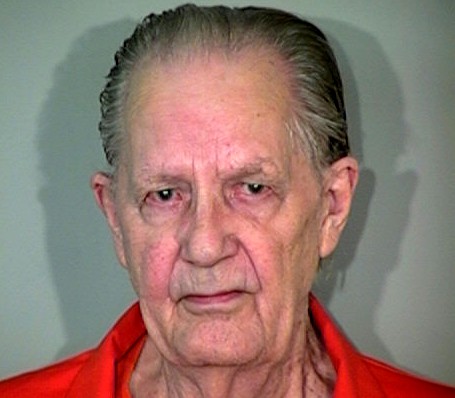
Joseph Naso was convicted by a Marin County jury of the murders of four women described as prostitutes. Prosecutors presented a “rape diary” that contained entries about sexual assaults and the circumstances under which he allegedly approached, drugged, and photographed women before strangling and disposing of their bodies. Naso acted as his own attorney during the trial.
Timeline
- January 12, 2012 — A preliminary hearing in Marin County, California, entered Naso’s alleged “rape diary” into evidence.
- June 18, 2013 — Naso was tried for the murder of four California alphabet murder victims.
- August 20, 2013 — Naso was convicted by a Marin County jury of the murders.
- September 4, 2013 — A reconvening for determination of whether Naso would get the death penalty (after reconvening following the conviction).
- April 11, 2011 — Naso was arrested in Reno, Nevada for four murders in California dating back to 1977.
- June 17, 2013 — Naso’s trial began in Marin County Superior Court.
- August 10, 2013 — Naso rested his case after calling witnesses and did not testify.
- March 23, 2012 — Reporting described a woman who said she was raped in 1961 by the man later identified as Naso, and discussed the possibility that she could be called as a witness.
- August 21, 2013 — Reporting described jurors deliberating about eight hours over two days before finding Naso guilty.
Background
Joseph Naso was a photographer who traveled between New York and California extensively for decades. He was described as a New York native and as living in Rochester in the 1970s. Authorities considered him a “person of interest” in the New York Alphabet Murders.
The four California murder victims had double initials: Roxene Roggasch, Pamela Parsons, Tracy Tafoya, and Carmen Colon (a different woman from the Rochester, NY victim). All four women were described by authorities as prostitutes.
The offence
Naso was tried for four murders of women whose first and last names began with matching initials. Prosecutors’ theory was that he drugged and photographed his unconscious victims, then strangled them and disposed of their bodies. Prosecutors also described the victims as prostitutes and argued that the murders were connected by the “double initials” pattern.
The women were identified as:
- Roxene Roggasch, described as 18 years old, found dead in 1977.
- Carmen Colon, described as 22 years old, found dead in 1978.
- Pamela Parsons, described as 38 years old, found dead in 1993.
- Tracey Tafoya (spelled “Tracy Tafoya” elsewhere in the record), described as 31 years old, found dead in 1994.
Authorities reported that all four women were found dumped in rural Northern California locations. Roxene Roggasch’s body was found in Marin County, Carmen Colon’s body was found in Contra Costa County, and the other two victims were found in Yuba County.
Investigation
Prosecutors presented Naso’s alleged “rape diary,” which contained graphic entries describing rape and sexual assault. Marin County prosecutor Rosemary Slote read from the diary during closing arguments. The diary was described as dating back to the 1950s, and the entries described approaching women and offering them a ride home, and then “putting it” on them once the woman got into his car.
One entry quoted in the proceedings stated:
"Girl in north Buffalo woods. She was real pretty. Had to knock her out first."
A further entry quoted in reporting described an attack set in London:
"Outside the front door I overpowered her and ravaged her,"
"I couldn't help myself."
Authorities also described the discovery of a handwritten list of 10 women (“List of 10”), with references to locations that investigators believed coincided with places where the bodies were discarded. The locations mentioned in reporting included Cleveland, Kansas City, Buffalo, Rochester, Wichita, Berkeley, and London. Investigators believed the “List of 10” referenced the four victims charged, and also referenced additional women.
Naso was described as being linked to at least the four charged murders through DNA and other evidence. Reporting said investigators found Naso’s DNA on pantyhose Roggasch was wearing when her body was found, and that Naso’s ex-wife’s DNA was found on pantyhose wrapped around Roggasch’s neck. Reporting also described semen from two males, one of them likely Naso, on another pair of pantyhose on Roggasch’s body.
A “rape journal” and photographs were found during searches of Naso’s Reno home by probation officers, including images of nude women in unnatural poses who appeared dead or unconscious with mannequin parts and lingerie nearby. Reporting described more than 4,000 images being found.
Arrest and pretrial events
Naso was arrested in Reno, Nevada, following probation officers’ actions connected to an unrelated gun conviction. It was described that a routine check by probation officers discovered numerous photographs of nude women posed in unnatural positions who appeared dead or unconscious with mannequin parts and lingerie strewn nearby. Naso told police it was his art.
Naso’s arrest in Nevada was described as having occurred after officer Wesley Jackson conducted a random search at his home, under a California Nevada Interstate Compact Agreement. Officer Wesley Jackson noticed a gun advertisement and ammunition, and his parole status was described as being in violation due to ammunition and other items. Officer Robert Jacobs was called and discovered the “List of 10,” and Naso was soon arrested for probation violations.
Authorities seized items including cash, weapons, women’s clothing, newspaper clippings, mannequin legs, dolls, bullets, a coin collection, knives, photographs, and the “rape journal.” Reporting described additional details including safety deposit box keys found in an upper dresser drawer.
Pretrial hearings included the entry of the alleged “rape diary” into evidence in Marin County.
Trial
Naso was tried in Marin County Superior Court for the murder of four California alphabet murder victims. Prosecutors called witnesses and presented evidence including the diary excerpts and photographs.
Naso was described as acting as his own attorney. A prosecutor described him as a “serial rapist and murderer.” Naso delivered an opening statement described as personal history and denied the allegations. In opening remarks he said:
"I've been waiting two years and two months for this day, to tell my side of the story,"
"I'm not the monster they say killed these women,"
"I don't kill people and there's no evidence of that in my writings and photography."
During opening remarks, Naso also stated:
"I want to tell you about myself, who I really am.
"[The prosecution] doesn't even have circumstantial evidence,"
Naso added.
Naso pleaded not guilty to four counts of first-degree murder with special circumstances for the slayings of four women. He was also described as scheduled to face the death penalty if convicted.
In closing-related narrative, graphic diary entries detailing stalking and sexual assault were read in court during closing arguments.
Victim identification and dates described during trial reporting
Reporting described Roxene Roggasch as an 18-year-old whose body was found on Jan. 11, 1977, off the side of a road near Fairfax. Reporting described Carmen Colon as a 22-year-old whose body was found on Aug. 15, 1978 in Contra Costa County. Reporting described Pamela Parsons as a 38-year-old whose body was found on Sept. 19, 1993 in Yuba County. Reporting described Tracy Tafoya as a 31-year-old whose body was found on Aug. 14, 1994 in Yuba County.
Defence position described during trial reporting
Naso was described as arguing that the DNA evidence did not prove he killed the victims and that evidence only showed he had sex with Roxene Roggasch. Reporting described him as asserting that there was no proof that he killed her and that prosecutors could not prove who put the pantyhose around her neck.
Reporting also described Naso’s statements denying forcible behavior related to photographs, stating that his photos depicted willing participants and that he did not force women to do anything. He characterized his work as “art” and described the images as “glamour” or “cheesecake” photographs of nude women.
Naso declined to testify at trial and rested his case after calling witnesses, including one of his former models, a former Marin County sheriff’s detective, and other people he knew.
Sentencing
After conviction, a jury reconvened for instructions and to determine whether Naso would get the death penalty in a separate proceeding.
Appeals
No appeal outcome was stated in the provided material.
Outcome
Naso was convicted by a Marin County jury on August 20, 2013 of the murders of four women. He was described as potentially eligible for the death penalty.
Aftermath and related events mentioned
During the trial, court investigated a truck bearing words including “Joseph Naso killed my sister” that was parked in the jury lot. A district attorney’s inspector and Naso’s private detective looked into the matter and concluded no contact was made with jurors.
Naso was described as showing the jury photographs he took of weddings, landscapes, family members, and nude women he called “glamour” or “cheesecake” photographs. Prosecutors claimed he kept a list of victims and mementos of crimes.
A “List of 10” contained references to additional women beyond the four charged victims, and authorities were described as exploring connections to several unsolved killings. The additional women on the list were described as not identified in the provided material.
Other details
Naso was described as having prior involvement with the legal system for theft-related matters and as being on probation and parole at the time of the discovery leading to the investigation.
A reported 1961 incident involved a woman who said she was raped by a man authorities identified as Naso. The woman said police at the time suggested she was trying to make her boyfriend jealous, and Reuters reporting quoted her with the statement:
"It was different at that time,"
"It was still your own fault."
Naso’s “rape diary” was discussed as including references to events from the 1950s and later, including a 1961 entry described as depicting a man picking up a girl and raping her in a car in the Berkeley Hills. Reporting also described entries in which police told him to “get out of town,” and where he described using the term “rape” in a way he said was misconstrued. Naso said:
"I sometimes use the term 'rape' to mean I scored, I made out,"
Reporting also described that a skull found in Nevada County held DNA matching the profile of a mother of a person referred to as Sara Dylan, and that Dylan’s passport was found in Naso’s safe deposit box. Naso was described as not being formally charged with Dylan’s murder in the provided material.
Naso displayed behavior described as repeated and sometimes befuddled during closing arguments. Reporting quoted attorney Brian Kanel saying:
'He's bright,'
'But not that bright.'
Reporting also described legal analysts discussing that it was unlikely Naso would be executed even if sentenced to death, referencing that executions were on hold and that adoption of a new execution protocol would require time.
Spotted an error, or have more information about this case?