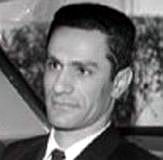
George Nassar
Murderer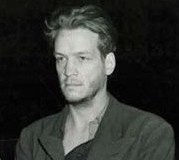 George Sitts
Murderer · USA · 1945
George Sitts was executed by the State of South Dakota on April 8, 1947 for the…
3 victims
George Sitts
Murderer · USA · 1945
George Sitts was executed by the State of South Dakota on April 8, 1947 for the…
3 victims
 Joseph Medley
Murderer · USA · 1940
Joseph Medley was a male White person identified as being associated with robbe…
3 victims
Joseph Medley
Murderer · USA · 1940
Joseph Medley was a male White person identified as being associated with robbe…
3 victims
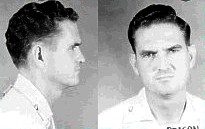 Lester Edward Bartholomew
Murderer · USA · 1955
Lester Edward Bartholomew was charged in Arizona with murder in the Superior Co…
3 victims
Lester Edward Bartholomew
Murderer · USA · 1955
Lester Edward Bartholomew was charged in Arizona with murder in the Superior Co…
3 victims
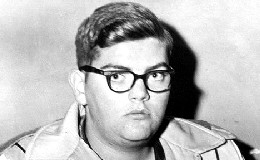 Lowell Lee Andrews
Murderer · USA · 1958
Name: Lowell Lee Andrews Date of execution: November 30, 1962 Status: Executed…
3 victims
Lowell Lee Andrews
Murderer · USA · 1958
Name: Lowell Lee Andrews Date of execution: November 30, 1962 Status: Executed…
3 victims
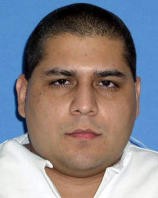 Robert Madrid Salazar
Murderer · USA · 1997
Robert Madrid Salazar was a Black male described as 27 years old at the time of…
1 victim
Robert Madrid Salazar
Murderer · USA · 1997
Robert Madrid Salazar was a Black male described as 27 years old at the time of…
1 victim
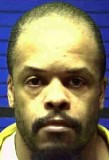 Sedrick Cobb
Murderer · USA · 1989
Sedrick Cobb was sentenced to death on August 13, 1991. Sedrick Cobb was convic…
1 victim
Sedrick Cobb
Murderer · USA · 1989
Sedrick Cobb was sentenced to death on August 13, 1991. Sedrick Cobb was convic…
1 victim
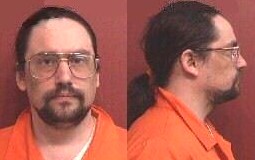 William Gollehon
Murderer · USA · 1985
William Jay Gollehon was sentenced to death in 1992 after he and Douglas Turner…
7 victims
William Gollehon
Murderer · USA · 1985
William Jay Gollehon was sentenced to death in 1992 after he and Douglas Turner…
7 victims
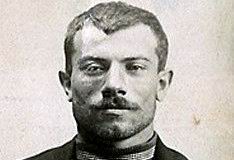 Luigi Lucheni
Murderer · Switzerland · 1898
Luigi Lucheni (April 22, 1873 – October 19, 1910) was an Italian anarchist. Lui…
1 victim
Luigi Lucheni
Murderer · Switzerland · 1898
Luigi Lucheni (April 22, 1873 – October 19, 1910) was an Italian anarchist. Lui…
1 victim
 Sinedu Tadesse
Murderer · USA · 1995
Sinedu Tadesse (1974 - May 28, 1995) was a junior at Harvard University when sh…
1 victim
Sinedu Tadesse
Murderer · USA · 1995
Sinedu Tadesse (1974 - May 28, 1995) was a junior at Harvard University when sh…
1 victim
- Gender
- male
- Country
- USA
- Location
- Massachusetts , USA
- Date of birth
- June 1932
- Age at first offence
- 16
- Characteristics
- rape
- Victim profile
- Dominic Kirmil (shopowner) / Irvin Hilton, 44 (Texaco station owner)
- Method of murder
- Shooting
- Date(s) of murder
- May 18, 1948 / September 29, 1964
- Years active
- 1948–1964
- Date of arrest
- Same
- Status
-
Life imprisonment
Resentenced to life in prison in 1966; sentenced to death in 1965; paroled early in 1961; sentenced to life in prison in 1948
Case record: George Nassar
George Nassar (born June 1932) was an American murderer.
Nassar was incarcerated at Massachusetts Correctional Institution – Cedar Junction. He was also described as being held in federal prison in Leavenworth, Kansas, as recently as 2006.
Background
Nassar was born in Providence, Rhode Island, and was the oldest of two children of Henry Nassar and Helen (née George), both of Assyrian/Syriac descent. Henry came to America with his parents as a child and worked at various mills in Lawrence, Massachusetts. Henry died there in 1955. Helen was born in Dover, New Hampshire, worked as a bobbin setter in mills, and had a previous marriage that ended in 1931 to a man named Lawrence Otis, which yielded one son named after his father. Nassar had one sister named Eileen. Eileen and George grew up in Lawrence and were Catholics.
Nassar was involved in sports and was a Boy Scout. At school, his teachers found him reserved, quiet, and a poor mixer.
Nassar had schizophrenic tendencies and was put under observation when he met DeSalvo.
The offence
Robbery spree and Kirmil murder (1948)
In May 1948, Nassar and two of his friends, Gennaro Pullino and William Kenney, went on a robbery spree that netted eighty dollars. In one place they hit, shopowner Dominic Kirmil lunged at the trio with a Coke bottle; Nassar pulled out a nickel-plated revolver from his dark-colored trench coat and shot Kirmil four times.
Dominic Kirmil died three hours later from loss of blood. Several witnesses described Nassar’s distinct trench coat to police.
Hilton murder (1964)
On September 29, 1964, Nassar murdered 44-year-old Texaco station owner Irvin Hilton in full view of Rita Buote and her 14-year-old daughter Diane. As Buote pulled into the station, Nassar fired one shot into the kneeling Hilton and three more after Hilton crumpled to the floor.
Nassar then approached Buote’s car and tried to get her to open up. Failing, he jumped into another car and drove off toward North Andover.
A truck driver, William King, wrote down the plate number and called the police.
An autopsy on Hilton revealed that he was shot six times at close range and stabbed in the back. The police theorized that the murderer made Hilton beg for his life while shooting him.
Investigation
The police found two thirty-eight-caliber bullets in Nassar’s pocket and the nickel-plated revolver used in the murder in the wrecked car.
For the Hilton murder, shells from the revolver were found at the crime scene and matched the bullets found in Hilton. A description given by Rita and Diane Buote enabled Andover police officer William Tammany to draw a composite of the killer.
On spotting the drawing, Nassar’s former arresting officer Charles Keenan was struck by its familiarity. Keenan went through his files and found a photograph of Nassar, which the Buotes positively identified as the man they saw shooting Hilton.
Arrest
On May 20, Nassar was picked up by Lawrence patrolmen Charles Keenan and Walter Sliva after crashing a stolen car on Route 2 in Ayer, Massachusetts. Initially, he was charged with auto theft and later became a prominent suspect in the Kirmil murder.
Following the Hilton murder, the getaway car was found later that evening on a street in Andover next to Phillips Academy. The police learned the car had been stolen earlier that day from near the Massachusetts Institute of Technology in Cambridge. The car belonged to a navy lieutenant who was attending MIT.
A thirty-two-caliber nickel-plated Harrington & Richardson revolver and a twenty-two caliber Astra semi-automatic pistol were found underneath the front seat of the car. A hunting knife was also located and confiscated when the police searched.
Nassar was found living in the Mattapan section of Boston. The Andover, Lawrence, and state police contacted the Boston police department and got a warrant at Dorchester District Court to search Nassar’s suspect car and his apartment on 51 Deering Road. When the police arrived, they found Nassar with a social worker.
Nassar was subsequently arrested and sent to Bridgewater to await his trial.
Trial
Kirmil murder trial and plea (1948)
Nassar and his friends Pullino and Kenney were indicted and pleaded guilty to a second degree murder charge. They were formally sentenced to life in prison. Nassar was sent to MCI-Norfolk in Norfolk, Massachusetts.
Hilton murder trial and conviction (1965)
On June 26, 1965, a jury found Nassar guilty of Hilton’s murder, with no recommendation for mercy. He received the death sentence and was placed on Death Row at Walpole State Prison pending appeal.
Sentencing
Nassar was sentenced to life in prison in 1948. He was paroled early in 1961.
Nassar received the death sentence for Hilton’s murder on June 26, 1965.
On June 7, 1966, his sentence was stricken by the Massachusetts Supreme Judicial Court and later changed to life imprisonment.
Appeals
On February 16, 2008, Nassar’s appeal was denied by the Massachusetts Supreme Judicial Court.
Nassar’s appeal before the Supreme Judicial Court concerned a motion he filed to indicate an intention to appeal the 1982 denial of a new trial in the second killing. The matter was dismissed in November 1983 because he never acted.
In 2006, Nassar argued in court filings that he could not make his case because he was in federal prison in Leavenworth, Kansas, without access to Massachusetts legal materials. The court noted that he was back in Massachusetts in December 1983 and did not inquire about the case then or for more than two decades after.
Claudia Bolgen, Nassar’s attorney, repeated that Nassar denied having anything to do with the deaths. Bolgen was disappointed in the decision but said Nassar had a pending motion for a new trial in Essex County that she was confident would be granted. The motion claimed the judge gave erroneous jury instructions, including one involving a witness photo identification, and questioned whether Nassar was advised of his right to testify.
Other people mentioned in relation to the case
Albert DeSalvo allegedly confessed to being the Boston Strangler to Nassar in late 1965. Nassar contacted his lawyer, F. Lee Bailey, and informed him of this confession, which led DeSalvo to become the prime suspect in the unsolved Strangler murders.
DeSalvo had been arrested for sexual assault in November 1964. The next year, Nassar told Bailey that DeSalvo was the Boston Strangler.
DeSalvo confessed in remarkable detail to Bailey. Bailey told the story in court in hopes of convincing the jury considering the sexual assault charges that DeSalvo was insane. It did not work, and DeSalvo was convicted and sentenced to life in prison. DeSalvo later recanted his confession and was killed in prison in 1973.
In 2001, forensic scientists announced that DNA evidence taken from the body of the strangler’s final victim did not match DeSalvo’s.
Ames Robey, a former prison psychologist who analyzed both DeSalvo and Nassar, said Nassar was a misogynistic, psychopathic killer and a far more likely suspect than DeSalvo.
Some followers of the case said Nassar was the real strangler and fed DeSalvo details of the murders so he could confess and gain notoriety.
A spokesperson for Nassar’s theory in a 1999 interview with The Boston Globe included the following statements:
“I had nothing to do with it”
“I’m convicted under the table, behind the scenes.”
Timeline
- May 1948 — Nassar, Gennaro Pullino, and William Kenney went on a robbery spree that netted eighty dollars; Nassar shot shopowner Dominic Kirmil four times with a nickel-plated revolver after Kirmil lunged at the trio with a Coke bottle; Kirmil died three hours later from loss of blood.
- May 20, 1948 — Nassar crashed a stolen car on Route 2 in Ayer, Massachusetts and was picked up by Lawrence patrolmen Charles Keenan and Walter Sliva after initially being charged with auto theft.
- 1948 — Nassar and Pullino and Kenney pleaded guilty to second degree murder and were sentenced to life in prison; Nassar was sent to MCI-Norfolk in Norfolk, Massachusetts.
- Early 1961 — Nassar was paroled through the efforts of Unitarian minister William Moors.
- September 29, 1964 — Nassar murdered Texaco station owner Irvin Hilton in full view of Rita Buote and her 14-year-old daughter Diane.
- Late 1965 — Nassar allegedly confessed to his lawyer F. Lee Bailey that Albert DeSalvo had confessed to being the Boston Strangler to Nassar.
- June 26, 1965 — A jury found Nassar guilty of Hilton’s murder with no recommendation for mercy; he received the death sentence and was placed on Death Row at Walpole State Prison pending appeal.
- June 7, 1966 — The Massachusetts Supreme Judicial Court struck Nassar’s death sentence and later changed it to life imprisonment.
- November 1983 — Nassar’s motion to indicate an intention to appeal the 1982 denial of a new trial was dismissed.
- December 1983 — The court noted Nassar was back in Massachusetts.
- February 16, 2008 — The Massachusetts Supreme Judicial Court denied Nassar’s appeal.
Outcome
Nassar’s appeal was denied on February 16, 2008. His sentence history included life imprisonment in 1948, early parole in 1961, a death sentence in 1965, and resentencing to life imprisonment in 1966.
Spotted an error, or have more information about this case?