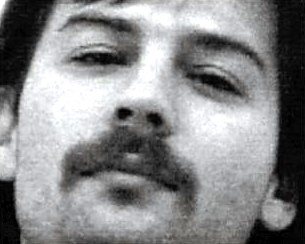
Eric Christopher Payne
Murderer Russell Ellwood
Murderer · USA · 1991
Russell Ellwood was a former taxi driver. Authorities suspected him of killing…
20 victims
Russell Ellwood
Murderer · USA · 1991
Russell Ellwood was a former taxi driver. Authorities suspected him of killing…
20 victims
 Robert Martines Perez
Murderer · USA · 1994
Name: Robert Martines Perez · Other name used in proceedings: Robert Martinez P…
15 victims
Robert Martines Perez
Murderer · USA · 1994
Name: Robert Martines Perez · Other name used in proceedings: Robert Martinez P…
15 victims
 Billy Frank Vickers
Murderer · USA · 1993
Billy Frank Vickers Vickers was executed by lethal injection in Texas on Januar…
14 victims
Billy Frank Vickers
Murderer · USA · 1993
Billy Frank Vickers Vickers was executed by lethal injection in Texas on Januar…
14 victims
 Juan Manuel Álvarez
Mass murderer · California · 2005
Juan Manuel Álvarez (born February 26, 1979) was a laborer from Compton, Califo…
11 victims
Juan Manuel Álvarez
Mass murderer · California · 2005
Juan Manuel Álvarez (born February 26, 1979) was a laborer from Compton, Califo…
11 victims
 Brandy Holmes
Murderer · USA · 2003
Brandy Aileen Holmes was convicted of first-degree murder and sentenced to deat…
1 victim
Brandy Holmes
Murderer · USA · 2003
Brandy Aileen Holmes was convicted of first-degree murder and sentenced to deat…
1 victim
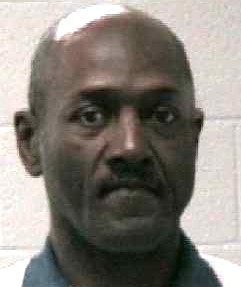 James Mathis
Murderer · USA · 1980
Name: James Mathis · Age: 51 · Status: Sentenced to death in May 1991 · May 199…
2 victims
James Mathis
Murderer · USA · 1980
Name: James Mathis · Age: 51 · Status: Sentenced to death in May 1991 · May 199…
2 victims
 Lonnie Franklin
Serial killer · USA · 1985
Lonnie Franklin was convicted as the “Grim Sleeper” serial killer, a nickname u…
25 victims
Lonnie Franklin
Serial killer · USA · 1985
Lonnie Franklin was convicted as the “Grim Sleeper” serial killer, a nickname u…
25 victims
- Gender
- male
- Country
- USA
- Location
- Henrico County, Virginia, USA
- Date of birth
- 1973
- Age at first offence
- 24
- Characteristics
- rape, robbery
- Victim profile
- Ruth Parham (female, 61) / Sally Fazio (female, 57)
- Method of murder
- Beating with a hammer
- Date(s) of murder
- June 5/11, 1997
- Years active
- 1997
- Date of arrest
- —
- Status
-
Executed
Executed by lethal injection in Virginia on April 28, 1999
Case name
Eric Christopher Payne v. Commonwealth of Virginia (Record No. 980559); Eric Christopher Payne v. 980879)
Timeline
- June 5, 1997 — Payne attacked Ruth Parham, a 61-year-old woman who cleaned offices, in Hanover County.
- June 11, 1997 — Payne attacked Ridley Fleck and her 8-year-old son, W. Dean Fleck, with a hammer outside a Richmond movie theater.
- June 11, 1997 (evening) — Payne murdered Sally Marie Fazio in the City of Richmond.
- June 6, 1997 — Parham’s body was found.
- November 1997 — A Richmond Circuit Court jury recommended the death penalty in Payne’s death of Fazio.
- December (year not specified) — Payne pleaded guilty to capital murder in the death of Parham and placed the decision between death and life in prison without parole in Hanover Circuit Judge Richard Taylor’s hands.
- January 8, 1999 — Opinion issued by Senior Justice Roscoe B. Stephenson, Jr.
- April 28, 1999 — Payne was executed by lethal injection in Virginia.
- 9:04 p.m. EDT (date April 28, 1999) — Payne died after being injected with a dose of lethal chemicals in Greensville state prison in Jarratt.
Background
Eric Christopher Payne was convicted of capital murders and received two death sentences in each of these appeals. Although Payne waived his appeals of right, former Code § 17-110.1 (now Code § 17.1-313) required mandatory review.
The appeals were considered and determined whether the sentences were imposed “under the influence of passion, prejudice or any other arbitrary factor” and whether the sentences were “excessive or disproportionate to the penalty imposed in similar cases, considering both the crime and the defendant.” Former Code § 17-110.1(C).
The case involved two capital cases: the Fazio case and the Parham case.
The offences
Fazio case: capital murder of Sally Marie Fazio in commission of robbery and in commission of rape
Payne was charged with the capital murder of Sally Marie Fazio in the commission of robbery, in violation of Code § 18.2-31(4), and with the capital murder of Fazio in the commission of rape, in violation of Code § 18.2-31(5) (the Fazio case).
At the end of the first phase of a bifurcated trial, the jury found Payne guilty of both capital murders. At the penalty phase, the jury found the “future dangerousness” predicate and the “vileness” predicate present and unanimously fixed Payne’s punishment at death for each of the two capital murder convictions. Code § 19.2-264.2. After considering a probation officer’s report and conducting a sentencing hearing, the trial court sentenced Payne in accord with the jury verdicts.
Undisputed evidence in the Fazio case
On the evening of June 11, 1997, Payne saw Fazio outside her residence in the City of Richmond, caring for her sick dog. When Fazio entered her house, Payne put a 22-ounce hammer in his pants, went to Fazio’s front door, and asked to use the telephone. Fazio permitted Payne to use a portable telephone outside her house, and after feigning a telephone call, Payne returned the telephone. As he handed the telephone to Fazio, Payne forced his way into Fazio’s house and struck her in the head with the hammer, knocking her down.
Fazio briefly struggled with Payne and then attempted to flee down a hallway to her bedroom. As she fled, she threw a chair behind her, attempting to block Payne. Fazio tried to close the bedroom door, but Payne forced his way into the room. Fazio pleaded for her life and offered to write a check to Payne. Payne told Fazio that, “if she removed her clothes, he would not hurt her.” Fazio removed her clothes, and Payne raped her. During the attack, Payne repeatedly struck Fazio with the hammer.
Afterward, Payne took money from Fazio’s pocketbook and ransacked her house looking for more money and guns. He then removed his bloodstained clothing and dressed in sweatpants and a T-shirt belonging to Fazio. He left the bloodstained clothing in Fazio’s house.
As Payne was preparing to leave the house, he noticed that Fazio was still breathing, so he hit her with the hammer several times in the head. Fazio continued breathing, so Payne “hit her maybe ten, twelve times in the chest.” Payne wrapped the hammer in a towel and subsequently threw the hammer out of his car window.
Later that night, Payne disposed of the clothing he had taken from Fazio’s home in a dumpster at a public high school. The police recovered the hammer, and forensic evidence established that the hammer contained traces of blood consistent with Fazio’s blood type. Semen stains from a bedspread and clothing found at the crime scene were consistent with Payne’s blood type and DNA profile. The medical examiner’s autopsy revealed that Fazio died from blunt force trauma to the head due to multiple blows that caused fractures, contusions, hemorrhaging, and edema. Fazio also sustained multiple bone fractures and contusions to her chest and a fractured right middle finger.
Fazio was also described as 57 years old, and her body was found in Richmond in a dental office on June 6, 1997.
Parham case: capital murder of Ruth Parham in commission of or subsequent to object sexual penetration and in commission of or subsequent to attempted rape
Payne pleaded guilty to the capital murder of Ruth Parham while in the commission of or subsequent to object sexual penetration and to the capital murder of Parham while in the commission of or subsequent to attempted rape, both in violation of Code § 18.2-31(5) (the Parham case). The trial court accepted Payne’s voluntary pleas and found him guilty of both capital murders.
In a separate sentencing proceeding, the court found that the evidence established beyond a reasonable doubt both aggravating factors, i.e., “vileness” and “future dangerousness.” The court imposed the death penalty for each offense.
Payne filed a motion to waive his appeal of right, and the Supreme Court remanded the case for a determination whether the waiver was made knowingly, voluntarily, and intelligently. Payne was examined, at his request, by a psychologist and was found to be competent to waive his appeal. Thereafter, the trial court conducted a hearing and determined that Payne’s waiver was made knowingly, voluntarily, and intelligently. The Supreme Court concluded the record supported that determination.
Undisputed evidence in the Parham case
On June 5, 1997, Payne saw Parham enter an office building in Hanover County. Payne concealed a large hammer inside his pants and entered the building. He found Parham, a 61-year-old woman who cleaned the offices, in a lunchroom. Payne asked Parham if he could use the telephone, and she consented. Parham had turned her back on Payne and had taken about three steps when Payne hit her in the back of her head with the hammer. Parham fell facedown, and Payne began to rip off her clothes. Payne fondled Parham’s breast and inserted his finger into her vagina. During the attack, Payne repeatedly struck Parham’s head with the hammer.
Parham sustained four depressed skull fractures, each potentially fatal, and also sustained a fractured nose and numerous facial and skull bruises and lacerations. Her left hand had traces of her blood and strands of her hair, indicating that she was alive during the bludgeoning, and her brain was extruding through one of her skull fractures.
After the murder, Payne removed his shirt and used it to wipe doorknobs and other items he may have touched in the room. He then went throughout the building looking for another female victim before leaving.
In the sentencing proceeding, the trial court received evidence about Payne’s prior criminal history. Less than five months before Payne murdered Parham, he had been released on parole after serving approximately five years in prison for drug possession. Payne told the police that during the entire time he had been in prison, he had thought about raping and killing a woman.
Investigation and forensic evidence
In the Fazio case, the police recovered the hammer that Payne had thrown out of his car window. Forensic evidence established that the hammer contained traces of blood consistent with Fazio’s blood type.
The medical examiner’s autopsy in the Fazio case revealed death from blunt force trauma to the head due to multiple blows causing fractures, contusions, hemorrhaging, and edema. Fazio also had multiple bone fractures and contusions to her chest and a fractured right middle finger.
Trial and sentencing
Fazio case sentencing
After hearing evidence of Payne’s prior criminal history, the jury in the Fazio case found the “future dangerousness” predicate and the “vileness” predicate to be present and fixed Payne’s punishment at death for each of the two capital murder convictions.
At the penalty phase, the Commonwealth presented evidence of Payne’s attempted rape and murder of Ruth Parham on June 5, 1997. The Commonwealth also presented evidence of Payne’s assault on Ridley Fleck and her 8-year-old son, W. Dean Fleck, which occurred on June 11, 1997 shortly before Payne murdered Fazio. Payne attacked the Flecks with a hammer, and he told the police that he attacked them because he wanted to incapacitate Ms. Fleck and take her elsewhere to rape her. Payne was forced to leave because Dean Fleck was screaming and fighting. The Flecks both suffered skull fractures.
Parham case sentencing
Payne pleaded guilty to the Parham case capital murders, and the trial court imposed the death penalty for each offense after finding the aggravating factors of “vileness” and “future dangerousness” beyond a reasonable doubt.
In the sentencing proceeding, Payne’s voluntary plea was accepted, and he was found guilty of both capital murders.
Key statements at sentencing
Hanover Circuit Judge Richard Taylor sentenced Payne to death for the murder and attempted rape of Ruth Parham. At the end of a three-day sentencing hearing, Taylor said:
“when you have a mad dog in the pack, you get him out. The only question is whether you put him in another pen or take him down the river and put him in a gunnysack with a brick.”
In opting for the “gunnysack,” Taylor said:
“under certain circumstances, he (Payne) would do the same thing again.”
After hearing this, Payne stood and said:
“no, sir,”
when Taylor asked him if he had anything to say before the sentence was formally pronounced.
A Senior Assistant Commonwealth’s Attorney William R. Coleman acknowledged Payne’s upbringing as miserable and urged the court to sentence Payne to death, saying:
“We'd ask you to pity the child but punish the man.”
Defense attorney Patrick Bynum responded that there was “no evidence of violence or aggressiveness at all” on Payne’s part other than the two murders and an attack on a woman and her 8-year-old son just before Fazio was killed.
In relation to Payne’s conduct and appeals, Taylor recalled that Payne had said he deserved to die and asked his attorneys to abandon any appeals when he was sentenced in Fazio’s death last month. Taylor said:
“he is entitled to be relieved of his of his misery. I think probably it is the best thing for everybody.”
Payne also told his wife, Margaret Dalton Payne:
“I love you Margie. We will be together again,”
just before he was injected with a dose of lethal chemicals.
Appeals and judicial review
Mandatory review of death sentences
The Supreme Court reviewed both death sentences as required by former Code § 17-110.1 (now Code § 17.1-313), including whether the sentences were imposed under the influence of passion, prejudice or any other arbitrary factor and whether the sentences were excessive or disproportionate to penalties in similar cases.
Contentions in the Fazio case
Payne contended that videotape of the crime scene and autopsy and crime scene photographs shown during the guilt phase were unduly graphic and inflamed the jury. He also contended that a videotape related to the earlier attempted rape and murder of Ruth Parham, presented during the penalty phase, was unduly graphic.
The Supreme Court concluded that the trial court did not abuse discretion in admitting the evidence and rejected Payne’s contention that the evidence was too graphic to unduly influence the jury emotions. The Supreme Court also addressed Payne’s contention about evidence of Dean Fleck’s injuries and the Commonwealth’s Attorney’s references to the child’s bravery in identifying Payne and assisting in Payne’s capture, and concluded the evidence was relevant to Payne’s future dangerousness and that the Commonwealth’s remarks were accurate and based on evidence.
The Supreme Court concluded the death sentences in the Fazio case were not imposed under the influence of passion, prejudice, or any other arbitrary factor, and that Payne’s sentences were neither excessive nor disproportionate compared to other similar cases.
Contentions in the Parham case
Payne contended that the Commonwealth’s Attorney made improper remarks in the sentencing proceeding. Payne complained the prosecutor used evidence of the Fazio and Fleck crimes to justify the death penalty, referred to Payne as a “predator” and a “monster,” and showed photographs of the victims to the court during argument.
Payne asserted the prosecutor’s argument had the desired effect on the court because the court described him as “a mad dog who should be put in a gunny sack with some bricks and dropped off a bridge.” Payne opined that this language was evidence of passion and prejudice.
The Supreme Court concluded that the trial court considered criminal history and mitigation and that the prosecutor’s argument constituted fair comment on properly admitted evidence. The Court reasoned that the Commonwealth had the burden of proving beyond a reasonable doubt that “there is a probability based upon evidence of the prior history of the defendant . . . that he would commit criminal acts of violence that would constitute a continuing serious threat to society.” Code § 19.2-264.4(C) (emphasis added). It held that evidence of Payne’s other crimes was admissible and concluded the death sentences were not the product of passion, prejudice, or any other arbitrary factor.
Payne made no argument that his sentences were excessive or disproportionate, and the Supreme Court concluded they were neither excessive nor disproportionate when compared to other attempted rape and/or robbery capital murder cases.
Multiple death sentences for one victim
The Supreme Court considered whether more than one death sentence could be imposed when there was only one victim, addressing the Fifth Amendment guarantee against multiple punishments for the same offense.
The Supreme Court determined that Code § 18.2-31 expressed legislative intent for multiple capital offenses, and under the Blockburger test, each statutory provision required proof of a fact the other did not. For each case, it held the killing constituted two capital offenses, and it ruled that the convictions and sentences did not violate the constitutional guarantee against multiple punishments for the same offense.
The Supreme Court concluded and affirmed:
- Record No. 980559 — Affirmed.
- Record No. 980879 — Affirmed.
Dissent
Justice Koontz dissented in part, expressing disagreement with the conclusion that Code § 18.2-31 authorized more than one death sentence for the capital murder of one victim. Koontz cited prior cases involving the vacating or reduction of multiple death sentences where the number of death sentences exceeded the number of victims and argued that, because there can be only one killing of the same person, there can only be one capital murder penalty for the murder of that person.
Koontz agreed with not arbitrarily choosing which of the two sentences should be vacated and that the Commonwealth should not be required to elect which offense to dismiss, and he stated he would apply the rationale of Wright and Williams and modify Payne’s sentences to impose a single death sentence upon the capital murder convictions for each victim.
Outcome
The Supreme Court affirmed the judgments in both the Fazio case and the Parham case. Record No. 980559 was affirmed and Record No. 980879 was affirmed.
Aftermath
Payne was executed by lethal injection in Virginia on April 28, 1999, in a state prison on Wednesday, as a prison spokesman said. Payne died at 9:04 p.m. EDT.
The account of events surrounding execution included that Payne confessed to murdering the women and beating another woman and her son in a series of attacks six months after he was released from prison. Payne refused to file appeals or seek clemency to delay his execution.
Payne was described as the first of two death row inmates set to die in as many days. He was described as the 7th condemned inmate to be put to death that year in Virginia and the 66th overall since the state resumed capital punishment on Aug. 10, 1982. He was described as executed in Greensville state prison in Jarratt, about 55 miles from the state capital Richmond.
Before he was injected, Payne spoke to his wife, saying, “I love you Margie. We will be together again,”.
Other details
Victims and family references mentioned in the proceedings
Ruth Parham was described as 61 years old and a custodial worker whose body was found June 6, 1997 in a dental office in Richmond.
Jeff Fazio and Anthony Parham stood by themselves in the courthouse lobby and wept, each with an arm on the shoulder of the other.
Parham was described as the son of the 61-year-old custodial worker whose body was found June 6, 1997 in a dental office in Richmond.
Jeff Fazio was described as the son of Sally Marie Fazio.
Fazio was described as the sister of Lisa Moseley; Moseley was not present because she recently gave birth to her first child. It was stated that this was a new lease of life.
Anthony Parham said:
“I am pleased with the decision.”
Ida Butts added:
“I'm glad this phase of it is over. Maybe we can pick up and go on and not having to keep going back”
Attorney Carolyn Grady was quoted as saying:
“He was bound to lose, you know. He never had a chance from the beginning,”
“He really kind of got the shaft all along from the system.”
Gerald Payne’s testimony about upbringing and counseling
Earlier testimony showed Payne was orphaned at 4 months when his father shot and killed his mother, and then hanged himself the next day. It was stated that over the next 18 years Payne was in 22 homes, shelters and institutions before spending 6 years at a correctional center on an LSD distribution charge.
Gerald Payne testified that he adopted the defendant when he was 8 years old and surrendered custody when he was 14. He stated he spent about $70,000 in counseling for Payne but “we never felt in those 6 years that we were able to penetrate Chris.” Gerald Payne said Payne lied, stole, and never really became part of the family, and that Payne “had every opportunity for a good life” while in his home.
It was also stated that although the witness stand was barely 10 feet from the defendant in the Hanover courtroom, the two men never made eye contact while the father testified.
Post-release drug and alcohol abuse and conduct
It was stated that Payne married in July 1996 while in prison, was released in January 1997, obtained a job with a dry-wall company, and moved into an apartment with his wife in western Henrico County. It was also stated that he started abusing alcohol and crack cocaine and exposing himself to women.
Psychological testimony
Psychologist Nelson Evans testified that the sexual attacks on the women were an abnormal extension of exhibitionism and seeking sexual gratification by touching strange women in crowds. Evans said the stress of trying to build a normal life despite mental problems helped explain but did not excuse the attacks.
Procedural waiver and competency
The Supreme Court noted that Payne waived his appeals of right in both cases but that mandatory review was still conducted. The Supreme Court concluded that the trial court had found the waiver in the Fazio case knowingly, voluntarily, and intelligently and that the record supported the finding. In the Parham case, after Payne was found competent to waive his appeal by a psychologist, the Supreme Court concluded that the trial court’s determination that the waiver was made knowingly, voluntarily, and intelligently was supported by the record.
Additional mention of prior conviction and parole
Payne had served approximately five years in prison for drug possession and was released on parole less than five months before murdering Ruth Parham.
Spotted an error, or have more information about this case?