Sterling Rault
Murderer Ervil LeBaron
Murderer · USA · 1972
Ervil Morrell LeBaron (1925 to August 16, 1981) was the leader of a polygamous…
35 victims
Ervil LeBaron
Murderer · USA · 1972
Ervil Morrell LeBaron (1925 to August 16, 1981) was the leader of a polygamous…
35 victims
 Brian Kevin Rosenfeld
Murderer · USA · 1985
Brian Kevin Rosenfeld Brian Kevin Rosenfeld was sentenced to three concurrent l…
23 victims
Brian Kevin Rosenfeld
Murderer · USA · 1985
Brian Kevin Rosenfeld Brian Kevin Rosenfeld was sentenced to three concurrent l…
23 victims
 Marvin Gray
Murderer · USA · 1975
Marvin Gray was convicted killer who claimed responsibility for 23 slayings and…
23 victims
Marvin Gray
Murderer · USA · 1975
Marvin Gray was convicted killer who claimed responsibility for 23 slayings and…
23 victims
 Yahweh ben Yahweh
Murderer · USA · 1980
Yahweh ben Yahweh was born and legally named Hulon Mitchell Jr. (October 27, 19…
23 victims
Yahweh ben Yahweh
Murderer · USA · 1980
Yahweh ben Yahweh was born and legally named Hulon Mitchell Jr. (October 27, 19…
23 victims
 Russell Ellwood
Murderer · USA · 1991
Russell Ellwood was a former taxi driver. Authorities suspected him of killing…
20 victims
Russell Ellwood
Murderer · USA · 1991
Russell Ellwood was a former taxi driver. Authorities suspected him of killing…
20 victims
 Michael Gene Blakley
Murderer · USA · 1998
Defendant: Michael Gene Blakley ADC#: 152228 Blakley was sentenced to death on…
1 victim
Michael Gene Blakley
Murderer · USA · 1998
Defendant: Michael Gene Blakley ADC#: 152228 Blakley was sentenced to death on…
1 victim
 Roger Girerd
Mass murderer · France · 1965
Roger Girerd was the perpetrator of a mass murder in Charvieu-Chavagneux on May…
10 victims
Roger Girerd
Mass murderer · France · 1965
Roger Girerd was the perpetrator of a mass murder in Charvieu-Chavagneux on May…
10 victims
 Shelley Casterline
Murderer · USA · 2013
Shelley Casterline was 41 when she pleaded guilty to second-degree murder. Baro…
1 victim
Shelley Casterline
Murderer · USA · 2013
Shelley Casterline was 41 when she pleaded guilty to second-degree murder. Baro…
1 victim
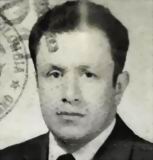 Campo Elías Delgado Morales
Spree killer · Colombia · 1986
Campo Elías Delgado Morales was a Colombian Vietnam War veteran. He lived with…
30 victims
Campo Elías Delgado Morales
Spree killer · Colombia · 1986
Campo Elías Delgado Morales was a Colombian Vietnam War veteran. He lived with…
30 victims
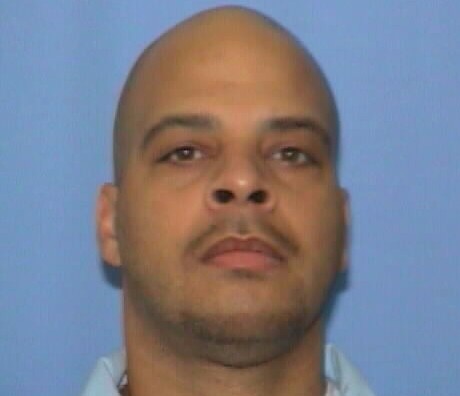 Ralph Harris
Serial killer · USA · 1992
Ralph Harris was found guilty by a jury on March 3, 1999, for the August 17, 19…
6 victims
Ralph Harris
Serial killer · USA · 1992
Ralph Harris was found guilty by a jury on March 3, 1999, for the August 17, 19…
6 victims
- Gender
- male
- Country
- USA
- Location
- New Orleans, Louisiana, USA
- Date of birth
- 1951
- Age at first offence
- 30
- Characteristics
- rape, torture
- Victim profile
- Jane Ellen Francioni, 21 ( his secretary )
- Method of murder
- Shooting ( .25-cal. pistol) - St abbing with knife
- Date(s) of murder
- March 1, 1981
- Years active
- 1981
- Date of arrest
- —
- Status
-
Executed
Executed by electrocution in Louisiana on August 24, 1987
Overview
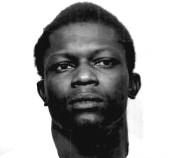
Sterling Rault was executed by electrocution in Louisiana on August 24, 1987. He was convicted of raping, stabbing, shooting, and burning the body of Jane Ellen Francioni, a 21-year-old secretary, on March 1, 1981, in New Orleans. Rault gave several varying, bizarre confessions to the crime.
Rault’s final statement was:
"I would like the public to know that they are killing an innocent man at this time. I pray that God will forgive all those involved in this matter. I, personally, do not hold any animosity towards anyone, though. " "This country professes to be 'One nation under God,' but the death penalty goes against the word of God. Jesus Christ died on the cross in order that all people would have mercy and we need to start giving that mercy to our fellow man. " "Into the arms of love of God I now go. I love you all. May God bless you all."
Timeline
- March 1, 1981 — Sterling Rault raped, stabbed, shot, and burned the body of Jane Ellen Francioni in New Orleans.
- March 19, 1982 — Rault was charged in a March 19, 1982 indictment with first degree murder of Jane Francioni committed while he was engaged in perpetrating or attempting to perpetrate aggravated rape or aggravated kidnapping of the victim, contrary to LSA-R.S. 14:30(1).
- October 4, 5, 6, and 7, 1982 — Jury trial in the Orleans Parish Criminal District Court.
- October 7, 1982 — The jury found Rault guilty as charged; during the sentencing phase the jury recommended that he be sentenced to death and found three statutory aggravating circumstances.
- January 16, 1984 — The Louisiana Supreme Court affirmed Rault’s conviction and sentence and denied rehearing on February 15, 1984.
- February 15, 1984 — Rehearing was denied by the Louisiana Supreme Court.
- October 1, 1984 — The United States Supreme Court denied Rault’s petition for writ of certiorari.
- October 23, 1984 — Rault filed an application for post-conviction relief and stay of execution in the Criminal District Court of Orleans Parish.
- March 1985 — An evidentiary hearing was held; the court made findings adverse to Rault, denied all requested relief, and dissolved the stay.
- May 14, 1985 — The Louisiana Supreme Court unanimously denied Rault’s application for habeas corpus without opinion.
- September 13, 1985 — Federal appellate decision: Rault’s application for a certificate of probable cause was denied and his attempted appeal was dismissed; the stay was vacated.
- August 24, 1987 — Sterling Rault was executed by electrocution in Louisiana; he was pronounced dead at 12:16 A.M.
Background
Sterling J. Rault Jr. was an accountant who worked as an assistant comptroller for a gas company where Jane Ellen Francioni worked as a secretary. The materials described him as embezzling money and fearing that Francioni would expose him.
Jane (Janie) Francioni was a 21-year-old secretary employed at the same gas company where Rault worked as an accountant.
The materials described both as white. The Louisiana Supreme Court observed that Rault was a married man and father of two young children; he lived with and supported them; he had a college degree and had been employed in accounting for several years with an annual salary in excess of $25,000.
The materials also described Rault as having previously been caught embezzling money from Masonite in 1981, repaid the entire sum, and had not been prosecuted.
The materials described Rault as teaching fellow inmates to read and write on death row and corresponding with dozens of other prisoners who had heard his writings on Christian radio broadcasts.
Rault was represented by retained counsel at all stages of his trial, including pretrial proceedings, and he also had counsel on direct appeal, certiorari, state post-conviction relief (including an evidentiary hearing), and federal habeas corpus proceedings.
The offence
Rault was convicted of raping, stabbing, shooting, and burning the body of Jane Ellen Francioni.
Circumstances described at trial (as set out in the appellate opinion)
Fellow employees observed Rault and Francioni leaving work together in her car. Less than an hour later, three U.N.O. students saw the two struggling in the campus parking lot. Francioni screamed at the students, asking them to call the police and make him leave her alone because he was attempting rape. The student closest to the car observed what appeared to be splashes of blood on her clothing.
Rault repeatedly said he had to get her to the hospital, before throwing “her into the car from the driver's side all the way to the passenger's side” (Tr. 50) and driving away.
The appellate opinion then described that approximately 9:20 P.M., a state trooper driving north on Paris Road in an isolated area of New Orleans East stopped to investigate what appeared to be a brush fire and discovered a burning female body. Close by were a partially full five gallon gasoline can and Francioni’s blood stained car, which smelled strongly of gasoline. A spent bullet was on the floor of the car.
The appellate opinion described injuries including:
- a man’s belt wrapped around her neck and a jagged wound on the right side of her neck;
- she had been shot twice;
- one bullet struck her in the thigh traveling into the abdomen through the small intestines, stomach and liver before exiting the left side of her chest;
- the pathologist testified that this would have caused extensive slow bleeding and would have resulted in death in “less than a matter of hours” (Tr. 21);
- the second bullet entered directly into the abdomen, damaging blood vessels in the right kidney and the large blood vessel known as the interior vena cava, before lodging in the spine;
- the appellate opinion described that the second bullet would have caused extensive, fairly rapid bleeding and would have been fatal within five to ten minutes;
- the victim was dead when the neck wound was inflicted and she was set on fire;
- fingernail scrapings had human blood on them.
The appellate opinion described that sexual activity occurred twelve to twenty-four hours prior to death and that vaginal swabs showed seminal fluid but no sperm, and that Rault had had a vascectomy [sic] in 1979.
The appellate opinion described police finding movement under a nearby bridge; as they approached, a man broke and ran, turned around, threw up his hands, and hollered, “I'm Sterling Rault” (Tr. 87). Rault appeared quiet, calm and relaxed. He was dressed in casual clothing, lacked a belt, and had a strong aroma of gasoline. There were several fresh, red scratch marks across his chest and his right hand was very swollen.
After being advised of his rights, Rault claimed two men in ski masks had kidnapped him and Janie Francioni and raped her.
Prior embezzlement described as motive
Testimony at trial revealed that Rault had been embezzling funds from LUTEX. The appellate opinion set out that two checks totaling over $84,000 payable to Jerry Jones did not have Jones’ endorsement but cleared the company account. Rault opened a B.N.O. checking account in February 1982 under the name of Jerry Jones and deposited the two Jones checks into this account. Three checks were written on the account, two payable to Janie Francioni. Rault was with her when she cashed the first check. A handwriting expert established that Rault had signed the name of Jerry Jones on the checks. The appellate opinion also described that Rault used the name to order $62,000 worth of gold coins from a local dealer.
Investigation and arrest
The appellate opinion described that a trooper discovered the burning female body at approximately 9:20 P.M. and found a partially full five gallon gasoline can, Francioni’s blood stained car that smelled strongly of gasoline, and a spent bullet on the floor of the car.
When police searched the area they detected movement under a bridge and chased a fleeing man who identified himself as “I'm Sterling Rault” (Tr. 87). The appellate opinion described Rault’s physical appearance and that he had a strong aroma of gasoline and red scratch marks across his chest and a swollen right hand.
The materials described that an off-duty state trooper spotted the blaze, and minutes later Rault, reeking of gasoline, was arrested running from beneath a highway overpass.
Confessions and versions of events
The materials described that Rault gave several varying confessions.
“Masked Men” version
Rault told arresting officers and initially told his counsel (Fulgham and Gaudin) that he and Francioni were kidnapped by two masked men who raped and killed her. Fulgham later described that Rault said the masked men got in the vehicle, beat Francioni, stabbed her, and shot her, and that Rault ran away and hid until he saw squad car lights, then came forward.
Fulgham described the “Masked Men” story as follows:
“He said he was--that Miss Francioni had given him a ride to U.N.O. where he was going to study for a C.P.A., some C.P.A. matters; that--that at U.N.O. a couple of masked men got in the vehicle with them, that they made Sterling lie down in the back seat; they--they drove them around for awhile; that he couldn't see very much of what went on, but he was looking around out of the back seat as much as he could; that they beat Francioni up; that they--they stabbed her, they shot her, and that he ran away, he was able to get away and--and ran to the--the bridge where he hid until he saw the lights from the squad cars and then he came forward.”
“Elroy and Darryl” version (under hypnosis)
The materials described that under hypnosis Rault told a version in which long-dead cousins appeared, maimed and beat Francioni, and set her on fire after an accidental shooting. The appellate opinion described that under hypnosis, Rault claimed three deceased persons orchestrated the day of the murder through post-mortem appearances. It described that Elroy Coffey encouraged sex with Francioni, and that Rault scuffled with the victim, a gun went off injuring her, and he took her to New Orleans East, where Elroy and another deceased cousin Darryl maimed and beat her, drug her around with a belt, and set her on fire.
In the post-conviction hearing description of Fulgham’s account, Fulgham outlined the “Elroy and Darryl” story in detail and described that Rault claimed:
- Rault and Francioni had been involved in an embezzlement scheme at work;
- they discussed returning money;
- Francioni asked for something to be taken to help;
- the gun went off during a struggle after the victim pulled a gun from her purse;
- she was shot;
- Rault attempted to get campus security to help and later tried resuscitation;
- he attempted a tracheotomy;
- hallucinated figures dragged and set her afire;
- he cremated her body with gasoline and tried to set the automobile on fire;
- he attempted suicide in the car and then ran as the police came.
Fulgham also explained that the “Good Samaritan” story Rault commenced to relate to Fulgham later, but Fulgham’s account included the “Elroy and Darryl” narrative (quoted in the record excerpt) describing:
“He stated at that time that he and Miss Francioni had been involved in an embezzlement scheme at the place where they worked .... They did it as a, a way to get back at Elaine Pritchard, who was both their, their bosses .... Sterling had stated that he always intended to give the money back, and that had--something happened, ... anyway that they weren't able to do it on the date in which they were going to; that, Sterling said that Janie did ask him to ride out with her to--to U.N.O., that on the way they--he got in her car, as they were driving out they saw another employee who Sterling waived [sic ] at. I understand from some of my other investigation that what's--what the employee states is that Sterling tried to slouch down in the seat. As they were driving out that Miss Francioni did give him a cigarette to smoke, that they drove out to U.N.O., and that on the way, I believe a--a--a knife that Sterling had fell out of his pocket, and that Francioni had asked for to keep the knife. He had earlier had given her a gun, which he had--had purchased some years back because he was, he was a little bit concerned because his cousins had committed suicide, and a couple of times he felt depressed and that he wanted to commit suicide [Rault admitted at the hearing that he had purchased the gun under an alias]. So, he had this gun and he--he gave it to Miss Francioni to give to a cousin or a brother who was on the sheriff's department to have destroyed. When they got to the U.N.O. parking lot they argued over whether or not the money would be given back. Sterling stating that he was going to give the money back, Miss Francioni saying no, ... her boyfriend had said that they would be fools to give the money back .... They argued, Janie pulled a--the gun out of her purse. They struggled with the gun and the gun went off. I believe he only said the gun went off three times. The--there was a policeman or campus security person that had driven by. Janie was--was--had been shot and that he tried to get the campus security, get his attention to get help for her but the guy drove off and didn't help at all. Rault invited the Boleware family to return to his home for dinner, but Boleware declined because they were attending church that evening. Rault asked several questions concerning the church's location and service times. When the Boleware family left church that evening, their car malfunctioned. The brakelines had been cut. ... He then decided that he didn't want to live anymore either and he doused the automobile with gas and sat in the car, he threw the--tried to strike matches and throw it on top of the roof to, to set the car on fire. That was not successful and I believe I--I forgot at one point he did say that he called his wife and that his wife had told him that the police were looking for him, which was when he, about contemporaneously with going to purchase the gas. The car didn't light so he decided that he couldn't leave the gun there, and he went out and buried the gun someplace on--on the levee; didn't want to leave the gun there because he was fearful that some kids or something might pick it up. So, he buried the gun and couldn't complete the suicide and he began running and that was about when the police came upon him.”
“Good Samaritan” version
The materials described that Rault later began telling a “Good Samaritan” story in which Francioni pulled a gun on him in the U.N.O. parking lot and was accidentally shot during a struggle, and that he tried to save her and to cremate her in accordance with her previously expressed wishes.
In the “Good Samaritan” story account in the record excerpt, the narrative included:
“[Rault said] [h]e had driven past a grocey [sic ] store, or a drugstore on Elysian Fields Avenue, ... the owners were friends of Janie Francioni's. They were going to stop in there to get help. The store was closed but they had run into a lady that was outside the store, and Sterling had said, you know, I have got this--this very sick lady, I need help, call an ambulance. We are heading towards the nearest hospital. Call the hospital, tell them I am on the way, get emergency assistance for us.”
Rault’s insanity-related hypnotic testimony
During Rault’s trial, defense psychiatrist Dr. Charles Steck testified about Rault’s hypnotic narratives. The materials included the following quoted testimony:
“Q. Did he ever have any prior occasion, while he was under a hypnotic trance, did he ever tell you about any prior occasions where Elroy had appeared and done something to some other individual, a Ted Boleware, does that name ring a bell with you?
A. I don't recall the name, but he did tell me that he was involved in an embezzlement in Laurel, Mississippi, and that somebody, I don't recall the name, didn't return the money and he was angry with him, the person who didn't return the money, and he told me that Elroy cut the man's brake lines. So, in my opinion, it was probably, I think that it was Sterling Rault that cut the man's brake lines.'”
Trial
Rault pleaded not guilty and not guilty by reason of insanity. The trial court found him competent to stand trial and conducted a jury trial in the Orleans Parish Criminal District Court on October 4, 5, 6, and 7, 1982.
The appellate record described that the jury found Rault guilty as charged. Following a recess slightly in excess of two hours, the jury resumed for the sentencing phase, which was completed the same day. The jury found three statutory aggravating circumstances and recommended that Rault be sentenced to death:
- he was engaged in the perpetration or attempted perpetration of aggravated rape or aggravated kidnapping;
- the offense was committed in an especially heinous, atrocious, or cruel manner;
- the victim was an eyewitness to a crime alleged to have been committed by the defendant or possessed other material evidence against him.
The materials described that the trial included pretrial motions and evidentiary hearings, including a sanity examination and suppression motions. The appellate record stated the trial court found, based on appointed physicians’ reports, that Rault was presently sane and able to understand the proceedings and assist in his defense.
Sentencing
After the bifurcated proceedings, the jury recommended a death sentence. The Louisiana Supreme Court affirmed.
Direct appeal
On direct appeal, the Louisiana Supreme Court affirmed the conviction and sentence and denied rehearing on February 15, 1984.
Appeals
U.S. Supreme Court certiorari
The United States Supreme Court denied Rault’s petition for writ of certiorari on October 1, 1984.
Post-conviction and habeas proceedings
The appellate record described that on October 23, 1984 Rault filed an application for post-conviction relief and stay of execution in the Criminal District Court of Orleans Parish. The court initially stayed execution pending an evidentiary hearing held in March 1985; after the hearing the court denied all requested relief and dissolved the stay. The Louisiana Supreme Court denied Rault’s application without opinion on May 14, 1985.
Rault then filed a petition for habeas corpus with the United States District Court for the Eastern District of Louisiana; the court denied the petition without an evidentiary hearing and denied the application for certificate of probable cause.
Federal appellate decision (certificate of probable cause)
The appellate decision stated that the district court denied Rault’s petition for writ of habeas corpus under 28 U.S.C. Sec. 2254 seeking to set aside his Louisiana first degree murder conviction and death sentence; it also denied his application for a certificate of probable cause under 28 U.S.C. Sec. 2253. The appellate court denied Rault’s application for certificate of probable cause and dismissed his attempted appeal, and it vacated the stay previously entered by that court.
The appellate decision included the disposition statement:
- “We deny Rault's application for certificate of probable cause and accordingly dismiss his attempted appeal.”
- “Application for certificate of probable cause DENIED; appeal DISMISSED; stay VACATED.”
Outcome
He was pronounced dead at 12:16 A.M.
The materials described that his last meal was described as: “a T-bone steak, 12 shrimps, French fries, Pepsi and strawberry shortcake,” and that Warden R. Hilton Butler said: “He's taking it real calm, real good,” and later after the execution: “12.16. It's over.”
The materials described witness movement and that when Rault was strapped in the chair he gave a thumbs-up sign with both hands and looked over at his aunt, Sister Mary Rault, and said, “I love you.”
The materials described that in his final hours, Rault was visited by his mother, father, brother, and sister-in-law, and by his spiritual advisers, the Rev. Alan J. McLellan and Sister Mary Rault, his aunt.
Other details
Charges and procedural items stated in the appellate opinion
The appellate record described that Rault was charged in a March 19, 1982 indictment with first degree murder of Jane Francioni, committed while Rault was engaged in perpetrating or attempting to perpetrate aggravated rape or aggravated kidnapping, contrary to LSA-R.S. 14:30(1). It also described his not guilty and not guilty by reason of insanity pleas, competency to stand trial, and the bifurcated sentencing proceeding.
Claims raised in habeas for certificate of probable cause
The appellate decision described that Rault presented five grounds of asserted constitutional infirmity in his state trial as a basis for the certificate of probable cause:
- denial of the right to participate in his own defense;
- denial of the right to testify;
- denial of the right to a cross-sectional jury by exclusion of potential jurors in accordance with Witherspoon v. Illinois, 391 U.S. 510;
- denial of due process by the State’s presentation of evidence at the sentencing hearing of Rault’s responsibility for other crimes;
- denial of a fair trial by the trial judge’s failure to charge the jury that a reasonable doubt could arise both from the evidence and the lack of evidence.
Representation details included in the appellate record
The materials described that Rault was represented at his October 1982 trial by attorneys Bernard Eugene (“Gene”) Fulgham and Michelle Gaudin, with Fulgham being retained and later replaced and then re-retained, and with Gaudin retained to assist Fulgham. The materials described that Attorney Dwight Doskey commenced representing Rault in late October 1982 when joined with Fulgham to present a motion for a new trial and new sentencing hearing; Doskey’s representation continued since then including state appeals and federal proceedings.
State penalty-related statements and witness commentary included in the materials
The materials included quotes from individuals and descriptions of execution procedures:
- Judie Menadue said: “We still have the lynch mob down here.”
- Another civil rights campaigner said: “It's just becoming a routine - no one takes any notice any more.”
- Sister Helen Prejean commented: “It's a dirty deed and they do it at night in the bowels of the jail so no one will see.”
- Warden R. Hilton Butler was quoted about Rault’s last meal and that he was “taking it real calm, real good.”
- A witness spokesman for the witnesses said: “The first jolt passed through him at 12.10 and he arched sharply and clenched his fists. After the first jolt he appeared to remain with his fists clenched during subsequent jolts,” and that Rault had given a thumbs-up sign with both hands and said, “I love you.”
- The execution procedure was quoted from Richard Peabody: “We administer 2,400 volts for 10 seconds, 500 for 20 seconds, 2,400 for 10 seconds and then again 500 for 20 seconds. The idea is not to have any overkill - excessive scarring, for example. It is our belief that the man is dead from the moment of the first jolt.”
Additional family and community details stated in the materials
The materials described Rault as a father of two. They also described that his father, mother, brother, and sister-in-law visited him in his final hours and that his spiritual advisers visited him.
The materials described that Jane Francioni’s family gathered the night before the execution in Slidell and that Jane’s mother said: “We are totally spent,” and that her son Norman said: “We're victims, they're victims, everyone's a victim in this.”
Federal appellate quotes and holdings included in the materials
The appellate decision included a statement quoting the standard for certificate of probable cause:
- “a certificate of probable cause requires petitioner to make a 'substantial showing of the denial of [a] federal right.'” It also quoted and discussed Barefoot v. Estelle standards and referenced that the appellate court reviewed the record of state proceedings and denied the application.
Evidence of other crimes described for sentencing phase
The appellate decision described that during sentencing the State offered testimony linking Rault with embezzlement from Masonite and a possible attempted murder of a fellow Masonite employee, Ted Boleware, including testimony that Rault admitted embezzling and gave restitution and then that brakelines were cut by having been sawed in half.
The appellate decision included the quoted Louisiana Supreme Court excerpt describing the Boleware incident and testimony.
Pathologist testimony included in the appellate record
The appellate decision included a quote about whether the neck wound would have been fatal: “Eventually there is a good possibility since the gunshot wound to the liver would bleed extensively but rather slowly. Eventually, if she had not received or did not receive medical care, it conceivably could have been fatal.”
Spotted an error, or have more information about this case?