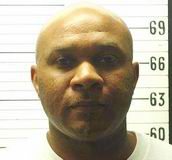
Clarence Nesbit
Murderer Brian Kevin Rosenfeld
Murderer · USA · 1985
Brian Kevin Rosenfeld Brian Kevin Rosenfeld was sentenced to three concurrent l…
23 victims
Brian Kevin Rosenfeld
Murderer · USA · 1985
Brian Kevin Rosenfeld Brian Kevin Rosenfeld was sentenced to three concurrent l…
23 victims
 Russell Ellwood
Murderer · USA · 1991
Russell Ellwood was a former taxi driver. Authorities suspected him of killing…
20 victims
Russell Ellwood
Murderer · USA · 1991
Russell Ellwood was a former taxi driver. Authorities suspected him of killing…
20 victims
 Robert Martines Perez
Murderer · USA · 1994
Name: Robert Martines Perez · Other name used in proceedings: Robert Martinez P…
15 victims
Robert Martines Perez
Murderer · USA · 1994
Name: Robert Martines Perez · Other name used in proceedings: Robert Martinez P…
15 victims
 Billy Frank Vickers
Murderer · USA · 1993
Billy Frank Vickers Vickers was executed by lethal injection in Texas on Januar…
14 victims
Billy Frank Vickers
Murderer · USA · 1993
Billy Frank Vickers Vickers was executed by lethal injection in Texas on Januar…
14 victims
 Alvin Neelley
Murderer · USA · 1982
Alvin Howard Neelley, Jr. (1953-2005) was an American prisoner. Alvin Neelley m…
2 victims
Alvin Neelley
Murderer · USA · 1982
Alvin Howard Neelley, Jr. (1953-2005) was an American prisoner. Alvin Neelley m…
2 victims
 Nicola Edgington
Homicide/Murderer · United Kingdom · 2005
Nicola Edgington was a British woman convicted of manslaughter due to diminishe…
2 victims
Nicola Edgington
Homicide/Murderer · United Kingdom · 2005
Nicola Edgington was a British woman convicted of manslaughter due to diminishe…
2 victims
 Natashay Ward
Murderer · USA · 2005
Natashay Ward was charged in connection with the deaths of her three children:…
3 victims
Natashay Ward
Murderer · USA · 2005
Natashay Ward was charged in connection with the deaths of her three children:…
3 victims
- Gender
- male
- Country
- USA
- Location
- Shelby County, Tennessee, USA
- Date of birth
- January 15, 1974
- Age at first offence
- 19
- Characteristics
- torture
- Victim profile
- Miriam M. Cannon, 20
- Method of murder
- Shooting (.357 Magnum revolver)
- Date(s) of murder
- May 20, 1993
- Years active
- 1993
- Date of arrest
- Next day
- Status
-
Sentenced to death
Sentenced to death on March 24, 1995
Overview
Clarence C. Nesbit was convicted of premeditated first degree murder in the Criminal Court of Shelby County and sentenced to death by electrocution. The jury found that the murder was especially heinous, atrocious, or cruel because it involved torture or serious physical abuse beyond that necessary to produce death.
The Tennessee Supreme Court affirmed the conviction and death sentence.
Timeline
- May 20, 1993 — The body of Miriam Cannon was discovered in her Memphis apartment at approximately 3:00 p.m.
- February 24, 1995 — The jury returned its verdict.
- March 4, 1998 — Oral arguments were held before the Tennessee Supreme Court in Dyersburg as part of the Supreme Court’s SCALES project for high school students.
- March 24, 1995 — The trial court entered the sentencing order sentencing Nesbit to death by electrocution.
- September 28, 1998 — The Tennessee Supreme Court affirmed the death penalty for the Memphis murder.
Background
Clarence C. Nesbit was also known as “Red” and “Pooh.” At the time of the crime, he was 19.
As a juvenile, Nesbit was arrested for trespass, driving on a revoked license, and assault.
The offence
Miriam Cannon, 20, was shot in the head with a .357 Magnum revolver. Four of her five young children were in the apartment where the murder took place.
The body was discovered at approximately 3:00 p.m. in her Memphis apartment. A medical examiner testified that prior to the fatal shooting, the victim had been burned repeatedly and her feet had been bruised and scraped with a coat hanger or similar object. The burns included a burn on the neck shaped like the number one, and a triangular burn under the chin. The bruises on the soles of the feet were consistent with “falanga,” described as the forceful application of a rod-like instrument across the soles while the victim remained alive and conscious. The medical examiner testified the victim would have suffered mental and physical pain and distress during the torture, inflicted over an extended period of time.
The autopsy testimony described the fatal wound as follows: the .357 caliber bullet entered the victim’s body through the left ear about five feet above the ground and exited behind the right ear about an inch lower. The wound would have caused “instantaneous incapacitation.” No defensive wounds were found, and Dr. Smith testified that there were no signs of sexual activity.
Investigation and evidence at the scene
Officer Donald E. Wright was dispatched to the scene at approximately 3:00 p.m. The officer found the victim’s body lying face up in a pool of blood in front of the kitchen door. The officer saw the victim’s children in Ms. Davis’ apartment and testified that they were crying and informed him that “Red” had shot their mother.
Officer Frederick Louis Sansom collected evidence, took photographs, and drew sketches of the crime scene. Sansom testified the victim was fully clothed and wearing sandals with no socks. He found four cartridges on top of the refrigerator and a lead bullet fragment on the kitchen floor near the living room. On the floor next to the body, Sansom found a cigarette butt, a match that had been struck, a matchbook, and a barrette. On the kitchen counter, a radio and hair curling iron had been turned on. Sansom testified there was a bullet ricochet mark 4'8" above the ground on the range hood over the stove.
Officer Timothy Edward Cook, Sr. interviewed the appellant at the police station later that evening. Prior to the interview, Nesbit was informed of his rights and signed a written waiver of those rights. Nesbit stated he had spent the night before the murder with the victim. He stated he had brought a gun with him, had unloaded it except for one bullet, and had placed it with the bullets on top of the refrigerator. He stated the victim removed the gun and began to play with it, pulled the trigger several times, and the gun finally discharged killing her. Nesbit stated he grabbed the gun and left the apartment. He claimed he tried to telephone Shaw but could not reach him. He said he went to a motel to see his uncle, Ashley Nesbit, and hid the gun in the motel bathroom behind the toilet.
Officer Samuel Williams conducted a second interview later that evening. Again, Nesbit was advised of his rights and signed a written waiver. Nesbit stated at this time that he had shot and killed Miriam Cannon but maintained it had been an accident. He explained he did not believe the gun was loaded when he pulled the trigger.
After Nesbit’s arrest, a search of the appellant revealed $602.00 in cash, a beeper, and a driver’s license.
Arrest and movements after the shooting
James Shaw, a boyfriend of Nesbit’s aunt, testified he heard a gunshot in a nearby apartment unit on the afternoon of May 20. He testified that shortly thereafter he saw Nesbit leave that unit. Shaw stated Nesbit walked to a blue Oldsmobile and drove away at a normal rate of speed.
Shaw testified that after finishing his beer he walked down to the parking lot where he noticed the victim’s children walking around and crying. He asked where their mother was, and Shaw testified the children responded, “She's dead.”
Shaw testified that Nesbit later returned to the complex in a pickup truck. Shaw testified that Nesbit initially explained to him that the victim had shot herself while playing Russian Roulette. Shaw advised Nesbit to tell the truth, and Nesbit then described that he had accidently shot Miriam Cannon and thought he had removed the bullets from the gun.
Shaw testified that Nesbit said he had thrown the gun away, but later confessed that Nesbit had taken the weapon to a motel where his uncle, Ashley Nesbit, was staying. Shaw testified they were en route to retrieve the gun when an officer approached and asked Nesbit to accompany her to the squad car. Shaw retrieved the gun from the motel and surrendered it to the police.
People and testimony
Victim and family
Miriam Cannon was the victim. Constance Cannon testified that the victim was twenty years old at the time of her death and resided at the Pershing Apartments. She testified that the victim lived with her five children, ages ranging from three to seven at the time of trial. Constance Cannon testified she last saw her sister at approximately 1:00 p.m. on May 20 and that she and a friend stopped at the victim’s apartment to take her to the grocery store. She testified they knocked but no one answered, and when leaving they saw one of the victim’s children look out the window. She testified that after several minutes the victim opened the door and asked that Constance return at 3:00 p.m., and that the victim did not invite them inside contrary to her usual practice. Constance testified that from the doorway she saw the appellant sitting on the living room couch with one of the victim’s children. She testified the victim had known the appellant for about one month before the murder. Constance testified she noticed a horizontal mark on her sister’s neck later identified as the base of the number one found burned into the victim’s neck and that the mark was not present the day before. She testified the victim was fully clothed but was not wearing shoes.
Laura May Cannon testified on behalf of the State during sentencing. She said her daughter’s death devastated their family and that her daughter was kind and warmhearted. She testified she had legal custody of four of her daughter’s children and that the children were receiving therapy designed to help them cope with their loss. She testified several children sometimes re-enact the murder.
In the appeal, there was a dissenting opinion that described victim impact evidence as protracted and prone to be unfairly prejudicial.
Other witnesses
Tracy Davis, a friend of the victim, testified she lived in an apartment across from the victim and spoke with the victim every day. She testified that on the afternoon of May 20 she heard babies crying in the victim’s apartment. She testified that she saw three of the victim’s children walking toward her apartment, crying, and telling her their mother was asleep and they could not wake her. She testified that she looked in the victim’s apartment and saw the victim lying on the floor in a pool of blood with her eyes and mouth open, and that one child was attempting to “wake” her. She testified she returned to her apartment and called 911.
Officer Donald E. Wright testified the children informed him that “Red” had shot their mother.
James Shaw testified about Nesbit’s statements and Nesbit’s movements. During cross-examination by the defense, Shaw testified about his familiarity with the appellant’s reputation in the community for peacefulness and violence, stating, “He [Nesbit] didn't bother nobody.” Shaw added that Nesbit was a nice young man who respected everyone. During redirect examination, Shaw testified that his girlfriend, the appellant’s aunt, told him that someone had said that the appellant worshiped Satan and needed to kill two people to gain more power.
During the sentencing phase, Mary Wilson, shift commander for the Shelby County Jail, testified Nesbit participated in the jail choir and introduced a certificate. Oscar Nesbit, the appellant’s brother, asked the jury to spare his brother’s life and testified Nesbit was a nice, kind brother. Nesbit’s sister, Lashunda Michelle Nesbit, stated Nesbit was a good brother, that he had never been abusive, and that he had always helped her correct her mistakes. Bernice Stevenson, Nesbit’s grandmother, testified Nesbit was the “best grandson a grandmother could have,” that he never got into trouble, and she asked the jury to spare his life.
Trial
Guilt/innocence phase
The body of Miriam Cannon was discovered in her Memphis apartment at approximately 3:00 p.m. on May 20, 1993.
Nesbit was convicted of premeditated first degree murder in the Criminal Court of Shelby County.
Testimony described the injuries, including burns on the chin, neck, abdomen, forearm, and back, and bruises and scraping on the soles of the victim’s feet. The burns occurred anytime from six hours to minutes before the murder, and Dr. Smith concluded the neck burn on the left side was shaped like the number one and the burn under the chin was triangular and blistered. Dr. Smith testified some burns were inflicted at different times, and that due to soot deposits, the burn on the left side of the victim’s neck was caused by a flame. Dr. Smith concluded the remaining burns were thermal in origin but could not determine the exact source of the burns. Dr. Smith testified there were no defensive wounds and no signs of sexual activity.
Appellant’s testimony
Nesbit testified that he was nineteen years old at the time of the offense and lived with his parents. He testified he had known the victim about one month and visited her about five times. He testified that the night before the murder he visited his uncle at a motel in Memphis and that during that visit the police entered the room and began a search. He testified that he observed a gun on the dresser, removed it from the motel room, and hid it under his car seat. He testified that while at the motel he received a “beep” from the victim. He testified that upon arriving at the Pershing Apartments he removed the gun from the car and carried it into the victim’s apartment. He testified he removed the bullets from the gun and placed the gun and bullets on top of the refrigerator to keep them out of the children’s reach. He testified that the next afternoon he grabbed the gun and went to look through the kitchen window blinds. He admitted he had no reason for looking through the blinds. He testified that he turned around, placed the gun in both hands, pointed it sideways, and while fumbling at the time pulling the trigger “real slow, feeling the chamber rotate, the gun fired.” He testified he believed he had removed all of the bullets the night before. He testified that when he left the victim’s apartment he saw Mr. Shaw but did not say anything because he was afraid and panicking. He testified he left the complex, attempted unsuccessfully to call Shaw, and then went to the motel where his uncle was staying. He testified that he returned to the scene of the murder where he saw Shaw and his aunt, and he explained he told Shaw the victim had shot herself because he was afraid and panicking. He testified he was in the car with Shaw and his aunt preparing to leave and retrieve the gun when he was apprehended by police. He denied burning the victim or ever observing burn marks on her.
Sentencing
The jury’s sentence of death was based upon the aggravating circumstance that the murder was especially heinous, atrocious, or cruel because it involved torture or serious physical abuse beyond that necessary to produce death, referencing Tenn. Code Ann. § 39-13-204(i)(5) (1991).
Dr. Smith was recalled during sentencing. Dr. Smith testified the burns were inflicted anytime from six hours to minutes before the victim’s death and that bruises on her feet were inflicted within several hours of her death. He testified the victim suffered moderate pain from the burns and bruises and would have endured more pain when walking due to bruises. He testified the burns were first and second degree burns and that bruises were consistent with falanga. He testified falanga cases were relatively rare and typically inflicted in military contexts on prisoners of war and to a lesser extent in child abuse cases. He testified none of the injuries would have required hospitalization but the victim would have suffered a great deal of distress anticipating the injuries. He testified there were no marks indicating the victim had been restrained, but he stated soft ligatures would leave no marks and mental intimidation could also restrain a victim. He testified there were no defensive wounds to the hands and no signs of sexual activity. He opined that torture is not usually inflicted in order to cause death.
During sentencing, victim impact evidence was introduced through testimony from Laura May Cannon. The dissenting opinion argued it was protracted and unfairly prejudicial and discussed that it could encourage quantifying the value of the victim’s life and that murder is more reprehensible when the victim is survived by a bereaved family.
Appeals and legal issues raised
On appeal, Nesbit raised multiple issues, which the Tennessee Supreme Court limited to five.
In the Court of Criminal Appeals decision dated April 22, 1997, the appellant raised eleven issues:
- Whether the evidence was sufficient to sustain the conviction and sentence, including whether the evidence supported premeditation and deliberation and whether a single gunshot wound supported the heinous, atrocious, and cruel aggravating factor.
- Whether the State’s cross-examination of a witness utilized to establish character for peacefulness was without reasonable factual basis and unduly prejudicial.
- Whether the trial court improperly admitted items seized from Nesbit’s person that created the inference that he was involved in drug activity.
- Whether the trial court erred by instructing the jury concerning flight.
- Whether the prosecutor committed reversible error by interjecting personal opinions during closing argument.
- Whether the introduction of a family photograph of the victim and two of her children was prejudicial.
- Whether the prosecutor committed reversible error while questioning a witness during the sentencing phase, implying Nesbit was involved in satanism or devil worship.
- Whether victim impact evidence was properly admitted during sentencing.
- Whether the trial court erroneously instructed the jury on all statutory mitigating factors, including factors not relied upon by the defense.
- Whether the trial court’s instruction concerning the “heinous, atrocious, or cruel” aggravating circumstance sufficiently narrowed the class of death eligible offenders.
- Whether the Tennessee death penalty statute is constitutional.
Procedural ruling on waiver
The Court of Criminal Appeals addressed the State’s contention that many grounds were waived due to the failure to timely file a motion for new trial. The court discussed that in non-capital cases appellate review would be limited, but it concluded that within the context of a capital case it had jurisdiction to review the issues raised and elected to review them.
Sufficiency of the evidence
The Court of Criminal Appeals concluded that a rational trier of fact could have found premeditated first degree murder beyond a reasonable doubt, based on circumstances including evidence that the appellant obtained a gun prior to the visit, inflicted separate and distinct injuries over a six hour period, his demeanor after the murder, and concealment of the murder weapon and returning to the scene in a different vehicle.
For the penalty phase, it concluded that evidence was legally sufficient to support a finding of severe mental pain while the victim remained conscious over a period of hours, and that a rational jury could find the aggravating circumstance beyond a reasonable doubt.
Impeachment and satanic rumor
The Court of Criminal Appeals concluded that the trial court did not err by allowing the State to cross-examine character witness James Shaw about his knowledge of Nesbit’s satanic beliefs and practices. It found the trial court determined the prosecutor had a reasonable factual basis and that the prejudicial effect did not outweigh probative value. It also noted limiting instructions by the trial judge.
Beeper and money
The Court of Criminal Appeals concluded the admission of Nesbit’s beeper and $602.00 cash was improperly admitted as irrelevant, but it found Nesbit was not unfairly prejudiced and held the error harmless based on Nesbit’s testimony explaining the items.
Flight instruction
The Court of Criminal Appeals concluded there was no error in the jury instruction on flight, reasoning that evidence showed Nesbit left the scene and hid the weapon and returned and was about to leave again when apprehended.
Closing argument
The Court of Criminal Appeals concluded there was no reversible error from the prosecutor’s closing argument remark and found the isolated remark had no effect on the verdict.
It included a verbatim colloquy:
- MR. HENDERSON: I hope at the end of all of this trial and my other trials, I guess, I can say that, as the Apostle Paul wrote --
- MR. JOHNSON: Your Honor, he is putting his personal observation into closing argument.
- MR. HENDERSON: It's not my personal feelings, Your Honor.
- THE COURT: Overruled. This it [sic] argument. You may proceed, Mr. Henderson.
- MR. HENDERSON: I've done what I can to present the truth to you, as much of it as is possible this long after the offense and given the nature of the crime and the evidence. I submit to you that I can say that I have fought the good fight, I have run my course, I have kept the faith. I want you 12 to be able to say the same when it is over. Thank you.
Photograph
The Court of Criminal Appeals concluded the family photograph admission during the guilt phase was not error and found no prejudicial impact during the sentencing phase.
Satan or devil worship implication during sentencing
The Court of Criminal Appeals concluded there was no merit to the claim of prosecutorial misconduct in the sentencing phase because the trial court sustained an objection, the witness never answered, and the trial judge gave curative instruction to disregard.
It stated the jury instruction:
- “Ladies and gentlemen, disregard that question that was just asked at this time.”
Tennessee Supreme Court ruling
The court found that evidence presented during Nesbit’s trial was sufficient to support the death penalty. It also rejected Nesbit’s argument that testimony by the victim’s mother concerning the impact of her death on the family should not have been allowed.
In a 3-1 decision, the court held that none of the assignments of error required reversal. The majority opinion was written by Justice Frank Drowota, with Chief Justice Riley Anderson and Justice Janice Holder concurring. Justice Adolpho A. Birch, Jr. dissented.
Justice Frank Drowota wrote: “It is an affront to the civilized members of the human race to say that at sentencing in a capital case, a parade of witnesses may praise the background, character and good deeds of the defendant..., but nothing may be said that bears upon the character of, or the harm imposed, upon the victims,”
Justice Adolpho A. Birch, Jr. wrote: “In his dissent, Birch wrote that he draws ‘no conclusion regarding the penalty imposed,’ but found that a jury should reconsider the penalty ‘under the correct sentencing guidelines.’”
He also wrote about victim impact evidence: “Generally, victim impact evidence is unsettling because its use encourages the jury to quantify the value of the victim’s life and urges the finding that murder is more reprehensible if the victim is survived by a bereaved family than if the victim has no family at all,”
Outcome
Clarence C. Nesbit’s conviction for premeditated first degree murder and his death sentence by electrocution were affirmed.
Spotted an error, or have more information about this case?