Thomas Dula
Murderer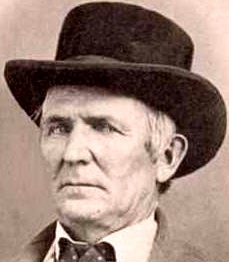 John Doyle Lee
Murderer · USA · 1857
Name: John Doyle Lee Lifespan: September 12, 1812 - March 23, 1877 Legal outcom…
120 victims
John Doyle Lee
Murderer · USA · 1857
Name: John Doyle Lee Lifespan: September 12, 1812 - March 23, 1877 Legal outcom…
120 victims
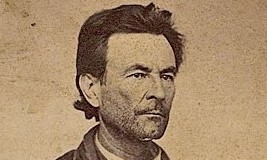 Champ Ferguson
Murderer · USA · 1861
Champ Ferguson was born November 29, 1821 in Clinton County, Kentucky, near the…
100 victims
Champ Ferguson
Murderer · USA · 1861
Champ Ferguson was born November 29, 1821 in Clinton County, Kentucky, near the…
100 victims
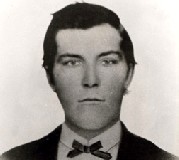 John Wesley Hardin
Murderer · USA · 1867
John Wesley (Wes) Hardin (1853-1895) was an American outlaw, gunfighter, and co…
42 victims
John Wesley Hardin
Murderer · USA · 1867
John Wesley (Wes) Hardin (1853-1895) was an American outlaw, gunfighter, and co…
42 victims
 Henry Wirz
Murderer · USA · 1864
Henry Wirz (also known as Heinrich Hartmann Wirz) (November 25, 1823 – November…
11 victims
Henry Wirz
Murderer · USA · 1864
Henry Wirz (also known as Heinrich Hartmann Wirz) (November 25, 1823 – November…
11 victims
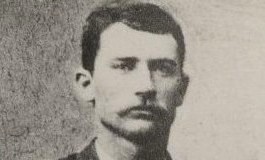 Henry Newton Brown
Murderer · USA · 1870
Henry Newton Brown — 19th century gunman; orphan; raised by relatives in Rolla,…
6 victims
Henry Newton Brown
Murderer · USA · 1870
Henry Newton Brown — 19th century gunman; orphan; raised by relatives in Rolla,…
6 victims
 Lindsay Haugen
Murderer · USA · 2015
Lindsay April Haugen was an Army veteran. At the time of the killing, she was a…
1 victim
Lindsay Haugen
Murderer · USA · 2015
Lindsay April Haugen was an Army veteran. At the time of the killing, she was a…
1 victim
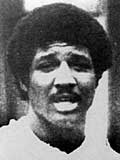 Pernell Ford
Murderer · USA · 1983
Defendant: Pernell Ford, also described as 18 during the 1983 murders and as 35…
2 victims
Pernell Ford
Murderer · USA · 1983
Defendant: Pernell Ford, also described as 18 during the 1983 murders and as 35…
2 victims
 Anne Louise Gordon
Murderer · USA · 2002
Anne Louise Gordon was sentenced to life in prison without parole on July 17, 2…
2 victims
Anne Louise Gordon
Murderer · USA · 2002
Anne Louise Gordon was sentenced to life in prison without parole on July 17, 2…
2 victims
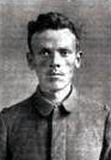 Friedrich Schumann
Serial killer · Germany · 1911
Friedrich Schumann (1 February 1893 – 27 August 1921) was a German serial kille…
6 victims
Friedrich Schumann
Serial killer · Germany · 1911
Friedrich Schumann (1 February 1893 – 27 August 1921) was a German serial kille…
6 victims
 Samuel Leonard Boyd
Murderer · Australia · 1982
Samuel Leonard Boyd was sentenced to 5 consecutives sentences of life imprisonm…
4 victims
Samuel Leonard Boyd
Murderer · Australia · 1982
Samuel Leonard Boyd was sentenced to 5 consecutives sentences of life imprisonm…
4 victims
- Gender
- male
- Country
- USA
- Location
- Wilkes County, North Carolina, USA
- Date of birth
- June 22, 1845
- Age at first offence
- 21
- Characteristics
- —
- Victim profile
- Laura Foster ( his pregnant fiancée)
- Method of murder
- St abbing with knife
- Date(s) of murder
- May 26, 1866
- Years active
- 1866
- Date of arrest
- —
- Status
-
Executed
Executed by hanging on May 1, 1868
Case record: Thomas Dula
Overview
Thomas C. Dula (June 22, 1845 – May 1, 1868) was a former Confederate soldier. He was tried, convicted, and hanged for the murder of his fiancée, Laura Foster.
While the murder occurred in Wilkes County, North Carolina, the trial, conviction, and execution took place in Statesville, North Carolina. The trial and hanging received national publicity from newspapers such as The New York Times, turning Dula’s story into a folk legend. There was considerable controversy surrounding his conviction and execution.
Timeline
- 15 March 1862 — Thomas C. Dula joined the Confederate Army.
- 1865 — Dula served as a private in Company K in the 42nd North Carolina Infantry Regiment until the war ended.
- 1859 — Ann married James Melton.
- May 1866 — Laura Foster left her home about the 26th of May and was never seen alive again.
- 1 May 1868 — Dula was executed by hanging.
- 2001 — A petition was sent around Wilkes County and to the county seat; Tom Dula was “acquitted” of all charges in an unofficial action.
Background
Thomas C. Dula was born into a poor Appalachian hill country family in Wilkes County, North Carolina. He was most likely the youngest of three brothers, with one younger sister, Eliza. Dula grew up and attended school in Wilkes County.
Dula’s childhood included play with the female Fosters, Ann (later Melton) and Laura, her younger cousin. As the children grew up, Tom and Ann apparently became intimate.
Three months before his eighteenth birthday, on 15 March 1862, Dula joined the Confederate Army. He served as a private in Company K in the 42nd North Carolina Infantry Regiment until the war ended in 1865. The material states that Dula suffered various injuries during the fighting.
Each of Dula’s brothers died in the war, leaving Tom as his mother’s “sole remaining boy.”
The material says there was evidence that Dula was literate: he wrote a 15-page account of his life and also wrote the note that exonerated Ann Melton.
Military service
The material states that contrary to newspaper accounts at the time, Dula did not serve in Zebulon Vance’s 26th North Carolina, and that this also contradicted rumors that he “played the banjo” in the army band for Colonel Vance’s benefit or entertained Colonel Vance with antics. Those claims were often cited as the reason Governor Vance quickly led the defense of Dula during his trial. The material says it seemed more likely that Governor Vance believed in Dula’s innocence or thought defending a Confederate veteran in the high-profile case would be politically beneficial.
The offence: murder of Laura Foster
After returning from the war, Dula discovered that Ann had married James Melton. The material describes Dula as having a reputation as something of a libertine, and states that it did not take Dula long to take up with young Laura. Laura became pregnant shortly thereafter, and she and Dula decided to elope.
On the night she was to meet Dula, about the 26th of May, 1866, Laura Foster left her home and was never seen alive again.
The material states that it was not known for certain what happened that evening. Many stories arising from contemporary folklore implicated Ann Melton in some way. It presents competing beliefs: some stories believed Ann murdered Laura because she was still in love with Dula and jealous that Laura was marrying him; other stories suggested Dula might have known or suspected Ann had murdered Foster but refused to implicate her after his arrest because he still loved Ann and took the blame.
The material states that Ann’s word led to the discovery of Laura Foster’s body. Foster had been stabbed multiple times with a large knife. Laura Foster was pregnant when she was killed. The gruesome nature of the murder and the fact that Foster was pregnant captured the public’s attention and led to enduring notoriety of the crime.
The material states that the role of Dula in the slaying was unclear. It says Dula fled shortly after her body was found—when he was declared a suspect. It also says he worked for a time for Colonel James Grayson in Watauga County, before taking refuge across the state line in Trade, Tennessee. The material says Grayson later entered folklore as a romantic rival of Dula’s, but that this was not true and was an incorrect inference from lyrics of the song, becoming more widespread as facts were forgotten. The material says Grayson did help the Wilkes County posse bring Dula in once his identity was discovered.
Trial
After Dula was arrested, the material states that former North Carolina Governor Zebulon Vance represented him pro bono and maintained Dula’s innocence of the charges. It says Vance succeeded in having the trial moved from Wilkesboro to Statesville due to a belief that Dula would not receive a fair trial in Wilkes County.
The material states that Dula was convicted. It says he was given a new trial on appeal, but he was convicted again. It says his supposed accomplice, Jack Keaton, was set free, and that on Dula’s word, Melton was acquitted of the crime.
As he stood on the gallows facing his death, the material says he was reported to have said:
“Gentlemen, do you see this hand? I didn’t harm a hair on the girl’s head”.
Sentencing and execution
The material states that Dula was executed nearly two years after the murder of his fiancée. It states that he was executed on 1 May 1868. After the execution, Dula’s younger sister and her husband retrieved his body for burial.
Appeals and later actions
The material states that Dula was given a new trial on appeal and was convicted again.
It also states that in 2001, Tom Dula was “acquitted” of all charges after a petition was sent around Wilkes County and to the county seat. The material states that this action was unofficial and had no legal force.
Other details
Relationships and timing
The material says Ann married James Melton in 1859, three years before Tom left for the war. It also says it was unclear whether this changed the nature of the relationship between Tom and Ann.
Folk legend and controversy
The material describes myths that arose around Dula’s life and the tragedy. It states that myths included Dula surviving the war without a scratch and Governor Zebulon Baird Vance making use of Dula’s supposed talents with a banjo for entertainment. The material says Dula’s and Vance’s accounts, along with Dula’s military record, showed these legends to be untrue, but that they persisted nonetheless.
Cultural references and song
A local poet named Thomas Land wrote a song about the tragedy shortly after Dula was hanged. The material says this, combined with the widespread publicity of the trial, cemented Dula’s place in North Carolina legend. It states the song written by Land was still sung today throughout North Carolina.
The material says several recordings were made in the twentieth century, with the first in 1929 by a group called “Grayson and Whitter.” It states the most popular version was recorded by The Kingston Trio in 1958, sold over 6 million copies, and was widely credited with starting the “folk boom” of that time period. It also says the song was named by the Grammy Foundation as one of the Songs of the Century.
The material states that The Trio’s song was covered in Great Britain by Lonnie Donegan later in 1958. It states that in 1959 Michael Landon was given the role of Dula in the movie The Legend of Tom Dooley. The material says the movie was not based on the facts of Dula’s life except in the loosest sense and was not based on any traditional Tom Dula legends; it says it was a fictional treatment inspired by the lyrics of the song.
The material states that also in 1959 Stonewall Jackson’s U.S. country music and Billboard hit song Waterloo makes reference to Tom Dooley in the final verse.
It further states that the members of Macabre, known for death metal, put out an album of acoustic folk songs, including a song entitled Tom Dooley about his death.
People mentioned
- Thomas C. Dula — defendant; former Confederate soldier; convicted and executed.
- Laura Foster — fiancée and murder victim.
- Ann (later Melton) — Laura Foster’s connection; mentioned in relationship to Dula; named in relation to discovery of Foster’s body; said to have been exonerated by a note.
- Eliza — Dula’s younger sister.
- James Melton — married Ann; acquitted of the crime on Dula’s word.
- Jack Keaton — supposed accomplice; set free.
- Zebulon Vance — former North Carolina Governor; represented Dula pro bono.
- Zebulon Vance — Governor named as leading defense during the trial.
- Colonel James Grayson — employer of Dula for a time; helped the Wilkes County posse bring Dula in.
- Thomas Land — local poet who wrote a song about the tragedy shortly after Dula was hanged.
- The Kingston Trio — recorded a hit version in 1958.
- Lonnie Donegan — covered the song in Great Britain later in 1958.
- Michael Landon — cast as Dula in The Legend of Tom Dooley (1959).
- Stonewall Jackson — Waterloo reference to Tom Dooley (1959).
- Macabre — death metal band that released an acoustic folk album including “Tom Dooley.”

Spotted an error, or have more information about this case?