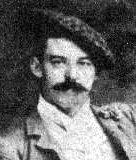
John Reginald Birchall
Murderer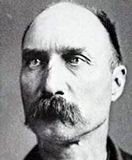 John Makin
Murderer · Australia · 1892
John Makin (14 February 1845 – 15 August 1893) was an Australian baby farmer wh…
12 victims
John Makin
Murderer · Australia · 1892
John Makin (14 February 1845 – 15 August 1893) was an Australian baby farmer wh…
12 victims
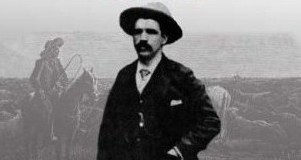 Jackson Lee Davis
Murderer · USA · 1896
Jackson Lee Davis, also known as Diamondfield Jack, was an inmate. · June 4, 18…
2 victims
Jackson Lee Davis
Murderer · USA · 1896
Jackson Lee Davis, also known as Diamondfield Jack, was an inmate. · June 4, 18…
2 victims
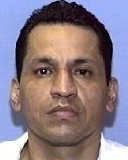 Jesse Joe Hernandez
Murderer · USA · 2001
Defendant: Jesse Joe Hernandez · Race: Hispanic · Gender: Male · Age: 47 · Educ…
1 victim
Jesse Joe Hernandez
Murderer · USA · 2001
Defendant: Jesse Joe Hernandez · Race: Hispanic · Gender: Male · Age: 47 · Educ…
1 victim
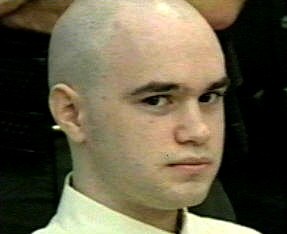 Brandon Wilson
Murderer · USA · 1998
Brandon Wilson was a drifter from Milltown, Wisconsin. He had no permanent plac…
1 victim
Brandon Wilson
Murderer · USA · 1998
Brandon Wilson was a drifter from Milltown, Wisconsin. He had no permanent plac…
1 victim
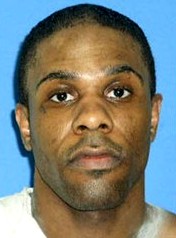 Leon Dorsey
Murderer · USA · 1994
Leon David Dorsey IV (TDCJ Number 999359) was executed by lethal injection in T…
3 victims
Leon Dorsey
Murderer · USA · 1994
Leon David Dorsey IV (TDCJ Number 999359) was executed by lethal injection in T…
3 victims
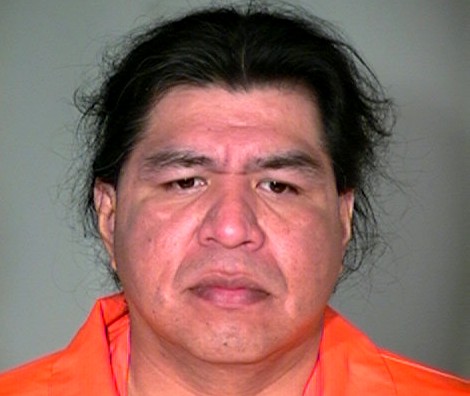 Eldon Schurz
Murderer · USA · 1989
Eldon Schurz was tried in Arizona in connection with the attempted robbery and…
1 victim
Eldon Schurz
Murderer · USA · 1989
Eldon Schurz was tried in Arizona in connection with the attempted robbery and…
1 victim
 Mack Oran Hill
Murderer · USA · 1978
Mack Oran Hill was executed by lethal injection in Texas on August 8, 2001. Hil…
2 victims
Mack Oran Hill
Murderer · USA · 1978
Mack Oran Hill was executed by lethal injection in Texas on August 8, 2001. Hil…
2 victims
- Gender
- male
- Country
- —
- Location
- —
- Date of birth
- May 25, 1866
- Age at first offence
- 24
- Characteristics
- —
- Victim profile
- Frederick Cornwallis Benwell, 25
- Method of murder
- Shooting Loca tion : Woodstock, Ontario, Canad a
- Date(s) of murder
- February 21, 1890
- Years active
- 1890
- Date of arrest
- —
- Status
-
Executed
Executed by hanging at Woodstock on November 14, 1890
Background
John Reginald Birchall was born 25 May 1866 in Accrington, England. He was the son of the Reverend Joseph Birchall, late rector of Church-Kirk, near Accrington, Lancashire, England. Birchall entered Lincoln College at Oxford in the early spring of 1885. He inherited £4,000 in 1878 from his father’s estate to be held in trust until his 25th birthday. Nevertheless, he lived like a young aristocrat and became heavily in debt. He founded the hedonistic Black and Tan Club at Oxford. By 1888 he was forced to sell his future inheritance at a discounted value of £3,000 to appease creditors and left Oxford without obtaining a degree.
Birchall invested £500 in a farm at Woodstock, Ontario. He eloped with the daughter of David Stevenson, master of transportation of the London and Northwestern Railroad. In November 1888 they set sail for Canada. In Woodstock, they found not the prosperous estate that had been advertised but a small farm. They took rooms in Woodstock and, calling themselves Lord and Lady Somerset, established a line of credit and took the social life of the community by storm. Six months later, pressed by local merchants to pay their bills, Lord and Lady Somerset suddenly disappeared from Woodstock and returned to London.
After returning to London, Birchall received an insider’s tip on a sure thing in the 1890 English Derby. To raise capital, he placed an advertisement in London newspapers posing as the owner of a prosperous Canadian horse farm and sales-yard who was looking for a partner to buy into the business for £500. Birchall planned to bet the money on the English Derby, take his partner to Canada, stall until the race was run, and then pay back the £500 with interest out of his winnings.
The offence
Birchall lured Douglas Raymond Pelly and Frederick Cornwallis Benwell into a partnership scheme connected to buying into a farm business near Woodstock, Ontario. Under the Farm Pupil scheme, dishonest promoters had abused a system in which young Englishmen would pay money to get taught the art of farming abroad. Birchall’s plan was to kill Benwell and take the money, and he later attempted unsuccessfully to kill Pelly.
Birchall and his wife Florence Stevenson met Douglas Raymond Pelly and Frederick Cornwallis Benwell in New York City in February 1890 as part of the scheme. Birchall instructed that Benwell would be shown a sales-yard at Eastwood, a station just east of Woodstock. Instead, Birchall led Benwell into a heavily wooded area called Blenheim Swamp and shot Benwell twice in the back of the head. The plan involved taking Benwell’s money, and Birchall returned that evening to Buffalo, telling Pelly that Benwell had been unhappy with the farm and planned to return to England. Birchall avoided further questioning by Pelly.
Investigation
Benwell’s frozen body was discovered by two farmers who were out walking on 21 February 1890 in the Blenheim Swamp. The body had two bullets lodged in the brain. A picture of Benwell was placed in the local newspaper, and identification was made when a man and his wife recognised the photo and came forward.
Reginald and Florence Birchall admitted that they had met Benwell when travelling to New York. Birchall maintained that he had met Benwell on the liner Britannic travelling from Liverpool to New York and that they had parted company at Niagara Falls. Witnesses were able to confirm that Birchall had been seen in the vicinity of the area where Benwell was found.
Birchall’s wife later returned to England and remarried. During the investigation, police became suspicious and both Reginald and Florence Birchall were arrested. A chief detective for the province of Ontario was identified as John Wilson Murray. Cable connections led directly from the courthouse in Woodstock to London, England, and newspapers in France, Germany, and Italy covered the trial.
Arrest
Birchall was arrested for the murder at Niagara Falls on 2 March and was transferred to the Woodstock jail. He was arrested by local police with the involvement of John Wilson Murray, described as the province of Ontario’s chief detective.
Trial
Birchall’s trial opened on 22 Sept. 1890 and excited international attention. Both Benwell and Birchall were described as members of the English upper class, which led to speculation that the murder was part of a larger scheme to swindle and murder young Englishmen from prosperous families.
Birchall steadfastly insisted that he was innocent but did not address the court. He was defended by George Tate Blackstock and prosecuted by Britton Bath Osler, with Judge Hugh MacMahon presiding. The circumstantial evidence was described as overwhelming. Birchall was found guilty and sentenced to hang.
Sentencing
Birchall was sentenced to hang. On 14 Nov. 1890, in the Woodstock jailyard, Birchall “went to his death ghastly white, but without a tremor.”
Outcome
Birchall was executed by hanging at Woodstock on November 14, 1890.
Other details
Frederick Cornwallis Benwell was the victim. Douglas Raymond Pelly invested £170 with Birchall. Separately, Frederick Cornwallis Benwell and his father Colonel F. Benwell of Cheltenham agreed to supply £500, but only after the son had seen the farm and examined the books.
Reginald Birchall and Florence Stevenson were married in 1888. While describing Birchall’s early education and conduct, a passage stated that, during two years of private tutoring, Birchall spent six years in public schools, during which time he found delight in “whatsoever was against the rules and whatsoever was redolent of lawlessness and disorder.”
A passage also described Birchall’s earlier experience with being swindled by money lenders and by the Farm Pupils Industry. It stated that in the spring of 1889, Birchall and his wife left Woodstock to return to England, and that Birchall needed to make money quickly and sent his own advertisement to the Farm Pupil Industry. It also described that he received a response from Frederick C. Benwell and told the Benwells that he had two farms in Canada, one near Niagara Falls and the other near Woodstock, and that Benwell met with Birchall and they visited the farm near Woodstock; later, Birchall returned alone, claiming that Benwell had decided against the Woodstock farm and to continue on his own.
Birchall wrote “Birchall, the story of his life, trial and imprisonment as told by himself” (Toronto, 1890) during his imprisonment. The materials also listed:
- [J. W. Murray], Memoirs of a great detective, incidents in the life of John Wilson Murray , comp. Victor Speer (Toronto, 1905).
- Evening Sentinel-Review (Woodstock, Ont.), September–November 1890.
- W. S. Wallace, Murders and mysteries, a Canadian series (Toronto, 1931), 172–93.
- Biographi.ca.
The hangman’s use of an experimental noose that caused slow death by strangulation was described as being greatly criticized.
Spotted an error, or have more information about this case?