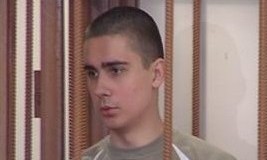
Viktor Sayenko
Serial killer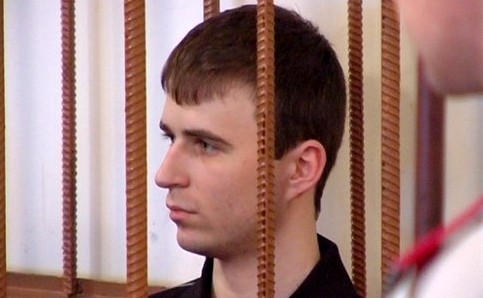 Igor Suprunyuck
Serial killer · Ukraine · 2007
Name: Igor Suprunyuck · Also known as (Ukr): Ігор Супрунюк · Also known as (Rus…
21 victims
Igor Suprunyuck
Serial killer · Ukraine · 2007
Name: Igor Suprunyuck · Also known as (Ukr): Ігор Супрунюк · Also known as (Rus…
21 victims
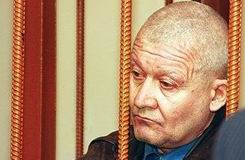 Serhiy Tkach
Serial killer · Ukraine · 1980
Serhiy Tkach (Russian: Серге́й Фёдорович Ткач, born 12 September 1952 in Kisely…
100 victims
Serhiy Tkach
Serial killer · Ukraine · 1980
Serhiy Tkach (Russian: Серге́й Фёдорович Ткач, born 12 September 1952 in Kisely…
100 victims
 Anatoly Onoprienko
Serial killer · Ukraine · 1989
Anatoly Yuriyovych Onoprienko was born July 25, 1959, and was also known by the…
52 victims
Anatoly Onoprienko
Serial killer · Ukraine · 1989
Anatoly Yuriyovych Onoprienko was born July 25, 1959, and was also known by the…
52 victims
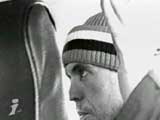 Vladimir Kondratenko
Serial killer · Ukraine · 1991
Vladimir Kondratenko overdosed on prescription medication and died while in pol…
16 victims
Vladimir Kondratenko
Serial killer · Ukraine · 1991
Vladimir Kondratenko overdosed on prescription medication and died while in pol…
16 victims
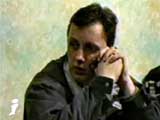 Vladislav Volkovich
Serial killer · Ukraine · 1991
The Nighttime Killers (Ночной Серийник) were responsible for a string of brutal…
16 victims
Vladislav Volkovich
Serial killer · Ukraine · 1991
The Nighttime Killers (Ночной Серийник) were responsible for a string of brutal…
16 victims
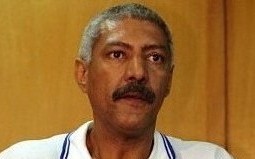 Edson Isidoro Guimaraes
Serial killer · Brazil · 1999
Edson Isidoro Guimarães was a Brazilian nursing assistant and nurse’s aide at S…
131 victims
Edson Isidoro Guimaraes
Serial killer · Brazil · 1999
Edson Isidoro Guimarães was a Brazilian nursing assistant and nurse’s aide at S…
131 victims
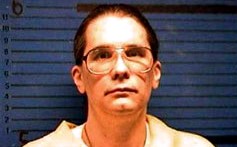 Michael Ross
Serial killer · USA · 1981
Michael Ross was executed by lethal injection in Connecticut on May 13, 2005. R…
8 victims
Michael Ross
Serial killer · USA · 1981
Michael Ross was executed by lethal injection in Connecticut on May 13, 2005. R…
8 victims
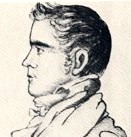 Samuel Green
Serial killer · USA · 1817
Samuel Green was executed by hanging in Massachusetts on April 25, 1822. He was…
Samuel Green
Serial killer · USA · 1817
Samuel Green was executed by hanging in Massachusetts on April 25, 1822. He was…
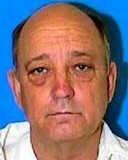 Hilton Lewis Crawford
Murderer · USA · 1995
Hilton Lewis Crawford was executed by lethal injection in Texas on July 2, 2003…
1 victim
Hilton Lewis Crawford
Murderer · USA · 1995
Hilton Lewis Crawford was executed by lethal injection in Texas on July 2, 2003…
1 victim
- Gender
- male
- Country
- Ukraine
- Location
- Dnepropetrovsk, Ukraine
- Date of birth
- 1988
- Age at first offence
- 19
- Characteristics
- motive unclear, torture, serial rapist
- Victim profile
- Men, women and children
- Method of murder
- Hitting with hammers and steel construction bars - St abbing with knife
- Date(s) of murder
- June 25, 2007 - July 16, 2007
- Years active
- 2007
- Date of arrest
- J uly 23, 2007
- Status
-
Life imprisonment
Supreme Court of Ukraine upheld life sentences passed on Igor Suprunyuck and Viktor Sayenko on November 24, 2009; sentenced to life in prison on February 11, 2009
Background
The case was associated with “The Dnepropetrovsk Maniacs,” a media epithet for the killers responsible for a string of murders in Dnepropetrovsk, Ukraine in June and July 2007. The case gained additional notoriety because the killers made video recordings of some of the murders, with one of the videos leaking to the Internet.
The offence
The court found that premeditated murder occurred repeatedly during a murder spree that included murders and robbery-related incidents.
Murders
The first two murders took place late at night on June 25, 2007.
The first victim was a 33-year-old local woman named Ekaterina Ilchenko. She was walking home after having tea at her female friend’s apartment. According to Viktor Sayenko’s confession, he and Igor Suprunyuck were “out for a walk.” Suprunyuck had a hammer. As Ilchenko walked past, Suprunyuck “spun around” and struck her in the side of the head. Ilchenko’s body was found by her mother at 5 AM.
Within an hour of the first murder, the two men attacked their next victim, Roman Tatarevich. He was sleeping on a bench a short walk away from the first murder scene. Tatarevich’s head was smashed with blunt objects numerous times, rendering him unrecognizable. The bench was located across the street from the local Public Prosecutor’s office.
On July 1, two more victims, Evgeniya Grischenko and Nikolai Serchuk, were found murdered in the nearby town of Novomoskovsk.
On the night of July 6, three more people were murdered in Dnepropetrovsk.
The first was Egor Nechvoloda, a recently discharged army recruit. He was bludgeoned while walking home from a night club. His mother found the body in the morning by their apartment building on Bohdan Khmelnytsky Street.
Elena Shram, a 28-year-old night guard, was then murdered around the corner on Kosiora Street. According to Sayenko’s taped confession, as Shram walked towards them, Suprunyuck struck her with the hammer he had been hiding under his shirt and struck her several more times after she fell down. She had been carrying a bag filled with clothes. The men picked up the bag, used the clothes to clean the hammer, and threw the bag out.
Later the same night, the men murdered a woman named Valentina Hanzha. She was a mother of three married to a disabled husband. No apparent relation to co-defendant Alexander Hanzha was stated.
On the next day, July 7, two 14-year-old boys from Podgorodnoye, a nearby village, were attacked in broad daylight as they went fishing. One of the two friends, Andrei Sidyuck, was killed, but the other, Vadim Lyakhov, managed to escape.
On July 12, a 48-year-old man named Sergei Yatzenko, disabled by a recent bout with cancer, went missing while riding his Dnepr motorcycle. His body was found four days later, with signs of a savage attack clearly visible even after four days in the summer heat.
Thirteen more murders followed. Often multiple bodies were found in the same day. In addition to earlier sprees, two victims were found every day from July 14 through 16.
Victims were seemingly selected at random. Many were vulnerable to attack, including women, children, elderly, vagrants, or people under the influence of alcohol.
Most victims were killed using blunt objects, including hammers and steel construction bars. Blows were often directed at the victims’ faces, leaving them unrecognizable.
Many victims were also mutilated and tortured. Some had their eyes gouged out while they were still alive.
One of the victims was a pregnant woman, whose fetus was cut out of her womb.
No sexual assaults on any victims were reported.
Some victims were robbed of their cell phones and other valuables. Their possessions were pawned to a large network of second-hand shops in the area. However, most victims had their possessions intact.
The murders spanned a large geographical area, including the city of Dnepropetrovsk itself and many outlying areas of the Dnepropetrovsk Oblast.
Investigation of motive
The prosecution did not establish a specific motive behind the killings. Local media reported that the killers had a plan to get rich from the murder videos they recorded. One of the suspects’ girlfriends reported that they were planning to make forty videos of separate murders. This claim was corroborated by the suspects’ former classmate, who said that he often heard Suprunyuck was in contact with an unknown “rich foreign website operator” who ordered forty snuff videos, and would pay a large sum of money once they were made.
Regional security chief Ivan Stupak rejected the claim that the murders had been committed to make Internet snuff videos, saying no evidence supported the claim during the investigation.
Detective Bogdan Vlasenko stated: “We think they were doing it as a hobby, to have a collection of memories when they get old.”
Deputy interior minister Nikolay Kupyanskiy commented: “For these young men, murder was like entertainment or hunting.”
At the trial, it emerged that Suprunyuck had collected newspaper cuttings about the case. Some of the photographs of the crimes had captions added, including “The weak must die. The strongest will conquer.”
Investigation
No official link between the murders was made until the July 7 attack on two boys in Podgorodnoye.
Vadim Lyakhov, the survivor, was initially placed under arrest, suspected of murdering his friend. He was reportedly denied access to counsel and beaten by police during questioning. It quickly became clear that he was not responsible for his friend’s death, and that the murder was connected with the murder spree.
Lyakhov cooperated with investigators to create sketches of the attackers.
Several days later, on July 14, a 45-year-old woman named Natalia Mamarchuk was riding her scooter in the nearby village of Diyovka. As she was passing through a wooded area, two men ran towards her and knocked her down. They then took out a hammer or a pipe and bludgeoned her to death as she lay on the ground. After she stopped moving, the men jumped on her scooter and drove off. The attack was witnessed from a distance by many locals. They gave chase but quickly lost sight of the attackers.
Two local children also witnessed the attack from up close, hidden in a tent just a few feet away where Mamarchuk was murdered. They provided a detailed description that matched the one given by Lyakhov.
A task force was quickly set up from Kiev, headed by Lead Criminal Investigator Vasily Paskalov. The manhunt soon grew to encompass most of the local law enforcement. Reportedly over 2,000 investigators were working on the case.
The investigation was initially kept secret. No official information about the murders was released, and local people were not warned about possible attacks or provided with descriptions of the suspects. Rumors of the attacks kept most of the local population home at night.
Eventually, investigators selectively distributed sketches and lists of stolen property to local pawn shops. Stolen property began to appear in the pawn shops of the city’s Leninskiy district. The combination of sketches and located stolen property led quickly to the suspects.
Arrest and trial
Arrest
The three suspects were arrested on July 23, 2007.
Suprunyuck attempted to sell a mobile phone stolen from one of the victims in a local pawn shop, asking for 150 hryvnia (about US $20). When the phone was turned on to show that it worked, its location was traced by law enforcement agents. Suprunyuck and Sayenko were arrested near the cash register of the shop.
Hanzha was arrested at home, reportedly managing to flush other stolen mobile phones down the toilet. The phones were recovered, but all information on them was lost.
Charges
The three men were charged with involvement in 29 separate incidents, including 21 murders and 8 more attacks where the victims survived.
Suprunyuck was charged with 27 of the cases, including 21 counts of capital murder, 8 armed robberies, and 1 count of animal cruelty.
Sayenko was charged with 25 instances, including 18 murders, 5 robberies, and 1 count of animal cruelty.
Hanzha was charged with two counts of armed robbery, stemming from a March 1, 2007 incident in Dniprodzerzhynsk.
Confessions and trial proceedings
All three confessed quickly, although Suprunyuck later withdrew his confession.
Their trial began in June 2008. Suprunyuck pleaded not guilty, while the other two suspects pleaded guilty to all charges.
Viktor Chevguz, Suprunyuck’s original defense lawyer, dropped out after reportedly being disappointed at failing to have a plea of insanity accepted.
The lawyers for the victims’ families argued that the level of care taken by the killers during their crime spree meant that they were fully aware of their actions.
Prosecution evidence included bloodstains on the suspects’ clothing and video recordings of the murders.
The defense denied that the people in the videos were the suspects, claiming serious problems with the investigation. The defense cited at least 10 more murders covered up by the prosecution, supposed cover-ups of additional arrests of people with powerful connections who were released without being charged, and naming some additional people supposedly involved.
The case was heard by a panel of judges chaired by Judge Ivan Senchenko.
The prosecution asked for life imprisonment for Sayenko and Suprunyuck, and 15 years of hard labor for Hanzha. Ukraine has no capital punishment.
People involved
Viktor Sayenko
Viktor Sayenko was one of the two locals arrested and charged with 21 murders. The case summary identified him as a 19-year-old local. He attended school together with the other defendants and Suprunyuck later became friends with them in the third grade.
Sayenko testified that he had been in constant fear of Suprunyuck since 7th grade. In that questioning, Sayenko stated: “Me and Igor [Suprunyuck ] were both afraid of heights, and we were afraid we'd be beaten up by bullies”.
At the time of arrest, he worked part-time at a metallurgy institute and worked as a security guard.
In the night-of-July-6 account, Sayenko’s taped confession described the hammer attack and subsequent actions including cleaning and disposing of the bag.
Igor Suprunyuck
Igor Suprunyuck was another 19-year-old local arrested and charged with 21 murders. He remained officially unemployed but made a living driving his green Daewoo Lanos as an unlicensed taxi. The car was reportedly a birthday gift from his parents.
The prosecution charged Suprunyuck with 27 cases including 21 counts of capital murder, 8 armed robberies, and 1 count of animal cruelty. Sayenko and Suprunyuck were arrested near the cash register of a pawn shop on July 23, 2007 after a traced phone location.
Sayenko’s confession described Suprunyuck as having a hammer at the time of Ilchenko’s killing and as striking her in the side of the head after “spun around.”
Suprunyuck was described as shy and withdrawn but always picking fights and getting into trouble based on a teacher’s report. By the fifth grade, the boys had their first brush with the law when caught throwing rocks at passing trains.
Suprunyuck was described as squeamish, with blood phobia, refusing even to bathe his kitten.
Suprunyuck suggested tackling the fears by torturing stray dogs. The boys captured dogs near their house, hung them from trees, disemboweled them, and took pictures standing next to the corpses. Prosecution evidence included many of these photos taken by underage suspects. Some photos showed swastikas and other symbols with animal blood, and giving the Hitler salute. In one photo, Suprunyuck posed sporting a “Hitler moustache”.
Suprunyuck was born on April 20, the same day as Adolf Hitler, and often made references to the fact.
A long video showing the three torturing a white kitten was shown in court. It took place in their garage. The suspects fashion a cross out of two wooden boards and nail the kitten to it, then shoot at it with two pistols, placing foam and glue in its mouth in order to muffle the kitten's screams.
In the court video evidence description, Suprunyuck was identified by the court as attacking Sergei Yatzenko in the genuine video.
At trial, Suprunyuck pleaded not guilty and later withdrew his confession.
Alexander Hanzha
Alexander Hanzha was a third co-conspirator charged with two armed robberies before the murder spree.
Hanzha was charged with two counts of armed robbery from a March 1, 2007 incident in Dniprodzerzhynsk.
Hanzha was described as drifting between odd jobs, including a pastry chef and a construction worker. At the time of arrest he had been unemployed for some time.
The defense asserted that Hanzha never participated in the murder spree and was involved only with a single incident four months before the spree began, in which two men were robbed.
Hanzha fully admitted his guilt, hoping for leniency in sentencing.
Suspects’ background and behaviours
The three suspects were described as lifelong friends who attended school together. Their families described Sayenko and Hanzha as friends from an early age. Suprunyuck moved to the area later.
Suprunyuck, with help of Sayenko and Hanzha, began picking up passengers and robbing them before the murder spree began. A green Daewoo with a taxicab's checkerboard marking was described as the vehicle used in the murders. According to the suspects’ confessions, some murder victims were picked up as passengers in Suprunyuck’s unlicensed cab.
Hanzha reportedly participated in a single incident where two men were robbed, and subsequently declined to take part in further attacks.
Local media reported that the suspects had wealthy influential parents with ties to local law enforcement. Vladimir Suprunyuck, Igor Suprunyuck’s father, in an interview to Segodnya stated that he had been employed at Yuzhmash as a test pilot, often flying with Leonid Kuchma, the future president of Ukraine, and continuing to serve as his personal pilot on domestic flights after Kuchma’s rise to power.
Local authorities, including deputy interior minister Nikolay Kupyanskiy, initially referred to supposed influence of suspects’ families but later denied the assessment, claiming that all three suspects came from poor families.
Viktor Sayenko was represented in court by his father Igor Sayenko, a lawyer.
Evidence and murder videos/photographs
The suspects’ cell phones and personal computers contained multiple video recordings of the murders.
One full video was leaked to the Internet showing the murder of 48-year-old Sergei Yatzenko. In the described video, Yatzenko was struck repeatedly in the face with a hammer held inside a plastic bag. An attacker poked out Yatzenko’s eyes and stabbed him in the abdomen with a screwdriver. Yatzenko was then struck with the hammer to ensure he was dead. The attack lasted over four minutes, during which the victim lapsed in and out of consciousness. One of the murderers smiled towards the camera during the video.
The murderers walked back to their car, with the crime taking place only a few feet away from the side of a road next to their parked car. They discussed the murder calmly, expressing mild amazement that the victim was still breathing after a screwdriver was plunged into his exposed brain. The suspects washed their hands and the hammer with a water bottle and began to laugh. Only two suspects appeared in the video, with one always behind the camera.
The suspects were also found in possession of multiple photographs showing them attending funerals of the victims. They could be seen smiling and “flipping off” the coffins and gravestones.
Evidence of animal abuse was also shown in court, with the suspects posing alongside mutilated animal corpses.
Photographic and video evidence was shown in court on October 29, 2008, as part of a larger presentation of over 300 photographs and two videos.
The defense objected to the presentation, claiming the evidence was obtained illegally and that the subjects shown in the video and photographs were digitally altered to resemble the suspects.
When Suprunyuck and Sayenko were asked if they recognized the people in the photographs, they replied they did not. Judge Ivan Senchenko responded: “You are not blind.”
Valery Voronyuck, an expert on film and video editing, testified that the video material had not been faked or altered in any way.
The court rejected objections and accepted the prosecution’s argument that the material was genuine and showed the suspects in the act of murdering their victims.
The victim in the leaked video: Sergei Yatzenko
The man whose murder was recorded in the leaked video was identified as Sergei Yatzenko from the village of Taromskoye.
His murder took place on July 12, 2007. His body was found on July 16. Yatzenko was 48 years old. He had recently been forced into retirement due to a cancerous tumor in his throat. The treatment left him unable to speak for some time, but he was unhappy about being unable to work and continued to find odd jobs around the village. He took on small construction projects, fixed cars, weaved baskets, and cooked for his family. He was beginning to regain his voice by the time of the murder.
Yatzenko was married and had two sons and one grandchild. He also had a disabled mother whom he looked after.
Yatzenko had another brush with death sixteen years earlier. While working at a farm, he lost control of his tractor and rolled downhill into a river. Instead of jumping out, he stayed in the cabin trying to save his vehicle and became pinned underwater. By the time he was freed, he was clinically dead but was resuscitated. Doctors called his survival “one in a thousand”.
At around 2:30 PM on the day of the murder, he called his wife to let her know he was riding his old Dnepr motorcycle to see his grandchild. He never arrived at his son’s house. His cell phone was turned off by 6 PM.
His wife Lyudmila called a friend and walked around the village, afraid that her husband might have fallen ill or had a motorcycle accident. They were unable to locate any signs of him.
They were also unable to file a missing person's report, since in Ukraine a person could not be declared missing until at least 72 hours after last being seen.
The next day, Lyudmila posted photographs of her husband around the village and enlisted more local help to search the surrounding area. Four days later, a local who saw one of Lyudmila’s posters remembered seeing an abandoned Dnepr bike in a remote wooded area by a garbage dump. The local took Yatzenko’s relatives to the scene, where they discovered his mutilated and decomposing body.
The fact that Yatzenko’s murder was captured on video was unknown to the public until a court session on October 29, 2008.
The unedited video of the murder was shown as part of a large presentation by the prosecution, causing shock in the audience.
The court agreed the video was genuine, showing Igor Suprunyuck attacking the victim, and that Viktor Sayenko was the man behind the camera.
The murder video was leaked to a shock site based in the United States and dated December 4, 2008.
Ekaterina Levchenko, adviser to Ukraine’s Minister of the Interior, was critical of the leak but admitted that control of videos on the Internet was “virtually impossible”.
Caitlin Moran of The Times watched part of the video and recalled her reaction in her column in January 2009.
Parts of the video became a viral video known as “3Guys1Hammer,” a pun on another famous shock video, “2 Girls 1 Cup”. Some YouTube users posted videos recording their reactions while watching the murder video.
Sentencing
On February 11, 2009, the court in Dnepropetrovsk found Igor Suprunyuck and Viktor Sayenko guilty of premeditated murder and sentenced both to life imprisonment.
Suprunyuck was found guilty of 21 murders while Sayenko was found guilty of 18 murders.
They also received fifteen years sentences after being found guilty on robbery charges.
Alexander Hanzha, not involved in the killings, was found guilty of robbery and sentenced to nine years in prison.
All three were also found guilty on the animal cruelty charges.
Hanzha said: “If I had known the atrocities that they were capable of committing, I would have not gone near them at gunpoint.”
The judge stated in the verdict that the motive for the crimes had been a desire for “morbid self-affirmation”. Referring to the accused, the court noted “the poverty of their emotional world, and their absence of interest in people and moral standards.”
The court’s verdict was several hundred pages long and was read out over a period of two days.
The lawyers for Suprunyuck and Sayenko announced an intention to appeal. They said the authenticity of the photographic and video evidence had not been established beyond reasonable doubt.
The claim was dismissed by Edmund Saakian, a lawyer for one of the victims’ families. He commented: “In theory a photo can be faked, but to fake a forty minute video would require a studio and a whole year.”
Larissa Dovgal, a representative of the victims’ families, claimed that other perpetrators involved in the crimes could still be at large.
Vladimir Suprunyuck and Igor Sayenko’s parents repeated their belief in the innocence of their sons.
Vladimir Suprunyuck claimed that Igor had been tortured to extract his confession, with police covering his head and forcing him to inhale cigarette smoke.
Speaking at a televised press conference, Vladimir Suprunyuck cited irregularities during the investigation and said that the case against his son was false.
Igor Sayenko claimed his son had been made a scapegoat and that the crimes had been committed by the relatives of senior officials.
The parents planned to appeal to the Supreme Court of Ukraine and the European Court of Human Rights.
The parents of Suprunyuck and Sayenko also argued that the sentence on Alexander Hanzha had been too lenient.
An opinion poll conducted in Dnepropetrovsk found that 50.3% of people believed that the sentence was fair and 48.6% believed it should have been more severe.
Appeals
On August 18, 2009, the Supreme Court of Ukraine referred the case back to the Dnepropetrovsk regional court of appeal. The move was welcomed by Igor Sayenko, who stated it was a step towards clearing his son's name.
Speaking at a press conference, Igor Sayenko and Vladimir Suprunyuck repeated belief that the case was based on fabricated evidence.
A spokesperson for the prosecutor’s office said that referring the case back to the appeal court was procedural and that the verdict would be upheld.
The appeal was scheduled for October 5, 2009.
In an interview with the newspaper Novi Most, the mothers of Suprunyuck and Sayenko said their children were being treated well in prison. It was also reported that Igor Sayenko was considering setting up a website about the case.
On November 24, 2009, the Supreme Court of Ukraine upheld the life sentences passed on Igor Suprunyuck and Viktor Sayenko in February 2009.
Alexander Hanzha did not appeal against his nine year sentence.
Other details
Defence claims and courtroom disputes
The legal team consisted of three lawyers, one assigned to each suspect. All three lawyers were originally court-appointed, but after initial hearings Viktor Sayenko requested to be represented by his father instead of his previous lawyer, who had apparently graduated from law school only two months earlier. The request was granted, leading to a delay in proceedings as Sayenko’s father familiarized himself with multiple volumes of evidence.
Igor Sayenko became the most prominent figure on the defense side, giving numerous interviews and taking a leading role in court proceedings.
Hanzha’s attorneys based their defense on the claim that he never participated in the murder spree and was involved only with the robbery incident four months before the spree began, during which two men were robbed. Hanzha admitted guilt and hoped for leniency.
The defense strategy for Suprunyuck and Sayenko attacked the prosecution on a wide front. Multiple investigators were called including the leader of the arrest team and the lead investigator. The defense claimed illegal searches, improperly kept records, and problems during questioning.
Igor Sayenko raised questions about the videotape of searches conducted in the suspects’ apartments. According to Sayenko, the tape constantly stops and restarts, showing evidence obtained only after it was picked up by investigators, but never the actual moment of discovery.
The legal team also denied that the people shown in murder videos were the suspects, asserting they were recognized as different individuals.
In an interview with Komsomolskaya Pravda, Igor Sayenko claimed that a fourth suspect named Danila Kozlov was initially charged with the murders. Tatiana Shram, sister of victim Elena Shram, stated in an interview that she saw Kozlov’s name mentioned in court documents. She stated that Kozlov was aware of the murders and was with the suspects just before her sister was murdered. Shram further stated that investigators told her that Kozlov remained free because he “did not murder anyone”. She added that when her attorney attempted to bring up the matter in court, the judge “asked him to sit down”.
Igor Sayenko also speculated about influence of the families of the “real killers.” He said he conducted interviews with an escaped victim who wanted his identity kept secret out of fear for his life. The unnamed victim claimed he identified the suspects in his attack and that two other men were identified and arrested. The suspects were supposedly released an hour later due to pressure from their families, and two investigators were fired. In court, Sayenko said: “But now these details are being covered up,” and: “The investigators claim that this did not happen. But there are people, officers in the Militsiya, who on July 19, 2007 received reports that those three were arrested. [...]But, alas, it turned out that the persons arrested had powerful parents. So the information was quickly suppressed, and instead my son and two of his friends were railroaded. I also believe that the girl arrested on that day has since left the country and is now in Germany.”
The defense also claimed the prosecution withheld information from the court that exonerated their clients. Igor Sayenko claimed police interviewed witnesses and recovered evidence from two additional murders. The suspects had an alibi for the times of those murders, so information about those crimes was removed from the case.
Viktor Sayenko’s defense claimed he had a “psychological dependence” on Igor Suprunyuck, called the ringleader. They claimed Suprunyuck repeatedly threatened Sayenko and that Sayenko feared for his life.
Some victims’ relatives reportedly supported the defense strategy due to dissatisfaction with slow legal process and an alleged cover-up by investigators. Some relatives stated they planned to set up an independent organization to monitor court proceedings.
Authorities in Ukraine strongly denied that a fourth person was involved who could still be at large, and said rumors of similar crimes taking place since the arrest of the three suspects were unfounded.
Murder videos and photographic evidence in court
The defense objected to the October 29, 2008 presentation of over 300 photographs and two videos, claiming the evidence was obtained illegally and that subjects had been digitally altered to resemble the suspects. Judge Ivan Senchenko rejected the defense’s claim of unrecognizability with: “You are not blind.”
An expert, Valery Voronyuck, testified that the video was not faked or altered.
The court rejected objections and accepted prosecution arguments that the evidence showed the suspects murdering their victims.
Animal cruelty video evidence
During court, evidence also included animal cruelty photos and videos, including torture and killing of dogs and a kitten.
Spotted an error, or have more information about this case?