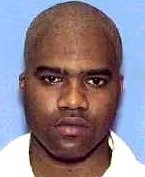
Roderick Newton
Murderer Russell Ellwood
Murderer · USA · 1991
Russell Ellwood was a former taxi driver. Authorities suspected him of killing…
20 victims
Russell Ellwood
Murderer · USA · 1991
Russell Ellwood was a former taxi driver. Authorities suspected him of killing…
20 victims
 Robert Martines Perez
Murderer · USA · 1994
Name: Robert Martines Perez · Other name used in proceedings: Robert Martinez P…
15 victims
Robert Martines Perez
Murderer · USA · 1994
Name: Robert Martines Perez · Other name used in proceedings: Robert Martinez P…
15 victims
 Billy Frank Vickers
Murderer · USA · 1993
Billy Frank Vickers Vickers was executed by lethal injection in Texas on Januar…
14 victims
Billy Frank Vickers
Murderer · USA · 1993
Billy Frank Vickers Vickers was executed by lethal injection in Texas on Januar…
14 victims
 Mark Anthony Duke
Mass murderer · USA · 1997
Mark Anthony Duke was 16 years old when he committed a capital offense. He resi…
4 victims
Mark Anthony Duke
Mass murderer · USA · 1997
Mark Anthony Duke was 16 years old when he committed a capital offense. He resi…
4 victims
 Gregorio Cardenas
Spree killer · Mexico · 1942
Gregorio Cárdenas buried the bodies in his garden. · Gregorio Cárdenas Hernánde…
4 victims
Gregorio Cardenas
Spree killer · Mexico · 1942
Gregorio Cárdenas buried the bodies in his garden. · Gregorio Cárdenas Hernánde…
4 victims
 George Bernard Harris
Murderer · USA · 1989
George Bernard Harris was the defendant in the case. Harris hit a lucky streak…
1 victim
George Bernard Harris
Murderer · USA · 1989
George Bernard Harris was the defendant in the case. Harris hit a lucky streak…
1 victim
 Allan Baker
Murderer · Australia · 1973
Allan Baker was convicted with Kevin Crump for the murder of Ian James Lamb and…
2 victims
Allan Baker
Murderer · Australia · 1973
Allan Baker was convicted with Kevin Crump for the murder of Ian James Lamb and…
2 victims
 Michael Monert
Serial killer · USA · 1989
Michael Monert was a serial killer who was convicted for killing three women in…
3 victims
Michael Monert
Serial killer · USA · 1989
Michael Monert was a serial killer who was convicted for killing three women in…
3 victims
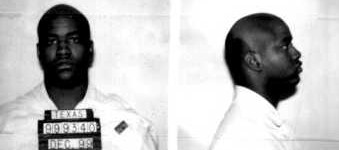 Geno Capoletti Wilson
Homicide · USA · 1998
Name: Geno Capoletti Wilson TDCJ Number: 999340 Date of Birth: 05/24/1981 Date…
1 victim
Geno Capoletti Wilson
Homicide · USA · 1998
Name: Geno Capoletti Wilson TDCJ Number: 999340 Date of Birth: 05/24/1981 Date…
1 victim
- Gender
- male
- Country
- USA
- Location
- Dallas County, Texas, USA
- Date of birth
- December 7, 1977
- Age at first offence
- 22
- Characteristics
- robbery, kidnapping
- Victim profile
- Jesus Montoya, 20
- Method of murder
- Shooting ( .35 caliber gun)
- Date(s) of murder
- March 9, 1999
- Years active
- 1999
- Date of arrest
- —
- Status
-
Sentenced to death
Sentenced to death on March 15, 2000
Case identification
- Name: Roderick Newton
- TDCJ Number: 999348
- Date of Birth: 12/07/1977
- Gender: Male
- Race: Black
- Hair Color: Black
- Height: 5' 10"
- Weight: 206
- Eye Color: Brown
- Native County: Native
- State: Hartford, Connecticut
- Prior occupation: Cook, Laborer
- Education level: 03/15/2000 (as provided in the record)
- Age when received: 22
- County: Dallas
- Race of victim: hispanic male
The offence
Newton and one co-defendant carjacked a 20-year-old Hispanic male on 03/09/1999 and forced him to an ATM at gunpoint before shooting and killing him.
On March 8, 1999, Newton and Julian Williams went to a car wash in Pleasant Grove in Dallas looking for someone to rob. Newton, who was armed, started a conversation with Jesus Montoya who was washing his truck. After a few minutes, Newton, Williams and Montoya left the car wash and drove to a bank, where Newton forced Montoya to withdraw $200 from an ATM.
Newton next drove Montoya’s truck to a vacant field, where he told Montoya to take off his shoes, forced him out of the truck, took his gold chain and cross, and shot Montoya several times. Newton left Montoya in the field and drove his truck back to the car wash, where he and Williams got back into Newton’s car and drove away. The next afternoon, Newton pawned Montoya’s gold chain and cross.
A neighbor noticed that Montoya’s truck was still at the car wash on March 9, 1999. After discovering Williams’s fingerprint on glass in the passenger’s side of Montoya’s truck, Mesquite police arrested Williams who gave a statement implicating Newton in Montoya’s murder. Mesquite police then attempted to arrest Newton, who led them on a high speed car chase before finally being arrested.
In processing Newton’s car, Mesquite police discovered a .35 caliber gun and two Texas ID cards in the vehicle’s glove box.
Investigation
- Williams’s fingerprint on glass in the passenger’s side of Montoya’s truck was discovered after a neighbor noticed the truck was still at the car wash.
- Mesquite police arrested Williams and Williams gave a statement implicating Newton in Montoya’s murder.
- Mesquite police attempted to arrest Newton, and Newton led them on a high speed car chase before being arrested.
Arrest
Newton was arrested after leading Mesquite police on a high speed car chase.
Trial
- Mar. 8, 1999 — A Dallas County grand jury indicted Newton for the capital murder of Jesus Montoya.
- Feb. 25, 2000 — Judgment was entered after a jury found Newton guilty of capital murder as alleged in the indictment.
- Mar. 1, 2000 — The jury answered the punishment special issues affirmatively. The court assessed a sentence of death.
Sentencing
Newton was sentenced to death.
Appeals
Newton filed for multiple forms of review following sentencing and pursued federal habeas corpus and certificates of appealability.
Outcome
- Jan. 31, 2001 — Newton filed a direct appeal with the Texas Court of Criminal Appeals.
- Dec. 10, 2001 — Newton filed for state habeas relief in the Texas Court of Criminal Appeals.
- June 12, 2002 — Newton’s conviction and sentence were affirmed on direct appeal by the Texas Court of Criminal Appeals.
- Jan. 15, 2003 — The Texas Court of Criminal Appeals denied Newton’s application for state habeas relief.
- Jan. 14, 2004 — Newton filed his petition for writ of habeas corpus in a U.S. district court.
- Mar. 28, 2007 — The federal district court denied Newton’s federal habeas petition.
- Apr. 15, 2007 — Newton filed a motion for a certificate of appealability (“COA”) with the U.S. district court.
- Apr. 25, 2007 — The federal district court denied Newton’s COA motion.
- Nov. 27, 2007 — Newton requested a COA in the Fifth Circuit Court of Appeals.
- Mar. 13, 2008 — Newton’s request for COA was denied by the Fifth Circuit Court.
- July 28, 2008 — Newton filed a petition for a writ of certiorari with the U.S. Supreme Court.
- Oct. 6, 2008 — Newton’s petition for writ of certiorari was denied by the U.S. Supreme Court.
- Mar. 24, 2009 — The trial court judge signed a death warrant, ordering Newton be executed after 6 p.m. on Thursday, July 23, 2009.
A stay of execution was granted for Newton.
The Texas Court of Criminal Appeals granted a stay of execution and ordered a lower court to determine whether Newton deserved a new trial and whether he is mentally retarded. Defense attorneys argued that Newton did not get a fair trial because police failed to hand over evidence that would have questioned the credibility of a co-defendant who testified against him. The district attorney’s office supported efforts to halt the execution after agreeing that Mesquite police withheld a written statement that contradicted the co-defendant’s testimony.
- District Attorney Craig Watkins said he believes Newton is guilty and he will prosecute him again if a new trial is granted.
- “We've always thought he was guilty. We'll pursue the same punishment,” Watkins said.
- “The process was less than perfect. ... We have the responsibility to call a spade a spade,” Watkins added.
Brady violation dispute and co-defendant statements (as contested in the proceedings)
David Finn, one of Newton’s attorneys, and prosecutor Mike Ware, who oversees the county's conviction integrity unit, said they believed police never gave defense attorneys or prosecutors copies of co-defendant Julian Williams' first statement to police. In that statement, Williams denied any knowledge of the crime, according to a copy of the handwritten statement, and he also said he would not lie.
Finn said Mesquite Police Officer Michael Meek testified at trial that he took two statements from Williams – not three. Finn said:
- “It was not an oversight” that the first statement was never presented to the defense, he said.
- “It was not an accident. It was not a mistake. The detective should thank his lucky stars that the statute of limitations is only three years for aggravated perjury.”
Greg Davis, lead prosecutor during the original trial and now the No. 2 prosecutor in Collin County, said:
- “nothing was withheld from the defense.” He said the defense attorneys reviewed the police file at the Police Department before the trial, and that he was not present at that meeting. Davis said:
- “It was a premeditated and vicious killing, and Newton has never expressed one word of remorse for his actions,” Davis said.
- “Besides the co-defendant's testimony, we had [a] witness who identified Newton as the man who pawned Montoya's crucifix necklace after the murder, Newton's prints on Montoya's vehicle, Newton's attempt to escape at the time of his arrest and a confession to a cellmate that the defense called to the stand. The evidence of guilt was overwhelming against Newton.”
Finn said trial attorneys viewed only physical evidence at that meeting.
A Mesquite police spokesman, Lt. Bill Hedgpeth, declined to discuss the case and referred questions to prosecutors. Hedgpeth said:
- “My understanding is we made everything available to defense attorneys.”
- “He added that he has not spoken to Meek.” He also said: “My understanding is we made everything available to defense attorneys,” he added.
Finn credited the DA's office for its help in securing the stay. Finn said that although he discovered the statement might exist, prosecutors found the document at the Mesquite Police Department. Finn said:
- “They could have just looked the other way,” Finn said.
- “And they didn't. That speaks volumes about their integrity.”
Withholding information that could benefit a defendant was described as a “Brady violation.”
Mental retardation issue
The district attorney’s office did not agree to Newton's stay on the issue of mental retardation. It was stated that in 2002, the U.S. Supreme Court ruled that the mentally retarded cannot be executed, and that they can be tried for capital crimes and sentenced to life in prison if they understand the charges and can contribute to their defense.
It was stated that neither the Supreme Court, the Texas Court of Criminal Appeals nor the state Legislature had laid out a definitive method to determine if defendants are mentally retarded. It was stated that in several cases, defendants with IQs below 70 have been spared the death penalty, and that Newton's IQ was 61, according to court records.
It was stated that no date had been set for proceedings by the original trial court to hold hearings about the Brady violation and whether Newton is mentally retarded, and that after that hearing, the appeals court would make a decision based on the lower court's recommendation.
Prior criminal history
In May 1993, Newton threatened to kill two officers after he was arrested for making terroristic threats to an elderly person.
One of Newton’s neighbors testified that in October 1993 someone stole several items from her car. While Newton was never arrested for this crime, the neighbor testified that she later recovered the items from Newton’s home.
In November 1993, when one of Newton’s teachers confronted him for sleeping in class, Newton attacked him, forcing the teacher to physically remove Newton from the classroom and call police. Newton later telephoned the teacher and threatened to “eliminate” him.
In 1994, Newton was stopped for suspicious behavior, but ran from the police. When finally caught, he falsely identified himself.
In November 1996, an officer saw Newton and another person working under the hood of a car. As the officer approached them, they immediately started walking away from the car. When the officer attempted to speak with Newton, he again ran from the police. Newton was eventually convicted of evading arrest for this incident.
In October 1997, when stopped for traffic violations, Newton identified himself by another name, but stated he did not have any form of identification. Newton was later convicted of failing to identify himself as a fugitive from justice.
In November 1997, Newton was convicted and given a probated sentence for unlawfully carrying a weapon and theft of services. His probation was later revoked because Newton failed to comply with its terms.
In December 1997, Newton led police on a high-speed chase in a stolen vehicle. Newton eventually ran from the car, but was later arrested. Newton was convicted of evading arrest and possession of marijuana.
In February 1998, Newton robbed two women. In relation to this incident, Newton was found guilty of two counts of theft of property from a person, and sentenced to five years probation.
Newton’s probation officer testified that Newton did not attend his first probation meeting because eight days after being placed on probation, he was arrested again for a burglary of a vehicle. Newton later lied to the officer about his place of residence. At his second meeting with his probation officer, Newton tested positive for marijuana. Newton failed to make any more of his required probation meetings, and his probation was consequently revoked.
Newton also caused problems while he was being held in the Dallas County Jail for the capital murder of Jesus Montoya, specifically assaulting and threatening an officer.
Other details
- A media advisory stated that Roderick Newton was scheduled for execution Thursday, July 16, 2009.
- The narrative also stated that in 2000 Newton was convicted and sentenced to death for the murder and robbery of Jesus Montoya.
- Co-defendant: Julian Williams.
- Victim: Jesus Montoya, 20-year-old Hispanic male.
- Co-defendant’s sentencing: Williams pleaded guilty after he testified and was sentenced to 10 years in prison.
- Williams’s testimony: Williams testified that Newton shot Montoya as the man begged for his life.
- It was stated that evidence included a witness who identified Newton as the man who pawned Montoya’s crucifix necklace after the murder, Newton’s prints on Montoya’s vehicle, Newton’s attempt to escape at the time of his arrest, and a confession to a cellmate that the defense called to the stand.
- Prior prison record: None.

Spotted an error, or have more information about this case?