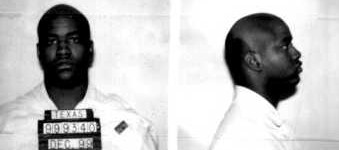
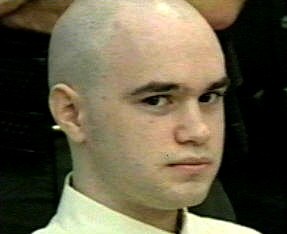
Geno Capoletti Wilson
Homicide Jack Kevorkian
Homicide · USA · 1990
Jack Kevorkian (born May 26, 1928) was a controversial American pathologist. He…
130 victims
Jack Kevorkian
Homicide · USA · 1990
Jack Kevorkian (born May 26, 1928) was a controversial American pathologist. He…
130 victims
 David Koresh
Homicide · USA · 1993
David Koresh (born Vernon Wayne Howell; August 17, 1959 – April 19, 1993) led t…
79 victims
David Koresh
Homicide · USA · 1993
David Koresh (born Vernon Wayne Howell; August 17, 1959 – April 19, 1993) led t…
79 victims
 Todd Hall
Homicide · USA · 1996
Todd Hall was described by neighbors as "mentally slow" and was said to have su…
9 victims
Todd Hall
Homicide · USA · 1996
Todd Hall was described by neighbors as "mentally slow" and was said to have su…
9 victims
 Joshua Jenkins
Homicide · USA · 1996
Joshua Jenkins was a 15-year-old American killer who killed five members of his…
5 victims
Joshua Jenkins
Homicide · USA · 1996
Joshua Jenkins was a 15-year-old American killer who killed five members of his…
5 victims
 Joan Vila Dilme
Serial killer · Spain · 2009
Joan Vila Dilme was a security guard and care-home worker at the La Caritat hom…
11 victims
Joan Vila Dilme
Serial killer · Spain · 2009
Joan Vila Dilme was a security guard and care-home worker at the La Caritat hom…
11 victims
 Dennis Rader
Serial killer · USA · 1974
Dennis Lynn Rader (born March 9, 1945) was an American serial killer who murder…
10 victims
Dennis Rader
Serial killer · USA · 1974
Dennis Lynn Rader (born March 9, 1945) was an American serial killer who murder…
10 victims
 Phil Spector
Murderer · USA · 2003
Harvey Phillip Spector (born December 26, 1939) was an American record producer…
1 victim
Phil Spector
Murderer · USA · 2003
Harvey Phillip Spector (born December 26, 1939) was an American record producer…
1 victim
 Demarco McCullum
Murderer · USA · 1994
Demarco Markeith McCullum was executed by lethal injection in Texas on November…
1 victim
Demarco McCullum
Murderer · USA · 1994
Demarco Markeith McCullum was executed by lethal injection in Texas on November…
1 victim
 Terrie Robinson
Murderer · USA · 2011
Terrie Robinson was a 25-year-old woman who pleaded guilty to the murder of her…
1 victim
Terrie Robinson
Murderer · USA · 2011
Terrie Robinson was a 25-year-old woman who pleaded guilty to the murder of her…
1 victim
- Gender
- male
- Country
- USA
- Location
- Harris County, Texas, USA
- Date of birth
- May 24, 1981
- Age at first offence
- 17
- Characteristics
- juvenile (17), robbery
- Victim profile
- An adult male
- Method of murder
- Shooting
- Date(s) of murder
- December 2, 1998
- Years active
- 1998
- Date of arrest
- —
- Status
-
Life imprisonment
Sentenced to death on December 29, 1999; commuted to life in prison on June 22, 2005
Case record
Name: Geno Capoletti Wilson TDCJ Number: 999340 Date of Birth: 05/24/1981 Date Received: 12/29/1999 Age at Receipt: 18 Education Level: 9 Race: Black Gender: Male Hair Color: Black Height: 5' 8" Weight: 215 Eye Color: Brown Native County: Native Native State: Prior occupation: Laborer Prior prison record: None County: Harris Race and Gender of Victim: Male; race unknown
The offence
On 12/02/98 on the streets of Houston, Texas, Wilson shot an adult male during a robbery attempt. The victim was reportedly selling bottles of cleaning solution on the street and was approached by Wilson and 3 black male companions. Wilson indicated he would buy a bottle of the cleaning solution, produced a handgun, and pointed it at the head of the victim, demanding cash. When the victim denied having any cash, Wilson shot him once in the back of the head.
Wilson also had one charge of Aggravated Robbery pending (involved car jacking a black male at gunpoint). Charges were no longer pursued after the sentencing phase of the present offense.
Investigation
Wilson’s interactions with Reverend Rogers Delaney were described during testimony at the punishment phase of trial.
During cross-examination, the prosecutor established that Delaney had been personally involved in appellant’s life and had attempted to ensure that appellant learn right from wrong and become a productive member of society.
Trial
Wilson was convicted in December 1999 of capital murder under Tex. Pen. Code Ann. § 19.03(a) (Vernon 1994). Pursuant to the jury’s answers to the special issues set forth in Texas Code of Criminal Procedure Article 37.071 sections 2(b) and 2(e), the trial judge sentenced appellant to death. Art. 37.071 § 2(g).
Direct appeal to the Court of Criminal Appeals of Texas was automatic under Art. 37.071 § 2(h).
Wilson raised three points of error but did not challenge the sufficiency of the evidence at either stage of trial. The Court affirmed.
Points of error: character witness cross-examination
In all of his points of error, Wilson complained that the trial court erred in allowing the prosecutor to ask a defense punishment witness, over objection, “did you know” questions about specific criminal acts which had not been proven before the jury. Wilson contended this violated his right to confront the witnesses against him as granted by the Sixth Amendment to the United States Constitution and his right to due process under the Fourteenth Amendment. Wilson asserted this error affected his substantial rights, including his substantial right to confront the witnesses against him and the substantial right to have the State meet its burden of proof on future dangerousness.
During the punishment phase, Wilson called Reverend Rogers Delaney to testify about his interactions with Wilson and about Wilson’s character in general. On cross-examination, Delaney responded that he was not aware of any of the incidents to which the prosecutor referred. Appellant did not object to any of these questions.
After the prosecutor asked Delaney if he knew that Wilson had driven a stolen car to the scene where he committed the capital murder, defense counsel requested to approach the bench and objected. The trial court overruled the objection.
Verbatim objection exchange: [DEFENSE COUNSEL:] This might be a delayed objection, but I'd like to object to any reference to a stolen car to the capital murder case. There's been no evidence - THE COURT: I understand that. I understand that. But there's nothing wrong with him asking this witness if he's heard about it. [DEFENSE COUNSEL:] But the manner in which the questions is [sic] phrased presupposes that the witness - not this witness obviously has not heard anything about the testimony [sic]. Neither has the jury. It's sort of like asking, "When did you stop beating your wife," which presupposes that you ever beat your wife. And there's been no evidence -
On re-cross, the prosecutor asked Delaney about alleged jail conduct. Specifically, the prosecutor asked whether Delaney knew that while in jail, Wilson had been charged with extortion in November of 1998. Appellant objected.
Verbatim exchange: [DEFENSE COUNSEL:] We're way outside the scope now of either cross-examination - direct, cross, redirect, we're way outside. This was not an alleged criminal act. And this witness obviously would have no way of having any information relative to that. He's already testified that - THE COURT: I understand. [DEFENSE COUNSEL:] And that's different from posing a question, now we're saying we have another crime allegedly. [THE COURT:] That he was charged with. I understand. I understand . And I wish there was a rule that said that the first direct and the cross and the redirect and the recross and the re-re and the re-re that would refine it. But we don't have a rule like that. So, at any rate as I understand your objection, it's overruled, sir.
The prosecutor resumed questioning Delaney regarding additional incidents of extortion for which Wilson was charged while in jail. Wilson objected again, and the trial court overruled the objection.
Verbatim exchange: [DEFENSE COUNSEL:] At this point I think we're badgering the witness. He's already testified that he has no knowledge about anything other than his limited involvement and the scope of his - I think the State at this time is badgering this man. And he doesn't deserve that. The trial court overruled appellant's objection.
Without further objections, the prosecutor finished asking Delaney a series of “did you know” questions concerning more charges that had been filed against Wilson while he was in jail.
Preservation and merits analysis on appeal
The Court held Wilson failed to preserve error for appellate review because he did not make a specific objection and obtain a ruling, and because the objection did not comport with the objection made at trial. The Court also held that, even if preserved, the claim was without merit.
The Court addressed the “did you know” questioning as cross-examination of a character witness, including legal principles regarding cross-examining character witnesses on specific instances of conduct and the requirement of relevance and a factual basis.
The Court described Delaney’s testimony on direct examination, including that Delaney testified he was surprised to learn that Wilson had just been convicted of capital murder and had a prior criminal history, and that Delaney testified that during the times that he was with Wilson, Wilson exhibited exceptional behavior.
On re-direct, Delaney responded to a question by Wilson’s attorney about whether Delaney still wished to associate with Wilson despite what had been asked by the State during cross-examination. Delaney answered:
Verbatim statement: “Geno is far above in my mind what I have heard going on here.”
The Court stated that because Delaney testified as to his opinion of Wilson, the State was entitled to test Delaney’s knowledge about specific instances of conduct involving Wilson by asking a series of “did you know” questions.
The Court discussed the claimed improper allowance of “did you know” questions about specific criminal acts that had not been proven before the jury, and concluded the claim was without merit.
Authorities quoted in the opinion
“inquiry is allowable” quote: Rule 405(a) stated: “inquiry is allowable” into relevant specific instances of conduct.
Federal Rule of Evidence 405(a) quotation: Rule 405(a) stated: “In all cases in which evidence of character or a trait of character of a person is admissible, proof may be made by testimony as to reputation or by testimony in the form of an opinion. On cross-examination, inquiry is allowable into relevant specific instances of conduct.”
Texas Evidence Rule 405 quotation: Rule 405 provides: “In all cases in which evidence of character or character trait is admissible, proof may be made by testimony as to reputation or by testimony in the form of an opinion. In a criminal case, to be qualified to testify at the guilt stage of trial concerning the character or character trait of an accused, a witness must have been familiar with the reputation, or with the underlying facts or information upon which the opinion is based, prior to the day of the offense. In all cases where testimony is admitted under this rule, on cross-examination inquiry is allowable into relevant specific instances of conduct.”
Opinion delivery and publication
The opinion was delivered March 20, 2002 and was published.
Sentencing
Pursuant to the jury’s answers to the special issues set forth in Texas Code of Criminal Procedure Article 37.071 sections 2(b) and 2(e), the trial judge sentenced Wilson to death. Art. 37.071 § 2(g).
Appeals
On direct appeal from Harris County, the Court of Criminal Appeals of Texas affirmed the judgment of the trial court.
Outcome
Wilson’s conviction was affirmed on direct appeal.
Aftermath
Wilson’s sentence was later commuted to life in prison. His status was: sentenced to death on December 29, 1999; commuted to life in prison on June 22, 2005.

Spotted an error, or have more information about this case?