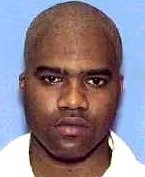
Oliver Newman
Murderer
1known / alleged victims
Similar offenders
 Lock Ah Tam
Murderer · United Kingdom · 1925
Lock Ah Tam was 54 when he killed his wife and two daughters. He had been a suc…
3 victims
Lock Ah Tam
Murderer · United Kingdom · 1925
Lock Ah Tam was 54 when he killed his wife and two daughters. He had been a suc…
3 victims
 Buck Ruxton
Murderer · United Kingdom · 1935
Buck Ruxton (21 March 1899, Bombay – 12 May 1936, Manchester) was also known as…
2 victims
Buck Ruxton
Murderer · United Kingdom · 1935
Buck Ruxton (21 March 1899, Bombay – 12 May 1936, Manchester) was also known as…
2 victims
FR
Frederick Field
Murderer · United Kingdom · 1931
Frederick Field Frederick Field worked for a firm of signboard fixers. He was s…
2 victims
PA
Patrick Carraher
Murderer · United Kingdom · 1934
Patrick Carraher was an alcoholic Glasgow brawler who was charged with murder o…
2 victims
 Walter Graham Rowland
Murderer · United Kingdom · 1934
Defendant: Walter Graham Rowland Age: 39 (labourer) Residence/Origin: from Mell…
2 victims
Walter Graham Rowland
Murderer · United Kingdom · 1934
Defendant: Walter Graham Rowland Age: 39 (labourer) Residence/Origin: from Mell…
2 victims
WA
Walter Prince
Murderer · United Kingdom · 1929
Walter Prince was a 32-year-old man. On May 5, 1934, the body of Harriet Shaw,…
2 victims
Random profiles
 John Sweeney
Murderer · United Kingdom · 1990
John Sweeney was a jobbing carpenter. He worked under assumed names on construc…
2 victims
John Sweeney
Murderer · United Kingdom · 1990
John Sweeney was a jobbing carpenter. He worked under assumed names on construc…
2 victims
 Jane LaMarsh
Murderer · Canada · 2009
Name: Jane LaMarsh Jane LaMarsh was a 50-year-old woman from Wallaceburg, Ontar…
2 victims
Jane LaMarsh
Murderer · Canada · 2009
Name: Jane LaMarsh Jane LaMarsh was a 50-year-old woman from Wallaceburg, Ontar…
2 victims
 Tronneal Mangum
Homicide · USA · 1997
Tronneal Mangum was a 14-year-old male. He was a student and became the younges…
1 victim
Tronneal Mangum
Homicide · USA · 1997
Tronneal Mangum was a 14-year-old male. He was a student and became the younges…
1 victim
 Thomas Brooks
Murderer · USA · 1993
Thomas Brooks, Jr. was convicted in the State of Missouri, Respondent, v. Thoma…
1 victim
Thomas Brooks
Murderer · USA · 1993
Thomas Brooks, Jr. was convicted in the State of Missouri, Respondent, v. Thoma…
1 victim
 Lisa Ann Coleman
Murderer · USA · 2004
Lisa Ann Coleman was a Black female born on 10/06/1975. She was 30 when her cas…
1 victim
Lisa Ann Coleman
Murderer · USA · 2004
Lisa Ann Coleman was a Black female born on 10/06/1975. She was 30 when her cas…
1 victim
 James Beauregard-Smith
Murderer · Australia · 1977
James Beauregard-Smith James George Beauregard-Smith was an Australian offender…
3 victims
James Beauregard-Smith
Murderer · Australia · 1977
James Beauregard-Smith James George Beauregard-Smith was an Australian offender…
3 victims
Case Facts
- Gender
- male
- Country
- United Kingdom
- Location
- Scratchwood, London, England, United Kingdom
- Date of birth
- 18 80
- Characteristics
- retaliation
- Victim profile
- Herbert William 'Pigsticker' Ayres, 45
- Method of murder
- Beating with an axe
- Date(s) of murder
- June 1, 1931
- Years active
- 1931
- Date of arrest
- —
- Status
-
Executed
Executed by hanging on August 5, 1931
Case Summary
Case identification
- Defendant: Oliver Newman
- Victim: Herbert William “Pigsticker” Ayres, 45-year-old casual labourer
- Other defendant: William “Moosh” Shelley, 57-year-old
- Place: Old Bailey; Scratchwood railway sidings (rubbish tip); Mill Hill, north-west London (rubbish dump)
Timeline
- 1st June 1931 — A man walking past a rubbish tip at Scratchwood railway sidings noticed a human arm sticking out of smouldering rubbish; the body was later identified as Herbert William “Pigsticker” Ayres.
- 30th May 1931 — John Armstrong said he had seen Ayres attacked by “Tiggy” and “Moosh”.
- 29th May 1931 — Detectives were told Ayres had been attacked by two men, William “Moosh” Shelley and Oliver “Tiggy” Newman.
- August 5, 1931 — Shelley and Newman were hanged after being convicted of murder.
- June 1931 — Shelley and Newman were tried at the Old Bailey.
Background
- Herbert William “Pigsticker” Ayres, aged 45, had been a casual labourer who had lived in a group of shacks by the sidings.
- There were tramps and “down-and-outs” who lived in shacks in a nearby disused lane.
- John Armstrong, who lived rough in the shacks, said he had seen Ayres attacked by two men known as “Tiggy” and “Moosh”.
The offence
- Herbert William “Pigsticker” Ayres was found with serious injuries.
- Sir Bernard Spilsbury concluded that Ayres had been dead for two or three days.
- Spilsbury concluded that death had been caused by a rectangular-shaped object that had fractured the man’s skull.
- The back of the axe found under the floor of Newman’s abode matched the impression in Ayres’s skull.
- The defendants said they had caught Ayres stealing food and had beaten him up “to teach him a lesson”.
- When they realised they had killed him, they buried the body.
- The pair set the dump alight as part of concealing the body.
Investigation
- On 1st June 1931, a human arm protruding from a burning rubbish dump at Mill Hill, north-west London was spotted, and the rest of the body was uncovered and identified as a man.
- His nose, left temple, and jaws were fractured, and he had obviously been beaten.
- The tell-tale hand protruding effect was described as resulting from heat contracting the muscles and extending the hand before rigor mortis set in.
- Police learned that 45-year-old Herbert “Pigsticker” Ayres had not been seen for two days, and the body was identified as his.
- Detectives were told that on May 29th Ayres had been attacked by two men: William “Moosh” Shelley, 57, and Oliver “Tiggy” Newman, 45.
- Another part of the timeline described John Armstrong seeing Ayres attacked on 30th May by two men known as “Tiggy” and “Moosh”.
- Sir Bernard Spilsbury examined the body and concluded that it was a case of murder.
- A search of the defendants’ shacks revealed a bloodstained axe under the floor of Newman’s abode.
Arrest
- “Tiggy” (61-year-old Oliver Newman) and “Moosh” (57-year-old William Shelley) were quickly arrested.
Trial
- Shelley and Newman were tried at the Old Bailey in June 1931.
- At trial, Shelley and Newman claimed that Ayres had grabbed a weapon and that his hand must have been bruised when they tried to knock the implement from his grasp.
- Sir Bernard Spilsbury told the court that Ayres’s fractures had been caused not by fists but by a weapon or kicks.
- It was stated that if Ayres had been holding a weapon, it would have taken more than one blow to cause the bruises on the back of his hand.
- The court was also told that the bruises had more probably been inflicted when Ayres placed his hand on his head to protect himself from a rain of blows.
- Both defendants were found guilty.
Sentencing
- Shelley and Newman were executed on 5th August 1931.
Appeals
- No appeals were stated.
Outcome
- Oliver Newman was convicted of murder and executed by hanging on 5th August 1931.
- Before Shelley’s execution, Shelley boasted that there were five more bodies buried in the rubbish tip.
Other details
- The record described the cause of death as being consistent with a rectangular-shaped object fracturing the victim’s skull.
- The record included a concealment method: burying the body and setting the dump alight.

Spotted an error, or have more information about this case?