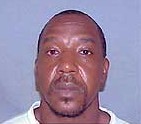
George Bernard Harris
Murderer Brian Kevin Rosenfeld
Murderer · USA · 1985
Brian Kevin Rosenfeld Brian Kevin Rosenfeld was sentenced to three concurrent l…
23 victims
Brian Kevin Rosenfeld
Murderer · USA · 1985
Brian Kevin Rosenfeld Brian Kevin Rosenfeld was sentenced to three concurrent l…
23 victims
 Yahweh ben Yahweh
Murderer · USA · 1980
Yahweh ben Yahweh was born and legally named Hulon Mitchell Jr. (October 27, 19…
23 victims
Yahweh ben Yahweh
Murderer · USA · 1980
Yahweh ben Yahweh was born and legally named Hulon Mitchell Jr. (October 27, 19…
23 victims
 Russell Ellwood
Murderer · USA · 1991
Russell Ellwood was a former taxi driver. Authorities suspected him of killing…
20 victims
Russell Ellwood
Murderer · USA · 1991
Russell Ellwood was a former taxi driver. Authorities suspected him of killing…
20 victims
 Robert Martines Perez
Murderer · USA · 1994
Name: Robert Martines Perez · Other name used in proceedings: Robert Martinez P…
15 victims
Robert Martines Perez
Murderer · USA · 1994
Name: Robert Martines Perez · Other name used in proceedings: Robert Martinez P…
15 victims
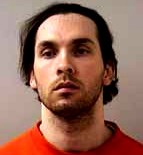 Ralph Swan
Murderer · USA · 1996
Ralph E. Swan was a White male born on 03/25/1971. He was sentenced to death on…
1 victim
Ralph Swan
Murderer · USA · 1996
Ralph E. Swan was a White male born on 03/25/1971. He was sentenced to death on…
1 victim
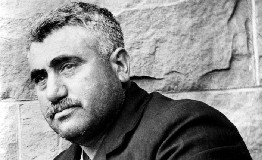 Emilio Picarielo
Murderer · Canada · 1922
Emilio Picariello was also known as Emileo Picariello and Emil Picariello. Emil…
1 victim
Emilio Picarielo
Murderer · Canada · 1922
Emilio Picariello was also known as Emileo Picariello and Emil Picariello. Emil…
1 victim
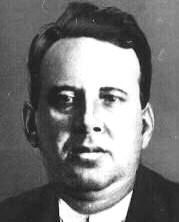 Sylvestre Matuschka
Mass murderer · Hungary · 1931
Sylvestre Matuschka (born 1892, date of death unknown) (in Hungarian publicatio…
22 victims
Sylvestre Matuschka
Mass murderer · Hungary · 1931
Sylvestre Matuschka (born 1892, date of death unknown) (in Hungarian publicatio…
22 victims
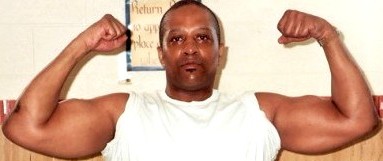 Cecil Emile Davis
Murderer · USA · 1997
Cecil Emile Davis was the appellant in State of Washington v. Cecil Emile Davis…
1 victim
Cecil Emile Davis
Murderer · USA · 1997
Cecil Emile Davis was the appellant in State of Washington v. Cecil Emile Davis…
1 victim
 Rahan Arshad
Murderer · United Kingdom · 2006
Rahan Arshad (born 1970) was a taxi driver. He lived at Turves Road, Cheadle Hu…
4 victims
Rahan Arshad
Murderer · United Kingdom · 2006
Rahan Arshad (born 1970) was a taxi driver. He lived at Turves Road, Cheadle Hu…
4 victims
 Sarah Malcolm
Murderer · United Kingdom · 1733
Sarah Malcolm was a powerfully built 22-year-old Irish laundress employed in th…
3 victims
Sarah Malcolm
Murderer · United Kingdom · 1733
Sarah Malcolm was a powerfully built 22-year-old Irish laundress employed in th…
3 victims
- Gender
- male
- Country
- USA
- Location
- Kansas City, Missouri, USA
- Date of birth
- February 9, 1959
- Age at first offence
- 30
- Characteristics
- revenge, armed robbery, convicted rapist
- Victim profile
- Stanley "Hank" Willoughby
- Method of murder
- Shooting ( .41 caliber Rugar Blackhawk magnum revolver)
- Date(s) of murder
- March 11, 1989
- Years active
- 1989
- Date of arrest
- 4 days after
- Status
-
Executed
Executed by lethal injection in Missouri on September 13, 2000
Case record
Identity
George Bernard Harris was the defendant in the case.
Background
Harris hit a lucky streak on the morning of March 11, 1989 by winning money shooting craps. People noticed the money and figured he had spare funds. Harris was born on February 9, 1959 in Newport, Arkansas.
At some point during the day Harris had been called a "punk" and told Michael Taylor that he was going to do a "drive-by" shooting to show "them" that he was not a punk.
Harris previously had felony convictions, and authorities called him the "top of his field." Defense attorneys said his previous convictions influenced the jury to find him guilty.
The offence
On March 11, 1989, Harris obtained and transported firearms and later used them in a fatal shooting of Stanley "Hank" Willoughby.
Harris arranged for a man who needed money to "pawn" two machine guns, an Uzi and a .45 caliber Thompson automatic machine gun. Harris agreed to the arrangement, gave the man $500 in return for the machine guns, and took them to the trunk of his car. Harris then walked back toward the crap game, worried someone would steal the guns from his car.
Harris asked Michael Taylor to keep the machine guns for him. After Taylor agreed, Harris followed Taylor to Taylor’s house with Rodney Butler, Ross Talliferro, and Stanley "Hank" Willoughby. When Harris arrived, Taylor asked Willoughby to come down to Harris’ car. Harris spoke to Willoughby, removed a box containing the machine guns from the trunk, and handed it to Willoughby. Willoughby walked toward the house with the weapons.
Rodney Butler was sitting on the porch and asked Willoughby not to bring the guns in the house. Willoughby handed the box containing the machine guns to Cortez and Anthony Taylor, who were Michael Taylor’s younger brothers. Willoughby told the boys to hide the guns somewhere near the house. Harris left.
Cortez and Anthony hid the box under some bushes in the backyard. The young Taylors left without telling Willoughby where they had hidden the guns.
At about 8:00 p.m., Harris returned looking for Michael Taylor. Butler answered the door and indicated that Taylor was upstairs sleeping. Harris went upstairs and told Taylor he had come to pick up the guns. When Taylor told him that he did not know where the guns were, Harris insisted that he needed them right away.
During the argument, Harris was heard to say: "I’m going to kill that nigger."
Four other people in the house went upstairs. Five minutes later, Willoughby returned without the guns and another man left to look for them. At that point, only three people remained on the living room area: Michael Taylor, George Harris, and Hank Willoughby. Willoughby told Harris that if he wanted his guns, he would have to wait until Anthony and Cortex came back. Harris insisted on getting his guns right away. Willoughby said: "Well, I can’t help you."
Harris got up from the chair and pulled a .41 caliber Rugar Blackhawk magnum revolver from his waistband. Harris shot Willoughby in the lower face and neck. The bullet passed through Willoughby’s carotid artery.
Willoughby staggered next door to Michael Taylor’s house and collapsed on the steps. A few minutes later, police and ambulance were called. Willoughby died before he reached the hospital.
Meanwhile, Butler returned with the guns, placed them on the porch, and ran inside. Harris took the guns and drove away, making his way to Sabrina Lowe’s apartment. From there, Harris and Lowe went to the Champagne Lounge looking for a man named "Rudi". Harris told Lowe he intended to kill Rudi and had bought the machine guns for that purpose.
Investigation
Law enforcement arrested Harris in Columbia, Missouri on March 15, 1989, after Harris and others had committed an armed robbery there.
Trial
The trial involved conflicting accounts of the shooting between Harris and Michael Taylor.
Harris testified on his own behalf at trial. Harris explained that during the argument Willoughby appeared to reach for his gun. Harris stated that he jumped up from his chair, moved sideways, and fired one shot in an effort to stop Willoughby, and no other shots were fired.
Michael Taylor acknowledged that Willoughby had been his best friend, and Taylor told a different version of events. Taylor testified that the shooting was unprovoked and sudden.
The police report identified several possible eyewitnesses to the shooting, but only Harris and Taylor appeared at trial. Ben Brown was in the house that evening and witnessed the shooting but was not contacted by Harris’s trial counsel and did not testify at Harris’s trial.
There was testimony at trial as to a drug house owned by Michael Taylor in Kansas City. The shooting took place in the living room of that drug house during the evening of March 11, 1989, during an argument between Harris and Willoughby regarding Willoughby’s failure to return a pair of guns owned by Harris.
After hearing eyewitness testimony only from George Harris and Michael Taylor, the jury found Harris guilty of first degree murder and sentenced him to death.
At trial, the jury found Harris guilty of Murder First Degree. On February 12, 1990, the jury returned a sentence of death for the murder of Stanley Willoughby.
Sentencing
Harris was sentenced to death by the circuit court judge on July 30, 1990.
Appeals
Harris filed a motion for postconviction relief on December 5, 1990. The Jackson County Circuit Court denied Harris’s motion for postconviction relief on January 15, 1992. The Missouri State Supreme Court affirmed the denial on February 22, 1992.
On October 17, 1994, the United States Supreme Court affirmed Harris’s judgment of conviction and sentence and affirmed the denial of Harris’s postconviction relief motion.
Harris filed a petition for writ of habeas corpus in the United States District court for the Western District of Missouri on October 28, 1994. The United States District court denied Harris’s petition for federal habeas relief on November 11, 1996. The United States District Court denied Harris’s petition for federal habeas relief again on July 13, 1999.
On August 31, 1999, the United States Court of Appeals for the Eighth Circuit denied Harris’s motion for rehearing and suggestions for en banc review. On May 9, 2000, the United States Court of Appeals for the Eighth Circuit denied Harris’s motion for rehearing or en banc.
On January 10, 2000, the United States Supreme Court declined to review Harris’s habeas petition.
On February 14, 2000, the United States Court of Appeals for the Eighth Circuit denied a motion to recall the mandate.
On March 23, 2000, the United States District Court denied Harris’s motion for relief from judgment.
On August 14, 2000, the Missouri State Supreme Court issued an order and warrant of execution setting September 13, 2000 as Harris’s execution date.
Outcome
Harris was executed by lethal injection in Missouri on September 13, 2000.
Other details
Harris’s case included clemency issues and arguments about premeditation and counsel.
Clemency petition summary included that Harris won money playing craps and used it to buy 2 machine guns. After giving them to a friend, Michael Taylor, for safekeeping, Harris came back later demanding the firearms. Stanley "Hank" Willoughby had assisted Taylor in hiding the firearms, and Willoughby was aided by two children. When Willoughby told Harris he did not know where the firearms were, the argument grew heated. Harris pulled a .41 revolver and shot Willoughby in the face.
Issues raised for clemency included: (1) Lack of premeditation, a requirement for capital punishment; Harris had no record of violent crime although he did have a record of property crimes; Harris expressed intent to kill the person who had insulted him; therefore the charge should have been less, without a death penalty; Harris claimed he feared Willoughby was threatening him. (2) Inadequate counsel: defense counsel should have produced the witnesses who could have corroborated Harris’s fear that Willoughby was threatening him and that he fired only one shot. (3) In an election year, clemency is less likely than in other years.
A petition for executive clemency statement included that Harris’s conviction arose from the shooting of Stanley Willoughby in the living room of a drug house owned by Michael Taylor in Kansas City. The shooting took place on the evening of March 11, 1989, during an argument between Harris and Willoughby regarding Willoughby’s failure to return a pair of guns owned by Harris.
The clemency material stated that the jury essentially had to choose between Michael Taylor’s version of the events and Harris’s, since neither side presented corroborating evidence or testimony, and that the crucial evidence to corroborate Harris’s testimony was available through Ben Brown, but Brown was not contacted by Harris’s trial counsel.
It also stated that Harris had exhausted all legal remedies available to him, therefore executive clemency was warranted.
An additional statement about execution date set for KC Man Convicted in Murder Case said that on Wednesday the Missouri Supreme Court set a Sept. 13 execution date for a Kansas City man convicted of murder. It said Harris was convicted for the 1989 slaying of Stanley Willoughby and was scheduled to be executed at the Potosi Correctional Center. The statement also said Harris was convicted in Jackson County on charges of first-degree murder and armed criminal action, and that Harris’s execution would be the first one involving a Jackson County case since Roy Ramsey Jr. was put to death on April 14, 1999.
It also stated that Harris was arrested four days after the shooting following the armed robbery of a Columbia grocery store, and that during his trial Harris admitted killing Willoughby but said it was in self-defense during an argument in a drug house, and that "I was afraid for my life" was Harris’s testimony.
Timeline
- February 26, 1976 — Harris was arrested in Kansas City, Missouri for Robbery First Degree.
- September 1976 — Harris was sentenced to eight years in the Missouri Department of Corrections.
- March 11, 1989 — Harris murdered Stanley "Hank" Willoughby in Kansas City, Missouri.
- March 15, 1989 — Law enforcement arrested Harris in Columbia, Missouri after Harris and others had committed an armed robbery there.
- April 26, 1989 — Harris was arrested in Columbia, Missouri, for Robbery First Degree and Armed Criminal Action.
- February 12, 1990 — The jury returned a sentence of death for the murder of Stanley Willoughby.
- October 2, 1989 — Harris was sentenced to twelve and three year concurrent sentences in the Missouri Department of Corrections.
- March 19, 1982 — Harris was arrested in Columbia, Missouri, for a Murder First Degree charge from the incident that occurred on March 11, 1989 in Kansas City, Missouri.
- February 12, 1990 — Harris was convicted of Murder First Degree and sentenced to death.
- 3/22 — Harris was indicted on one count of Murder First Degree and one count of Armed Criminal Action in the Jackson County Circuit Court.
- 2/5 — Harris' trial began in the Jackson County Circuit Court.
- 2/10 — The jury found Harris guilty of Murder First Degree.
- 7/30 — Harris is sentenced to death by the circuit court judge.
- 12/5 — Harris filed a motion for postconviction relief.
- January 15, 1992 — The Jackson County Circuit Court denied Harris' motion for postconviction relief.
- February 22, 1992 — The Missouri State Supreme Court affirmed Harris' motion for postconviction relief.
- October 17, 1994 — The United State Supreme Court affirmed Harris' judgement of conviction and sentence and affirmed the denial of Harris' postconviciton relief motion.
- October 28, 1994 — Harris filed a petition for writ of habeas corpus in the United State District court for the Western District of Missouri.
- November 11, 1996 — The United State District court denied Harris' petition for federal habeas relief.
- July 13, 1999 — The United States District Court denied Harris' petition for federal habeas relief.
- August 31, 1999 — The United States Court of Appeals for the Eighth Circuit denied Harris' motion for rehearing and suggestions for en banc review.
- January 10, 2000 — The United States Supreme Court declined to review Harris' habeas petition.
- February 14, 2000 — The United States Court of Appeals for the Eighth Circuit denies motion to recall the mandate.
- March 23, 2000 — The United States District Court denies Harris' motion for relief from judgement.
- May 9, 2000 — The United States Court of Appeals for the Eighth Circuit denies motion for rehearing or en banc.
- August 14, 2000 — The Missouri State Supreme Court issues order and warrant of execution setting September 13, 2000, as Harris' execution date.
- September 13, 2000 — Harris was executed by lethal injection in Missouri.
Spotted an error, or have more information about this case?