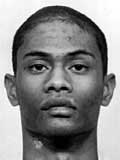
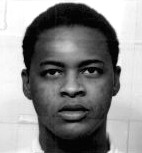
Ponchai Wilkerson
Murderer Brian Kevin Rosenfeld
Murderer · USA · 1985
Brian Kevin Rosenfeld Brian Kevin Rosenfeld was sentenced to three concurrent l…
23 victims
Brian Kevin Rosenfeld
Murderer · USA · 1985
Brian Kevin Rosenfeld Brian Kevin Rosenfeld was sentenced to three concurrent l…
23 victims
 Yahweh ben Yahweh
Murderer · USA · 1980
Yahweh ben Yahweh was born and legally named Hulon Mitchell Jr. (October 27, 19…
23 victims
Yahweh ben Yahweh
Murderer · USA · 1980
Yahweh ben Yahweh was born and legally named Hulon Mitchell Jr. (October 27, 19…
23 victims
 Russell Ellwood
Murderer · USA · 1991
Russell Ellwood was a former taxi driver. Authorities suspected him of killing…
20 victims
Russell Ellwood
Murderer · USA · 1991
Russell Ellwood was a former taxi driver. Authorities suspected him of killing…
20 victims
 Robert Martines Perez
Murderer · USA · 1994
Name: Robert Martines Perez · Other name used in proceedings: Robert Martinez P…
15 victims
Robert Martines Perez
Murderer · USA · 1994
Name: Robert Martines Perez · Other name used in proceedings: Robert Martinez P…
15 victims
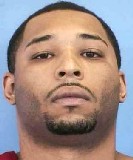 Marlon Howell
Murderer · USA · 2000
Name: Marlon Howell Status: Sentenced to death on March 30, 2001 · May 15, 2000…
1 victim
Marlon Howell
Murderer · USA · 2000
Name: Marlon Howell Status: Sentenced to death on March 30, 2001 · May 15, 2000…
1 victim
 Sergey Martynov
Serial killer · Russia (from Vladimir Region to Yekaterinburg) · 1992
Sergey Martynov (also spelled as Sergei Martynov, born in 1962) was suspected o…
9 victims
Sergey Martynov
Serial killer · Russia (from Vladimir Region to Yekaterinburg) · 1992
Sergey Martynov (also spelled as Sergei Martynov, born in 1962) was suspected o…
9 victims
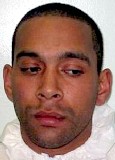 Wayne Edwards
Murderer · United Kingdom · 2009
Wayne Edwards was 33 years old and lived with his grandfather, Paul Peters, in…
1 victim
Wayne Edwards
Murderer · United Kingdom · 2009
Wayne Edwards was 33 years old and lived with his grandfather, Paul Peters, in…
1 victim
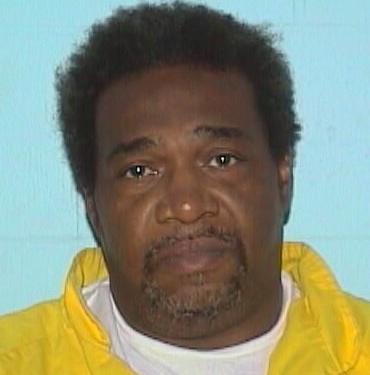 Milton Johnson
Serial killer · USA · 1983
Milton Johnson was an Illinois native born in 1951. He was convicted at age 19…
10 victims
Milton Johnson
Serial killer · USA · 1983
Milton Johnson was an Illinois native born in 1951. He was convicted at age 19…
10 victims
 Amanda Kelly
Murderer · Australia · 2012
Amanda Kelly was sentenced to life in prison with a 14-year minimum on December…
1 victim
Amanda Kelly
Murderer · Australia · 2012
Amanda Kelly was sentenced to life in prison with a 14-year minimum on December…
1 victim
- Gender
- male
- Country
- USA
- Location
- Harris County, Texas, USA
- Date of birth
- J uly 15, 1971
- Age at first offence
- 19
- Characteristics
- jewelry store robbery, robbery
- Victim profile
- Chung Myong Yi, 43 (store owner)
- Method of murder
- Shooting
- Date(s) of murder
- November 28, 1990
- Years active
- 1990
- Date of arrest
- —
- Status
-
Executed
Executed by lethal injection in Texas on March 14, 2000
Overview
Ponchai Wilkerson was executed by lethal injection in Texas on March 14, 2000. He was convicted of capital murder in connection with a robbery at the Royal Gold Jewelry Store in Houston, Texas, on Nov. 28, 1990.
Timeline
- Nov. 5, 1990 — Ponchai Wilkerson and Wilton Bethony assaulted and robbed Anthony Jolivet of his vehicle at gunpoint in a self-serve car wash.
- Nov. 13, 1990 — Wilkerson, Bethony, Kenneth Joseph, and Eddie Bolden stole Carolyn Cangemi's Suburban and drove it back to Wilkerson's apartment.
- Nov. 18, 1990 — Wilkerson and Bethony burglarized CoCo's Fashions by driving a vehicle into the front of the store and through the burglar bars, escaping with approximately $10,000 worth of merchandise.
- Nov. 19, 1990 — Wilkerson, Bethony, Joseph, and Bolden located, and Bethony stole, Bernard Sezon's Plymouth Voyager.
- Nov. 20, 1990 — Wilkerson drove into the Fondren Glen Apartments at approximately 4:30 p.m. searching for a person who had pulled a gun on Bolden earlier, then shot at Jimmy Johnson and Jarrode Turner; Wilkerson hit both young boys as they ran away, and 13-year-old Kesia Nealy, walking home from school, was struck by a bullet one inch from her heart.
- Nov. 20, 1990 — Wilkerson, Bethony, and Bolden drove a vehicle through the front of the Alamo Gun Store and threw $7,000 worth of guns into the van; some guns were recovered from Wilkerson's apartment, some were used in later crimes, and others were sold on the street for $100 each.
- Nov. 23, 1990 — In a Buick Regal they had previously stolen, Wilkerson and Bethony entered the Westwood Village apartments parking lot around 10 p.m.; Bethony fired a semi-automatic weapon into the apartments and vehicles, fatally shot Bobby Holley twice in the back, and shot James McGowen as he ran away; after Bethony's gun ran out of bullets, Wilkerson opened fire randomly with another semi-automatic weapon, and then both drove off.
- Nov. 24, 1990 — Wilkerson and a companion drove into the parking lot of the Breckenridge apartments just after midnight, fired without provocation using at least two of the same weapons used in the Westwood Village shooting, and 29 shell casings and 35 bullet holes were recovered at the scene.
- Nov. 25, 1990 — Wilkerson and at least one accomplice burglarized Collectors' Firearms of 86 weapons worth approximately $40,000.
- Nov. 28, 1990 — Wilkerson and Wilton Bethony entered the Royal Gold Jewelry Store in Houston, Texas, and Wilkerson shot and killed store owner Chung Myong Yi during the robbery.
- July 16, 1991 — A jury found Wilkerson guilty of capital murder.
- July 26, 1991 — The trial court sentenced Wilkerson to death.
- March 23, 1994 — The Texas Court of Criminal Appeals affirmed the conviction and sentence.
- Dec. 12, 1994 — The United States Supreme Court denied certiorari review.
- Dec. 29, 1994 — Wilkerson filed an application for habeas corpus relief with the convicting court.
- Sept. 13, 1995 — The Court of Criminal Appeals agreed with the trial court recommendation to deny habeas corpus relief.
- Oct. 31, 1995 — Wilkerson filed a petition for federal habeas corpus relief in federal district court.
- May 1, 1996 — Relief was denied on Wilkerson's federal habeas corpus petition.
- Aug. 18, 1999 — The United States Court of Appeals for the Fifth Circuit denied Wilkerson permission to appeal.
- Jan. 18, 2000 — The United States Supreme Court denied certiorari review.
- Feb. 21, 2000 — Wilkerson and another death row inmate, Howard Guidry, took Texas Department of Criminal Justice guard Jeanette Bledsoe hostage at knife-point for approximately 13 hours.
- Feb. 22, 2000 — Bledsoe was released after the inmates were allowed to meet with anti-death penalty activists at the Terrell Unit in Livingston, Texas.
- March 14, 2000 — Wilkerson was executed by lethal injection in Texas; he was pronounced dead at 6:24 p.m.
- March 15, 2000 — AP described the execution including Wilkerson spitting out a universal handcuff and leg restraint key.
Background
Ponchai Wilkerson was convicted and sentenced to death for the Nov. 28, 1990, robbery-shooting of Chung Myong Yi, a jewelry store owner in Houston, Texas. The case involved Wilkerson's participation in a month-long crime spree in 1990.
During the punishment phase of the trial, the State presented evidence of Wilkerson's involvement in a crime spree in 1990. Wilkerson had an auto theft conviction before November 1990, and in Aug. 1990 he pleaded guilty to unauthorized use of a motor vehicle and was sentenced to three years deferred adjudication and given probation. His probation officer testified that Wilkerson failed to report after his initial interview.
Wilkerson later attempted an escape from death row in 1998 and held a prison guard hostage for 13 hours in February 2000.
The offence
Royal Gold Jewelry Store robbery and killing (Nov. 28, 1990)
On Nov. 28, 1990, Ponchai Wilkerson and his companion, Wilton Bethony, entered the Royal Gold Jewelry Store in Houston, Texas, following a month-long crime spree. While Bethony was looking at rings, Wilkerson purchased a $35 pendant from store owner Chung Myong Yi. At that time, Bethony's friend, Chris Jones, entered the store. Jones later testified that he and Bethony spoke while Bethony continued looking at rings and Wilkerson stood nearby.
After Bethony bought two rings, Wilkerson exited the store for the first time and told Bethony he was going to a nearby leather store. Wilkerson returned to the store almost immediately, picked up the car keys he had left on the counter, and exited again. Wilkerson returned a second time, one or two minutes later, stood behind Bethony, and pulled a gun from under his jacket. Without saying a word, Wilkerson shot and killed Yi across the counter.
The medical examiner later found that Wilkerson's Glock pistol had been fired from within 12 inches of Yi's temple. Wilkerson and Bethony then smashed the jewelry cases and seized the rings and necklaces inside. Jones ran to the business next door and asked them to hide him because he had just witnessed the store owner next door being shot. While Jones hid in the bathroom, Alan Krizan stepped outside and witnessed two men running from the jewelry store carrying black boxes with chains hanging out of them. Krizan identified Wilkerson as one of the men he saw running from the store. Wilkerson and Bethony loaded the stolen jewelry into a car and drove away.
Wilkerson and Bethony robbed the store and then fled with jewelry. Wilkerson never denied the shooting but contended he fired after becoming alarmed by the jeweler's movements behind the counter. At trial, Wilkerson testified that the murder was not committed in self-defense nor was it an accident.
Evidence regarding attempted defenses
Wilkerson testified that the murder was not committed in self-defense and was not an accident. He did not deny shooting Yi during the robbery and contended that he fired after becoming alarmed by the victim's movements behind the counter.
Investigation
The medical examiner found that Wilkerson's Glock pistol had been fired from within 12 inches of Yi's temple.
Witnesses testified about the events at the store. Chris Jones identified Wilkerson as being involved, and a separate witness, Alan Krizan, identified Wilkerson as running from the store after the killing.
Arrest
The provided record contained no details of Wilkerson's arrest.
Trial
Wilkerson was indicted in Harris County, Texas, for the capital murder of Chung Myong Yi during the course of committing the offense of robbery.
Wilkerson was tried before a jury upon a plea of not guilty in the 184th Judicial District Court of Harris County, Texas.
During the trial, Wilkerson testified that the murder was not committed in self-defense nor was it an accident. He contended that he did not deliberately or intentionally kill anyone and argued that the case was not a capital case.
On July 16, 1991, the jury found him guilty of capital murder.
The trial court sentenced Wilkerson on July 26, 1991, in accordance with Texas law, to death.
During the punishment phase of the trial, the State presented evidence of Wilkerson's involvement in a crime spree in 1990, which included multiple auto thefts, robberies, burglaries, and drive-by shootings.
Sentencing
On July 26, 1991, in accordance with Texas law, the trial court sentenced Wilkerson to death.
Appeals
Because Wilkerson was sentenced to death, appeal to the Texas Court of Criminal Appeals was automatic.
The Court of Criminal Appeals affirmed the conviction and sentence on March 23, 1994.
The United States Supreme Court denied certiorari review on Dec. 12, 1994.
Wilkerson filed an application for habeas corpus relief with the convicting court on Dec. 29, 1994. The trial court recommended that relief be denied, and the Court of Criminal Appeals agreed on Sept. 13, 1995.
On Oct. 31, 1995, Wilkerson filed a petition for federal habeas corpus relief in federal district court, and relief was denied on May 1, 1996.
The United States Court of Appeals for the Fifth Circuit denied Wilkerson permission to appeal on Aug. 18, 1999, and the United States Supreme Court denied certiorari review on Jan. 18, 2000.
Outcome
Wilkerson was executed by lethal injection in Texas on March 14, 2000, and he was pronounced dead at 6:24 p.m.
Execution details and last statement
As lethal drugs began taking effect, Wilkerson spit out a key that was described as a universal handcuff and leg restraint key. James Brazzil, a chaplain who stood next to Wilkerson in the death chamber, said: "The secret, as of Wilkerson," mumbled Wilkerson as lethal chemicals flowed and he spat out the key.
Texas Department of Criminal Justice spokesman Larry Fitzgerald described the key as an inch-and-a-half universal handcuff and leg restraint key, and he said it was unknown how Wilkerson got it.
ABCNews.com reported that a warden, Neill Hodges, picked up the key after it fell onto the side of Wilkerson's face.
AP reported that Wilkerson declined a final statement earlier, but as lethal chemicals flowed he spit out the key. AP also reported that Wilkerson had been strapped tightly on a gurney and that he had struggled with prison guards all day, refusing to leave his holding cell near the death chamber.
APNews.com and other reporting in the provided record described the time line before death as Wilkerson being moved from the Terrell Unit in Livingston to the Walls Unit in downtown Huntsville, about 40 miles away. Wilkerson had refused to leave his cell and guards used a Mace-like gas on him. The record described him struggling with guards in the hallway outside his cell shortly after noon, requiring him to be carried to and from the van for the drive to Huntsville. Prison officials also reported he refused to select a final meal and refused to tell prison officials how they should dispose of his body.
The Houston Chronicle reported that when Hodges asked Wilkerson whether he had anything to say when asked earlier, Wilkerson responded: "This is not a capital murder case. That's all I have to say."
Resistance on execution date
The record described that Wilkerson refused to leave his holding cell near the death chamber and had to be restrained with additional restraining bands and shackles. It also described that after guards attempted to take him from his cell, Wilkerson had to be carried to and from the van, and extra restraints were used to strap him to the gurney in the chamber.
Aftermath
After Wilkerson was executed, prison officials investigated how he came to possess the key used to open handcuffs and leg restraints.
Other details
Wilkerson's month-long crime spree in 1990 (as presented during punishment phase)
The State presented evidence of Wilkerson's involvement in a crime spree in 1990 that included:
- Automobile thefts and probation status: After pleading guilty to unauthorized use of a motor vehicle in Aug. 1990, Wilkerson received three years deferred adjudication and probation, and his probation officer testified he failed to report after the initial interview.
- Assault and robbery of Anthony Jolivet (Nov. 5, 1990): Wilkerson and Wilton Bethony assaulted and robbed Anthony Jolivet of his vehicle at gunpoint in a self-serve car wash.
- The stolen Suburban and acquisition of a shotgun and ski hat (Nov. 13, 1990): Wilkerson, Bethony, Kenneth Joseph, and Eddie Bolden stole Carolyn Cangemi's Suburban and drove it back to Wilkerson's apartment; after assembling in the stolen Suburban, the group proceeded to a friend's house to acquire a 20-gauge shotgun and a ski hat full of shells.
- Robbery of Zahir Ali’s store (Nov. 13, 1990): Wilkerson and Bethony decided to rob the neighborhood Shop and Get owned by Bolden's friend Zahir Ali. Despite Bolden's refusal to participate, Wilkerson carried an automatic pistol and Bethony carried a shotgun to rob Ali's store. Ali survived being shot in the chest by Bethony with the shotgun.
- Burglary of CoCo's Fashions (Nov. 18, 1990): Wilkerson and Bethony burglarized CoCo's Fashions by driving a vehicle into the front of the store and through the burglar bars; they escaped with approximately $10,000 worth of merchandise.
- Plymouth Voyager theft (Nov. 19, 1990): Wilkerson, Bethony, Joseph, and Bolden located and Bethony stole Bernard Sezon's Plymouth Voyager.
- Shooting at Fondren Glen Apartments (Nov. 20, 1990): Wilkerson stopped exiting a parking lot, turned down the radio, and said to Jimmy Johnson and Jarrode Turner: "You talking to me?" When they responded they were not, he started shooting at them. Wilkerson hit both young boys and also shot 13-year-old Kesia Nealy, who was walking home from school, one inch from her heart. The record reported Wilkerson did not express regret or remorse and called a friend to tell her to watch the news for it.
- Alamo Gun Store incident (Nov. 20, 1990): Wilkerson, Bethony, and Bolden drove a vehicle through the front of the Alamo Gun Store, threw $7,000 worth of guns into the van, drove away, and later some guns were recovered from Wilkerson's apartment while others were used in later crimes or sold for $100 each.
- Westwood Village apartments shooting (Nov. 23, 1990): In a stolen Buick Regal, Bethony declared "let's get it on LA style," fired into apartments and vehicles, fatally shot Bobby Holley twice in the back, and shot James McGowen as he ran away. After Bethony's gun ran out of bullets, Wilkerson opened fire randomly. The pair then drove away.
- Breckenridge apartments shooting (Nov. 24, 1990): Wilkerson and a companion drove into the Breckenridge apartments just after midnight, fired into the apartments using at least two of the same weapons used in the Westwood Village shooting, and 29 shell casings and 35 bullet holes were recovered.
- Collectors' Firearms burglary (Nov. 25, 1990): Wilkerson and at least one accomplice burglarized Collectors' Firearms of 86 weapons worth approximately $40,000.
- Timing relative to the jewelry store robbery: Wilkerson and Bethony robbed the Royal Gold Jewelry Store four days after the Collectors' Firearms burglary.
Other criminal events referenced during the death row period
- Escape attempts and hostage situation on death row: The record described that Wilkerson was involved in two escape attempts and a hostage situation while on death row.
- Thanksgiving night 1998 escape attempt: The record described that on Thanksgiving night 1998, Wilkerson and six other condemned prisoners fled their cells; one convict, Martin Gurule, managed to escape but later drowned in a nearby river/creek about a mile from the prison. Wilkerson and five others turned back after guards began shooting at them.
- February 2000 hostage incident: The record described that on Feb. 21, 2000, Wilkerson and another death row inmate, Howard Guidry, took Texas Department of Criminal Justice guard Jeanette Bledsoe hostage at knife-point for approximately 13 hours, released her on Feb. 22, and allowed the inmates to meet with anti-death penalty activists at the Terrell Unit in Livingston, Texas.
- Reference to Wessie Scyrus / Njeri Shakur contempt sentence: The record contained an incident where State District Court Judge Jan Krocker sentenced Wessie Scyrus, also known as Njeri Shakur, to 30 days in jail for her courtroom outburst over the setting of Wilkerson's execution date. The record reported that Krocker gave Scyrus 48 hours to report to the Harris County jail to begin her sentence for contempt, described arguments made by Scyrus and her attorney Martin Mayne, and included quotes by Scyrus and others. The record also reported that Scyrus said she didn't believe her actions disrupted the court and included Scyrus's quote: "What I exhibited was passion and pain. I responded out of human emotion. I said what was true. I can't regret that," and quoted her attorney as saying: "30 days is a lot of time in jail. It's a serious sentence. I don't think jail time was that necessary. It was put on television. (Krocker) felt the need to counter the activity that was broadcast. It made the frontier for this thing much larger."
- Reference to Howard Guidry and other activists during the hostage situation: The record described that after 13 hours Bledsoe was released when prison officials agreed to let Wilkerson and Guidry talk to several activists, including Kofi Taharka, chairman of the Houston chapter of the National Black United Front, and described Wilkerson and Guidry meeting with activists at the Terrell Unit.
Wilkerson's clemency application
Wilkerson submitted a Petition for Executive Clemency to the Texas Board of Pardons and Paroles on February 22, 2000. The petition included a statement that he was scheduled to be murdered by Gov. George Bush and the State of Texas in 21 days on March 14. It also included Wilkerson's claims regarding counsel and sentencing. Verbatim excerpts included:
"I am scheduled to be murdered by Gov. George Bush and the State of Texas in 21 days, on March 14. This is an appeal for clemency presented by Ponchai “Kamau” Wilkerson and his friends, supporters and activists in the Texas Death Penalty Abolition Movement, at the SHAPE Community Center, and the National Black United Front, Houston Chapter. I am presenting this appeal myself, through death-penalty abolitionists in Houston, because my attorney, Troy McKinney, has refused to file for me."
The petition further stated:
"The state must not be allowed to murder me for the following reasons: Like 90 percent of those on death row, I could not afford to hire my own attorney. I had incompetent counsel who did not make any objections to actions during my trial. There was nothing honorable or just or noble about the way I was sentenced."
The petition then included Wilkerson's statements about alleged issues during trial, including the jury foreperson being a friend of one of the prosecution's main witnesses, and the prosecutor positioning his body during crime demonstrations. Wilkerson also requested executive clemency and argued for an immediate moratorium on executions.
Final statement included in the provided record
The record contained a “Final Statement of Ponchai Wilkerson” and also contained multiple verbatim claims. It included the following verbatim passage:
"Me, Ponchai Wilkerson, I'm not innocent of all wrong doing but I am most surely NOT guilty of capital murder. I did not deliberately or intentionally kill anyone nor did I rob them of their merchandise. This is not a capital case. My case derserves another trial. Prosecutorial misconduct warrants it."
It also included:
"During trial as I gave testimony, and upon instruction of the prosecutor, rising before the jury and demonstrating my actions (what exactly took place) the prosecutor was allowed to approach me, grab hold and position my body to his liking, take my arms himself and move them about in motions to fit his ill conceived, fabricated version of the incident. As I protested and moved to re- demonstrate for the jury what actually and factually happened, I was instructed then to seat myself back down."
And included:
"The state plans to murder me now. This small act of misconduct is crucial in whatever fate lies ahead of me. I did not deliberately nor did I ever (not for one minute, not one second), have any intent to kill anyone."
The record also included the line:
"Ponchai Wilkerson, March 6, 2000, Texas"
Spotted an error, or have more information about this case?