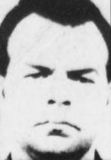
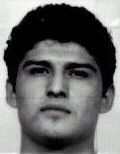
Elmo Patrick Sonnier
Murderer Ervil LeBaron
Murderer · USA · 1972
Ervil Morrell LeBaron (1925 to August 16, 1981) was the leader of a polygamous…
35 victims
Ervil LeBaron
Murderer · USA · 1972
Ervil Morrell LeBaron (1925 to August 16, 1981) was the leader of a polygamous…
35 victims
 Brian Kevin Rosenfeld
Murderer · USA · 1985
Brian Kevin Rosenfeld Brian Kevin Rosenfeld was sentenced to three concurrent l…
23 victims
Brian Kevin Rosenfeld
Murderer · USA · 1985
Brian Kevin Rosenfeld Brian Kevin Rosenfeld was sentenced to three concurrent l…
23 victims
 Marvin Gray
Murderer · USA · 1975
Marvin Gray was convicted killer who claimed responsibility for 23 slayings and…
23 victims
Marvin Gray
Murderer · USA · 1975
Marvin Gray was convicted killer who claimed responsibility for 23 slayings and…
23 victims
 Yahweh ben Yahweh
Murderer · USA · 1980
Yahweh ben Yahweh was born and legally named Hulon Mitchell Jr. (October 27, 19…
23 victims
Yahweh ben Yahweh
Murderer · USA · 1980
Yahweh ben Yahweh was born and legally named Hulon Mitchell Jr. (October 27, 19…
23 victims
 Richard Wayne Jones
Murderer · USA · 1986
Richard Wayne Jones was born on April 9, 1960. He was executed at age 40 and wa…
1 victim
Richard Wayne Jones
Murderer · USA · 1986
Richard Wayne Jones was born on April 9, 1960. He was executed at age 40 and wa…
1 victim
 Elijah Page
Murderer · USA · 2000
Elijah Page was executed by lethal injection in South Dakota on July 11, 2007.…
1 victim
Elijah Page
Murderer · USA · 2000
Elijah Page was executed by lethal injection in South Dakota on July 11, 2007.…
1 victim
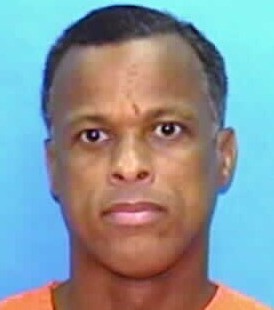 Jacob Dougan
Murderer · USA · 1974
Jacob Dougan was indicted for First-Degree Murder and was convicted and sentenc…
1 victim
Jacob Dougan
Murderer · USA · 1974
Jacob Dougan was indicted for First-Degree Murder and was convicted and sentenc…
1 victim
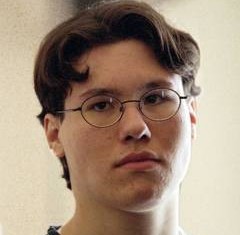 Seth Privacky
Mass murderer · USA · 1998
Seth Privacky (June 2, 1980 - July 15, 2010) was sentenced to life in prison wi…
5 victims
Seth Privacky
Mass murderer · USA · 1998
Seth Privacky (June 2, 1980 - July 15, 2010) was sentenced to life in prison wi…
5 victims
 Stephen Moody
Murderer · USA · 1991
Stephen Lindsey Moody was convicted and sentenced to death for the robbery and…
1 victim
Stephen Moody
Murderer · USA · 1991
Stephen Lindsey Moody was convicted and sentenced to death for the robbery and…
1 victim
- Gender
- male
- Country
- USA
- Location
- St. Martin Parish, Louisiana, USA
- Date of birth
- February 21, 1951
- Age at first offence
- 26
- Characteristics
- rape
- Victim profile
- Loretta Ann Bourque, 18, and David LeBlanc, 16
- Method of murder
- Shooting ( 22-caliber rifle )
- Date(s) of murder
- November 5, 1977
- Years active
- 1977
- Date of arrest
- December 5, 1977
- Status
-
Executed
Executed by electrocution in Louisiana on April 5, 1984
Case identification
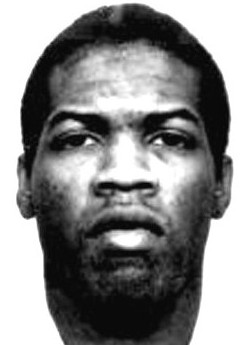
Elmo Patrick Sonnier (February 21, 1951 - April 5, 1984) was executed by electrocution in Louisiana on April 5, 1984.
STATUS and sentence
Sonnier was sentenced to death based on convictions of first degree murder.
The offence
On the evening of November 4, 1977, David LeBlanc, age 16, and Loretta Ann Bourque, age 18, attended a high school football game. Later that evening, the couple parked in a remote area of St. Martin Parish, described as a “lover's lane.”
At approximately one o'clock A.M. (now November 5), Sonnier and his brother, Eddie James Sonnier, who were rabbit hunting together, came across the couple’s car. Using a badge that one of the brothers had obtained while working as a security guard, and both armed with 22-caliber rifles, the two posed as police officers and approached and entered LeBlanc’s car.
The victims were informed that they were trespassing and would have to be brought to the landowner to determine if the landowner desired to press charges. The two victims’ driver’s licenses were confiscated. The victims were then handcuffed and placed in the back seat of their own car. The Sonnier brothers left their own car behind and drove the couple twenty-one miles to a remote oilfield located in Iberia Parish, an area described as known to the defendants.
At the oilfield, both victims were removed from the car. David LeBlanc was taken into the woods and handcuffed to a tree. Loretta Bourque was taken a short distance away and raped by Elmo Sonnier. She then agreed to have intercourse with Eddie Sonnier on the condition that they would safely release her and Mr. LeBlanc afterwards.
Upon completion of the rapes, the victims were unhandcuffed and brought back toward the road where the car was parked. At that point, Elmo Sonnier told his brother that they could not let the couple go because, if the victims talked, it would mean he (Elmo) would have to be sent back to Angola. David LeBlanc and Loretta Bourque were then forced to lie side by side, face down, and were each shot three times at close range in the back of the head.
Victim count
Sonnier’s convictions related to the murders of two victims: Loretta Bourque and David LeBlanc.
Additional alleged conduct and evidence described
After the shootings, the brothers drove the victims’ vehicle back to the original site where the couple was first accosted in order to pick up their own car. Finding their car with a flat tire, they used a jack from the LeBlanc vehicle to apply a spare tire. The jack was later seized by police from the trunk of Sonnier’s car. The brothers destroyed the victims’ driver’s licenses and buried the rifles the following day in another separate remote area.
Investigation revealed that between thirty and forty dollars that had been in the victims’ possession prior to the abduction could not be accounted for.
Investigation
Police later recovered the two rifles used in the murders, based on direction from Elmo Sonnier.
Ballistics testing indicated that one bullet taken from one of the victim’s head and four brass casings found at the scene had positively been fired from the rifle belonging to Elmo Sonnier. Because of excessive damage, the other five bullets that were recovered could only be identified as having been fired from the same model, brand and caliber rifle as that belonging to the defendants.
The handcuffs used in the abduction were later recovered from Elmo Sonnier’s bedroom.
The State produced a witness who testified that he had seen the defendants’ blue 1961 Dart at the place where the abduction occurred during the early morning hours of November 5, 1977.
Arrest and confessions
The Sonnier brothers were arrested on December 5, 1977 following a tip from a local man who reported seeing the Sonnier’s 1961 blue-colored Dodge Dart parked in the remote area during the early morning hours of November 5. Sonnier was advised of his rights and taken to the Sheriff’s Office in New Iberia, Louisiana.
While there, Elmo Patrick Sonnier gave verbal and written confessions. He was then transferred to a parish prison in an adjacent parish. During transport, he made other statements. The following day, he agreed to a videotaped confession. All three statements indicated that he participated in the abduction of the victims and had personally shot them.
Trial
Charges and indictment
The defendant and his brother were jointly indicted on two counts of first degree murder by the grand jury of Iberia Parish.
Plea
On January 19, 1978, Patrick Sonnier was arraigned and entered a plea of not guilty by reason of insanity.
Trial proceedings and competing accounts
During the trial, the brothers traded accusations regarding who did the actual killing.
The jury convicted Sonnier of first degree murder. Sonnier was sentenced to death. The sentencing was described as based on confessions and on testimony by his brother that he was the initiator and more dominant participant. Separate juries returned guilty verdicts on each brother and both were sentenced to death.
Proceedings in later appeals and remand for sentencing
After the first appeal, the death sentences were reversed due to procedural mishaps and new sentencing hearings were issued.
At Eddie James Sonnier’s second penalty hearing, he recanted his earlier testimony, claiming that Eddie, rather than Patrick, was the triggerman and that he was the more dominant offender. He also sent a letter to Governor Edwin W. Edwards explaining this. The prosecution attacked Eddie James Sonnier’s credibility, and the State of Louisiana imposed a second death sentence on Patrick Sonnier. Eddie’s sentence remained life without the possibility of parole.
Trial dates referenced in case materials
Trial was held on April 12-14, 1978. A twelve-person jury found the defendant guilty on each count. Following the sentencing portion, the jury recommended that the defendant be sentenced to death on each count. The trial court sentenced the defendant to death on April 25, 1978 on each count of first degree murder.
The defense requested that the jury be polled both as to the verdict and the sentence. The trial court stated it was satisfied that the jury had unanimously reached its conclusions.
Sentencing
First sentencing
On April 25, 1978, the defendant was sentenced to death on each count of first degree murder.
Second penalty hearing
After death sentences were reversed and sentencing hearings issued, Eddie James Sonnier recanted during his second penalty hearing. The prosecution established Patrick as the most in charge of the criminal situation, and the state imposed a second sentence of death on Patrick Sonnier, with the sentence to remain.
Appeals
State and federal procedural history described
Elmo Patrick Sonnier’s death sentence was reversed on procedural grounds, requiring a remand for a new sentencing proceeding. After remand, another death sentence was imposed.
A federal habeas corpus petition was addressed in decisions of the United States Court of Appeals for the Fifth Circuit. The district court denied the application for federal habeas corpus relief on August 16, 1983 and granted a certificate of probable cause to appeal on August 16, 1983. The Court of Appeals stayed the scheduled execution on August 17, 1983 to permit addressing the underlying merits.
The United States Court of Appeals for the Fifth Circuit affirmed the denial of habeas corpus relief. The district court’s judgment was “AFFIRMED” and the stay of execution was “VACATED.” The appeal included issues concerning exclusion of jurors, Louisiana Code of Criminal Procedure art. 798(2)(b), instructions on weighing aggravating and mitigating factors, proportionality, a warrantless search of the automobile, and refusal to appoint a psychiatric expert.
Who pulled the trigger issue
The appeals centered on whether Elmo or Eddie acted as the trigger man in killing Loretta Bourque and David LeBlanc. The material described that there was no question that the Sonnier brothers were involved, only which one acted as the trigger man.
Execution
Execution date and method
Elmo Patrick Sonnier was executed by electrocution in Louisiana on April 5, 1984.
He was executed at Angola Penitentiary, described as Louisiana Death Row and the state's oak electric chair known as “Gruesome Gertie.”
He was pronounced dead shortly after 12:07 A.M., with one account stating pronouncement at 12:12 A.M. and another stating pronouncement at 12:15 a.m.
Final statements and events in the death chamber
Sister Helen Prejean sat with Sonnier during his final hours and followed him to the execution chamber with her hand on his shoulder. Prejean read from Isaiah Chapter 43:
“Fear not, for I have redeemed you ... When you walk through fire, you shall not be burned ... Lead out the people who are blind though they have eyes, who are deaf though they have ears.”
Sonnier directed his last statement to Lloyd LeBlanc, saying:
“I can understand the way you feel. I have no hatred in my heart. As I leave this world, I ask God to forgive...me for what I did. I also ask your forgiveness for what I did.”
LeBlanc nodded, and then Godfrey Bourque remarked quietly:
“He didn't ask me.”
Sonnier told Prejean:
“I love you,”
and Prejean replied:
“I love you, too.”
Sonnier was strapped into the electric chair, the executioner pulled the switch at 12:07 A.M., and four alternating jolts of 2,000 volts and 500 volts were sent through his body. The execution was carried out shortly thereafter, and the state announced that the sentence of death had been carried out.
Actions and communications on the last day
Prejean described that Sonnier had ambivalent feelings toward the fathers of his victims, who were granted permission to watch the electrocution. Sonnier angrily expressed to Prejean:
“If they want to pull the switch, OK, let 'em!”
Prejean described that Sonnier repeatedly smoked cigarettes and drank coffee through much of his last day.
After appeals had been turned down by the federal courts, Sonnier told Prejean:
“I know I'm not going to make it,”
Minutes later, after Governor Edwin W. Edwards telephoned him insisting he personally deliver the decision not to interfere, Sonnier expressed fear and anguish, shaved preparation proceeded, and he began talking about life after death. He also vowed:
“no one was going to see him break.”
Afterward, Warden Ross Maggio announced that the sentence of death had been carried out on behalf of the State of Louisiana.
Age at execution
Sonnier was 33 years old at the time of execution, though another account described him as 34.
Aftermath
Burial arrangements and funeral details described
Helen Prejean and other Catholic nuns took responsibility for a proper Catholic burial. The service was presided over by a bishop and was held at a Baton Rouge area funeral home.
Sonnier was laid to rest in Roselawn Memorial Park, in a burial plot normally reserved for nuns.
Attendance
Among those in attendance was Sonnier’s brother and accomplice, Eddie, who was heavily shackled. About 30 members of the family attended the funeral services in one account, and Eddie Sonnier attended the funeral Mass in chains. The Mass was celebrated by Bishop Stanley Ott in one account.
Spotted an error, or have more information about this case?