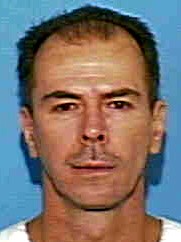
William Dean Wickline
Murderer Ervil LeBaron
Murderer · USA · 1972
Ervil Morrell LeBaron (1925 to August 16, 1981) was the leader of a polygamous…
35 victims
Ervil LeBaron
Murderer · USA · 1972
Ervil Morrell LeBaron (1925 to August 16, 1981) was the leader of a polygamous…
35 victims
 Brian Kevin Rosenfeld
Murderer · USA · 1985
Brian Kevin Rosenfeld Brian Kevin Rosenfeld was sentenced to three concurrent l…
23 victims
Brian Kevin Rosenfeld
Murderer · USA · 1985
Brian Kevin Rosenfeld Brian Kevin Rosenfeld was sentenced to three concurrent l…
23 victims
 Marvin Gray
Murderer · USA · 1975
Marvin Gray was convicted killer who claimed responsibility for 23 slayings and…
23 victims
Marvin Gray
Murderer · USA · 1975
Marvin Gray was convicted killer who claimed responsibility for 23 slayings and…
23 victims
 Yahweh ben Yahweh
Murderer · USA · 1980
Yahweh ben Yahweh was born and legally named Hulon Mitchell Jr. (October 27, 19…
23 victims
Yahweh ben Yahweh
Murderer · USA · 1980
Yahweh ben Yahweh was born and legally named Hulon Mitchell Jr. (October 27, 19…
23 victims
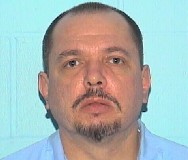 Timothy Buss
Murderer · USA · 1981
Timothy Buss was indicted in connection with the August 7, 1995, disappearance…
2 victims
Timothy Buss
Murderer · USA · 1981
Timothy Buss was indicted in connection with the August 7, 1995, disappearance…
2 victims
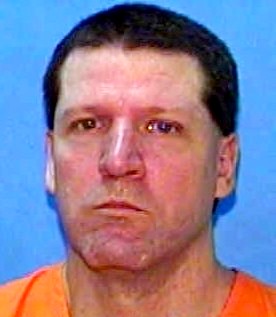 Daniel Lee Doyle
Murderer · USA · 1981
Daniel Lee Doyle was sentenced to death on May 13, 1982. He was convicted of fi…
1 victim
Daniel Lee Doyle
Murderer · USA · 1981
Daniel Lee Doyle was sentenced to death on May 13, 1982. He was convicted of fi…
1 victim
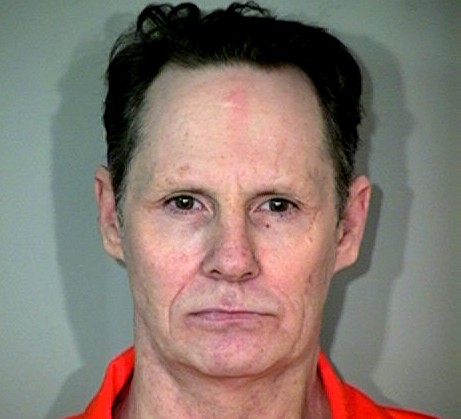 Robert Douglas Smith
Murderer · USA · 1980
Robert Douglas Smith was convicted in Tucson following a joint trial in which h…
1 victim
Robert Douglas Smith
Murderer · USA · 1980
Robert Douglas Smith was convicted in Tucson following a joint trial in which h…
1 victim
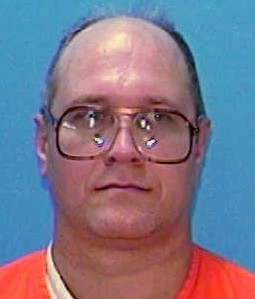 Thomas Michael Overton
Murderer · USA · 1991
Defendant: Thomas Michael Overton (born 11/05/55) DOB: 11/05/55 Age: Sixteen ju…
2 victims
Thomas Michael Overton
Murderer · USA · 1991
Defendant: Thomas Michael Overton (born 11/05/55) DOB: 11/05/55 Age: Sixteen ju…
2 victims
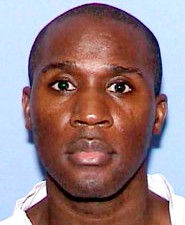 Curtis Moore
Murderer · USA · 1995
Curtis Moore was convicted of capital murder in Texas and was sentenced to deat…
3 victims
Curtis Moore
Murderer · USA · 1995
Curtis Moore was convicted of capital murder in Texas and was sentenced to deat…
3 victims
 Sanna Sillanpää
Homicide · Finland · 1999
Sanna Riitta Liisa Sillanpää (born April 15, 1968) was a Finnish woman who shot…
3 victims
Sanna Sillanpää
Homicide · Finland · 1999
Sanna Riitta Liisa Sillanpää (born April 15, 1968) was a Finnish woman who shot…
3 victims
- Gender
- male
- Country
- USA
- Location
- West Virginia/Ohio, USA
- Date of birth
- March 15, 1952
- Age at first offence
- 27
- Characteristics
- dismemberment, drugs, rape
- Victim profile
- Charles Morgan Marsh / Peggy and Christopher Lerch
- Method of murder
- St abbing with knife / Strangulation
- Date(s) of murder
- 1979 / 1982
- Years active
- 1979–1982
- Date of arrest
- 1984
- Status
-
Executed
Executed by lethal injection on March 30, 2004, at the Southern Ohio Correctional Facility in Lucasville, Ohio
Case record: William Dean Wickline
Status
William D. Wickline was executed by lethal injection on March 30, 2004, at the Southern Ohio Correctional Facility in Lucasville, Ohio. He was pronounced dead at 10:11 a.m.
On Monday, the U.S. Supreme Court refused to halt the scheduled execution. The U.S. Supreme Court turned down Wickline’s appeal without comment.
His last legal stand was based on a U.S. Supreme Court decision from the prior year stating that defense attorneys in death penalty cases do not need the client’s cooperation to conduct investigations that could persuade judges to impose life imprisonment instead of death.
Gov. Bob Taft refused to commute Wickline’s sentence.
The offence
In 1982, William D. Wickline was convicted of killing Christopher Lerch and Peggy Lerch in his Columbus apartment and dismembering their bodies. The couple were last seen in August 1982. Their bodies were never found.
Wickline denied killing the couple, portraying the primary witness against him as a jealous, spurned lover who invented a tale to keep custody of her then-infant son after admitting drug use to authorities.
The killings occurred after an argument over drug money. Wickline claimed that Christopher Lerch owed him $6,000 for cocaine. The murders occurred during or after a dispute that began in the course of drug use and heavy drinking shared by Wickline, his then-girlfriend Teresa Kemp, and Christopher and Peggy Lerch.
At trial, the most compelling evidence came from Teresa Kemp’s testimony. Kemp testified that Christopher Lerch was handcuffed to the kitchen table and was beaten on the head several times by Wickline during an argument. Kemp testified that shortly before the murders, Chris Lerch taunted Wickline by saying he had had a physical relationship with Kemp.
Kemp testified that Wickline went upstairs and called for Christopher Lerch to help him. Kemp testified that she found Christopher Lerch dead in the bathtub with his throat slit. She testified that Wickline strangled Peggy Lerch with a rope while Peggy Lerch was asleep, and that Kemp held Peggy Lerch’s legs while Wickline strangled her.
Kemp testified that Wickline cut up the bodies upstairs, placed the parts in trash bags, and disposed of them in dumpsters throughout the city. Kemp testified that Wickline had ordered her to clean the blood from the bathroom.
Victims
Christopher Lerch and Peggy Lerch were victims. The couple were from Blendon Township north of Columbus.
Peggy Lerch’s son from a previous marriage was 4 when she was killed and knew her only from pictures.
Investigation
Police were tipped off by an informant that Wickline may have been involved in the murders of Christopher and Peggy Lerch. Police contacted Teresa Kemp, who first denied having knowledge of any killings committed by William D. Wickline and later told investigators that the Lerches were murdered on August 14, 1982 at Wickline’s apartment.
When police began investigating after the Lerches disappeared, Wickline had been incarcerated on an unrelated offense.
Trial
A three-judge panel in 1985 convicted Wickline of killing Christopher and Peggy Lerch in his Columbus apartment.
Wickline was tried by a panel of three judges after waiving his right to a trial by jury.
The evidence presented at trial included testimony from Teresa Kemp, who said the deaths were the result of a dispute over drug money. The testimony included sequences of events and blocks of time described as merged and confused at times, but the testimony was described as consistent with an earlier statement and corroborated by other evidence.
The defense contested Kemp’s credibility and denied involvement in the deaths. Wickline argued that his arrest was the result of a jilted woman spreading rumors to a few friends, one of whom was the wife of the jail inmate who gave police the tip leading to Wickline’s arrest. Wickline also claimed police intimidated Kemp into describing the murders by threatening her with the death penalty for her involvement.
Wickline further argued that he held the Lerches’ jewelry as collateral for the $6,000 Chris Lerch owed him for cocaine. He insisted that it was the Lerches who were fighting and not himself and Chris Lerch.
Mitigation-phase statement and strategy
Wickline gave an unsworn statement at the mitigation phase of trial. He described his relationship with Kemp as having gone sour.
During prison, Kemp often visited Wickline even though she was married and had a child. Wickline told Kemp that their relationship was over and that when he got out of prison he would try to make it on his own.
At sentencing, counsel advised against using certain kinds of mitigation evidence. Counsel chose not to have a psychiatric report for two reasons: Wickline wanted nothing to do with psychiatrists or psychologists and counsel believed a psychiatric report would reflect negatively on Wickline. Counsel also chose not to have a presentence report delve into his background because Wickline wanted nothing to do with the probation officer.
Counsel reviewed prison files but chose not to present them because they would highlight Wickline’s numerous incarcerations. Counsel also were concerned that presenting witnesses about Wickline’s good character could open the door to prosecution evidence of bad acts committed by Wickline that would damage mitigating factors.
Counsel chose a strategy to argue that Christopher and Peggy Lerch facilitated the murders by attempting a drug rip-off.
Sentencing
Franklin County Common Pleas judges sentenced Wickline to life in prison for Christopher Lerch’s murder. The judges sentenced him to death for the slaying of Peggy Lerch because she was killed to cover up another crime.
Appeals and habeas corpus
U.S. Supreme Court
The U.S. The court turned down Wickline’s appeal without comment.
U.S. Court of Appeals for the Sixth Circuit
Wickline filed a petition for a writ of habeas corpus under 28 U.S.C. § 2254. The district court dismissed the petition after concluding Wickline’s forty-two claims were either procedurally defaulted or lacked sufficient merit.
Both Wickline and respondent (the State) filed motions to alter or amend the judgment under Fed. R. Civ. P. 59(e). The district court granted the State’s motion and amended the judgment to hold that the Antiterrorism and Effective Death Penalty Act of 1996 (AEDPA) was applicable to Wickline’s petition. Wickline’s Rule 59(e) motion was denied.
The Sixth Circuit reviewed and affirmed. The judgment was affirmed.
Other legal matters included in the record
Wickline was also charged with a murder in West Virginia in which the victim was beheaded. The West Virginia victim was Charles Morgan Marsh. Prosecutors stated that Marsh’s body was found on a bed and his head was found on a nearby nightstand.
Wickline was also indicted for the 1979 murder of Charles Morgan Marsh, who was decapitated.
Evidence details and related events
Because no bodies were found, the prosecution case rested heavily on Teresa Kemp’s testimony. The testimony was described as uncorroborated at points in one account, but described elsewhere as corroborated by other evidence.
Corroborating evidence discussed included bloody handcuffs, human blood in caulk from the tub, and dried human tissue and blood on a folding saw.
In 1984, while Wickline was serving a jail sentence unrelated to the murders, Kemp took handcuffs, jewelry, and other items belonging to Christopher and Peggy Lerch and hid them in a safety deposit box. The items were later recovered by police.
Wickline declined interview requests through prison officials and his attorney.
Related persons and testimony
Teresa Kemp was Wickline’s then-girlfriend and was the chief evidence at trial. She wrote to the Ohio Parole Board describing being unable to sleep soundly for 22 years and being haunted by the image of Wickline holding a man’s severed head in his hand.
Patricia Keaton was Peggy Lerch’s mother.
Pat Sheeran was an assistant county prosecutor who helped try the case.
Kim Norris was a spokeswoman for Attorney General Jim Petro.
David Stebbins was Wickline’s attorney who argued that trial lawyers did not investigate his past during the penalty phase in an effort to avoid a death sentence.
Rick Sheasby was a retired Columbus detective who interviewed the inmate briefly before he was charged.
Andrea Dean was a prisons spokeswoman who discussed movements and provisions made prior to execution.
Rev. Gary Sims was a Baptist minister who served as a spiritual adviser and was described as the prisons department’s religious services administrator.
Peggy Lerch’s sister and a Blendon Township detective were described as planning to watch the execution as victims’ witnesses.
Execution-day events and final statement
Wickline was moved from the Mansfield Correctional Institution to Lucasville on Monday in preparation for the execution.
Wickline spent most of the day talking on the phone to his brother, David Wickline of Columbus, or chatting with members of the execution team.
At about 4 p.m., Wickline was served a “special meal” described as an eight-ounce filet mignon, medium rare; potato salad; six rolls with butter; fresh strawberries with shortcake; and butter pecan ice cream. The steak came from the prison kitchen. The other ingredients were bought at a local store for $11.66. He also received four packs of Pall Mall cigarettes and six cans of pop, including three of Mountain Dew.
Wickline met with Rev. Gary Sims.
When Wickline walked into the death chamber, Peggy Lerch’s sister silently raised a framed photo of her and held it toward the window from the witness room until a guard closed the curtain after Wickline stopped breathing. Nancy Fowler then embraced the picture.
Wickline never looked in her direction, instead smiling and giving a thumbs up to his two younger brothers, Robert and David.
Wickline gave a final statement: “May tomorrow see the courts shaped by more wisdom and less politics.”
Timeline
- August 12, 1982 — Christopher and Peggy Lerch were last heard from.
- August 14, 1982 — Police were told the Lerches were murdered on this date.
- Late August 1982 — A missing persons report was filed concerning Christopher and Peggy Lerch.
- 1984 — While serving an unrelated jail sentence, Teresa Kemp hid handcuffs, jewelry, and other items belonging to Christopher and Peggy Lerch in a safety deposit box; the items were later recovered by police.
- 1999 — Ohio resumed carrying out the death penalty.
- March 30, 2004 — The U.S. Supreme Court refused to halt the scheduled execution; William Wickline was executed by lethal injection at the Southern Ohio Correctional Facility in Lucasville, Ohio; he was pronounced dead at 10:11 a.m.
Notes and quotations
Ohio Parole Board letter written by Teresa Kemp included the following question and quote: “Do you know I still walk into a bathroom sometimes and smell blood?''
Wickline spoke before his sentencing, saying: “That's the one comfort that I have,'' he said before his sentencing, 2is the hope and the belief that they will be found, and I hope that they are found alive, but even if they are found dead, and in one piece, then will she be made to pay back what she has done to me?''
Wickline’s attorney David Stebbins said: “His counsel did no investigation for the penalty phase of the case, zero,''
A message by Kim Norris included the quoted statement: “He clearly was directing and in control of his defense,”
Rick Sheasby said: “Wickline was just a scary guy,'' and “He's got those eyes that you can just tell.''
Wickline’s final statement at execution was: “May tomorrow see the courts shaped by more wisdom and less politics.”
Spotted an error, or have more information about this case?