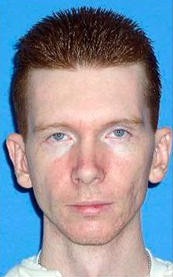
Robert James Neville
Murderer Russell Ellwood
Murderer · USA · 1991
Russell Ellwood was a former taxi driver. Authorities suspected him of killing…
20 victims
Russell Ellwood
Murderer · USA · 1991
Russell Ellwood was a former taxi driver. Authorities suspected him of killing…
20 victims
 Robert Martines Perez
Murderer · USA · 1994
Name: Robert Martines Perez · Other name used in proceedings: Robert Martinez P…
15 victims
Robert Martines Perez
Murderer · USA · 1994
Name: Robert Martines Perez · Other name used in proceedings: Robert Martinez P…
15 victims
 Billy Frank Vickers
Murderer · USA · 1993
Billy Frank Vickers Vickers was executed by lethal injection in Texas on Januar…
14 victims
Billy Frank Vickers
Murderer · USA · 1993
Billy Frank Vickers Vickers was executed by lethal injection in Texas on Januar…
14 victims
 Michele Profeta
Murderer · Italy · 2001
Michele Profeta was described as a serial killer of Padua. He was said to have…
2 victims
Michele Profeta
Murderer · Italy · 2001
Michele Profeta was described as a serial killer of Padua. He was said to have…
2 victims
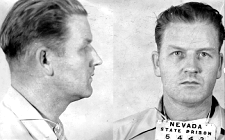 Owen Caudle Butner
Murderer · 1947
Owen Caudle Butner was executed by asphyxiation-gas in Nevada on February 10, 1…
1 victim
Owen Caudle Butner
Murderer · 1947
Owen Caudle Butner was executed by asphyxiation-gas in Nevada on February 10, 1…
1 victim
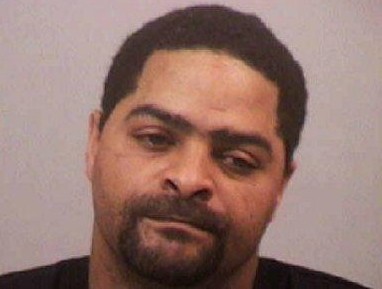 David Lance Bruce
Murderer · USA · 2005
David Lance Bruce was convicted in the death of a Fairfield County woman. He wa…
3 victims
David Lance Bruce
Murderer · USA · 2005
David Lance Bruce was convicted in the death of a Fairfield County woman. He wa…
3 victims
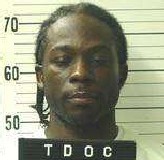 Kevin B. Burns
Murderer · USA · 1992
Kevin B. Burns was sentenced to death on November 27, 1995. He was convicted of…
2 victims
Kevin B. Burns
Murderer · USA · 1992
Kevin B. Burns was sentenced to death on November 27, 1995. He was convicted of…
2 victims
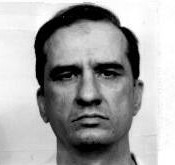 Kenneth Allen McDuff
Serial killer · USA · 1966
Kenneth Allen McDuff was executed by lethal injection in Texas on November 17,…
14 victims
Kenneth Allen McDuff
Serial killer · USA · 1966
Kenneth Allen McDuff was executed by lethal injection in Texas on November 17,…
14 victims
- Gender
- male
- Country
- USA
- Location
- Tarrant County, Texas, USA
- Date of birth
- October 5, 1974
- Age at first offence
- 24
- Characteristics
- white supremacist
- Victim profile
- Amy Robinson, 19 (suffered from Turner's syndrome)
- Method of murder
- Shooting ( .22-caliber rifle)
- Date(s) of murder
- February 15, 1998
- Years active
- 1998
- Date of arrest
- March 3, 1998
- Status
-
Executed
Executed by lethal injection in Texas on February 8, 2006
Case record: Robert James Neville
Background
Robert James Neville was a white male laborer with red hair, blue eyes, and a height of 6 ft 00 in. He weighed 140.
Neville previously worked at a grocery store where Amy Robinson was employed as a sacker. Neville was a paroled burglar who had served two years of a 10-year prison term for burglary of a vehicle and was released on parole in June 1997. During the punishment phase, evidence was introduced that Neville had previously been convicted of burglary of a vehicle and burglary of a habitation.
Evidence was also introduced during the punishment phase that Neville had sexual contact with an eleven-year-old girl and sexual contact with a nine- or ten-year-old boy and a seven-year-old boy when he was about fourteen or sixteen or seventeen. Evidence was introduced that he tossed kittens from a rooftop when he was fourteen, and that when he was about sixteen or seventeen, he tied a cat by its tail to a tree and struck the cat with a pole.
When he worked at Kroger’s, Neville ridiculed a mentally challenged coworker and avoided sacking groceries for minority shoppers. An expert for the State, Dr. Randall Price, testified that Neville was not mentally ill but had a severe psychopathic personality. Dr. Price testified that Neville expressed enjoyment and excitement during Robinson’s murder.
Neville and Michael Wayne Hall described themselves as white supremacists with the Aryan Brotherhood and said they wanted to kill blacks.
The offence
On Feb. 15, 1998, Robert Neville and a friend, Michael Wayne Hall, saw 19-year-old Amy Robinson riding her bicycle to a grocery store in Arlington where she worked. The two men offered Robinson a ride but took her to a rural field in Fort Worth, where they shot her to death.
Neville worked at the same grocery store where Robinson was employed as a sacker. Two hours after her work day was to have begun, a store employee called Robinson’s family to say that the young woman had not arrived at work. Her family called the Arlington police. Later that day, police contacted Hall and Neville.
After police began investigating, Hall’s stepbrother told police that Hall had told him that he and Neville had abducted and killed Robinson. A warrant was issued for the arrest of both Neville and Hall.
In statements given to law enforcement, Neville acknowledged killing Robinson and told police where to find Robinson’s body. Neville said that one day when he and Hall had gotten drunk at the home of Neville’s grandmother, Neville told Hall that he would “just like to [go] out and kill somebody....” Neville told police that he and Hall purchased two .22-caliber rifles and ammunition, and practiced shooting the rifles.
During the punishment phase evidence was introduced describing the victim and the circumstances of the killing. Robinson was described as 19 and having a genetic disorder, Turner's syndrome, characterized by short stature and lack of sexual development at puberty. Robinson suffered from Turner's syndrome, and prosecutors described her as “easy prey.” Robinson’s grandmother Carolyn Barker became an outspoken victims’ rights advocate after her granddaughter’s death.
Other descriptions of the offence included allegations that Hall and Neville decided they were in the “mood to kill someone” and chose Robinson as an “easy target.” Robinson was described as mentally challenged and with a genetic disorder, Turner's syndrome. She was described as short and as having the mental capacity of a third or fourth grader. Robinson was also described as part Native American.
In accounts of the sequence of events, Neville and Hall coaxed Robinson into the car after observing her bicycle ride to work. They then took her to a remote field and shot her. There were descriptions that Hall shot her in the back of her leg with a pellet gun, and that Neville returned with a .22 caliber rifle and shot her in the chest. There were also descriptions that Hall then shot her in the chest with the pellet gun multiple times, that Hall stood over her for five to ten minutes, and that Neville shot her in the head, killing her instantly. After the killing, accounts stated that Neville and Hall left Robinson and her bicycle in a place where they would not be easily discovered. A few days later, they returned and fired shots into Robinson’s dead body. Another account stated that Hall took keys and money from Robinson’s pocket.
Robinson’s body was found after a search that followed her failure to arrive at work and her subsequent disappearance.
Neville and Hall were described as offering conflicting accounts initially to police. Neville told police he had both worked with Robinson and met with her socially, and he told police that he had not seen her in a couple of months.
Neville also made statements and described intentions in the period after his arrest. One account quoted Neville saying:
“We had a bet going to see who could shoot and kill the most people between the two of us,”
and:
“No matter if it was blacks or Mexicans — anybody as long as they weren't our color.”
Another account quoted Neville as saying:
and:
Another report described Neville stating that he and Hall killed the woman “for the adrenaline rush” and that Robinson was used for “target practice.”
A separate description of Neville’s account of what he said to Hall included:
“just like to [go] out and kill somebody....”
Another description of Hall’s and Neville’s statements to reporters described them as characterizing their victim as an “easy prey,” and as laughing about how Robinson died as she begged for her life.
Investigation and arrest
Police contacted Hall and Neville after the family reported that Robinson had not arrived at work.
During the subsequent investigation, Hall’s stepbrother told police that Hall had told him that he and Neville had abducted and killed Robinson.
Neville and Hall were arrested at Eagle Pass on March 3, as they tried to cross into Mexico. According to statements given to law enforcement, Neville acknowledged killing Robinson and told police where to find Robinson’s body.
Texas Attorney General media information stated that Neville and Hall were arrested about two weeks after Robinson was reported missing.
There were descriptions that authorities found Robinson’s body on the day of the arrest.
Trial
A Tarrant County grand jury indicted Neville for capital murder on Mar. 24, 1998.
On Dec. 4, 1998, a jury found Neville guilty of capital murder.
After a separate punishment hearing, the trial court assessed a sentence of death on Dec. 9, 1998.
At the end of the trial, Neville expressed remorse.
“I feel if ... I get this over with now, hopefully my ... execution will bring some kind of peace to the victim’s family,”
and:
with attribution to Neville.
During the punishment phase, evidence included Neville’s prior burglary convictions and allegations of sexual contact involving children aged 7 to 11 and 16 or 17, along with torturing animals as described in the Background section. An expert for the State, Dr. Randall Price, testified that Neville was not mentally ill but had a severe psychopathic personality and that Neville expressed enjoyment and excitement during Robinson’s murder.
Appeals
The Texas Court of Criminal Appeals affirmed Neville’s conviction and sentence on Dec. 1, 1999.
Neville filed a state application for writ of habeas corpus in the trial court on Aug. 7, 2000.
The Texas Court of Criminal Appeals denied habeas relief on Mar. 28, 2001.
Neville filed a petition for writ of habeas corpus in a Fort Worth federal district court on July 19, 2001.
The federal district court denied habeas relief on Sept. 14, 2004.
Neville filed a notice of appeal with the 5th U.S. Circuit Court of Appeals on Sept. 24, 2004.
On Aug. 29, 2005, the 5th Circuit Court denied Neville’s application for a Certificate of Appealability.
Neville filed with the U.S. Supreme Court a motion seeking permission to file an out-of-time petition for writ of certiorari on Jan. 10, 2006.
On Jan. 23, 2006, the Supreme Court denied Neville’s motion.
Sentencing
On Dec. 9, 1998, after a separate punishment hearing, the trial court assessed a sentence of death.
Outcome
Neville was executed by lethal injection in Texas on February 8, 2006.
In final statements at execution, Neville apologized and addressed the victim’s mother and her two daughters by name. Neville made statements including:
“I hope you can find it in yourselves to forgive me and I hope all this here will kind of settle your pain. And I hope the Lord will give you comfort and peace. I just want you to know I am very sorry for what I have done,”
and:
“If I see Amy on the other side, I will tell her how much you love and miss her. And we will have a lot to talk about.”
Neville also stated:
“I am sorry for putting you through all this pain and stuff,”
and:
“I love you all and I will see you on the other side.”
One account stated Neville was pronounced dead at 6:19 p.m. CST, seven minutes after lethal injection began. Another account stated he was pronounced dead seven minutes later at 6:19 p.m. CST.
Other details
Michael Wayne Hall was also condemned and sentenced to death, and he was described as on death row with no execution date set. Hall had an execution date not set.
A named official involved in prosecution was Alan Levy, the Tarrant County assistant district attorney, who commented on victims’ desire for closure.
A named spokesperson was David Montague, spokesman for the Tarrant County district attorney’s office, who commented:
“You hope that it brings the family some closure,”
and:
“You don't know that it will, but you hope it does.”
A named defense attorney was Rick Alley, who argued Neville was mentally ill due to lupus.
A defense argument described Neville’s claim that he had lupus, a chronic autoimmune disease that attacked the brain. Rick Alley stated that Neville acted irrationally and dangerously and that Neville often gave him “psychopathic tendencies,” and he also argued:
“He is so mentally ill that to execute him would be cruel and unusual punishment,”
The timing of the execution was described as beginning about 6 p.m. with family and witnesses expected to attend.
Victims’ rights advocate Carolyn Barker was described as lobbying for workplace laws to protect minors and mentally retarded people from felons and as helping create Our Garden of Angels, described as a sanctuary for families of homicide victims.
A named witness and friend of Barker, Ray Stewart, commented:
“It was a chance to meditate on the good parts of life,”
and:
“Carolyn turned her attention to helping others survive through something like that. It strengthened her and gave her purpose.”
Timeline
- Feb. 15, 1998 — Robert Neville and Michael Wayne Hall saw Amy Robinson riding her bicycle to a grocery store in Arlington where she worked, offered her a ride, and took her to a rural field in Fort Worth where they shot her to death.
- Dec. 9, 1998 — After a separate punishment hearing, the trial court assessed a sentence of death.
- Mar. 24, 1998 — A Tarrant County grand jury indicted Neville for capital murder.
- Dec. 4, 1998 — A jury found Neville guilty of capital murder.
- Dec. 1, 1999 — The Texas Court of Criminal Appeals affirmed Neville’s conviction and sentence.
- Aug. 7, 2000 — Neville filed a state application for writ of habeas corpus in the trial court.
- Mar. 28, 2001 — The Texas Court of Criminal Appeals denied habeas relief.
- July 19, 2001 — Neville filed a petition for writ of habeas corpus in a Fort Worth federal district court.
- Sept. 14, 2004 — The federal district court denied habeas relief.
- Sept. 24, 2004 — Neville filed a notice of appeal with the 5th U.S. Circuit Court of Appeals.
- Aug. 29, 2005 — The 5th Circuit Court denied Neville’s application for a Certificate of Appealability.
- Jan. 10, 2006 — Neville filed with the U.S. Supreme Court a motion seeking permission to file an out-of-time petition for writ of certiorari.
- Jan. 23, 2006 — The Supreme Court denied Neville’s motion.
- Feb. 8, 2006 — Neville was executed by lethal injection in Texas.

Spotted an error, or have more information about this case?