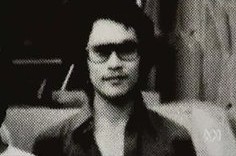
Joji Obara
Murderer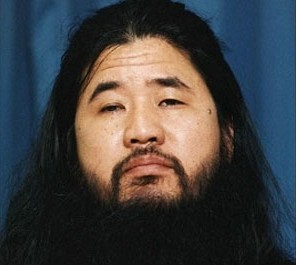 Shoko Asahara
Murderer · Japan · 1995
Shoko Asahara was the founder of Japan's controversial Buddhist religious group…
12 victims
Shoko Asahara
Murderer · Japan · 1995
Shoko Asahara was the founder of Japan's controversial Buddhist religious group…
12 victims
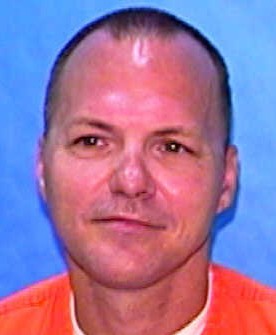 Mark James Asay
Murderer · USA · 1987
Name: Mark James Asay Date of birth: 03/12/64 Jurisdiction / Court: Fourth Judi…
2 victims
Mark James Asay
Murderer · USA · 1987
Name: Mark James Asay Date of birth: 03/12/64 Jurisdiction / Court: Fourth Judi…
2 victims
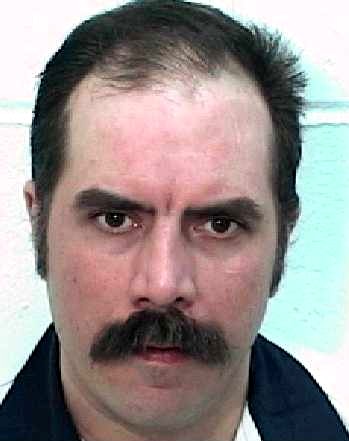 David Aaron Perkins
Murderer · USA · 1995
David Aaron Perkins was tried in the Clayton Superior Court before Judge Ison a…
1 victim
David Aaron Perkins
Murderer · USA · 1995
David Aaron Perkins was tried in the Clayton Superior Court before Judge Ison a…
1 victim
 Patty Michelle White
Murderer · USA · 2011
Patty Michelle White killed her former roommate, Michele O'Dowd, and later plea…
1 victim
Patty Michelle White
Murderer · USA · 2011
Patty Michelle White killed her former roommate, Michele O'Dowd, and later plea…
1 victim
 Debra Lynn Baker
Murderer · USA · 1990
Debra Lynn Baker was convicted of Jerry Sternadel’s murder. She received 10 yea…
1 victim
Debra Lynn Baker
Murderer · USA · 1990
Debra Lynn Baker was convicted of Jerry Sternadel’s murder. She received 10 yea…
1 victim
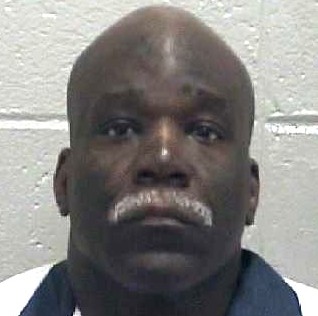 Michael Anthony Cohen
Murderer · USA · 1985
Michael Anthony Cohen, 40, was sentenced to death in Glynn County in December 1…
1 victim
Michael Anthony Cohen
Murderer · USA · 1985
Michael Anthony Cohen, 40, was sentenced to death in Glynn County in December 1…
1 victim
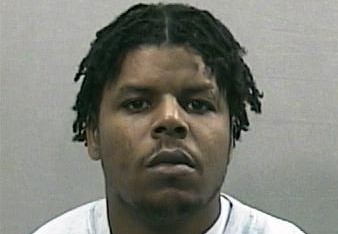 Rasheed Muhammad
Murderer · USA · 1995
April 4, 1995 — A 29-year-old homeless man, Rasheed Muhammed, was described as…
1 victim
Rasheed Muhammad
Murderer · USA · 1995
April 4, 1995 — A 29-year-old homeless man, Rasheed Muhammed, was described as…
1 victim
- Gender
- male
- Country
- Japan
- Location
- Tokyo, Japan
- Date of birth
- 1952
- Age at first offence
- 40
- Characteristics
- serial rapist, rape, domestic violence
- Victim profile
- Carita Ridgeway (21 year-old Australian model)
- Method of murder
- Poisoning (drug overdose)
- Date(s) of murder
- 1992 - 2000
- Years active
- 1992–2000
- Date of arrest
- October 11, 2000
- Status
-
Acquitted / overturned
Sentenced to life in prison on April 24, 2007; acquitted of the crime of Lucie Blackman's rape and murder.
Case record: Joji Obara
Joji Obara (織原城二; Obara Jōji) was born in 1952 in Osaka, Japan. He was a convicted rapist who was accused of the rape and subsequent deaths of two women and the rapes of six other women.
Background
Obara was born Kim Sung Jong in 1952 to zainichi parents in Osaka. During his youth, his father worked his way from scrap collector to taxi driver to immensely wealthy owner of a string of pachinko parlours.
At 15, Obara enrolled in private high schools, a prep school which was owned by Keio University, which at graduation guaranteed entrance to the University. Two years later, upon his father's death, he inherited holdings in Osaka and Tokyo.
After graduating from Keio University with degrees in politics and law, he became a naturalized Japanese citizen and legally changed his name to Joji Obara.
During the late 1980s and early 1990s, Obara invested heavily in real estate speculation. After losing his fortune when the bubble burst and his firm collapsed, police reportedly believed he used his business as a money laundering front for the yakuza syndicate Sumiyoshi-kai.
Police recovered 4,000 to 5,000 pornographic videos involving Obara, leading police to believe that Obara may have raped anywhere from 150 to 400 women. Police found over 200 sex videos involving Obara molesting women in this manner, sometimes wearing a facemask.
Obara kept extensive journals and made references to “conquer play”, which was described as a euphemism for sexual assaults on women he wrote were “only good for sex” and on which he sought revenge, including “revenge on the world,” by drugging women with chloroform. Obara did not make a confession.
The offence
Obara was accused of rape and killing of Lucie Blackman and Carita Ridgeway, and he was also charged with rape of six other women.
Lucie Blackman
Lucie Blackman (1 September 1978 – 1 July 2000) was an English woman who worked as a hostess in Roppongi, Tokyo. She disappeared in July 2000. Her dismembered body was found a year later, buried in a shallow grave under a bathtub in a seaside cave at Miura, Kanagawa. Her body was cut into eight pieces, her head had been shaved and encased in concrete, and her head was entombed in cement. She was 21 years old at the time of her body's recovery.
Blackman had previously worked as a flight attendant for British Airways. At the time of her disappearance, she had been working as a hostess at Casablanca, a night club in Roppongi.
Disappearance and key calls
On July 1, Lucie went on a douhan with a customer from Casablanca. No one heard from her again.
Lucie’s roommate Louise Phillips was still in bed in their six-tatami room when Lucie left. Louise recalls glimpsing Lucie wearing sandals and a black one-piece dress, along with a silver necklace with hearts on it, when she left.
Lucie phoned Louise three times that day: at 1:30 to say she had met her lunch date; at 5:00 saying, “I’m being taken to the sea”; and finally at 7:00 when she said, “I’ll be back in half an hour.” Lucie also phoned Scott Fraser, her boyfriend, a few minutes later with the same message.
The next day, Phillips received a call on her cell phone from a man who spoke in a thick accent and identified himself as Akira Takagi. He told her, “Lucie has joined a newly risen cult. She is safe and training in a hut in Chiba.” Prosecutors said the call was traced to a prepaid cell phone bought by Joji Obara and that he placed the call.
Media coverage and foreign women reports
The Blackman family flew to Tokyo to search for Lucie and launched a high-profile media campaign. Newspapers started publicizing Blackman’s disappearance on July 13, when British Prime Minister Tony Blair made mention of the case during an official visit to Japan where he met with Prime Minister Yoshiro Mori. An information hotline was staffed by British ex-pats, and a reward of £100,000 was made by an anonymous businessman.
As a result of the publicity, three foreign women came forward to describe waking up, sore and sick, in Obara’s bed, with no memory of the night before. Several of them had reported him to the Roppongi police but were ignored. Other victims identified Obara as someone who had date-raped them.
Prosecutors say that on July 20, the Azabu Police Station received a letter purporting to be written by Blackman saying she had vanished on her own accord. Similar letters would arrive in the following months.
Identification of the body
On January 10, 2001, Blackman’s dismembered body was found, buried in a shallow grave under a bathtub in a seaside cave at Miura, Kanagawa, about 30 miles south of Tokyo, just a few hundred meters from Obara's apartment. The body had been cut into eight pieces. Her head had been shaved and encased in concrete.
At first, investigators couldn't identify the corpse. The body parts were so badly decayed that their gender could not even be determined. When postmortem examiners cut into the cement encasing the head in hopes of finding teeth to match with dental records, they found one identifiable feature: long, natural blond hair.
Letters and family actions
The Blackman family printed and distributed missing-person posters and met with police. They held a press conference.
Sophie Blackman was on a plane to Tokyo on 4 July, although her father did not arrive until 12 July.
Tim Blackman, Lucie Blackman's father, accepted £450,000 in mimaikin—or condolence money—from a friend of Joji Obara, and the other members of the family were against the acceptance of the money.
Crimes involving other victims
Carita Ridgeway
Carita Ridgeway was an Australian woman who died in 1992. Obara was charged with manslaughter relating to Ridgeway. The record described that police found traces of chloroform in Ridgeway's liver and that a paper trail showed Obara accompanied Ridgeway to the hospital before she died.
Obara took a gravely ill Ridgeway to Hideshima hospital, telling nurses she had eaten bad shellfish. Ridgeway was erroneously diagnosed as suffering from liver failure as a result of eating seafood tainted with the virus that causes hepatitis. She died a few days later.
Due to an administrative fluke, Ridgeway's liver had been preserved at Tokyo Women's Hospital, where an autopsy had originally been performed. Later, medical examiners tested Ridgeway's liver for chloroform and said it proved to be present in toxic levels. Obara was charged in connection with her death.
The record described that after she died, Obara comforted her parents when they came to take her body home.
Additional rape charges
Obara was charged with raping six other women in addition to the charges involving Lucie Blackman and Carita Ridgeway.
Evidence described included approximately 400 videos taken by Obara in which he engaged in date-rape activities. Police confiscated receipts for buying a chainsaw, a shovel, and 5,000 video tapes made over 18 years, among them 400 showing Obara raping or molesting unconscious or semi-conscious women.
Among the Western women said to be on the tapes was 21-year-old Carita Ridgeway from Western Australia, and the record stated that she died in hospital in 1992 after she was checked in by a man police believed was Joji Obara. Police said they found the receipt for that hospital admission in his Zushi flat.
Investigation
Five days after Blackman was last heard from, on July 6, 2000, police received a call from the manager of Joji Obara's condominium on the shores of the Miura Peninsula, told of a tenant making lots of noise in his unit the day before. Police visited the apartment and found Obara, a property developer, naked from the waist up, covered in sweat.
Chunks of cement were strewn near the entrance and around the apartment. Officers noticed a bulky sack and what appeared to be a gardening hoe. When asked, Obara said he had been “removing tiles,” according to a trial transcript. When officers requested access to the bathroom, Obara said, “You've already seen enough.” Upon further questioning, he grew agitated and the officers eventually left.
At the time, police were not aware of Blackman’s disappearance and had no reason to be more suspicious of Obara. However, due to press coverage, leads began to pour into a hotline set up by the Blackmans.
Police confiscated receipts for buying a chainsaw, a shovel, and 5,000 video tapes. The record described that Obara was arrested in October.
The record also included that on July 2, late at night, Obara called area hospitals asking how to treat a victim of a drug overdose. On July 3, Obara purchased a chainsaw, cement mix and other tools from a hardware store.
Discovery of the body
On January 10, 2001, Blackman’s body was found buried in a shallow grave under a bathtub in a seaside cave at Miura, Kanagawa, about 30 miles south of Tokyo. The body had been cut into eight pieces, and her head had been shaved and encased in concrete.
The record described a delayed search where officers revisited the cave on or about Feb. 9 and found the body beneath the discarded tub. It stated that the condition of the body prevented determining the cause of death.
Diary entry described
The record stated police found a note in Obara's diary that read “drug women so that they can fall asleep completely.”
Arrest
In October 2000, Obara was arrested and charged with the drugging, raping and death of Lucie Blackman and another hostess, 21-year-old Australian model Carita Ridgeway, who died in 1992. He was also charged with raping six other women.
The record stated that police detained a 48-year-old Japanese businessman named Joji Obara in relation to Lucie’s disappearance.
Trial
Obara was charged with drugging, raping and killing Blackman, as well as raping of six other women and manslaughter of another hostess.
Evidence described
For the rape charge, evidence described included approximately 400 videos he took in which he engaged in date-rape activities.
For the charge of manslaughter of Carita Ridgeway, the prosecutor produced an autopsy report showing traces of chloroform in Ridgeway's liver and a paper trail showing that the accused accompanied Ridgeway to the hospital before she died.
For Blackman’s case, the prosecutor could not produce forensic evidence linking Obara to her death, and the cause of her death could not be determined because of the decomposed state of the body.
Payment of condolence money
The judge stated that in deciding on the sentence he did not attach much importance to Mr Obara’s payment of “consolation money” to a number of his victims.
Sentencing
On April 24, 2007, Obara was jailed for life on multiple rape charges and one manslaughter.
Appeals
The record stated that the public prosecutor appealed the Blackman-related verdicts and that on 25 March 2008 an appeal trial commenced in the Tokyo High Court.
The record also stated that Tokyo High Court found Obara guilty on some counts on December 16, 2008.
Outcome
Obara was acquitted of the crime of Blackman's rape and murder.
Other details
The record described a criminal pattern and allegations including that Obara drugged victims and placed cloth soaked in a drug, known to be chloroform in at least one case, over their mouths.
It stated that Obara assaulted most victims for 12 hours or more and captured assaults on tape using professional video equipment and lights. One victim was described as sustaining burns when a hot light was left too close to her body.
The record described Obara telling victims fabricated stories after assaults, including that he told one woman: “You are such a fun girl. You drank an entire bottle of vodka.” It also stated he told another there had been a gas leak. It said the woman with burned skin, who had been unconscious on and off for more than 36 hours, was told she had become drunk and fallen over.
The record also included the claim that police found blond hairs that matched Lucie’s and film with pictures of her taken near one of Obara’s seacoast condominiums.
Hospital and forensic details on Ridgeway
The record stated that Ridgeway was tested for chloroform after Obara came under investigation and that toxic levels were found.
Father's involvement in the investigation and allegations of wrongdoing
The record stated that Tim Blackman accepted condolence money in September 2006. Lucie's mother, Jane Steare, refused a similar payment and called this “blood money,” described her ex-husband’s actions as an “unbelievable betrayal,” and claimed Tim struck a deal with the trial's defence to receive the payment and signed a document questioning key evidence.
Her allegations were described as being investigated by Hampshire police.
The record also stated that under Japanese law, a gift made by those who confess their guilt to the victim's relatives may be taken into consideration by judges when sentencing, and that this could lessen the element of retribution. It also stated this did not apply in this case because the accused refused to accept his guilt.
The record included a letter sent by Tim Blackman to Japanese police denouncing Obara, quoting: “I believe the defendant to be guilty of all charges,” he wrote. “I do not forgive the defendant in any way whatsoever. The condolence from his friend is accepted just as we have received condolence from around the world.”
Dentition and decomposition preventing cause of death
The record stated that even determining the cause of death was not possible due to the decomposed state of Lucie Blackman’s body.
Debts and bankruptcy described
The record stated that Obara was declared bankrupt with debts of £122m (23.8 billion yen).
Detention and visitors
The record stated Obara was in custody since October 2000 and that he became destined to spend many years in prison despite being acquitted of Lucie's death. It stated that only his mother, “now in her eighties,” was allowed to visit him, and that for the past few months she had been too unwell to make the journey from Osaka.
Further quotes about Obara from named individuals
The record included a journalist’s quote from Naoko Tomono, and a professor’s comments from Susumu Oda. It quoted Naoko Tomono describing how some men respected Obara as: “They respect him as a man comfortable going to expensive bars and picking up Western girls.”
It quoted Susumu Oda as saying Obara was: “a peculiar symbol” of men of his generation, “because he was obsessed with Caucasian women.”
It included a quote from Tim Blackman about his daughter, quoting: “I hope Lucie had a glass of champagne, felt a bit woozy and passed out.”
It also quoted Tim Blackman on feelings towards Obara: “Every feeling I have had has been towards Lucie and I don't really have any left to feel towards Obara. Sophie feels the same and it's because we have had such an intense involvement with her loss, we have exhausted our emotions. There is nothing left to feel.”
It included a quoted reflection from Tim Blackman about seeing Obara in court: “I could be a bit odd,” he said. “I’m prepared to admit that. But I see somebody who is the same age as me, who has, by his actions, produced the most terrible situation for himself by doing something so heinous to somebody else’s life. And in a very strange way there’s a pathos that neutralises the more natural anger. I feel sorry for him. I do feel sorry for him.”
It included a quoted comment from a person who knew Obara about his mental state: “My impression is that he is totally sane,” says one who knows him. “There’s nothing crazy about him except the way he treats women. He’s very, very clever but very selfish, totally convinced that he is right, and he never listens to the opinions of other people. But I don’t think he ever had a true friend he could rely on, and he doesn’t now. He is a very lonely person. Apart from his lawyers, there’s no one he can rely on or consult.”
Trial descriptions
The record quoted a prosecutor describing Obara as a “beast with a human face.” It also said court findings described Obara as a “beast with a human face” in court.
Spotted an error, or have more information about this case?