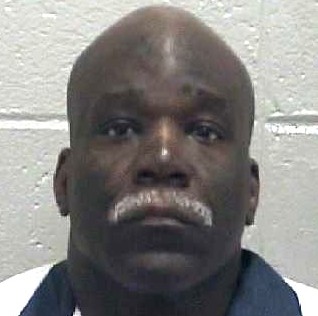
Michael Anthony Cohen
Murderer Brian Kevin Rosenfeld
Murderer · USA · 1985
Brian Kevin Rosenfeld Brian Kevin Rosenfeld was sentenced to three concurrent l…
23 victims
Brian Kevin Rosenfeld
Murderer · USA · 1985
Brian Kevin Rosenfeld Brian Kevin Rosenfeld was sentenced to three concurrent l…
23 victims
 Marvin Gray
Murderer · USA · 1975
Marvin Gray was convicted killer who claimed responsibility for 23 slayings and…
23 victims
Marvin Gray
Murderer · USA · 1975
Marvin Gray was convicted killer who claimed responsibility for 23 slayings and…
23 victims
 Yahweh ben Yahweh
Murderer · USA · 1980
Yahweh ben Yahweh was born and legally named Hulon Mitchell Jr. (October 27, 19…
23 victims
Yahweh ben Yahweh
Murderer · USA · 1980
Yahweh ben Yahweh was born and legally named Hulon Mitchell Jr. (October 27, 19…
23 victims
 Russell Ellwood
Murderer · USA · 1991
Russell Ellwood was a former taxi driver. Authorities suspected him of killing…
20 victims
Russell Ellwood
Murderer · USA · 1991
Russell Ellwood was a former taxi driver. Authorities suspected him of killing…
20 victims
 Pierre Williams
Murderer · United Kingdom · 2007
Pierre Williams was described by neighbours as the mother’s boyfriend and as a…
3 victims
Pierre Williams
Murderer · United Kingdom · 2007
Pierre Williams was described by neighbours as the mother’s boyfriend and as a…
3 victims
 Jeffery Eugene Tucker
Murderer · USA · 1988
Jeffery Eugene Tucker was convicted of capital murder in connection with a robb…
1 victim
Jeffery Eugene Tucker
Murderer · USA · 1988
Jeffery Eugene Tucker was convicted of capital murder in connection with a robb…
1 victim
 Elroy Chester
Spree killer · USA · 1997
Elroy Chester (TDCJ number 999280) was born on 6/14/1969 and was 29 at the time…
5 victims
Elroy Chester
Spree killer · USA · 1997
Elroy Chester (TDCJ number 999280) was born on 6/14/1969 and was 29 at the time…
5 victims
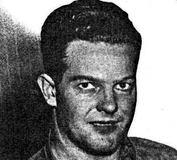 James Waybern Hall
Serial killer · USA · 1944
James Waybern Hall (1921–1946) was executed by electrocution in Arkansas on Jan…
4 victims
James Waybern Hall
Serial killer · USA · 1944
James Waybern Hall (1921–1946) was executed by electrocution in Arkansas on Jan…
4 victims
 Warren Glowatski
Homicide · Canad a · 1997
Warren Glowatski (born April 26, 1981 in Medicine Hat, Alberta) was a Canadian…
1 victim
Warren Glowatski
Homicide · Canad a · 1997
Warren Glowatski (born April 26, 1981 in Medicine Hat, Alberta) was a Canadian…
1 victim
- Gender
- male
- Country
- USA
- Location
- Glynn County, Georgia, USA
- Date of birth
- 1957
- Age at first offence
- 28
- Characteristics
- burglary
- Victim profile
- Auzzie Douglas Sr., 55 (a disabled man)
- Method of murder
- Shooting
- Date(s) of murder
- October 14, 1985
- Years active
- 1985
- Date of arrest
- —
- Status
-
Sentenced to death
Sentenced to death on December 23, 1986
Case overview
Michael Anthony Cohen, 40, was sentenced to death in Glynn County in December 1986. He had previously been convicted four times of burglary and had been out of prison for just over a month when he committed the crimes for which he was convicted in this case. He appealed his conviction, raising six enumerations of error, and the appellate court affirmed.
Timeline
- August 14, 1985 — The crime occurred.
- October 13, 1985 — Michael Anthony Cohen stole a handgun.
- October 14, 1985 — The victim visited his son nearby before returning home; Ruby Douglas observed a young man running away from the front doorway; Auzzie Douglas, Sr., was shot to death inside his home.
- October 23, 1985 — Michael Anthony Cohen was indicted.
- December 1, 1986 to December 4, 1986 — The guilt-innocence phase of Cohen’s trial took place.
- December 4, 1986 — The jury returned its guilty verdict.
- December 5, 1986 — The sentencing trial took place; the jury returned its sentencing verdict.
- December 23, 1986 — Michael Anthony Cohen was sentenced to death.
- December 30, 1986 — Cohen filed a motion for new trial.
- February 16, 1987 — Cohen amended the motion for new trial.
- February 17, 1987 — The motion for new trial was denied.
- March 6, 1987 — Cohen filed his notice of appeal.
- March 17, 1987 — The case was docketed in the appellate court.
- May 13, 1987 — The case was orally argued.
- October 7, 1987 — The appellate court decided the case.
- October 29, 1987 — Reconsideration was denied.
Background
The crime occurred on August 14, 1985, and Cohen was indicted October 23, 1985. Cohen had a history of burglary convictions. He had been out of prison about a month when he started burglarizing homes again, stealing a handgun on October 13, 1985.
The offence
On the evening of October 14, 1985, the victim, Auzzie Douglas, Sr., visited his son, Auzzie, Jr., who lived nearby. Shortly before 8:00 p.m., Auzzie, Sr., returned home. Ruby Douglas, the victim’s wife, arrived home from work soon afterwards. She observed a young man running away from the front doorway of the house.
Ruby Douglas entered and found her husband lying on the living room floor, bleeding from his ear. Barbara Waters, the victim’s stepdaughter, called him at 8:00 p.m. He answered the telephone, and then she heard noises that sounded like “he was banging a pot on the counter.” She “heard him holler and . . . heard something fall.” She waited a few moments thinking perhaps he was playing a trick. She then heard her mother screaming Auzzie’s name. Ruby picked up the phone and told her daughter to come over that something had happened to Auzzie. Ruby called the police.
Auzzie, Sr., had been shot in the head just behind his left ear and in the chest, and he had a gunshot wound in the web of his left hand.
At trial, the defendant testified that he had a serious drug problem and that he needed money for drugs. He entered the victim’s home thinking no one was there. He entered the bedroom and took the watch and the gun. He said that when the telephone rang, someone answered. He turned around and saw the victim standing in the doorway facing him. He said he panicked, shot twice, and ran.
Investigation
Police subsequently recovered a pistol that the defendant sold that evening for $10. The gun, which belonged to the victim, was identified by a ballistics examination as the murder weapon. The defendant’s fingerprints were found on a window screen where he had entered the victim’s home.
When the defendant was arrested, police found on his person a watch that had belonged to the victim. After his arrest, the defendant gave several statements to police.
In one statement, he claimed that he was somewhere else at the time of the crime and had picked up the watch a few minutes before he was arrested. When informed that his fingerprints had been found at the crime scene, he conceded that he “must have been there.”
He then said that when he entered the victim’s house through the window, he saw a man lying on the floor. He said he panicked and ran out the front door just as someone drove up. After the police recovered the murder weapon, he changed his story again and said he saw the gun lying next to the man on the floor; he stopped just long enough to retrieve the gun before running away.
When police told him they did not believe his story, he stated that he did not mean to kill the victim, and that, if he could get a good deal, he would be glad to tell the entire story. He gave several other statements, including one in which he claimed to have been standing outside the victim’s home when he heard “two or two and a half gunshots.” He said he entered the home looking for something to take, took a watch, and left.
Trial
Michael Anthony Cohen was convicted by a Glynn County jury of malice murder, burglary, and possession of a firearm by a convicted felon. Before Judge Taylor, the court instructed the jury that if it found one or more statutory aggravating circumstances, it was to select one of two penalties: penalty (A) being death, and penalty (B) being life imprisonment.
Cohen was sentenced to death.
During the court’s oral instructions, the court told the jury: “If your recommendation is that the defendant be sentenced to death by electrocution, after having completed number one above, then Mr. Foreman, you would circle either (A) or The defendant argues that this "palpable error in the charge . . . throws doubt on the verdict." This error clearly was a slip of the tongue which could not have misled the jury. See Gober v. State, 247 Ga. 652 (278 SE2d 386) (1981) . Moreover, any possible mistaken reliance on this erroneous charge could only have benefitted the defendant.
The jury found two statutory aggravating circumstances supporting the death sentence for the crime of murder:
- The offense of murder was committed while the offender was engaged in the commission of the burglary, OCGA 17-10-30 (b) (2).
- The defendant committed the offense of murder for the purpose of receiving money or any other thing of monetary value, OCGA 17-10-30 (b) (4).
Cohen argued that the findings were not supported by the evidence, asserting that the evidence showed he was an unarmed burglar with intent only on finding goods to sustain his drug habit, who was surprised by the owner of the home, and thereafter “totally abandoned” his “undertaking to burglarize the victim’s home” and shot the victim only in attempt to extricate himself from an “unexpected predicament.” He argued that he was no longer engaged in the commission of burglary when he shot the victim and that he did not commit murder for the purpose of receiving money or other things of monetary value.
The appellate court held that it could not agree. It stated that Cohen took a gun and a watch belonging to the victim and shortly thereafter pawned the gun, so it could not be plausibly argued that he abandoned his attempted burglary, and that he carried out his original purpose for entering the home to commit a theft therein. It also stated that one does not signal abandonment of burglary by the commission of the offense of murder. The jury was authorized to conclude that Cohen committed murder to complete the crime of burglary and for the purpose of obtaining two items having monetary value: the victim’s watch and gun. The appellate court cited Horton v. State, 249 Ga. 871 (11) (295 SE2d 281) (1982).
The appellate court also held that the evidence overwhelmingly supported Cohen’s conviction for burglary, and that the jury was authorized to find that Cohen “unlawfully and with malice aforethought” shot the victim as he stood talking on the telephone, facing away from Cohen. The court referenced Jackson v. Virginia, 443 U. S. 307 (99 SC 2781, 61 LE2d 560) (1979).
Cohen also argued that the court erred in refusing to answer the jury’s request for a definition of “life imprisonment in terms of years in prison,” or by responding that the jury was “bound” by the charge that had been given and that such was “the law of this state.” The appellate court held that the court did not err and cited Quick v. State, 256 Ga. 780 (9) (353 SE2d 497) (1987); Westbrook v. State, 256 Ga. 776 (5) (353 SE2d 504) (1987).
Sentencing
The appellate court held that it did not find that the sentence of death was imposed as a result of passion, prejudice or other arbitrary factor. It stated that it was shown Cohen had been convicted four times previously of burglary and that he had been out of prison for just over a month when he committed the crimes.
The appellate court held that the sentence of death was neither excessive nor disproportionate to sentences imposed in similar cases, considering both the crime and the defendant. It cited OCGA 17-10-35 (c).
Appeals
Cohen appealed his conviction, raising six enumerations of error. The appellate court affirmed the convictions and held that the evidence supported the jury’s findings of statutory aggravating circumstances. It rejected Cohen’s arguments regarding sufficiency of the evidence, the jury instructions error regarding the parole “slip of the tongue,” and the court’s refusal to define “life imprisonment in terms of years in prison.”
Sentence Review
The appellate court reviewed the death sentence, and it held it was not imposed as the result of passion, prejudice or other arbitrary factor. It also found it was neither excessive nor disproportionate to sentences in similar cases, citing OCGA 17-10-35 (c).
Reconsideration
The appellate court decided the case on October 7, 1987. Reconsideration was denied on October 29, 1987.
Outcome
The appellate court affirmed Cohen’s conviction and death sentence.
Aftermath
Cohen’s case had been sent back to Glynn County on the issue of mental retardation.
Other details
- The appellate case referenced COHEN v. THE STATE. 44457. ( 257 Ga. 544 ) ( 361 SE2d 373 ) (1987).
- The opinions cited BELL, Justice.
- Counsel for appellee included Glenn Thomas, Jr., District Attorney; Michael J. Bowers, Attorney General; and Mary Beth Westmoreland, Assistant Attorney General.
- John W. Davis represented Cohen for appellant.
- Notes: The crime occurred on August 14, 1985, and Cohen was indicted October 23, 1985. The guilt-innocence phase lasted from December 1 to December 4, 1986, with the guilty verdict returned on December 4. The sentencing trial took place on December 5, with the jury returning its sentencing verdict that day. Cohen filed a motion for new trial on December 30, 1986, and amended it on February 16, 1987. The motion was denied on February 17, 1987, and Cohen filed his notice of appeal on March 6, 1987. The case was docketed on March 17, 1987, and orally argued on May 13, 1987.

Spotted an error, or have more information about this case?