
Debra Lynn Baker
Murderer Bobbie Sue Terrell
Murderer · USA · 1984
Bobbie Sue Dudley Terrell was a Pinellas County nurse and worked as the night s…
12 victims
Bobbie Sue Terrell
Murderer · USA · 1984
Bobbie Sue Dudley Terrell was a Pinellas County nurse and worked as the night s…
12 victims
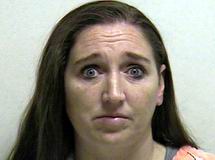 Megan Huntsman
Murderer · USA · 1996
Megan Huntsman was 40 at sentencing. She was a mother of three children who wer…
6 victims
Megan Huntsman
Murderer · USA · 1996
Megan Huntsman was 40 at sentencing. She was a mother of three children who wer…
6 victims
 Angela Johnson
Murderer · USA · 1993
Angela Jane Johnson was convicted in federal court of aiding and abetting the m…
5 victims
Angela Johnson
Murderer · USA · 1993
Angela Jane Johnson was convicted in federal court of aiding and abetting the m…
5 victims
 Catherine May Wood
Murderer · USA · 1987
Catherine May Wood was an American caregiver who worked at the Alpine Manor Nur…
5 victims
Catherine May Wood
Murderer · USA · 1987
Catherine May Wood was an American caregiver who worked at the Alpine Manor Nur…
5 victims
 Michele Kalina
Murderer · USA · 1996
Michele Kalina pleaded guilty to murder for one of five infants she initially w…
5 victims
Michele Kalina
Murderer · USA · 1996
Michele Kalina pleaded guilty to murder for one of five infants she initially w…
5 victims
 Amy Bishop
Murderer · USA · 1986
Amy Bishop — biology professor and perpetrator · James Anderson — Bishop’s husb…
4 victims
Amy Bishop
Murderer · USA · 1986
Amy Bishop — biology professor and perpetrator · James Anderson — Bishop’s husb…
4 victims
 Anthony & Damian Clemente
Murderers · USA · 1995
November 6, 1995 — Anthony and Damian went to the 99 Restaurant; Anthony used a…
4 victims
Anthony & Damian Clemente
Murderers · USA · 1995
November 6, 1995 — Anthony and Damian went to the 99 Restaurant; Anthony used a…
4 victims
 Jade Olmstead
Murderer · USA · 2012
Jade Olmstead (also named Nichole “Jade” Olmstead) — charged and pleaded guilty…
1 victim
Jade Olmstead
Murderer · USA · 2012
Jade Olmstead (also named Nichole “Jade” Olmstead) — charged and pleaded guilty…
1 victim
 Clara Schwartz
Murderer · USA · 2001
Clara Schwartz was convicted of first-degree murder and sentenced to serve 48 y…
1 victim
Clara Schwartz
Murderer · USA · 2001
Clara Schwartz was convicted of first-degree murder and sentenced to serve 48 y…
1 victim
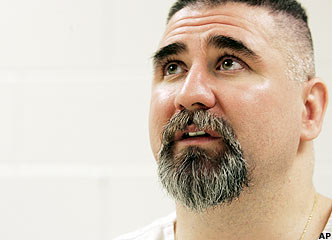 James Filiaggi
Murderer · USA · 1994
James J. Filiaggi (also referred to as James J. Filiaggi) was a death-row priso…
1 victim
James Filiaggi
Murderer · USA · 1994
James J. Filiaggi (also referred to as James J. Filiaggi) was a death-row priso…
1 victim
- Gender
- female
- Country
- USA
- Location
- Clay County, Texas, USA
- Date of birth
- August 5, 1956
- Age at first offence
- 34
- Characteristics
- poisoner
- Victim profile
- Jerry Sternadel (her millonaire boss)
- Method of murder
- Poisoning (arsenic)
- Date(s) of murder
- June 12, 1990
- Years active
- 1990
- Date of arrest
- —
- Status
-
Imprisoned
Sentenced to 10 years probation on June 30, 1993; probation was revoked on December 1, 2003
Overview
Debra Lynn Baker was convicted of Jerry Sternadel’s murder. She received 10 years probation and a $10,000 fine. Her probation was later revoked and she was sent to prison.
Timeline
- June 30, 1993 — Debra Lynn Baker was sentenced to 10 years probation.
- December 1, 2003 — Debra Lynn Baker entered prison and her probation was revoked.
- June 24, 2013 — Debra Lynn Baker’s projected release date was listed by the Texas Department of Criminal Justice.
Background
Debra Lynn Baker was employed as a bookkeeper and business manager for Jerry Sternadel, described as a millionaire Texan entrepreneur. She was also described as a close confidant of Sternadel's wife, Lou Ann. Jeannie Walker, identified as Sternadel’s ex-wife in the material, said that Sternadel confronted Baker about money missing from his bank accounts and told her he had found over $100,000.
The material also states that prior to his death, Sternadel felt Baker was acting in collusion with his then-wife, Lou Ann Sternadel, and that, despite the fact that Lou Ann was never charged, jurors in the murder case must have believed it too. It further describes that a jury gave Baker probation and that the jurors felt she was the scapegoat.
The offence
In 1990, Jerry Sternadel fell deathly ill. While in his hospital bed, he told attendants and others that he believed Debra and Lou Ann had poisoned him and that they had stolen money from him and were now killing him. The material states that a follow-up autopsy revealed that Jerry Sternadel had ingested a lethal dose of arsenic and that he had ingested arsenic over a period of time until lethal levels finally killed him.
The material states that an autopsy and death certificate affirmed that arsenic was given over time until lethal amounts finally killed him, and that the arsenic poison was found in a storage locker the bookkeeper rented. It further states that Jerry’s death followed him becoming deathly ill and dying in the hospital several days later.
The prosecution’s trial theory is described as a hate-triangle and love-triangle narrative: Jerry hated his wife and wanted to divorce her; Debra hated her boss; and Lou Ann hated the thought of losing her lavish lifestyle. The material states that prosecutors argued Debra Baker poisoned Jerry so he would not divorce his wife and so he could not have the bookkeeper arrested for embezzlement. The material also states that the prosecutor’s theory included that the wife and bookkeeper were confederates in a conspiracy to murder Jerry Sternadel for his money.
The material also includes a verbatim dying declaration attributed to Lou Ann Sternadel’s husband:
"Those two women stole $35,000 from me. They're trying to kill me!"
The material also includes a verbatim hospital declaration attributed to Sternadel:
“He told me there was over $100,000 that he found real quick. He said he wanted the money back or I’m going to have her arrested for embezzlement.”
Investigation
After Sternadel died, an anonymous caller tipped off the police about a $350,000 life insurance policy the widow stood to gain from Sternadel’s death.
The material states that arsenic was found in a storage shed or storage locker rented by Debra Baker, and that she was arrested and charged with Jerry Sternadel’s murder.
Arrest
The material states that when a trace of the poison was found in a storage shed rented to Debra, she was immediately arrested and charged with Jerry’s murder.
Trial
The material states that the murder trial took place in 1994 and that the jury found Debra Lynn Baker guilty.
It also states that the prosecution painted a picture of a hate triangle and a love triangle, and it describes the missing presence of the wife of the man who was murdered, stating that Lou Ann Sternadel did not attend one day of the murder trial and was not seen at trial.
The material states that the jury found Baker guilty of murder. In one portion it states that the jury found her guilty of “First Degree Murder.” It also states that the jury sentenced her to 10 years probation and fined her $10,000.
The material includes a verbatim statement attributed to the district attorney and others about the sentence:
“Travesty of Justice”
Sentencing
The material states that the jury sentenced Debra Lynn Baker to 10 years probation and fined her $10,000.
Appeals
The material states that Debra Lynn Baker exhausted many appeals in an effort to stay out of prison.
Outcome
Debra Lynn Baker’s probation was revoked, and she was sent to prison in 2003 for 10 years.
The material also states that when she entered prison, it occurred on December 1, 2003.
Aftermath
A later section of the material describes that Jeannie Walker, the ex-wife of Jerry Sternadel, said Baker was about to come up for parole and that Walker did not expect the board to make a determination until June, with the board reviewing the case as required under state law.
The material states that Baker was in the custody of the Texas Board of Pardons and Paroles at the time of the parole review and that she was incarcerated by the Texas Board of Pardons and Paroles.
It also states that Walker said Sternadel’s confrontation about money missing from his bank accounts contributed to the suspicion about Baker. Walker further said she talked to jurors about why they would give Baker probation and that the jurors said they felt she was the scapegoat and that “the widow was the one who had committed the crime.”
The material describes additional criminal justice events involving Baker after the murder conviction:
- In 1993, Baker was indicted by a Hays County Grand Jury for forging his name on two checks totaling $3,200.
- That forgery case did not go to trial until after Baker had been given probation on the murder charge, and Walker said the judge indicated that because she had gotten probation for murder, he couldn’t give her any more for forgery.
- In 1999, Baker was given deferred adjudication on a hot check charge, which was described as a violation of her probation and the reason she wound up in prison.
- In 2003, Baker was arrested for parole violations.
The material includes a verbatim statement attributed to Jeannie Walker:
“So she’s under 10 years probation in two different counties,” Walker said.
“I talked to jurors about why they would give her probation. They said they felt she was the scapegoat, that the widow was the one who had committed the crime.”
“They said they felt she was the scapegoat, that the

Spotted an error, or have more information about this case?