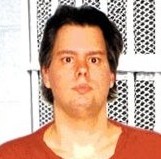
Walter Ogrod
Murderer Brian Kevin Rosenfeld
Murderer · USA · 1985
Brian Kevin Rosenfeld Brian Kevin Rosenfeld was sentenced to three concurrent l…
23 victims
Brian Kevin Rosenfeld
Murderer · USA · 1985
Brian Kevin Rosenfeld Brian Kevin Rosenfeld was sentenced to three concurrent l…
23 victims
 Yahweh ben Yahweh
Murderer · USA · 1980
Yahweh ben Yahweh was born and legally named Hulon Mitchell Jr. (October 27, 19…
23 victims
Yahweh ben Yahweh
Murderer · USA · 1980
Yahweh ben Yahweh was born and legally named Hulon Mitchell Jr. (October 27, 19…
23 victims
 Russell Ellwood
Murderer · USA · 1991
Russell Ellwood was a former taxi driver. Authorities suspected him of killing…
20 victims
Russell Ellwood
Murderer · USA · 1991
Russell Ellwood was a former taxi driver. Authorities suspected him of killing…
20 victims
 Robert Martines Perez
Murderer · USA · 1994
Name: Robert Martines Perez · Other name used in proceedings: Robert Martinez P…
15 victims
Robert Martines Perez
Murderer · USA · 1994
Name: Robert Martines Perez · Other name used in proceedings: Robert Martinez P…
15 victims
 Robert Lloyd Henry
Murderer · USA · 1993
Robert Lloyd Henry was executed in Texas on November 20, 2003. Henry was descri…
2 victims
Robert Lloyd Henry
Murderer · USA · 1993
Robert Lloyd Henry was executed in Texas on November 20, 2003. Henry was descri…
2 victims
 Jamie Reynolds
Murderer · United Kingdom · 2013
Jamie Reynolds murdered 17-year-old Georgia Williams after luring her to his ho…
1 victim
Jamie Reynolds
Murderer · United Kingdom · 2013
Jamie Reynolds murdered 17-year-old Georgia Williams after luring her to his ho…
1 victim
 Larry Davis
Murderer · USA · 1986
Larry Davis (May 28, 1966 - February 20, 2008) changed his name to Adam Abdul-H…
6 victims
Larry Davis
Murderer · USA · 1986
Larry Davis (May 28, 1966 - February 20, 2008) changed his name to Adam Abdul-H…
6 victims
 Andras Pandy
Serial killer · Belgium · 1986
András Pándy (born June 1, 1927, Chop, Ukraine) was a convicted Belgian serial…
13 victims
Andras Pandy
Serial killer · Belgium · 1986
András Pándy (born June 1, 1927, Chop, Ukraine) was a convicted Belgian serial…
13 victims
 Amy DeChant
Murderer · USA · 1996
Amy DeChant became romantically involved with Bruce Charles Weinstein, an illeg…
1 victim
Amy DeChant
Murderer · USA · 1996
Amy DeChant became romantically involved with Bruce Charles Weinstein, an illeg…
1 victim
- Gender
- male
- Country
- USA
- Location
- Philadelphia, Pennsylvania, USA
- Date of birth
- February 3, 1965
- Age at first offence
- 23
- Characteristics
- rape, child abuse
- Victim profile
- Barbara Jean Horn (female, 4)
- Method of murder
- Blows to the head consistent with a metal rod
- Date(s) of murder
- July 12, 1988
- Years active
- 1988
- Date of arrest
- 1992
- Status
-
Sentenced to death
Sentenced to death on November 8, 1996
Case information
Walter Ogrod was convicted in 1996 of murder and involuntary deviate sexual intercourse in the death of 4-year-old Barbara Jean Horn.
Timeline
- July 12, 1988 — The body of 4-year-old Barbara Jean Horn was discovered in a television box.
- January 13, 1989 — A witness identified another man as the person he saw carrying the television box.
- 1992 — Police arrested Ogrod after re-interviewing him and other neighbors.
- 1993 — Ogrod went on trial; a mistrial was granted after a juror changed his mind at the last second.
- October 1996 — Ogrod was sentenced to die after a jury convicted him.
- November 8, 1996 — Ogrod was formally sentenced.
- May 2002 — Arguments were made in Ogrod’s appeal.
- Dec. 30, 2003 — A decision was reached upholding Ogrod’s conviction and death sentence.
- 6/9 — A judge stayed an August 2005 execution and gave Walter J. Ogrod more time to pursue post-conviction appeals.
The offence
On July 12, 1988, Barbara Jean Horn, aged four, died after being lured into the basement of Ogrod’s home.
A Medical Examiner determined that the cause of death was the blows to the head consistent with a metal rod.
In his statement to detectives, Ogrod said Barbara Jean came to his door looking for the 5-year-old boy who was not at home, and that he enticed her into the basement by asking if she wanted to play doctor. Ogrod said he took off her clothing and started rubbing his penis against her leg. Ogrod said that when he tried to push her face into his penis, Barbara Jean started to scream. He said he held her down and hit her repeatedly with a pipe, adding: "it might have been my small pull down bar to my weight set." Ogrod stated that she did not move again, that she was bleeding, and that he grabbed a cloth and placed her in the tub holding her head under water. He described disposing of the body by placing her in a plastic bag, placing the body in an empty box nearby, and carrying the box some distance before deciding to leave it near some garbage cans.
Barbara Jean was found nude and in a fetal position lying on her side. A green trash bag covered the dead body. The Medical Examiner testified to bruises on her shoulders and a large gash on her head approximately one-half inch wide, which was not actually bleeding at the time but had some seepage, and that her hair was matted with blood. The Medical Examiner did not observe any blood on the body and thought that the body had been washed.
A prosecutor description also stated that Ogrod lured Barbara Jean into the basement by offering her chocolates, attempted to sexually assault her, and when she screamed, hit her over the head with an iron bar from a weight-lifting set. It stated that he placed her lifeless body in a plastic bag, stuffed it into a cardboard television box, and carried the box around the block to be taken out with the trash on the 1400 block of St. Vincent St., and that her nude and battered body was discovered because the box had been placed on the curb after trash had already been collected.
Investigation
A Philadelphia Police Department homicide sergeant responded to a call at 1409 Saint Vincent Street and arrived at approximately 6:45 P.M. with other detectives from the Homicide Division. Uniformed police protected 1409 Saint Vincent Street and detectives observed the television box, opened it, and saw the body of a young child in the box.
Soon after, the sergeant learned that a little girl who lived at 7245 Rutland Street, approximately a block and a half away, was missing. She went to the Rutland Street home of Sharon Fahy and John Fahy, informed them police had found a television box nearby containing the body of a child, and told them she did not know if the child was their daughter. The Fahys identified the body at the office of the Medical Examiner.
The Medical Examiner opened the box in the presence of the sergeant, and the sergeant told the jury that she saw a green trash bag covering the dead body of Barbara Jean. After the Medical Examiner removed Barbara Jean from the box, police preserved the box as evidence. The sergeant testified that detectives determined a family had purchased the television and apparently discarded the box. Police attempted to identify fingerprints on the box and the bag but were not successful.
Detectives asked Ogrod to come in as an information witness to determine whether he knew Barbara Jean, her family, the neighborhood, and whether he had heard any rumors about the murder. The detectives conducted a formal interview by asking questions in writing and recording Ogrod’s answers. The interview began with: "Walter, did you know Barbara Jean Horn?" Ogrod admitted he knew Barbara Jean and that she came to the house he shared with the other family on the day of the murder.
During the interview, Ogrod said he answered the door when Barbara Jean was calling on her young friend and that he told her to talk with the boy’s mother because he did not know where the boy was. Ogrod said he did not know whether Barbara Jean ever found her, and he said he went upstairs. When asked what part of the house the woman was in at the time Barbara Jean came into the house, Ogrod said she was in the dining room. When a detective asked whether Ogrod should have been able to see directly into the dining room, Ogrod said perhaps she was in the kitchen, which was not visible from the front door. The detectives then said: "you are not telling us the truth, are you, Walter?" Ogrod put his head in his hands and started to cry. A detective testified at trial that the crying was not “a tear ran down his cheek” but that Ogrod "started crying hard and convulsively." The detective arranged for Ogrod to get a cup of coffee and go to the bathroom, and after a break they returned to the interview room.
After returning, Ogrod began talking before the detectives started to question him. He said he experienced abuse as a child and said he was going to tell the detectives something that he never told anyone including his psychiatrist. The detectives read him his rights. Ogrod said he did not want an attorney. A detective then said: "Walter, you indicated you want to give us a statement at this time. Remember, you can stop whenever you want to. Please go on in your own words and tell us what you would like to say." Ogrod then gave a detailed account of the killing and sexual assault. After Ogrod completed his statement, detectives left the room and returned with questions. Ogrod confirmed the statement was the whole truth. The detectives gave the entire statement to Ogrod to read. Detectives asked: "Is there anything you would like to add to or change now that you have read these 16 pages?" Ogrod responded: "I am sorry." Ogrod then signed the statement.
The update narrative also stated that the case remained unsolved for four years and that police re-interviewed Ogrod and other neighbors in 1992.
Arrest
Police arrested Ogrod in 1992 after re-interviewing him and other neighbors.
Evidence and witness testimony
A manager of a car dealership testified that on the day the body was discovered, at approximately 5:00 or 5:30 P.M., he was looking from an office window onto Saint Vincent Street. He said he saw a man approximately twenty-five feet away carrying a television box, holding it so the witness could see printed on the box the words "color television, inches." He identified the box the prosecution marked as an exhibit as the box he saw that day. He testified he thought the box was heavy because when the man got on the other side of Saint Vincent Street, he laid the box down to catch his breath. The manager said the man carried the box down the sidewalk in front of a church on Saint Vincent Street and then started to drag it by a plastic bag sticking out of the box.
Another witness testified that in 1988 he lived at a house on St. Vincent Street and that at 5:12 P.M. he sat on the tailgate of his Chevrolet station wagon reading a newspaper with his wife in the passenger seat while waiting for their children to return home in a camp van before leaving for a doctor’s appointment. The witness testified he saw a man near the church approach his house alternately carrying a 13-inch color television box and dragging it by a plastic bag inside the box. He identified the 13-inch color television box in court as the box he saw on July 12, 1988. He said he saw the man walk up his steps, told the man not to leave the box because trash had already been removed, and that the man said he thought Wednesday was trash day while the witness told him trash day was Tuesday and had been picked up already. The witness asked what was in the box, and the man said it contained some old junk. The witness said when the man continued on, he turned his attention to a newspaper delivery boy who had just arrived. At 5:23 P.M., his children came home and he lost track of the man with the box. At 5:26 P.M., the family drove away for a doctor’s appointment. When they returned, police had blocked off the street. The witness looked up the street, recognized the television box, approached the scene, and told police he had seen the box being carried. He admitted he only saw the man’s face briefly and provided a description: a white male between 20 and 25, about 5'8" in height, 165 pounds, with sandy colored hair. He could not identify Ogrod in court and admitted that on January 13, 1989, he identified another man as the person he saw carrying the television box.
John Fahy testified that on the afternoon of Wednesday, July 12, 1988, Barbara Jean was at home with him at 7245 Rutland Street. He said Sharon Fahy went to work that morning, Barbara Jean dressed herself in pink shorts and a multi-colored sleeveless shirt with pastel stripes, he fed her breakfast, played with her, and watched television with her. He said they went to a small grocery market, returned home, and Barbara Jean had lunch. He estimated that at approximately 3:00 P.M. he started to clean the refrigerator, and Barbara Jean was in and out of the house and came in asking if she could help. He told her no and to go outside and play. He said Barbara Jean went into their front yard to play. After forty-five minutes to an hour, Fahy checked on her and told the jury he did not see her and that she did not return when he called. He said he talked with neighbors and searched for Barbara Jean. He testified that at 4:55 P.M. he started getting really nervous and called his wife, who told him to keep looking while she came home. He said his wife’s sister came to the house and joined in the search. Fahy testified that at approximately 6:00 P.M. his wife’s sister returned in a police vehicle. Soon after, a homicide sergeant arrived and told the Fahys the body of a child had been found nearby in a television box.
A woman living across the street at 7244 Rutland Street testified that the family lived in Ogrod’s house and that she heard Fahy calling for Barbara Jean but did not see the child.
The aunt testified that she gave Lieutenant Kelly a photograph of Barbara Jean and accompanied her to the police station. She stated that before the murder she did not want Barbara Jean to play at the little boy’s house because it was really a mess, there were a lot of people always coming and going, and she had no idea who exactly lived there and who didn’t. She said that the next morning the Fahys went to the Office of the Medical Examiner and identified the body of her daughter, Barbara Jean.
An officer briefly lifted the lid of the box. The daughter testified that she saw a child's body on its side and a little head with a green trash bag on top.
Confession and statement
Ogrod gave a detailed statement describing how he lured Barbara Jean into the basement, sexually assaulted her, hit her repeatedly with a pipe (described as "it might have been my small pull down bar to my weight set"), placed her in a tub holding her head under water, and disposed of her body in a cardboard television box after placing her in a plastic bag.
When Ogrod completed the statement, detectives showed him photographs of the box first closed and then open, and Ogrod identified the box he had placed the child in and confirmed that Barbara Jean was in the box.
At the end of the interview process, after reading the written statement, Ogrod responded "I am sorry" to a question about whether he wanted to add to or change anything, and he signed the statement.
Trial
The 1993 trial ended in a mistrial after a juror changed his mind at the last second. A juror named Alfred Szewczak changed his mind. The narrative stated that because there were only 11 votes for an acquittal, a mistrial was granted. A later narrative stated that Ogrod was about to be found not guilty when Szewczak changed his mind.
Three years later, Ogrod was tried again. This time, a jury convicted him in less than two hours.
At trial, a detective explained the meaning of Ogrod crying, stating it did not mean “a tear ran down his cheek” but that he "started crying hard and convulsively."
Ogrod’s criminal charges in 1996 trial were described as murder and involuntary deviate sexual intercourse in the death of 4-year-old Barbara Jean Horn. The narrative also stated that Ogrod killed Barbara Jean on July 12, 1988, in Castor Gardens.
Sentencing
In October 1996, Walter Ogrod was sentenced to die for sexually assaulting and bludgeoning to death four-year-old Barbara Jean Horn.
Ogrod was formally sentenced on November 8, 1996.
The narrative further stated that Ogrod was 39 at the time of formal sentencing and that he had been convicted in 1996 of murder and involuntary deviate sexual intercourse in the death of 4-year-old Barbara Jean Horn.
Appeals
The Pennsylvania Supreme Court upheld Ogrod’s conviction and death sentence.
It was stated that in the appeal Ogrod argued that his trial lawyer, Mark S. Greenberg, was ineffective. Lorie Dakessian handled the appeal for the district attorney’s office. Arguments were made in May 2002 and a decision was reached on Dec. 30, 2003.
District Attorney Lynne Abraham stated: “We are gratified by the court’s decision to uphold the conviction and death penalty,” and also stated: “The murder of four-year-old Barbara Jean Horn was especially brutal, and justice was done in this case.”
A further narrative stated that the Pennsylvania Supreme Court denied Ogrod’s request for resentencing. It stated that his attorneys argued they should be able to reargue his sentence and cited a 2001 law instructing jurors not to ignore a defendant’s clean criminal history when deliberating a death penalty case. It stated that the justices split 3-3. It also stated that three justices argued new court procedures should apply to pending appeals, such as Ogrod’s, and three disagreed. It said the decision was the second defeat for Ogrod in a four-month period.
It was stated that on Dec. 30, 2003, the state Supreme Court upheld Ogrod’s conviction and that his argument included that his trial lawyer, Mark S. Greenberg, was ineffective.
Outcome
Ogrod’s conviction and death sentence were upheld by the Pennsylvania Supreme Court.
A later update stated that a judge stayed an August 2005 execution of a man convicted of sexually assaulting and killing a 4-year-old girl in Philadelphia in 1988. It stated that Philadelphia Common Pleas Judge David Savitt on 6/9 stayed the execution and gave Walter J.
A quote from Alfred Szewczak stated: “I’m glad they found him guilty,” and also: “I believed with all my heart he was guilty.”
Other details
A narrative also stated that the case remained unsolved for four years and that an arrest was not made until 1992.
Ogrod’s defense later contended that homicide detectives coerced a statement out of him and that inmate Jason Banachowski made up his story.
The narrative stated that at the time of Ogrod’s 1996 conviction and death sentence, he had no criminal record before the murder.
Spotted an error, or have more information about this case?