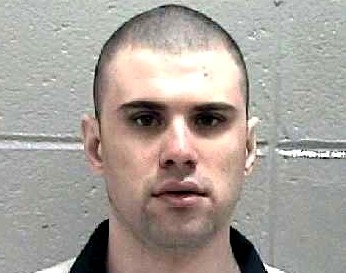
Dorian O'Kelley
Murderer Robert Martines Perez
Murderer · USA · 1994
Name: Robert Martines Perez · Other name used in proceedings: Robert Martinez P…
15 victims
Robert Martines Perez
Murderer · USA · 1994
Name: Robert Martines Perez · Other name used in proceedings: Robert Martinez P…
15 victims
 Billy Frank Vickers
Murderer · USA · 1993
Billy Frank Vickers Vickers was executed by lethal injection in Texas on Januar…
14 victims
Billy Frank Vickers
Murderer · USA · 1993
Billy Frank Vickers Vickers was executed by lethal injection in Texas on Januar…
14 victims
 Magdelena Luczak
Murderer · United Kingdom · 2012
Magdelena Luczak was the mother of Daniel Pelka. She lived with her partner, Ma…
1 victim
Magdelena Luczak
Murderer · United Kingdom · 2012
Magdelena Luczak was the mother of Daniel Pelka. She lived with her partner, Ma…
1 victim
 Danny Dean Thomas
Murderer · USA · 1981
Danny Dean Thomas was a Texas death row inmate. He died in prison on August 29,…
1 victim
Danny Dean Thomas
Murderer · USA · 1981
Danny Dean Thomas was a Texas death row inmate. He died in prison on August 29,…
1 victim
 John Patrick Henretta
Murderer · USA · 1988
John Patrick Henretta was sentenced to death in Tennessee on April 6, 2002. · N…
2 victims
John Patrick Henretta
Murderer · USA · 1988
John Patrick Henretta was sentenced to death in Tennessee on April 6, 2002. · N…
2 victims
 Murray Hooper
Murderer · USA · 1980
Defendant: Murray Hooper Victim: Patrick Redmond Victim: Helen Phelps Victim: M…
Murray Hooper
Murderer · USA · 1980
Defendant: Murray Hooper Victim: Patrick Redmond Victim: Helen Phelps Victim: M…
 Wellington Menezes de Oliveira
Mass murderer · Brazil · 2011
Wellington Menezes de Oliveira (July 13, 1987 - April 7, 2011) carried out a sh…
12 victims
Wellington Menezes de Oliveira
Mass murderer · Brazil · 2011
Wellington Menezes de Oliveira (July 13, 1987 - April 7, 2011) carried out a sh…
12 victims
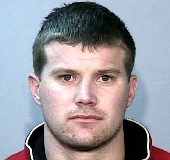 Christopher Hudson
Murderer · Australia · 2007
Christopher Hudson was a member of the Hells Angels Motorcycle Club and was des…
1 victim
Christopher Hudson
Murderer · Australia · 2007
Christopher Hudson was a member of the Hells Angels Motorcycle Club and was des…
1 victim
- Gender
- male
- Country
- USA
- Location
- Chatham County, Georgia, USA
- Date of birth
- 1981
- Age at first offence
- 21
- Characteristics
- rape, robbery, arson
- Victim profile
- Susan Pittman, 41, and her daughter Kimberly, 13
- Method of murder
- Stabbing with knife
- Date(s) of murder
- April 12, 2002
- Years active
- 2002
- Date of arrest
- Next day
- Status
-
Sentenced to death
Sentenced to death on November 17, 2005
Case record: Dorian Frank O'Kelley
Background
Dorian Frank O’Kelley was an accused killer in Chatham County. He was accused of killing a Savannah mother and her daughter and then setting their Whitfield Avenue house on fire.
The Pittman family victims were Susan Pittman and her 13-year-old daughter, Kimberly Pittman. Susan Pittman was 41. Kimberly Pittman died at age 13.
O’Kelley also lived next door to Darryl Stinski, who lived next door to Susan and Kimberly Pittman. Stinski was also facing the death penalty, but was to be tried separately at a later date.
O’Kelley wrote to another inmate, Chris Bowen, who was incarcerated in state prison. The two met while both were assigned to the same unit at the county jail. O’Kelley’s letter was written to Chris Bowen.
The offence
In the early morning hours of April 11, 2002, police reports and court documents said O’Kelley and Darryl Stinski killed Susan Pittman and her daughter Kimberly Pittman, and then set the Whitfield Avenue house on fire.
In the facts given by the Supreme Court of Georgia, the State contended that two Chatham County police officers were leaving a convenience store when they spotted a fire and rushed to the scene. They found a house fully engulfed in flames. One of the officers saw two men, O’Kelley and Stinski, watching from across the street. Later, investigators found the two bodies.
In the Supreme Court of Georgia facts, Susan Pittman died from blunt force trauma to the head and stab wounds to her heart and abdomen, and was probably dead before the fire was started. Kimberly Pittman died from smoke inhalation.
O’Kelley told a group at a trailer where Stinski was staying that he and Stinski had stolen items from cars. He also told one member that he’d slit Susan Pittman’s throat and raped her daughter “just for his pleasure.” He showed the man a tooth in his wallet that he said was the girl’s. A later report to police included what O’Kelley had said and items that were found in a red duffle bag, including pill bottles with Susan Pittman’s name on them.
At trial, the jury heard a taped statement in which O’Kelley confessed he’d beaten and stabbed the victims, as well as raped and sodomized the 13-year-old, then started the fire when she was still alive.
Investigation
A grand jury indicted O’Kelley and Darryl Stinski in June 2002.
Det. Robert von Lowenfeldt of the Savannah Chatham Metropolitan Police Department used O’Kelley’s letter as the basis for an Oct. 27 search warrant application. O’Kelley had written that the tape was in his mother’s safe-deposit box.
Police learned that box was at the BB&T bank on Hodgson Memorial Drive.
Superior Court Judge James Bass Jr. approved the warrant, but von Lowenfeldt did not find the tape there.
Von Lowenfeldt’s application revealed that O’Kelley also wrote about “how he raped, sodomized, tortured and killed Kimberly Pittman,” according to the warrant application filed with the clerk of court.
The application also revealed that O’Kelley wrote that he’d retrieved the camera from the trunk of a car.
A defense motion sought to restrict the crime scene photos the jury could see. The motion made clear that very little of the bodies survived the blaze so no physical evidence of a sexual assault could be recovered.
A two-week period before the Georgia Supreme Court ruling is referenced, where the Georgia Supreme Court ruled unanimously to exclude a detailed confession O’Kelley made to detectives after he’d requested an attorney during a routine court hearing.
Prosecutors likely intended to try to introduce the letter into evidence, while the gag order prevented anyone involved from speaking about the possibility of any video.
Arrest
The men were arrested the next day after the report from the group. Officers found what appeared to be a tooth in O’Kelley’s wallet.
Trial
O’Kelley was charged with murder in connection with the slayings of Susan Pittman and Kimberly Pittman.
In 2005, a jury convicted O’Kelley of the malice murders of Susan and Kimberly Pittman, as well as cruelty to children, arson, burglary and other crimes.
During death penalty jury selection:
- Potential jurors were interviewed individually about their views on the death penalty.
- Potential jurors were asked what, if anything, they may know about the case.
- Lawyers questioned about 200 potential jurors over the past week.
- Before selecting a jury of 12 plus alternates, 60 potential jurors had to be qualified by the judge so they could consider the death penalty as a sentence.
- The two other options were a life sentence without the possibility of parole and a life sentence with the possibility of parole.
- After selection, jurors were sequestered throughout the trial, which was expected to last at least through the week.
A gag order was issued prohibiting anyone involved in the case from speaking about the case.
The trial included a taped statement in which O’Kelley confessed to beating and stabbing the victims, raping and sodomizing the 13-year-old, and starting the fire when she was still alive.
Sentencing
After the sentencing phase, the jury found O’Kelley qualified for the death penalty due to several aggravating circumstances. One aggravating circumstance included that the murders were “outrageously or wantonly vile, horrible or inhuman.”
O’Kelley was sentenced to death on November 17, 2005.
Appeals
O’Kelley appealed his sentence to death following his conviction in Chatham County for the murders of Susan Pittman, 41, and her 13-year-old daughter, Kimberly Pittman.
O’Kelley’s case was set to be argued before the Georgia Supreme Court next week.
Attorneys for O’Kelley argued the trial court erred by failing to exclude six jurors who were biased in favor of a death sentence. They argued those jurors should have been struck for cause, including a state representative whose “personal, public and political life” rendered him incapable of voting for any other punishment, including life in prison with or without the possibility of parole. The failure to exclude those six jurors, attorneys argued, “deprived O’Kelley of his rights to a fair and impartial jury.”
The defense also argued the court erred by not letting the defense give an opening statement prior to the four-day sentencing phase, where they presented 22 witnesses to testify why O’Kelley’s life should be spared.
The defense also argued the trial court erred in denying the defense’s motion to declare Georgia’s lethal injection protocol unconstitutional.
The State argued:
- The court properly qualified the jurors and that the complete record showed none demonstrated a bias that would impair their ability to be impartial.
- There was no inherent right of a criminal defendant to present an opening statement during the penalty phase of a trial.
- Execution by lethal injection does not violate the Constitution’s prohibition against cruel and unusual punishment.
Outcome
Dorian Frank O’Kelley remained under a sentence of death.
Other details
In a 24-page letter to an inmate he met at the Chatham County jail, O’Kelley claimed he propped a video camera on a shelf in Susan and Kimberly Pittman’s home to get clear shots of the attack. The Pittmans’ charred remains were discovered in April 2002.
O’Kelley wrote the letter to Chris Bowen, who was incarcerated in state prison.
A woman accused Bowen, 19, of sexual assault in September 2001. Bowen pleaded to a charge of aggravated assault. Bowen was scheduled for release in March 2005.
Von Lowenfeldt’s application said Bowen contacted his attorney after receiving the O’Kelley letter on Oct. 21. His attorney forwarded it to police.
A defense motion earlier sought to restrict the crime scene photos the jury could see, and that motion made it clear that very little of the bodies survived the blaze so no physical evidence of a sexual assault could be recovered.
A Savannah mother and daughter were killed in the case; investigators found their bodies later.
If the jury selection report is considered as part of case processing: Opening statements in the case were scheduled to begin at 9 a.m. on the day after jury selection began.
Darryl Stinski was scheduled to be tried separately at a later date.
Spotted an error, or have more information about this case?