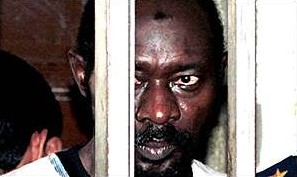
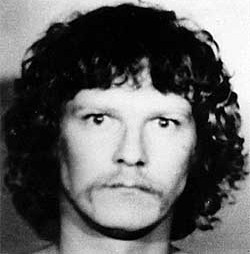
Mohammed Adam Omar
Murderer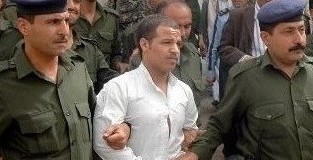 Yahya Hussein Al-Raghwah
Murderer · Yemen · 2008
This is criminal justice, Yemen style. A man accused of raping and murdering an…
1 victim
Yahya Hussein Al-Raghwah
Murderer · Yemen · 2008
This is criminal justice, Yemen style. A man accused of raping and murdering an…
1 victim
 Dr. Wouter Basson
Murderer · 1992
Wouter Basson (born July 6, 1950) was a South African cardiologist and the form…
230 victims
Dr. Wouter Basson
Murderer · 1992
Wouter Basson (born July 6, 1950) was a South African cardiologist and the form…
230 victims
 Ershad Sikder
Murderer · Bangladesh · 1990
Ershad Sikder was an influential political figure in the south-western city of…
30 victims
Ershad Sikder
Murderer · Bangladesh · 1990
Ershad Sikder was an influential political figure in the south-western city of…
30 victims
 Brian Kevin Rosenfeld
Murderer · USA · 1985
Brian Kevin Rosenfeld Brian Kevin Rosenfeld was sentenced to three concurrent l…
23 victims
Brian Kevin Rosenfeld
Murderer · USA · 1985
Brian Kevin Rosenfeld Brian Kevin Rosenfeld was sentenced to three concurrent l…
23 victims
 Russell Ellwood
Murderer · USA · 1991
Russell Ellwood was a former taxi driver. Authorities suspected him of killing…
20 victims
Russell Ellwood
Murderer · USA · 1991
Russell Ellwood was a former taxi driver. Authorities suspected him of killing…
20 victims
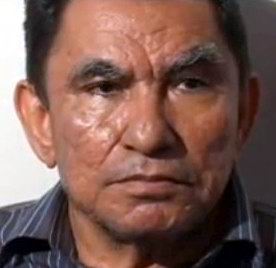 Anisio Ferreira de Sousa
Murderer · Brazil · 1989
September 4, 2003 — Anísio Ferreira de Sousa was sentenced to 77 years in priso…
19 victims
Anisio Ferreira de Sousa
Murderer · Brazil · 1989
September 4, 2003 — Anísio Ferreira de Sousa was sentenced to 77 years in priso…
19 victims
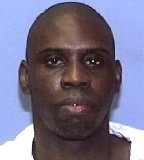 Ronnie Paul Threadgill
Murderer · USA · 2001
Ronnie Paul Threadgill was a Black male. He was 29 years old at the time of tri…
1 victim
Ronnie Paul Threadgill
Murderer · USA · 2001
Ronnie Paul Threadgill was a Black male. He was 29 years old at the time of tri…
1 victim
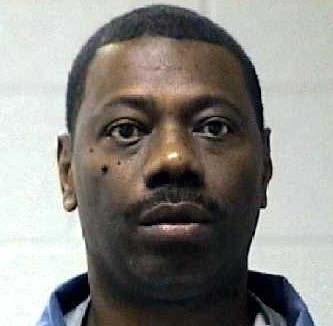 Timothy Carl Dawson
Murderer · USA · 1998
Timothy Carl Dawson was sentenced to life imprisonment without parole on Novemb…
4 victims
Timothy Carl Dawson
Murderer · USA · 1998
Timothy Carl Dawson was sentenced to life imprisonment without parole on Novemb…
4 victims
 Leslie Demeniuk
Murderer · USA · 2001
Leslie Demeniuk was a mother accused of murdering her twin 4-year-old sons, Jam…
2 victims
Leslie Demeniuk
Murderer · USA · 2001
Leslie Demeniuk was a mother accused of murdering her twin 4-year-old sons, Jam…
2 victims
 David Renz
Murderer · USA · 2013
March 14, 2013 — David Renz carjacked Liverpool librarian Lori Ann Bresnahan an…
1 victim
David Renz
Murderer · USA · 2013
March 14, 2013 — David Renz carjacked Liverpool librarian Lori Ann Bresnahan an…
1 victim
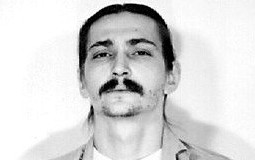 Larry C. Williams
Murderer · USA · 1979
Larry C. Williams and the other men drank beer, smoked pot, and watched TV for…
2 victims
Larry C. Williams
Murderer · USA · 1979
Larry C. Williams and the other men drank beer, smoked pot, and watched TV for…
2 victims
- Gender
- male
- Country
- Yemen
- Location
- Sanaa, Yemen
- Date of birth
- 1952
- Age at first offence
- 43
- Characteristics
- alcohol, convicted rapist, dismemberment, rape, torture, drug addict, mentally ill
- Victim profile
- Young women (students)
- Method of murder
- Strangulation
- Date(s) of murder
- 1995 - 1999
- Years active
- 1995–1999
- Date of arrest
- May 15, 2000
- Status
-
Executed
Executed by firing squad on June 20, 2001
Case identification
Mohammed Adam Omar was a morgue assistant at Sanaa University’s medical faculty.
Timeline
- December 1999 — Omar was arrested following a complaint by the mother of the Iraqi student about her daughter’s disappearance.
- February 2000 — Omar was fired.
- May 12, 2000 — Criminal Investigation unraveled the crime after finding two bodies.
- May 15, 2000 — The University Board of Directors issued a statement following an extraordinary meeting.
- May 16, 2000 — Students organized a sit-in strike at the college of medicine and demanded action.
- May 17, 2000 — The suspect was reported to have confessed to killing 11 other women in Sudan.
- May 28, 2000 — Students staged demonstrations and sit-ins, and a parliamentary/parastate response was discussed.
- May 29, 2000 — Omar pleaded guilty to the new charges on the second day of his trial in Sana’a.
- May 30, 2000 — Students took university officials to court and protested.
- May 31, 2000 — The trial had been adjourned until 3 June.
- June 3, 2000 — Omar withdrew his confession to 14 killings; one alleged victim turned up in court.
- June 4, 2000 — The murder trial was discussed along with interrogation and bodies recovered.
- June 20, 2001 — Omar was executed by firing squad.
Background
Students at Sanaa University said they were outraged over revelations of Mohammed Adam Omar’s killings and dismemberment. Students demonstrated in Sanaa demanding the firing of senior university officials and university security officers.
Students marched to the office of President Ali Abdullah Saleh and presented a list of demands including that the trial of the suspect be televised and “that he be executed and crucified outside the university's faculty of medicine.”
Students at Sana’a University accused officials of failing to investigate missing students and of neglect.
The offence
Killings and dismemberment at Sanaa University
Omar confessed to having killed multiple women, including university students. He said he cut off the hands and feet of his victims, dissolved them in chemicals, and kept their bones as mementos.
Police said they were looking for four associates suspected of helping him with the killings, and investigators were sent to Kuwait, Jordan and Sudan where Omar claimed to have killed additional women.
Yemeni police reported that they had discovered the remains of 15 women around the medical faculty of Sanaa University. Reuters sources close to the investigation said nine of the corpses were skeletons and six were headless bodies, and that two severed heads had also been found. Sources said some remains were found buried and others were in the university’s sewage system.
Numbers of victims mentioned in the proceedings and reporting
- Omar confirmed his confession of having killed 16 women in Yemen, 8 of whom were university students.
- Investigators recovered 12 bodies out of the 16 the accused was believed to have killed during primary investigations.
- Some reporting said that Omar confessed to killing up to 27 women in Yemen and Sudan combined, and that he killed 27 young girls and women, with 16 in Yemen and 11 in Sudan.
- Another account said investigators believed Omar was responsible for 67 deaths throughout the Middle East.
- Germany DNA testing reporting later referenced 21 complete bodies, two sets of mutilated remains, and dozens of parts found in the mortuary.
Modus operandi and allegations about handling bodies
Omar said he denied selling body parts and said he kidnapped victims and took them to the university’s morgue where he hit them hard on the head until they died. He then said he skinned the victims, cut off the hands and feet, dissolved them in chemicals, and kept the bones as mementos.
He also said he tried to sell the hair of his victims to be used in manufacturing wigs.
A Sudanese man suspected of raping and killing women was quoted saying he regretted his murder spree but had been unable to resist the urge to kill “beautiful women.”
Victim described in court: Iraqi and Yemeni nursing students
Omar was sentenced for the murder of:
- Hosn Ahmad Attiya, a Yemeni national, and
- Zeinab Saud Aziz, an Iraqi nursing student.
During the June 3, 2000 trial developments, Omar told the judge: “I only killed two students: Hosn Attiya, a Yemeni, and Zainab Saud, an Iraqi.” He further said:
- “I killed only two women. They accused me of killing 16 women and I said yes. I don't know why I said I killed the others.”
Investigation
Police said the remains of 15 women were discovered around the medical faculty of Sanaa University, including buried remains and remains in the university’s sewage system.
German forensic experts were sent in connection with DNA testing. A court in Yemen heard that German forensic experts found 21 complete bodies, two sets of mutilated remains and dozens of parts. The German experts called in to examine the mortuary were able to confirm that at least two women whose remains were found had been murdered. The women confirmed by German experts were:
- one from Yemen, and
- one from Iraq,
identified as the two victims Omar admitted killing.
The German report to the court said not all bodies found in the mortuary were listed in records, and that at least eight bodies remained unidentified and their presence in the mortuary was still unexplained. The report also said the numerous parts found “could come from many different bodies”.
Presiding judge Yahya al-Aslami ordered that all the bodies and organs be sent to Germany for DNA testing, and that the court would reconvene on 4 July to hear reports from Yemeni officials.
Arrest and custody
Omar was arrested following persistent complaining by the mother of the Iraqi student whose daughter mysteriously disappeared.
He was arrested again and was sent for Criminal Investigation in the Capital Secretariat, after primary interrogations revealed that he confessed to murdering a Yemeni and an Iraqi medical student.
When arrested, police said he tried to commit suicide by slicing open his wrists with glass from his spectacles, but he was overpowered by officers.
Trial
Court presentation and confessions mentioned
During a trial appearance before magistrate Yahia Mohammed Al-Salami in the Secretariat Court of Appeal, Omar confessed to having killed 16 students, including 8 university students.
He was produced before the magistrate in the presence of:
- advocate Dr. Mohammed Al-Khatib as the defendant’s lawyer, and
- advocate Ismael Al-Deilami as the victims’ families’.
Omar was also described as having confessed to selling victims’ gold for YR 2 millions by Yasmin Al-Alawadhi, who fell in love with him and whom he killed when she told him she was pregnant. The court record also said Omar regretted killing her because he might have had a good relation with her.
Revisions and retractions during the trial
Omar recanted all previous confessions during the trial, claiming he only killed the two women he was being tried for.
Stand-up appearances by alleged victims
On June 3, 2000, Omar retracted his earlier confession, and one alleged victim turned up in court. Omar told the judge he had only killed Hosn Attiya and Zainab Saud. In the courtroom, a relative of the murdered Iraqi student slapped a Sudanese diplomat and accused the prosecution of burying the truth; the man was immediately arrested.
Nada Yassin was mistakenly listed by police as missing since 1998, and Omar was shown a photograph of Nada Yassin. Omar described the murder in detail, but on June 3, 2000, Nada Yassin appeared in court wearing a black cloak with only her eyes showing through her veil. She told the judge she wanted to set the record straight because the press had reported her death. Judge Yahya al-Aslami told her to remove her veil and asked her sister, Aisha, to confirm her identity. Aisha Yassin told the judge:
- “This is my sister,” and she embraced her sister.
Newspaper reporting also said two other women contacted an agency saying they were university medical students who had been reported murdered by Omar.
The prosecution said it had proof he was involved in more than two murders, and that forensic reports found body parts belonging to five people at the Sana’a University medical school morgue. Before the session closed, the judge decided to reopen all investigations and the murder trial resumed on 5 June.
Motives, statements, and court remarks
Omar stated: “I regret what I did and executing me will purify me from my sins.”
Asked about his motive, Omar said:
- “Sometimes I used to hate what I did, but when I saw women, especially beautiful ones, something happened inside me that I could not resist at all.”
He told the court:
- “I cannot defend what I did. What has happened has happened,” and:
- “If I do not receive punishment I might go back to my crimes again.”
When asked about needing a lawyer, Omar told the court:
- “I cannot defend what I did. and in another court appearance he said he did not need a lawyer because there was no defence for what he had done.
A quote attributed to the prosecution’s read confessions included statements attributed to Omar about his family:
- “I never trusted a woman since that day. ”
- “I don't believe that my son is my son and I don't believe that my children are my children,” as read by the prosecutor.
In another reported trial-related statement, Omar pleaded guilty to the new charges and told the judge:
- “The charges are true. This is what I confessed to willingly and by choice,”
and he later said:
- “I cannot defend what I did.
Allegations about bribery and employment
University Board of Directors’ statement said Omar was sent to investigation for taking bribes on December 1999, and as he was proved guilty he was fired in the beginning of February 2000.
Yemeni media reporting said Omar initially confessed to raping and murdering 16 young women, and he also said he had left a trail of murder not just in Yemen but also in Kuwait and several African countries. Reporting said he retracted most of his confession in June after one alleged victim turned up in court.
Sentencing
Conviction and death sentence for two victims
On November 20, Omar was convicted of killing two women and sentenced him to death.
The court ordered execution by firing squad in the main square of the medical school.
The court also ordered Omar to pay each of the victims’ families 5 million riyals ($41,600) and ordered two lecture halls named after the victims:
- Noor Aziz
- Hoson al-Hamdani
Execution-related corporal punishment and alcohol
Prior to execution, he was ordered to receive 80 lashes for alcoholism.
A reported account described the execution as including receiving 80 lashes for drinking alcohol and that alcohol was banned under Yemen’s Islamic law.
Appeals
A report said unless Omar appealed successfully within 60 days he would be shot by firing squad or beheaded. The record also stated the trial resumed after proceedings that included adjournments; however, an explicit appeal decision was not included in the provided material.
Outcome
Conviction outcome and execution
Omar was executed by firing squad on June 20, 2001. Reporting stated he was shot dead by a police firing squad and his body was taken away by ambulance from the public square.
The execution took place in a square near the university complex as thousands of Yemenis looked on, and the spectators included the families of the dead students, who were Yemeni and Iraqi nationals. Policemen prevented cameramen and photographers from recording the event.
A New York Times account also described the execution procedure, stating that Omar was forced to kneel, then pushed face down onto the ground, then lashed 80 times across his back with a whip of knotted leather. The account further described that after the lashes a police officer fired at his upper back and then again at his head when he continued to move, and that his body was taken to a secret burial place undisclosed even to his family.
Additional comments about the case after execution
The New York Times account stated that the government and senior officials denied from the outset anything amiss with the trial and noted that Omar pleaded guilty at his trial. It also reported that the families of the two women wanted the case reopened, while the government refused and said its review showed Omar acted alone.
Other details
Omar’s age and disputed identity details in reporting
Multiple reporting versions gave Omar’s age with variation, including:
- 48-year-old suspect,
- 45-year-old suspect,
- 52-year-old,
- 53-year-old,
- 49-year-old in a New York Times account.
In June 3, 2000 developments, Omar named two victims in court:
- Hosn Attiya, a Yemeni,
- Zainab Saud, an Iraqi.
Victim family statements and protest quotations
Omar’s mother of the Iraqi student, Karimah Mutlak, said she would like to kill Omar with her own hands and dismember him as he dismembered her daughter. She said:
- “My only dream now is to see the body of Mohammad Adam chopped into pieces as he did to all these girls,” and:
- “I would do it myself, with my own hands, in a public place in the middle of Sanaa if they would let me.”
A Vice Minister of Interior quote to the mother of the Iraqi victim read:
- “LOOK FOR YOUR DAUGHTER IN THE DANCE-FLOORS.”
Students’ protests and demands
The General Union of Yemeni Students accused officials at Sana’a University of negligence and incompetence during the four years in which Omar confessed he committed his crimes in Yemen. Students said he lured women into the university morgue where he raped them, strangled them and cut up their bodies.
Students’ union threatened to strengthen protests and broaden them to include all the universities in Yemen if students detected “any attempt to undermine the case or be lenient with any of those involved.”
University board statement content
The University Board of Directors statement issued after an extraordinary meeting on May 15, 2000 included:
- Mohammed Adam was sent to investigation for taking bribes on December 1999.
- As he was proved guilty he was fired in the beginning of February, 2000.
- When the Iraqi mother informed the college of the disappearance of her daughter, the college immediately informed the Criminal Investigation that carried on a field investigation until it unraveled the crime on May 12 when it found two bodies, one of which was of the Iraqi victim.
- The college did dot receive any reports on other disappearing students.
- Only two bodies were found at the college.
- The University Board of Directors was following up results of interrogation of the administration until the completion of the investigation.
Statements by demonstrators and students’ comments
A student of medicine grade VI, identified as A.Y.H., said:
- “What's happened perplexes everybody in general and we, women, in particular. One wonders, since the college knew that he was infamous, why did it accept him? What if he had other accomplices? What will our fate be?” and also said:
- “Where are the security guards of the college? They knew that he used to sleep in the college. Didn't they know that he was killing, burying our classmates?,” and:
- “I cannot fancy myself looking on a teacher's face any more!,”
Another student, H.A., student of Laboratories grade II, said:
- “What the hell is the fittest punishment he should get?,” and:
- “Just because he was on a low salary, did not mean they should accept him,”
A Secretary General of Students' Rights and Freedoms Committee, Taha Hussain, said:
- “Security men were all the time busy monitoring students' activities and checking cards while they were overlooking many incidents of theft, embezzlement and recently of brutal murders,” and:
- “There are other complaints about abnormal behaviors by some people at the university which we will reveal at the appropriate time,”
A student Q.M., grade II, said:
- “However she hoped that the event would not damage relationships between the Sudanese and the Yemenis.”
Akram Al-Saqqaf, grade VI at the college of medicine, said the case would not have happened except in an environment contaminated by corruption and negligence, and that:
- “The weakness of administration at the morgue department and lack of alertness in it have provided a golden opportunity for the killer to commit his crimes.”
He also said:
- “The lack of seriousness on the part of the college security men about their tasks and their concentration only on watching the students was an important factor for criminals to commit their crimes without being noticed.”
He added:
- “The whole incident was the culmination of the corrupt policy and what happened makes it an imperative for students to shoulder the security responsibility in the college.”
Shukria Jalal Mahmoud, a friend of Zainab, said:
- “I am a medical student at grade III and Zainab was one of my best friends. She had disappeared since Ramadhan last year.” and:
- “Shukria was wondering about who should be responsible for this act and who would be able to bring back those girls to their families.”
Recruitment, accusations of assistance, and other suspected associates
Police said they were looking for associates. One account said police were looking for four associates suspected of helping him with the killings, and another said police were also looking for three people closely associated with him suspected of being involved in smuggling.
A statement said a Sudanese man who worked in the morgue of Sanaa University’s medical faculty confessed to killing up to 27 women, 16 in Yemen and 11 in Sudan, and selling their body parts, and that Mohammed Adam Omar confessed to killing 27 young girls and women.
Prison conditions discussion
A long section described prison conditions in Sana’a Central Prison, including overcrowding and diseases, and included a question-and-answer exchange with Ahmed Al-Mowaled, Deputy Director of the Prisons Authority. The interview included questions and answers about the Prisons Authority, budget allocation, number of prisons and prisoners, juvenile offender care, daily allowance per prisoner, classification system, and executions.
Legal and political responses mentioned
Yemen’s parliament decided to form a commission to investigate the killings. The cabinet discussed the murders and insisted on the need to conclude quickly the police enquiry to explain the circumstances of the crimes.
After protests, Prime Minister gave orders to suspend the dean, vice-dean, and all security guards of the College of Medicine.
Hamdan tribes, to which one of the victims belonged, threatened to take revenge and demanded the accused and his accomplices be punished by the same way the victims were killed.
Requested publicity and protest strategy
Students demanded that the trial be televised and that Omar be executed and crucified outside the university’s faculty of medicine.
After an angry demonstration, Dr. Abdul Karim Al-Iryani provided assurances via the Minister of Interior to suspend officials and continue investigations.
Spotted an error, or have more information about this case?